
- There are no more items in your cart
- Shipping
- Total 0.00 zł



- Bestsellers
- Wholesale
- Water filters
- Whole house filters
- Kitchen filters
- Bathroom filters
- Aquarium filters
- Reverse osmosis
- Water demineralizers
- Filter cartridges
- UV bactericidal lamps
- Alkaline water ionizers
- Industrial water filters
- Accessories, parts, and others
- Descaling filters for the coffee machine
- Water softeners and iron removers
- Water saturators
- ACES
- AMBERLITE
- AQUA VITA
- AQUAFILTER
- AQUAPHOR
- AQUATOR
- BASSAU
- BERG
- BIOCERA
- BIONIQ
- BLUEFILTERS
- CHEMOFORM
- CINTROPUR
- DAFI
- DELONGHI
- DIAMOND
- DOM WODY
- ECOWATER
- FILMTEC
- FIT ALCO
- FITAQUA
- GREEN FILTER
- HANNA INSTRUMENTS
- HELIXPRO
- HELLO PURE
- HIDROTEK
- HM-DIGITAL
- HONEYWELL
- Ibo
- JAVEL
- KLARWOD
- KRUPS
- MIDEA
- OTOWODA
- OTTONE
- Palintest
- PENTAIR
- PHILIPS
- PLATINUM WASSER
- PUROLITE
- SIEMENS
- Steingraf
- SUPREME
- TAB-SOL
- TOP FILTER
- UST-M
- USTM
- VONTRON
- WODARO
-
PayU

Tips
-
The water in the osmosis system is constantly flowing to the sewage - what to do?
-
Hydrogen water – effects, benefits, reviews – is it a scam?
-
Elimination of chlorine from water – why is it worth doing?
-
Reverse osmosis - operating costs
-
Pesticides in water - what they are, health risks, how to remove them
-
The water in the osmosis system is constantly flowing to the sewage - what to do?
-
Organic compounds in water – harmfulness, removal, and where do they come from?
-
Ammonia in water – where does it come from, is it harmful, and how to remove it?
-
Water filtration - why? Hit or miss?
-
Drinking water - effects after a month, skin and weight loss
Water softeners for the apartment: an effective way to get clean water
Water softener for the apartment is a solution that is becoming increasingly popular among apartment and single-family home residents. Hard water, rich in minerals such as calcium and magnesium, can lead to problems with the water system, fixtures, and household appliances.
A properly selected system helps reduce limescale, improves the comfort of everyday water use, and supports a longer lifespan of household equipment. It is a practical investment for people who want to take care of water quality in the apartment and better match the solution to their installation.
Filter
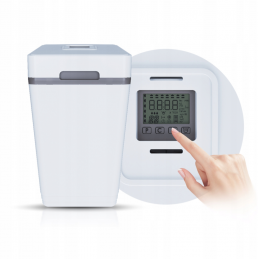
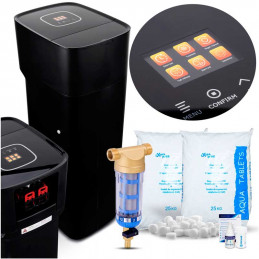
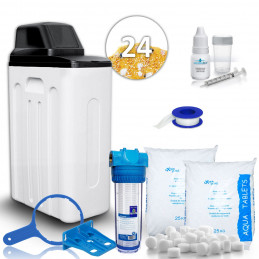
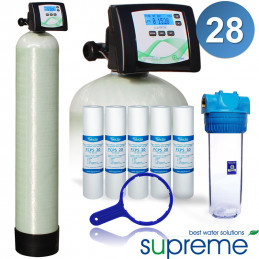
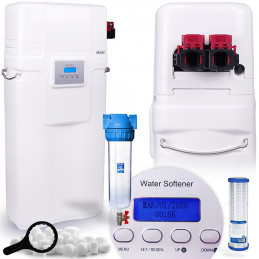
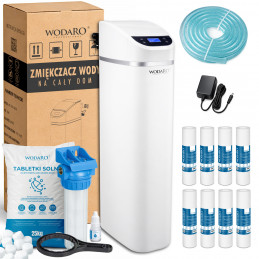
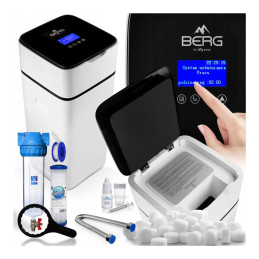
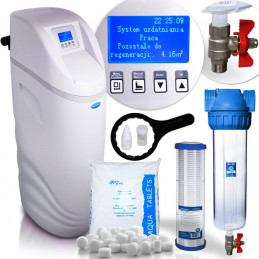
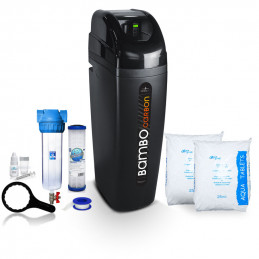
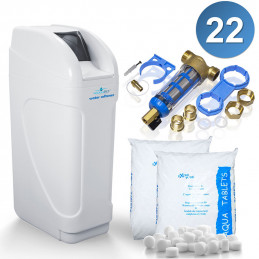
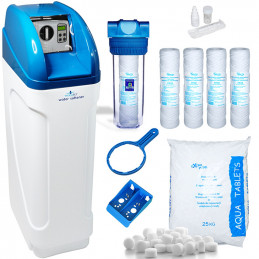
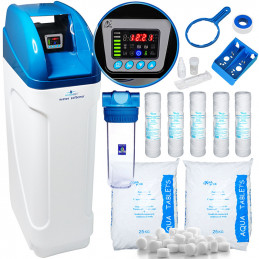
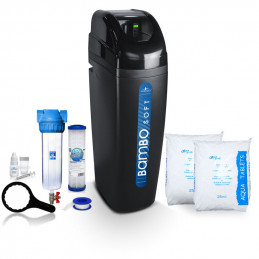
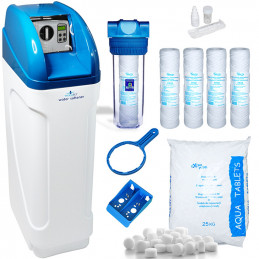
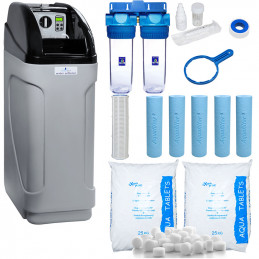
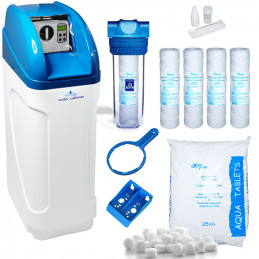
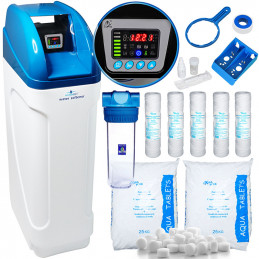
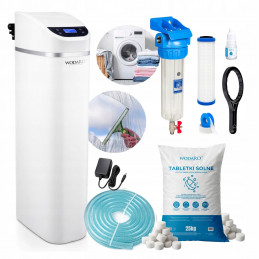
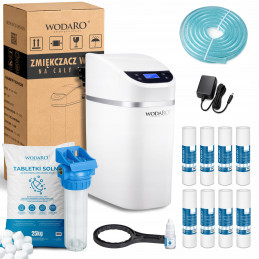
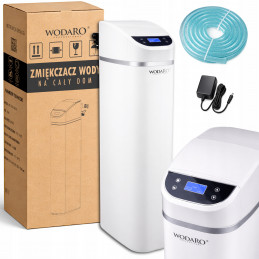
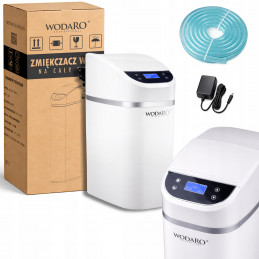
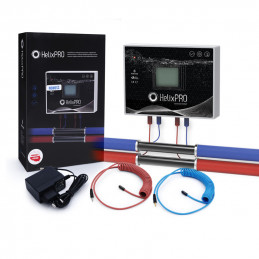
Water softeners for the apartment are devices designed for everyday comfort, installation protection, and reducing the effects of hard water. In apartments and single-family homes, the problem of limescale deposits very often affects not only the appearance of fixtures, but also leads to higher operating costs for appliances and greater detergent consumption. A properly selected softener helps solve this problem at its source.
What will you find in this category?
Water softeners for the apartment intended to reduce water hardness and limescale buildup. This group includes solutions for apartments in apartment buildings and single-family homes, including central, compact, and control-head models. Their purpose is to improve water use comfort, protect fixtures, pipes, and household appliances, and support more efficient operation of the water system.

Why is hard water a problem?
Hard water is characterized by a high content of calcium and magnesium ions. These are exactly the elements that contribute to the formation of limescale, which builds up in pipes, on fixtures, and in household appliances.
In practice, this means faster wear of installation components and less comfortable daily water use. Deposits may appear, among other places, on taps, shower faucets, in the washing machine, or in the dishwasher.
- Limescale in pipes and the installation may increase the risk of breakdowns and costly repairs.
- Household appliances, such as washing machines and dishwashers, are more exposed to faster wear.
- Bathroom and kitchen fixtures lose their aesthetic appearance due to deposits.
- Soaps and detergents foam less effectively, which may lead to higher consumption of cleaning products.
- The heating boiler and heating system may operate less efficiently because of accumulating limescale.
How does a water softener for the apartment work?
A water softener for the apartment works on the principle of ion exchange. Water flows through an ion exchange resin bed, which removes calcium and magnesium ions and replaces them with sodium ions. Thanks to this process, the water becomes soft, and the risk of limescale formation is significantly reduced.
Water softening takes place automatically, so the device does not require much user intervention. The softener contains an appropriate amount of ion exchange resin, which effectively captures the unwanted ions responsible for water hardness.
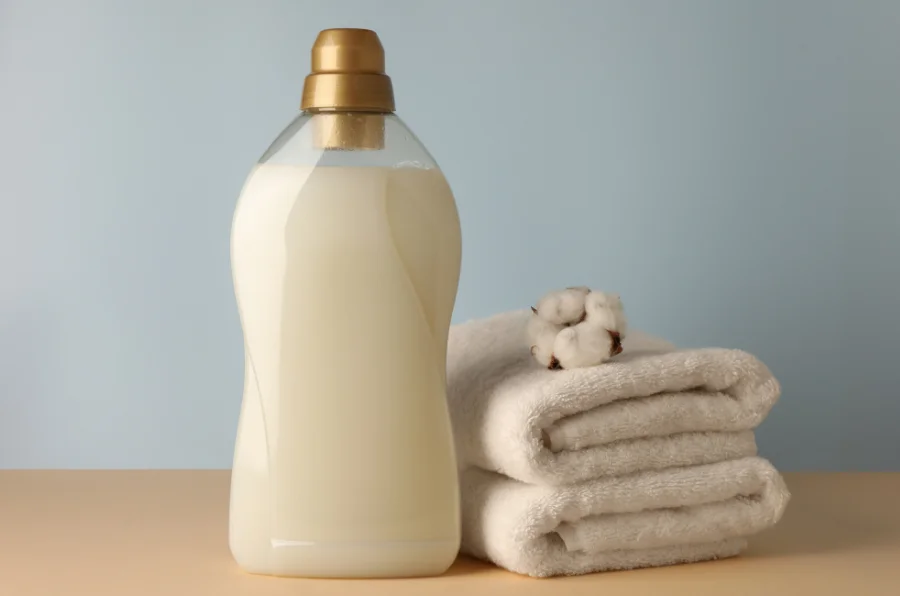
The most important benefits of installing a softener
Investing in a water softener for the apartment brings many practical benefits for household members and the installation itself.
- Protection of household appliances – washing machines, dishwashers, and other devices work longer and more efficiently when protected against limescale deposits.
- Better water quality – soft water is friendlier to skin and hair and also improves the comfort of everyday use.
- Better taste of beverages – softened water may improve the taste of drinks prepared at home, such as tea or coffee.
- Lower operating costs – lower consumption of detergents, soaps, and cleaning products, as well as lower energy use by household appliances.
- Longer lifespan of water installations – the absence of limescale deposits in pipes and devices reduces the risk of breakdowns.
- Better aesthetics – fewer deposits on fixtures such as taps or shower faucets.
- Energy savings – less limescale in heating systems means lower energy losses and more efficient water heating.
- Positive environmental impact – lower detergent consumption and lower energy use mean fewer chemicals entering the sewage system and lower CO2 emissions.
Types of water softeners for the apartment
Various types of softeners are available on the market and can be matched to the installation layout, available space, and the way water is used.
Central water softener
Installed at the main water supply entry to the apartment or house. It provides soft water throughout the entire system, protecting both fixtures and household appliances.
Compact water softener
This is a particularly convenient solution in smaller apartments where space is limited. A compact softener can be easily installed in a cabinet under the sink or in another convenient place, if the installation layout allows it.
Softeners with a control head
Models equipped with advanced control systems that automatically adjust the softening process to water consumption in the apartment. This is a convenient solution for people who value greater automation of device operation.
How to choose a softener for the apartment?
It is worth basing the choice of the right model on several practical criteria. This makes it easier to match the device to technical conditions and daily water demand.
- check how much space you have near the main cold water supply,
- determine whether a central or compact model will be better,
- take into account the control method and level of automation,
- check the requirements for drainage to the sewage system,
- pay attention to future maintenance, salt refilling, and possible cartridge replacement in selected models.
In apartments in apartment buildings, limited space often favors the choice of compact models. In single-family homes, where there is usually more room, central water softeners serving the entire installation are used more often.
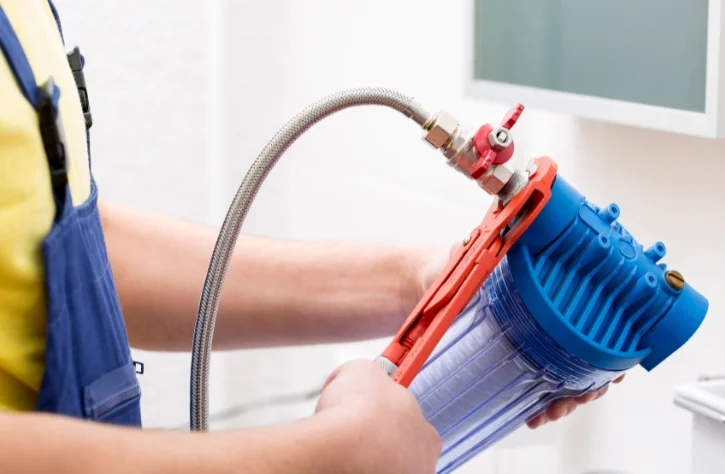
Water softener installation – the most important rules
Installing a water softener is simple, but it requires following several basic technical rules.
| Area | What to pay attention to |
|---|---|
| Choosing the location | The softener should be installed close to the main cold water supply so that it can effectively serve the installation. |
| Connection to the water installation | The device must be properly connected to the water installation, which requires knowledge of basic plumbing principles. |
| Drainage to the sewage system | The water used for resin regeneration must have drainage to the sewage system provided. |
| Device configuration | Depending on the model, it may be necessary to set parameters such as water hardness. |
| Fitting to the available space | In smaller apartments, compact solutions work well, while in larger premises and houses, central models are also suitable. |
Operation and maintenance
For a water softener to work properly for a long time, regular device maintenance should be remembered.
- Salt replacement – the ion exchange resin bed requires periodic regeneration using salt.
- Cartridge replacement – some models require regular cartridge replacement to maintain high water softening quality.
- Cleaning and technical condition inspection – periodic checking of the device supports its long and trouble-free operation.
Operating costs – what is worth knowing?
A water softener for the apartment brings many benefits, but it also involves basic operating costs. These most often include the purchase of regeneration salt, minimal electricity consumption, and possible servicing costs. These are expenses worth comparing with the savings resulting from lower detergent consumption, lower risk of breakdowns, and longer lifespan of appliances and installations.
Water softener and the comfort of everyday life
Soft water affects not only the condition of the installation, but also user comfort. Baths are more pleasant, skin and hair may feel greater comfort, and the bathroom and kitchen maintain an aesthetic appearance more easily. Water softening also supports the broader concept of water treatment in the apartment and more efficient use of water in the household.
This is a solution for people who want to reduce limescale, improve the everyday use of the installation, and take care of household equipment without the need for a constant fight against deposits.
FAQ – frequently asked questions
Does a water softener for the apartment really help reduce limescale?
Yes. A softener removes calcium and magnesium ions from water, which are responsible for hardness, thereby significantly reducing limescale formation in the installation, on fixtures, and in household appliances.
How does a water softener for the apartment work?
The device works on the principle of ion exchange. Water flows through an ion exchange resin bed that captures calcium and magnesium ions and replaces them with sodium ions. As a result, the water becomes soft.
Where is the best place to install a water softener?
It is best to install it close to the main cold water supply. Such a location allows effective softening of the water entering the entire installation in the apartment or house.
Is a softener suitable for an apartment in a residential building?
Yes. In apartments in residential buildings, compact models are often used because they are easier to fit into limited space. However, it is important to check the installation conditions and the possibility of connecting drainage to the sewage system.
Does a water softener require regular maintenance?
Yes. The basis of operation is regular refilling of the salt needed for resin regeneration. In some models, cartridge replacement as well as periodic cleaning and inspection of the technical condition may also be necessary.
What benefits does soft water provide for household appliances?
Soft water reduces the buildup of deposits in washing machines, dishwashers, and other household appliances. Thanks to this, the equipment can operate longer, more efficiently, and with a lower risk of breakdowns.
Does a softener affect detergent consumption?
Yes. With soft water, soaps and detergents usually work more effectively, so their consumption may be lower than in the case of hard water.
Is operating a softener expensive?
The most common costs are regeneration salt, minimal electricity consumption, and possible service. In practice, many people balance these expenses with savings resulting from better protection of installations and appliances.
Does softened water improve the comfort of everyday use?
Yes. Soft water may be friendlier to skin and hair, makes it easier to keep fixtures clean, and improves the convenience of using the bathroom and kitchen.