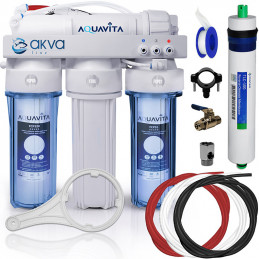
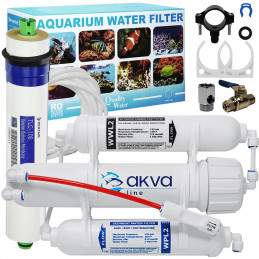
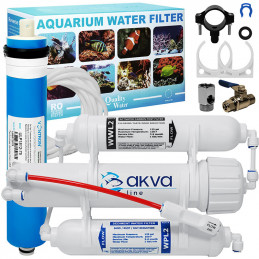
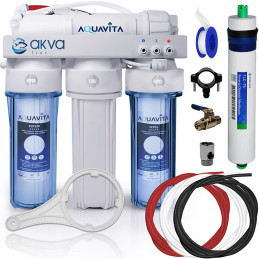
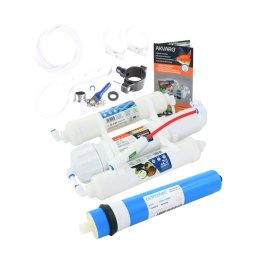
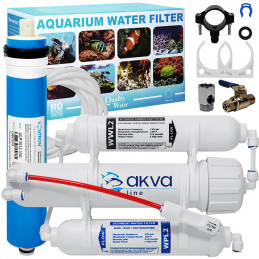
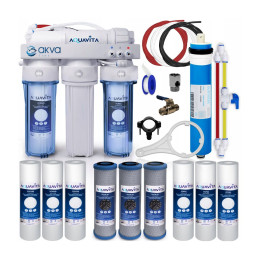
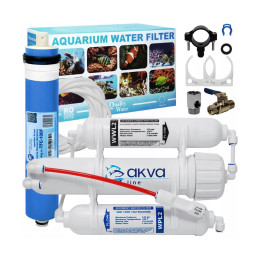
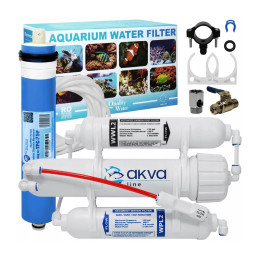
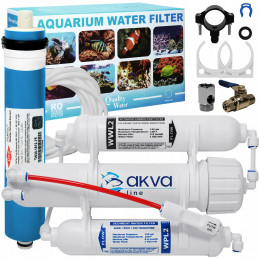
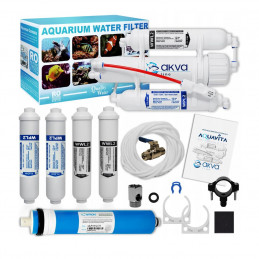
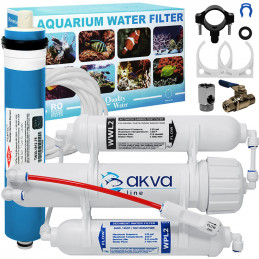
RO for aquarium is used to treat water used in both freshwater and marine aquaristics. Systems based on reverse osmosis pass water through a semipermeable membrane that retains many dissolved contaminants, including mineral salts, heavy metals, and other unwanted substances. This solution is especially useful wherever water purity, parameter stability, and the safety of aquarium fish and plants matter.
Maintaining proper water parameters is one of the foundations of modern aquaristics. That is why reverse osmosis filters are very popular among both beginners and more experienced aquarists. They make it possible to prepare highly purified water, which makes tank maintenance easier and helps create favorable living conditions for its inhabitants.
In this category, you will find solutions designed for purifying water for aquariums, useful when topping up tanks and wherever greater control over water quality is needed. This is especially important for fish and plants that require special water conditions.
Reverse osmosis in aquaristics
Aquarium filters using the reverse osmosis process are an advanced technology for removing contaminants from water by passing it through a semipermeable membrane. This membrane allows water molecules to pass through while retaining most dissolved substances, such as:
- mineral salts,
- heavy metals,
- chlorine and selected chemical substances,
- pesticides,
- other contaminants present in water.
The source content also indicated that RO filtration helps remove other unwanted contaminants, including fish food residues. As a result, the water used in the aquarium can be clearer and safer for aquatic organisms.
Main types of RO for aquarium
The category descriptions distinguish two main types of RO filters used in aquaristics: internal filters and external filters.
Internal filters for aquariums
An internal aquarium filter contains an RO membrane and a water pump placed inside the tank. Water is taken in by the filter, passed through the membrane, and then pumped back into the aquarium.
This solution is valued for:
- ease of installation,
- simple operation,
- suitability for smaller aquariums,
- convenience for people looking for uncomplicated water filtration.
External filters for aquariums
External filters are mounted outside the aquarium and powered by a water pump. Water flows through the filtration system, is purified by the RO membrane, and then returns to the tank.
Their advantages primarily include:
- effective water treatment,
- the ability to maintain better aesthetics inside the aquarium,
- additional space in the tank,
- convenient use wherever a tidy aquarium arrangement matters.
Where is RO filtration used in aquaristics?
Reverse osmosis filtration is used mainly for treating water used to top up freshwater and marine aquariums. The water supplied to the tank should be free from contaminants and properly chemically balanced to provide healthy living conditions for fish and aquarium plants.
RO solutions are particularly useful when:
- you keep a freshwater aquarium and want better control over the quality of the water you add,
- you maintain a marine aquarium in which parameter stability is especially important,
- you breed fish or grow plants that require special water conditions,
- you want to reduce the impact of contaminants present in tap water.
Key advantages of RO for aquarium
RO for aquarium offers a number of benefits for fish keepers and aquaristics enthusiasts. The most important advantages include:
- Contaminant removal – RO filtration removes most contaminants present in water, including chlorine, heavy metals, pesticides, and other chemical substances.
- Clean and treated water – water purified by an RO filter is clear and safe for fish and plants.
- Stable water parameters – osmotic systems help maintain stable chemical parameters, such as pH and hardness.
- Support for a healthy ecosystem – cleaner water helps maintain good living conditions for aquatic organisms.
- Reduced risk of health problems – purified water may reduce the risk of diseases and infections among fish and other aquatic organisms.
- Ease of use – RO filters are considered convenient to install and use, which is why they are willingly chosen by both beginners and experienced aquarists.
How to choose RO for aquarium?
It is worth basing the selection of the right system on the actual needs of the tank and the intended way of use. When choosing, pay particular attention to the type of design and ease of operation.
What is worth paying attention to before purchase?
- Filter type – internal or external, depending on the size of the aquarium and the preferred installation method.
- Available space – external filters help preserve more space in the tank.
- Ease of installation and use – especially important for people beginning their aquaristics journey.
- Water application – for freshwater aquariums, marine aquariums, and tanks with more demanding stocking.
- Need for parameter control – the greater the demands of fish and plants, the more important the consistent quality of the treated water becomes.
An RO filter is not chosen solely for water purity itself. In practice, for many aquarists, the ability to achieve more predictable parameters when preparing water for water changes and top-ups is equally important.
Summary of the most important information
| Area |
Information |
| Technology |
Reverse osmosis using a semipermeable membrane |
| Operating principle |
The membrane allows water molecules to pass through and retains many dissolved contaminants |
| Removed substances |
Including mineral salts, heavy metals, chlorine, pesticides, and other chemical contaminants |
| Application |
Water treatment for freshwater and marine aquariums |
| Types |
Internal filters and external filters |
| Benefits |
Cleaner water, greater parameter stability, ease of use, and support for a healthy aquarium environment |
RO for aquarium in the MojaWoda.com offer
Reverse osmosis filtration is an effective way to treat water in an aquarium and create a safe environment for fish, plants, and other aquatic organisms. By reducing the amount of contaminants, it becomes easier to maintain a healthy ecosystem and enjoy an aesthetic, well-maintained tank.
If you are looking for high-performance aquarium RO filters, this category will help you choose a solution suited to the type of aquarium, the available space, and the expected way of use.
FAQ - most frequently asked questions about RO for aquarium
What is an RO filter for an aquarium?
It is a water treatment system that uses the reverse osmosis process. Water passes through a semipermeable membrane that retains many dissolved contaminants while allowing water molecules to pass through.
What is reverse osmosis used for in aquaristics?
Primarily for treating water used to top up and prepare water for freshwater and marine aquariums. This solution is especially useful wherever greater control over quality and parameter stability is important.
What contaminants does an RO filter for an aquarium remove?
According to the category description, RO filtration helps remove most contaminants present in water, including mineral salts, heavy metals, chlorine, pesticides, and other chemical substances.
Is an RO filter suitable for both freshwater and marine aquariums?
Yes. RO filtration is commonly used in both freshwater and marine aquaristics because it helps prepare highly purified water.
What is the difference between an internal filter and an external filter?
An internal filter is placed inside the aquarium and is sometimes chosen for smaller tanks due to its simple installation. An external filter is installed outside the aquarium, which allows more space inside and a tidier tank appearance.
Does an RO filter help maintain stable water parameters?
Yes, this is one of the main advantages of this solution. Osmotic filters help maintain more stable chemical water parameters, such as pH and hardness, which is very important for the condition of fish and plants.
Are RO filters for aquariums difficult to use?
No. The category content emphasizes that they are easy to install and operate, which is why they are a popular choice for both beginner and experienced aquarists.
Can cleaner RO water reduce the risk of fish diseases?
Yes, purified water may reduce the risk of diseases and infections among fish and other aquatic organisms because it limits the presence of many unwanted contaminants.
Who is an RO filter for an aquarium a good choice for?
It is a good solution for people who want to improve water quality in the aquarium, maintain greater parameter stability, and prepare water suitable for fish and plants with standard or more demanding needs.