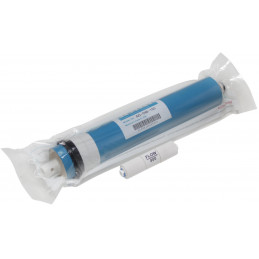
150 GPD osmotic membranes are a proven choice for reverse osmosis systems where efficient filtration and stable water quality are expected. The category includes cartridges intended for use in RO installations with a capacity of up to 567 liters per day, making it a good fit for household users looking for effective water purification for daily drinking and meal preparation.
Key information: the 150 GPD osmotic membrane works on the principle of reverse osmosis, removes contaminants, salts, and other undesirable substances from water, and the popular 1812 size ensures broad compatibility with many household RO systems. The capacity of this category is up to 567 liters per day. Recommended membrane replacement is most often every 2-3 years, although with more challenging water parameters it may be needed sooner.
What is a 150 GPD osmotic membrane?
A 150 GPD osmotic membrane is one of the key components of a reverse osmosis system. It is responsible for precisely separating clean water from many contaminants present in raw water. The abbreviation GPD refers to capacity measured in gallons per day, and in this category we are talking about solutions reaching up to 567 liters per day.
Such membranes are often chosen for household applications, where both filtration quality and sufficient performance for the whole family are important. In practice, this means the convenience of daily use of water for drinking, cooking, and preparing beverages.
How does a 150 GPD osmotic membrane work?
The 150 GPD osmotic membrane works on the principle of reverse osmosis. Water passes through a semi-permeable membrane that retains contaminants, salts, and other undesirable substances, allowing mainly purified water to pass through to the other side. This is a key process for obtaining clean and healthy drinking water.
Thanks to this technology, the user can reduce the presence of many components affecting the taste, smell, and overall quality of water. This is also one of the reasons why RO systems are valued in household water treatment installations.
Why choose a 150 GPD membrane?
A membrane with this capacity is a solution for people who expect effective performance and convenient daily use of an osmotic system.
- Effective contaminant removal - the membrane helps reduce the presence of salts and other undesirable substances in water.
- Better water taste - purified water is more pleasant for everyday consumption.
- Reduction of chlorine and compounds affecting odor - improves the comfort of using drinking water.
- Capacity suitable for home use - 150 GPD is a popular choice for households.
- Good fit for many systems - especially in the case of membranes in 1812 size.
- An investment in health and comfort - clean water is the basis of everyday functioning.
150 GPD osmotic membrane size 1812 - why is it important?
1812 size is one of the most popular standards used in household reverse osmosis systems. Its popularity comes from its compact dimensions and easier fit with many devices found in residential installations.
The 150 GPD osmotic membrane in 1812 size is valued for good compatibility, easier installation, and a beneficial combination of performance and durability. Before purchase, however, it is always worth confirming compatibility with the specific model of your filtration system.
How to choose the right membrane?
Membrane selection has a direct impact on the quality of water treatment and the proper operation of the entire RO system. When choosing, it is worth paying attention not only to the capacity itself, but also to technical compatibility with the system.
What should you pay attention to before buying?
- Membrane capacity - in this category up to 567 liters per day.
- Size - especially whether the system requires the 1812 standard.
- Compatibility with the housing and accessories - the membrane must fit the existing RO system.
- Inlet water quality - hard or difficult water may affect cartridge lifespan.
- Intensity of use - the higher the water consumption, the more important proper capacity selection becomes.
If you are not sure which membrane to choose, check the technical parameters of your filtration system. If in doubt, consulting an expert will help you choose a solution that ensures optimal water quality and proper installation operation.
How often should a 150 GPD osmotic membrane be replaced?
This is one of the most frequently asked questions by RO system users. Replacement frequency depends on several factors, primarily the quality of the inlet water, the amount of water used, and the regularity of maintenance of the entire system.
The general recommendation is to replace the membrane every 2-3 years. In practice, this period may be shorter if the installation operates with water of increased hardness or under greater load.
Signs that the membrane may need replacement
- decreased system performance,
- deterioration in water taste,
- increase in TDS level, meaning the amount of dissolved substances,
- less comfort in daily use of the RO installation.
Regular monitoring of the system's operating parameters helps detect more quickly the moment when the membrane stops working with full effectiveness.
Key information at a glance
| Parameter |
Information |
| Product type |
Osmotic membrane for reverse osmosis systems |
| Category capacity |
150 GPD, which means up to 567 liters per day |
| Application |
Household RO systems for drinking water purification |
| Popular size |
1812 |
| Operating principle |
Reverse osmosis using a semi-permeable membrane |
| Typical replacement |
Most often every 2-3 years |
| What affects lifespan |
Inlet water quality, water consumption, system maintenance |
Summary
The 150 GPD osmotic membrane is a practical solution for users who want to ensure high water quality in a household reverse osmosis system. It provides effective purification, good performance, and broad application possibilities in installations using the popular 1812 standard.
When choosing the right model, it is worth paying attention to compatibility, technical parameters, and the operating conditions of the entire system. Regular maintenance and performance monitoring will allow you to enjoy clean and tasty water every day for a long time.
FAQ - frequently asked questions
What does 150 GPD mean in an osmotic membrane?
The 150 GPD marking refers to the membrane capacity and means 150 gallons per day. In this category, this corresponds to a capacity of up to 567 liters per day.
How does a 150 GPD osmotic membrane work?
The membrane works on the principle of reverse osmosis. Water passes through a semi-permeable layer that retains contaminants, salts, and other undesirable substances, while allowing purified water to pass through.
Is a 150 GPD membrane suitable for household use?
Yes, it is a very popular solution for household RO systems. This capacity works well for everyday family use.
How often should a 150 GPD osmotic membrane be replaced?
Replacement is most often recommended every 2-3 years. However, the exact period depends on the quality of the inlet water, the amount of water used, and the regularity of system maintenance.
How can you tell that the membrane needs replacement?
The most common symptoms are decreased system performance, deterioration in water taste, and an increase in TDS level. These are signs that the membrane's effectiveness may already be lower.
Why does the 1812 size matter?
The 1812 size is one of the most popular standards in household reverse osmosis systems. It makes it easier to match the membrane to many installations and affects compatibility with the system housing.
Does hard water affect membrane lifespan?
Yes, water with more challenging parameters, including exceptionally hard water, may shorten membrane lifespan. In such conditions, replacement may be necessary more often than usual.
What should you pay attention to when choosing a 150 GPD membrane?
The most important factors are capacity, size, compatibility with your filtration system, and the installation's operating conditions. It is also worth considering the quality of the inlet water and the intensity of use.
Does a 150 GPD membrane improve water taste?
Yes, by reducing the presence of contaminants, salts, chlorine, and other substances affecting water, the user usually notices an improvement in taste and drinking comfort.