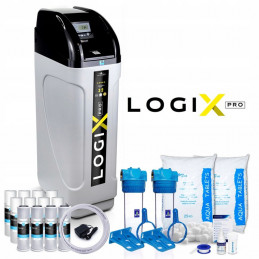
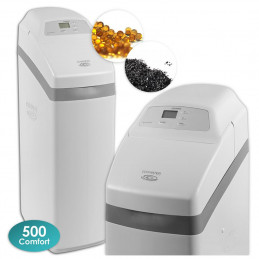
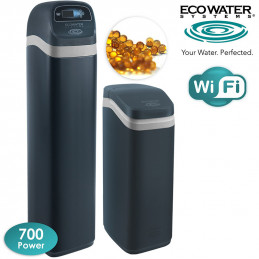
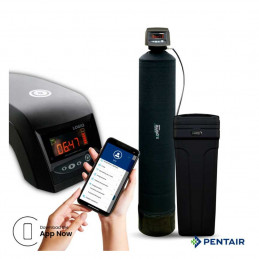
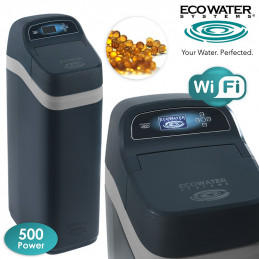
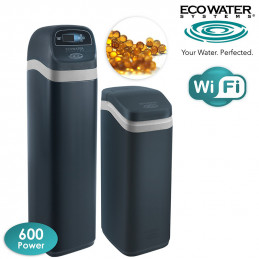
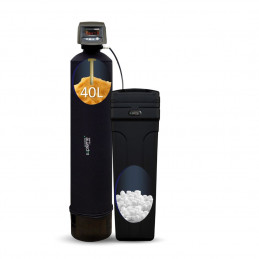
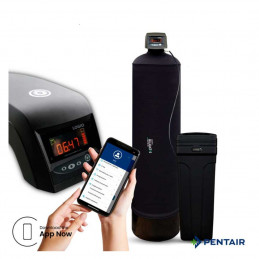
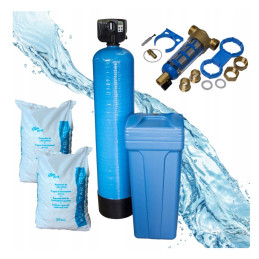
In multi-family buildings, hard water can be particularly troublesome. The greater the number of users and draw-off points, the faster limescale builds up in the system, fittings, and water-using appliances. That is why a properly selected water softener for a multi-family house is not just a convenient addition, but often an important element in protecting the entire system.
What will you find in this category?
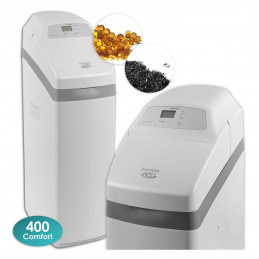
Water softeners intended for a multi-family house, meaning solutions that help reduce limescale, improve the operating conditions of the system, and protect components that are in constant contact with hard water. These are devices selected for buildings where water demand is higher than in a typical single-family house and where the solution needs to be matched to the nature of the property.
Why does water softening in a multi-family house matter so much?
Water with high hardness promotes the buildup of calcium and magnesium deposits. In practice, this means not only visible scale on taps or shower enclosures, but also the gradual burdening of the system and appliances. In multi-family buildings, where water consumption can be intensive and spread across many units, the effects of hard water may appear faster and affect a larger part of the installation.
Using the right softener helps reduce these problems and better adapt water quality to everyday use in the building.
Key benefits of using a water softener
- Reduced limescale buildup in pipes, fittings, and appliances.
- Protection of the water system against the effects of long-term contact with hard water.
- Better operating conditions for appliances that use water, such as heaters, boilers, or fittings.
- Greater user comfort thanks to reduced deposits on surfaces that come into contact with water.
- A solution matched to the building, where more than one family or unit uses a single system.
What types of properties are devices in this category suitable for?
This category includes solutions for residential properties in which the water system serves a greater number of users than in a standard single-family house. These may include, among others:
- multi-family houses,
- buildings with several residential units,
- properties inhabited by several families,
- properties in which a shared system requires more effective protection against limescale.
How to choose a softener for a multi-family house?
The choice of device should take into account the actual operating conditions of the system. In the case of multi-family buildings, it is especially important not to rely solely on the product name, but to analyze how water is used throughout the entire property.
What should you pay attention to before buying?
- Number of users and units – the more people use the system, the more important proper device selection becomes.
- Daily and peak water consumption – it is worth considering both average consumption and periods of higher demand.
- Raw water hardness – this is one of the basic parameters affecting the need for and effectiveness of softening.
- The nature of the building and system – the hydraulic layout, number of draw-off points, and the way the property is supplied with water all matter.
- Installation location – available service space and connection conditions should be checked.
In a multi-family house, the selection of a water softener should take into account not only the building itself, but also the water consumption profile. This makes it possible to better match the solution to the actual load on the system and reduce operational problems related to hard water.
What does a properly matched solution provide?
A properly selected softener can support stable system operation throughout the building and reduce the buildup of deposits where water is used most often. For the owner or property manager, this means more predictable operating conditions, and for residents – greater comfort in everyday water use.
In practice, a well-chosen device for a multi-family house helps combine three key goals: system protection, limescale reduction, and matching system operation to the scale of the building.
When is it worth considering installing a water softener?
- when limescale quickly appears on fittings and appliances,
- when the system supplies several apartments or several families,
- when the building has elevated water hardness,
- when the goal is better protection of pipes and water-using appliances,
- when a solution is needed that is suited to higher consumption than in a single-family house.
FAQ – frequently asked questions
Is a softener for a multi-family house different from a model for a single-family house?
Yes, mainly in terms of application scope and selection method. In a multi-family building, it is usually necessary to take into account a greater number of users, higher water consumption, and more intensive system operation.
Why install a water softener in a multi-family building?
The main goal is to reduce limescale buildup and protect the system and components that come into contact with water. It is a solution that helps improve the operating conditions of the entire building.
Does a water softener help protect the water system?
Yes, water softening helps limit deposits formed by hard water, which can matter for pipes, fittings, and appliances connected to the system.
How do you choose the right softener for a multi-family house?
It is worth considering the number of residents, the nature of the building, water consumption, raw water hardness, and installation conditions. For larger properties, proper selection is especially important.
Will this type of softener work well in a building inhabited by several families?
Yes, devices in this category are intended for exactly such applications. Their role is to serve systems in properties where more than one household uses water.
Does hard water in a multi-family house cause limescale to build up faster?
Usually yes. With greater and more frequent water draw-off, the effects of hard water may be more noticeable, both on fittings and in system components.
At what stage is it best to plan the installation of a water softener?
It is best to include it during system planning or modernization, but in many cases installation in an existing building is also possible if technical conditions allow it.
Should the choice of device depend on water hardness?
Yes, water hardness is one of the basic factors when selecting a softening system. Without this information, it is more difficult to properly match the solution to the building’s needs.
Is a softener for a multi-family house a good solution for a property manager or building owner?
Yes, because it helps reduce problems related to limescale and supports system protection in a property used by many people. It is a practical solution where durability and ease of operation matter.