Aquarium UV lamps – your reliable sterilizer in the fight against bacteria and algae
Aquarium UV sterilizer is practical support for maintaining cleaner, clearer water and reducing bacteria and algae suspended in the water column. As a result, the tank looks healthier and more attractive, while fish and plants can function in a more stable environment.
Crystal-clear water in an aquarium requires not only regular care, but also well-selected devices supporting filtration. Aquarium UV lamp effectively supports daily tank care, helping maintain its hygiene and biological balance.
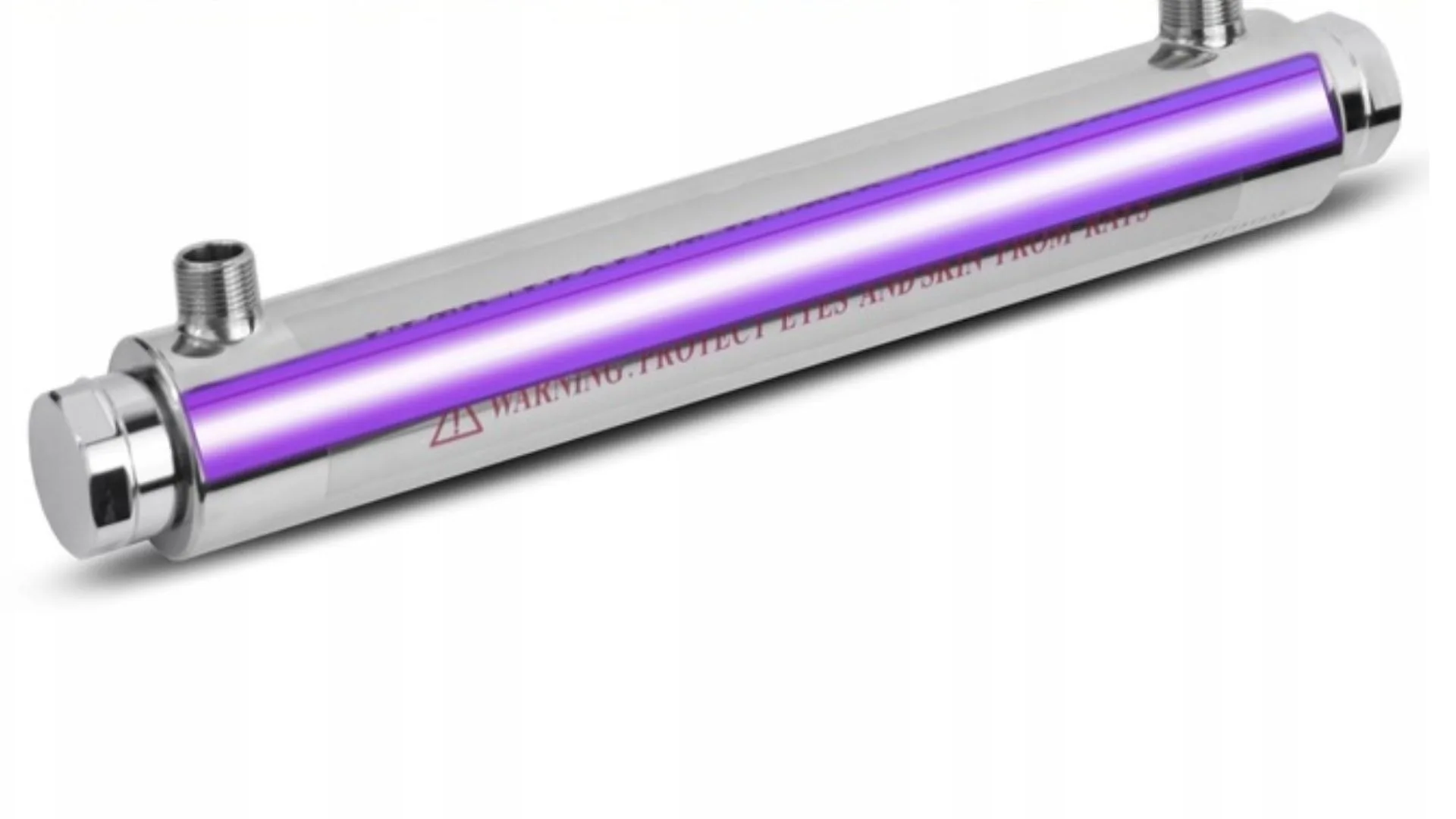
Complete UV lamp UV1G-M for water disinfection in installations with 1/4" hoses and reverse osmosis filters. UV-C radiation has bactericidal and virucidal effects, without the use of chemicals and without affecting the taste and smell of water. The set includes a chrome-plated housing, a Philips UV-Z6W 6W bulb, a glass cover, and a power supply with a sound signal for bulb burnout.
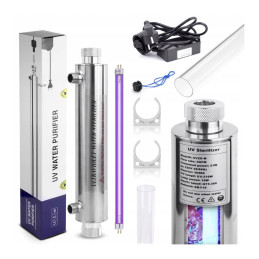
UV water sterilizer UV2G-M with PHILIPS 16 W lamp for water disinfection without the use of chemicals. UV radiation effectively reduces bacteria, viruses, and other microorganisms, ensuring safe drinking water and household applications. Housing made of AISI 304 stainless steel, quartz protective tube, 1/2 inch connection (external thread). Flow rate up to 0.85 m3/h, working pressure up to 10 bar.
A properly selected aquarium UV sterilizer is one of the most effective solutions supporting the maintenance of clear water and reducing microorganisms suspended in the tank. UV lamps are eagerly chosen by both beginner aquarists and more advanced users who want to improve living conditions for fish and plants without giving up classic mechanical and biological filtration.
In this category, you will find aquarium UV lamps matched to different tank capacities and water flow rates. These are solutions that help reduce water cloudiness, support the fight against planktonic algae, and reduce the risk of the development of some pathogens, while also serving as a complement to a well-designed filtration system.
What will you find in this category? Aquarium UV sterilizers designed to work with the water filtration circuit, helpful in reducing bacteria, viruses, protozoa, and planktonic algae suspended in the water. These devices are selected primarily according to lamp power, aquarium volume, water flow rate, installation method, and ease of servicing. A UV lamp does not replace a biological or mechanical filter, but it complements their operation very well.
How an aquarium sterilizing lamp works and why it is worth using
Aquarium UV lamps act as a sterilizer that uses ultraviolet rays of a specific wavelength. This type of radiation effectively affects the cells of bacteria, viruses, and protozoa suspended in the water. In practice, this means a lower risk of disease among fish and a reduction in the growth of planktonic algae.
A UV lamp helps maintain cleaner and clearer water in the aquarium.
The most important benefits of using a UV lamp in an aquarium:
help in preventing water cloudiness,
improved clarity and aesthetics of the tank,
reduction of planktonic algae growth,
reduction in the amount of pathogens suspended in the water,
less need for continuous use of chemicals.
Using aquarium UV lamps is usually simple. Just connect the device to the filtration circuit or install it near the water filter so that the water flowing through it is exposed to ultraviolet light.
Important: a UV sterilizer does not replace a classic biological or mechanical filter. It works best as a supplementary element of a properly functioning filtration system.
UV sterilizer and the health of fish and plants
Fish need a stable and as uncontaminated an environment as possible. Excess bacteria or algae in the aquarium can lead to stress and increase the risk of health problems. A UV lamp helps maintain better biological balance, and its effects can sometimes be noticed after just a few days of operation.
The most commonly observed effects are:
reduction in the amount of pathogens and parasites in the water column,
reduced risk of bacterial diseases,
better fish well-being,
more attractive and more intense coloration.
For plants, limiting excess algae is important, as it can hinder their development. A UV sterilizer reduces planktonic algae, allowing plants to carry out photosynthesis more effectively and grow better. In aquariums with species particularly sensitive to changes in water quality, a UV lamp can be an invaluable solution.
A properly selected UV lamp supports healthy living conditions for fish and plants.
How to choose a UV lamp for an aquarium
Choosing the right model should take into account not only the aquarium volume itself, but also the operating method of the entire filtration system. In our online store, you will find a variety of aquarium UV lamps matched to different tank capacities and water flow rates.
What to pay attention to before buying
UV lamp power – the larger the aquarium, the more powerful the lamp should be.
Water flow rate – proper synchronization with the filter ensures more effective purification.
Device size – it is worth matching it to the available space and the way the installation is routed.
Ease of servicing – convenient cleaning and trouble-free replacement of the UV bulb are important.
What power to choose for a specific volume
The power of the UV lamp must be matched to the amount of water in the tank. The values below are approximate and help organize the basic selection ranges.
Aquarium capacity
Approximate UV lamp power
up to 100 liters
about 5 W
200–300 liters
about 9–11 W
above 500 liters
18 W or more
When selecting, it is worth remembering that power alone does not determine everything. The proper contact time of water with UV radiation is equally important, so excessively fast flow can limit sterilization effectiveness.
Installation and operation of a UV sterilizer
To achieve the best results, the UV lamp should work together with the existing water filtration system in the aquarium. Depending on the design of the installation, the UV sterilizer can be mounted in several ways.
An example of a UV sterilizer used in water filtration and disinfection systems.
The most common installation locations:
in the canister filter circuit, for example on the outlet hose,
directly in the housing of an external filter, if the device has such an option,
in a sump installation in more advanced marine aquariums.
Regular cleaning of the lamp housing and checking the condition of the bulb are simple tasks that extend the service life of the device. In a properly filtered and well-aerated aquarium, a UV sterilizer will work even more efficiently.
Operating element
What to pay attention to
Housing cleaning
Removing deposits and dirt improves the effectiveness of the device.
UV bulb inspection
A worn bulb reduces sterilization efficiency.
Bulb replacement
Manufacturers usually recommend replacement every 8–12 months, depending on operating intensity.
Water quality
Well-filtered and aerated water supports more effective operation of the UV lamp.
Should a UV lamp run continuously
Many aquarists prefer constant operation of the UV lamp to reduce the number of pathogens around the clock. Others run the sterilizer only periodically, for example when visible symptoms of fish disease appear or during a sudden algae bloom.
The best solution depends on the specifics of the tank, stocking, plants, and water test results. In practice, it is worth observing fish behavior, plant condition, and water clarity, and then choosing such an operating schedule that best supports biological balance in the aquarium.
UV lamp and water filters in the aquarium
Although a UV lamp effectively destroys bacteria and limits algae, it does not replace traditional filters responsible for mechanical and biological filtration. That is why the best results are achieved by combining UV sterilization with a properly selected filtration system.
Support for the aquarium may include:
mechanical filters – trap particles, food residues, and solid impurities,
biological filters – promote the growth of beneficial nitrifying bacteria,
chemical filters – help remove unwanted compounds, for example chlorides or heavy metals,
industrial water filters – provide high performance and parameter control on a larger scale.
By combining an aquarium UV lamp with well-thought-out filtration, more stable conditions in the tank can be achieved. The store's offer also includes filters dedicated to aquaristics, as well as solutions for water treatment at home and in more demanding applications.
When it is worth choosing a premium-class UV sterilizer
Devices in various price ranges are available on the market. For more demanding tanks, it is worth considering premium models, especially if you have:
a very large marine aquarium,
a tank with valuable species of fish and corals,
particularly sensitive species requiring perfect water quality.
Such devices often offer higher efficiency, better quality bulbs, and more durable housing materials. The higher price can translate into greater operating stability and confidence in maintaining proper conditions in the tank over the long term.
FAQ – most frequently asked questions about aquarium UV sterilizers
How does an aquarium UV sterilizer work?
A UV sterilizer uses ultraviolet radiation of a specific wavelength, which affects bacteria, viruses, protozoa, and planktonic algae suspended in the water. As a result, it helps improve water clarity and reduces some biological threats in the tank.
Does a UV lamp replace a biological or mechanical filter?
No. A UV lamp does not replace mechanical or biological filtration. It is a supplementary device that works best as part of a properly selected aquarium filtration system.
Does a UV lamp help with green water in an aquarium?
Yes, a UV sterilizer is particularly effective in helping reduce planktonic algae responsible for so-called green water. In the case of algae attached to decorations or plants, additional maintenance measures are usually also needed.
How to choose the power of a UV lamp for an aquarium?
Power selection depends mainly on the tank volume and water flow rate. As a guideline, lamps of about 5 W are used for aquariums up to 100 liters, about 9–11 W for 200–300 liters, and often 18 W or more for tanks above 500 liters.
How often should the UV bulb be replaced?
Manufacturers usually recommend replacing the bulb every 8–12 months. The exact frequency depends on the operating intensity of the device and the recommendations of the specific manufacturer.
Can a UV lamp run continuously?
Yes, many aquarists use continuous operation. Others run the sterilizer only periodically, for example during algae problems or after worrying symptoms appear in fish. The best operating mode depends on the needs of the tank.
Does UV radiation harm beneficial bacteria in the filter?
Usually, this is not a major problem because beneficial bacteria mainly colonize filter media and the substrate, rather than floating freely in the water. A UV lamp primarily affects what flows through the device chamber.
Where is the best place to install a UV sterilizer?
It is most often installed in the canister filter circuit, in the housing of an external filter, or in a sump installation. The most important thing is to ensure proper water flow and compatibility with the device parameters.
Does a UV lamp remove all forms of algae?
No. It works best on planktonic algae suspended in the water. In the case of filamentous algae or algae settled on arrangement elements, the parallel use of other algae control methods may be necessary.
How to take care of the service life of a UV sterilizer?
It is worth regularly cleaning the housing and quartz sleeve, checking the condition of the bulb, replacing it according to the manufacturer's recommendations, and ensuring that the lamp receives water that is as well filtered as possible. This helps maintain high device effectiveness for a long time.