Deionizing cartridges – an effective solution for iron-contaminated water
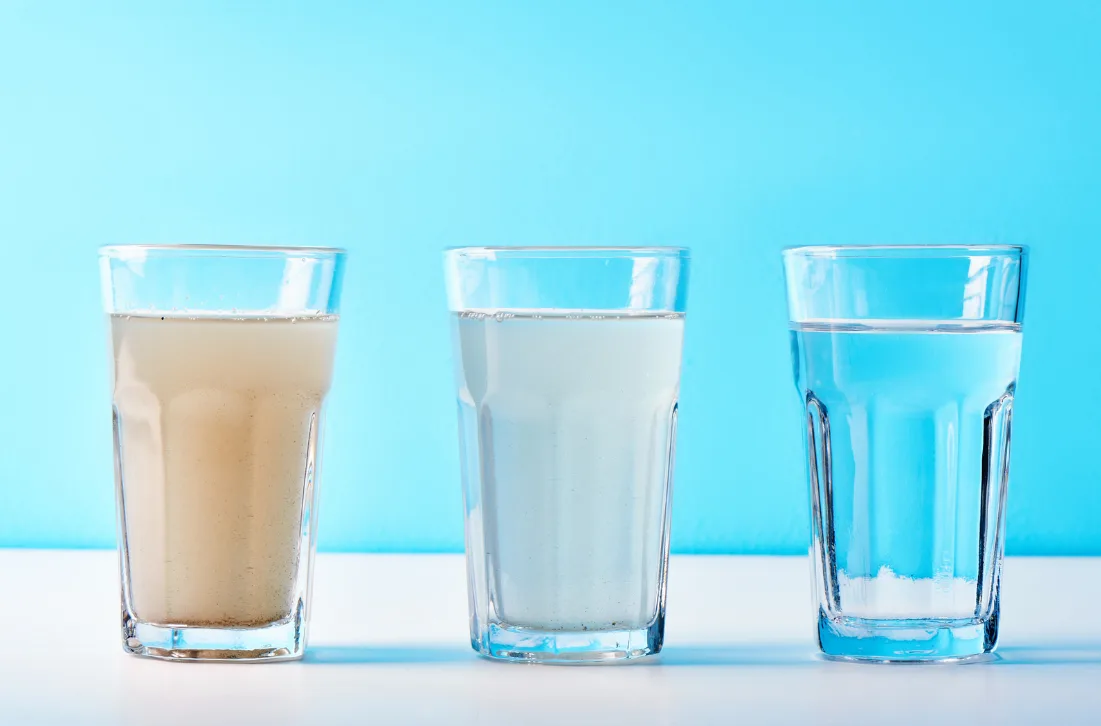
Deionizing cartridges provide practical support in dealing with excess iron in utility and drinking water. Iron-contaminated water may have an unattractive appearance as well as an unpleasant taste and odor, which is why a properly selected cartridge helps improve its everyday quality.
This solution works well both at home and in selected business applications. Water iron removal helps keep the installation cleaner, reduces sediment problems, and helps achieve water that is more comfortable for everyday use.
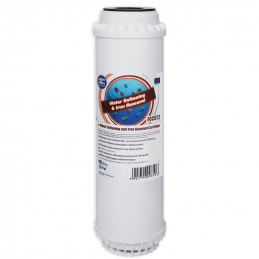
FCCST2 Aquafilter is a specialized treatment cartridge for 10-inch housings. The fine-grained media helps to soften water and reduce the content of iron and hydrogen sulfide, improving taste and odor. This solution is recommended for protecting plumbing and household appliances from scale and for reducing rusty stains. The product has a PZH certificate for drinking water.
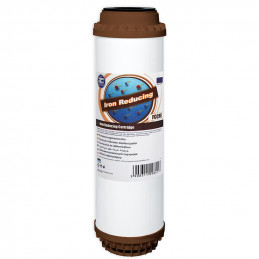
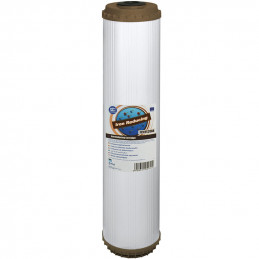
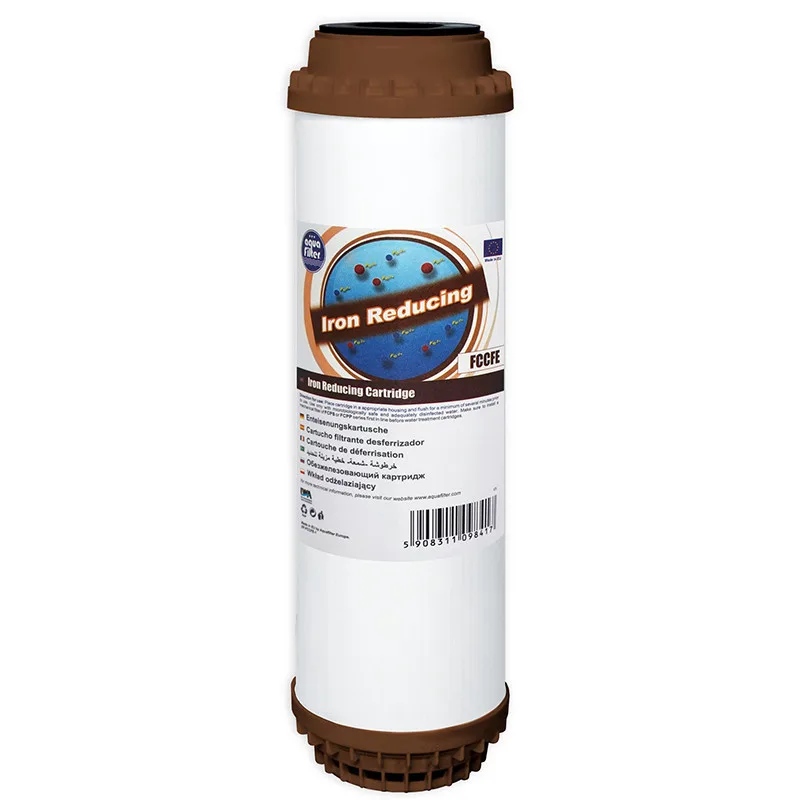
FCCFE Aquafilter is a cartridge with an active medium for iron removal from water. It effectively captures dissolved iron compounds, improves taste and odor, and reduces metallic aftertaste. It helps protect washing machines, dishwashers, and heating devices, as well as limits the formation of rusty streaks and yellow stains. It fits standard 10-inch housings.
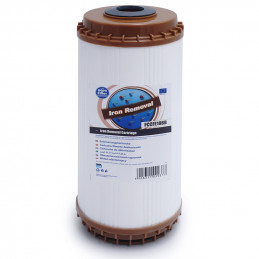
FCCFE10BB Aquafilter is a filter with an active medium for iron removal in 10" Big Blue housings. It effectively captures dissolved iron compounds, improves the taste and smell of water, and reduces metallic aftertaste. It helps protect household appliances and heating systems by limiting the risk of rusty stains and yellow spots. The filter has a final filter that prevents the granulate from escaping.
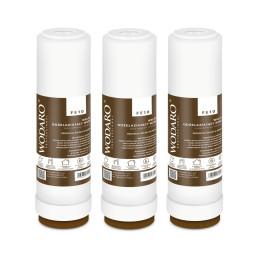
FE10 WaterRO is a deionization cartridge for standard 10" housings (set 3 pcs. ). The active medium used reduces iron, improving the taste and smell of water while limiting the formation of rusty deposits in the installation and household appliances. The dual-zone construction with PP foam at the inlet protects the medium from mechanical contaminants, and the sealed housing enhances hygiene and safety of use.
FCCFE20BB Aquafilter is a de-ironing cartridge for Big Blue 20 housings, designed to improve the quality of utility water. The active medium effectively captures dissolved iron compounds, reducing metallic taste and odor. It helps prevent rusty stains and yellow spots on laundry, protecting washing machines, dishwashers, and heating systems. The cartridge has a final filter that retains granule particles.
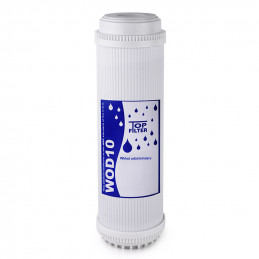
WOD10 Top Filter is a deionization cartridge for 10" pipe bodies and under-sink filters. It effectively reduces the concentration of iron ions, limiting rusty deposits and metallic taste and smell in water. It helps protect the installation, fittings, and household appliances, as well as improves bathing comfort and laundry quality. Recommended pre-filter: foam WP or string WS.
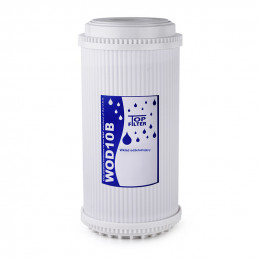
WOD10B Top Filter is a deionizing cartridge for BIG BLUE 10" housings and HHBB-10B treatment stations. It effectively reduces the concentration of iron ions, limiting rusty deposits, metallic taste, and odor in water. It helps protect the installation, fittings, and household appliances, as well as improves bathing comfort and laundry quality.
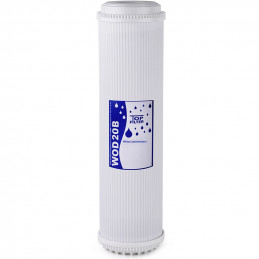
Top Filter WOD20B for deionization cartridges for BIG BLUE 20" and treatment stations HHBB-20B . Effectively reduces the concentration of iron ions, limits rusty deposits, and removes metallic taste and odor from water. Helps protect the installation, fittings, and household appliances, improving bathing comfort and laundry quality.
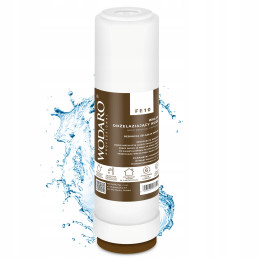
FE10 WODARO is a 10" deionization cartridge for water filtration, designed to reduce excess iron and manganese. It helps limit discoloration, metallic taste, and unpleasant odor, improving the comfort of water use. It works well in household installations, with water from deep wells, and in selected industrial applications.
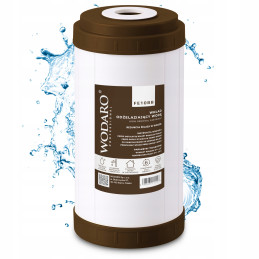
FE10BB WODARO is a deionization cartridge for Big Blue 10" housings (10"x4.5"). Designed to reduce excess iron and manganese in water, helping to limit discoloration, metallic taste, and unpleasant odor. Supports the protection of water systems and devices. Cartridge lifespan: up to 6 months.
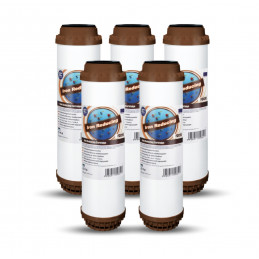
Aquafilter FCCFE 10" (5 pcs.) is a de-ironing cartridge with active media for standard 10" housings. It effectively captures dissolved iron compounds, reduces metallic taste and odor in water, and helps limit rusty streaks and yellow stains. The cartridge has its own end filter that prevents granules from entering the installation. Suitable for inline filters, under-sink filters, and standing filters.
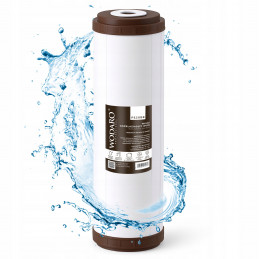
FE20BB WODARO is a deionization cartridge for BIG BLUE 20" housings designed to reduce excess iron in water. It helps limit discoloration, metallic taste, and unpleasant odors, improving the comfort of water usage. It is effective in residential installations, with well water, and in industrial applications. The cartridge also removes manganese and supports the protection of plumbing and water devices.
Deionizing cartridges are used in water filtration systems wherever elevated iron content is a problem. This solution is especially useful for water with a metallic aftertaste, unpleasant odor, and a tendency to create stains and deposits on fittings, sanitary ware, laundry, or dishes.
A properly selected deionizing cartridge helps improve the comfort of using water while also supporting the protection of installations and household appliances. This category includes products designed to reduce iron in utility and drinking water, used in popular filtration systems.
Key information about deionizing cartridges: A deionizing cartridge is a filtration element for the treatment of utility and drinking water, whose task is to remove iron from water. Iron may occur in dissolved form as iron(II) ions (ferrous iron), or in insoluble form as iron(III) compounds (ferric iron). Iron removal filters transform dissolved iron into an insoluble form, which is then retained by the iron removal media.
What are deionizing cartridges?
Deionizing cartridges help improve water quality in the installation.
Deionizing cartridge is a filtration element used in water treatment systems to reduce iron content. Depending on the water composition, iron may occur in dissolved or insoluble form, which is why effective filtration is based on the right media and properly selected operating technology.
In practice, an iron removal filter transforms dissolved iron into an insoluble form and then retains it in the filtration material. As a result, the water becomes clearer and more convenient for everyday use.
Why use iron removal filters?
Using iron removal filters brings a number of real benefits at home and in many utility applications.
Improved water taste and odor – reducing iron helps eliminate the metallic aftertaste and unpleasant odor.
Protection of household appliances – iron and manganese compounds may promote the buildup of contaminants and contribute to faster wear of appliances such as washing machines, dishwashers, or boilers.
Prevention of stains and streaks – high iron content promotes the formation of difficult-to-remove marks on sanitary ware, laundry, and dishes.
Improved user comfort – water after filtration is usually more pleasant in everyday use.
Support for water quality – reducing excess iron is particularly important where its concentration is elevated.
Types of iron removal filters for water treatment
Many solutions are available on the market, differing in operating technology and scope of application. Selecting the right type depends on water quality and the expected filtration effect.
Mechanical filters
They remove insoluble iron particles and other mechanical impurities. They are often used as pre-filtration in water treatment systems.
Catalytic filters
They use filtration media that catalyze the iron oxidation reaction. These types of solutions are popular in systems where effective conversion of dissolved iron into a form that can be retained by the media is necessary. One example is the USTM iron removal filter.
Manganese removal filters
They work similarly to iron removal filters but additionally help remove manganese from water. This is a good solution when the problem does not concern iron alone.
The choice of cartridge should be based on the type of contaminants and the installation parameters.
Deionizing cartridges for well water – when are they a good choice?
Well water very often contains elevated iron concentrations. A deionizing cartridge for well water may be a good solution for moderate contamination, but with very high iron concentrations, a standard filter may prove insufficient.
In such situations, more advanced treatment systems are used, such as:
aeration systems,
iron removers with automatic backwashing,
combined iron and manganese removal solutions,
in selected cases, also water softening systems as part of broader water treatment.
If the water comes from a private intake, it is worth performing a water analysis before choosing a cartridge. This is the most reliable way to select a solution appropriate for the actual concentration of iron and other contaminants.
How does iron removal media work?
Filtration on iron removal media is based on several successive stages.
Stage
What it involves
Adsorption
Iron ions are attracted to and retained on the surface of the filtration material.
Oxidation
The media components catalyze the oxidation reaction, converting dissolved Fe²⁺ iron into insoluble Fe³⁺ form.
Filtration
Insoluble iron particles are mechanically retained in the porous structure of the media, and clean, deironized water continues flowing into the water installation.
How to choose the right iron removal filter?
The choice of filter should take into account not only the type of installation, but also the actual water parameters and expected operation.
Iron concentration in water – before purchasing, it is worth performing a water analysis to determine the level of contamination.
Presence of manganese – if the problem also includes manganese, it is worth considering a solution combining iron and manganese removal.
Flow capacity – the filter should be matched to the amount of water used in the household or utility facility.
Operating costs – the purchase price, cartridge replacement, and system maintenance should all be taken into account.
Application – drinking water filtration may have different requirements than protection of the entire water installation.
USTM deionizing cartridges
USTM offers deionizing cartridges valued for their effectiveness and reliability. The range includes different sizes, including the popular 10-inch format, which is a universal choice for many standard filtration systems.
If you are looking for a proven solution for typical household applications, USTM deionizing cartridges are often chosen precisely because of their compatibility and ease of use.
Installation of an iron removal filter – key steps
Installation of an iron removal filter is usually simple, but it should be carried out carefully and in accordance with the manufacturer's recommendations.
Step
What should be done
Choosing the location
The filter is best installed where water enters the house in order to protect as much of the water installation as possible.
Preparing the installation
Before installation, the system should be flushed to remove any contaminants.
Installing the filter
Follow the manufacturer's instructions and make sure all connections are tight and properly secured.
Flushing the cartridge
Before first use, it is worth flushing the cartridge to remove production residues and any contaminants left after installation.
Summary
Iron removal filters and cartridges are effective tools in the fight against iron-contaminated water. They help improve the taste and odor of water, reduce deposits and streaks, and also support the protection of household appliances and installations. The right choice depends primarily on iron concentration, system flow capacity, and operating costs.
In the case of a moderate problem, a properly selected cartridge can be a very practical solution. With more severe contamination, especially in well water, it is worth considering a more advanced treatment system.
FAQ – frequently asked questions
What is a deionizing cartridge?
It is a filtration element used in utility and drinking water treatment systems, whose task is to remove iron from water.
What are the benefits of using a deionizing cartridge?
The main benefits are improved water taste and odor, reduction of the metallic aftertaste, protection of household appliances, reduced risk of deposits, and prevention of stains and streaks.
Is an iron removal filter suitable for well water?
Yes, but mainly for moderate contamination. With very high iron concentrations in well water, a standard cartridge may be insufficient, and more advanced treatment systems work better in such cases.
Do deionizing cartridges also remove manganese?
Not every deionizing cartridge removes manganese. For this purpose, manganese removal filters or solutions combining iron and manganese removal are used.
Are iron cartridges used for water softening?
No. Deionizing cartridges are not used for water softening. Hardness removal is handled by softening cartridges and systems that reduce calcium and magnesium.
How to choose the right iron removal filter?
It is best to start with a water analysis. When choosing, it is worth considering iron concentration, any presence of manganese, filter flow capacity, installation location, and later operating costs.
How does iron removal media work?
The media attracts iron ions, catalyzes the oxidation process, and retains insoluble particles in its structure, so that deironized water then flows into the installation.
How to install an iron removal filter?
You should choose the right installation location, flush the system, install the filter according to the manufacturer's instructions, check the tightness of the connections, and flush the cartridge before first use.
Can iron in water affect skin and hair?
Yes, excess iron in water can reduce the comfort of daily care. In practice, it is sometimes associated with dry skin, irritation, and dull-looking hair.