Floats for water softeners and iron removal systems – reliability and level control
Water float performs a key function in treatment systems, stabilizing the liquid level and supporting the efficient operation of equipment. It is an important component used, among others, in water softeners and iron removal systems, where it is responsible for the safe control of the brine or working solution level.
Solid construction and the correct selection of a float translate into the long-term reliability of the entire installation. A properly matched model helps reduce the risk of improper device operation, tank overflow, and a drop in the effectiveness of the water treatment process.
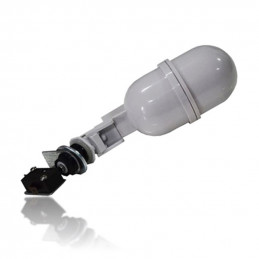
Electric float valve with switch for reverse osmosis systems. Once installed, it automatically controls the operation of the pump or solenoid valve depending on the water level, helping to maintain stable tank filling. The solid construction supports reliable operation of the system.
In this category, you will find floats for water softeners and iron removal systems, i.e. components responsible for controlling the liquid level in the tank. Their task is to maintain the proper level of brine or chemical solution, support the correct regeneration of ion exchange resin, and ensure the safe operation of the entire treatment station. These are small components, but they have a major impact on stability, efficiency, and protection of the installation against overflow.
In water treatment systems, not only the control valve or the media matter, but also the auxiliary components responsible for the proper course of each stage of the device's operation. Water floats belong exactly to this group of parts: they control the liquid level, support the regeneration process, and help maintain proper operating conditions for water softeners and iron removal systems.
A properly selected float helps reduce the risk of failure, improves safety of use, and makes it easier to keep the entire system in good condition. If you are looking for level control parts for your treatment station, in this category you will find solutions designed to work in installations that require precision and reliability.
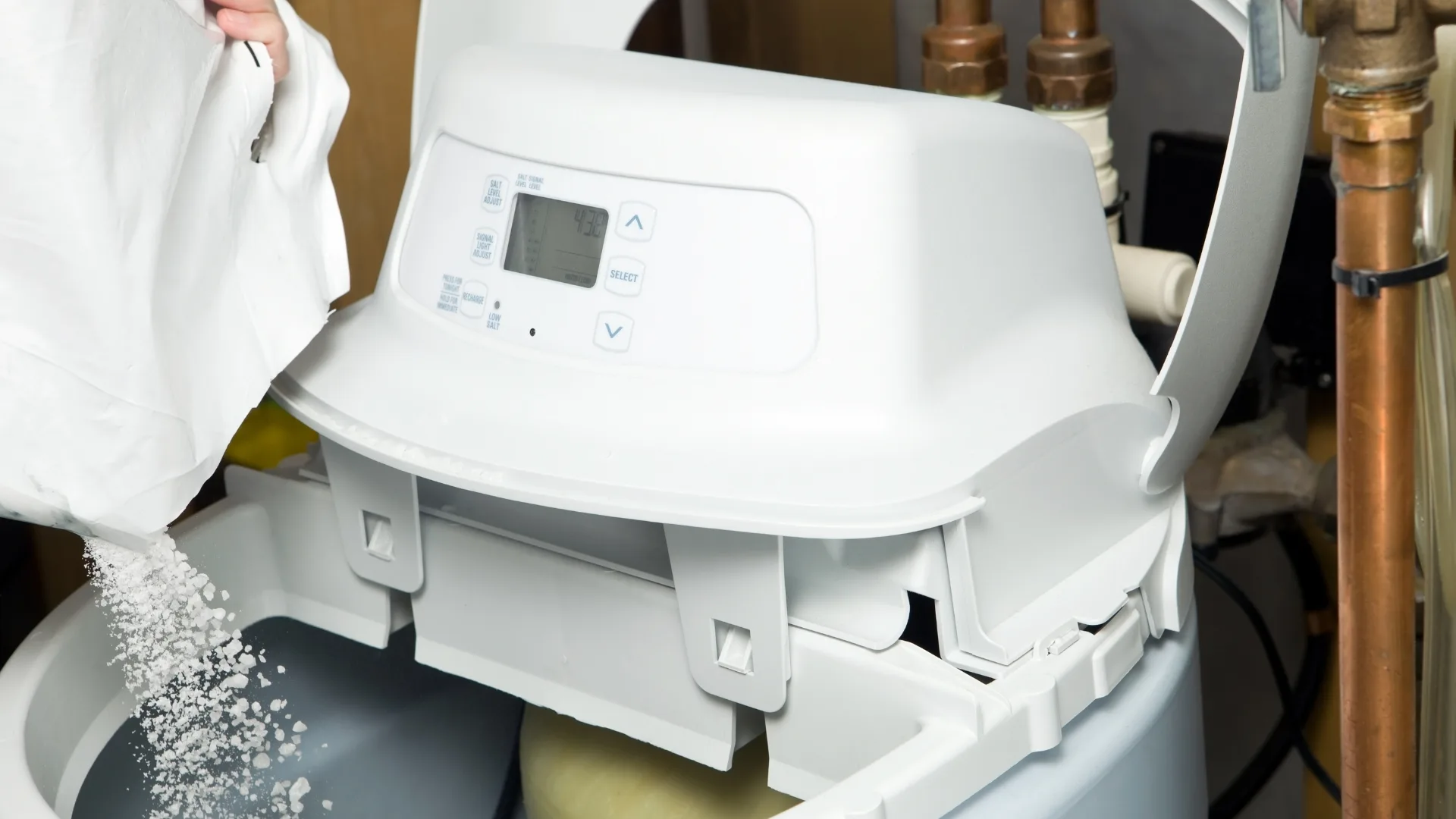
The float is responsible for maintaining the proper liquid level in the tank and the stable operation of the device.
How floats work in water softeners and iron removal systems
Floats for water softeners and iron removal systems play an important role in maintaining the appropriate level of brine or chemical solution in the tank. Thanks to them, a water softener can precisely draw the solution for the ion exchange resin regeneration process, and an iron removal system can efficiently rinse the media, removing accumulated iron and manganese.
The operating principle of a float is based on its ability to float on the surface of the liquid. When the level in the tank begins to rise, the float rises and acts on a valve or switch that shuts off the water supply. When the level drops, the opposite reaction occurs and the supply opens again. Thanks to this, the treatment process takes place under proper conditions, and the risk of flooding the device is lower.
Why it is worth choosing a high-quality water float
Although a float is a small part, its importance for the operation of the entire installation is very significant. A proven model translates not only into convenience of use, but also into safety and treatment efficiency.
Safety – a durable float prevents uncontrolled rises in liquid level and the resulting damage to the treatment station.
Durability – high-quality materials mean a longer service life, less frequent replacement, and lower operating costs.
Accuracy – precise control of the brine or chemical solution level supports the effective removal of hardness ions and other contaminants.
Ease of maintenance – a solid float usually requires only basic service activities.
Most common problems related to water floats
Floats for water softeners and iron removal systems are usually trouble-free, however, like every component working in contact with water and deposits, they require periodic inspection. Early recognition of problem symptoms helps avoid more serious failures of the entire system.
Contamination – deposits in the tank may hinder the free movement of the float.
Mechanical damage – cracks, deformation, or leaks may mean replacement is necessary.
Incorrect settings – an improperly adjusted float may cause the solution level to be too high or too low.
Material aging – even good components lose their properties over time and may require replacement in accordance with the manufacturer's recommendations.
If you notice an incorrect liquid level in the tank, regeneration problems, or signs of leakage, it is worth checking the condition of the float and its setting. A quick response helps prevent more costly failures of other components.
How to choose the right float for your treatment station
The selection of a float should be matched to the specific device and the conditions in which the installation operates. It is not only about the size of the component itself, but also about compatibility with the control system and the type of medium in the tank.
What to pay attention to when choosing
Tank type – the float should be compatible with the type of vessel and its dimensions.
Operating conditions – temperature, pressure, and the chemical composition of the water are important.
Material – plastic floats are popular, resistant to corrosion and most chemicals.
Switch parameters – if the float has built-in electrical contacts or flow control valves, their compatibility with the installation must be checked.
A float for a water softener operating in high hardness conditions may require a different design than a model used in a standard iron removal system. In the case of water with a more demanding composition, it is worth considering solutions adapted to a more aggressive environment.
Organized selection criteria
Selection area
What to pay attention to
Why it is important
Type of application
Water softener or iron removal system
Affects the operating method and function of the float in the installation
Tank
Type and dimensions of the vessel
Ensures proper liquid level control
Operating conditions
Temperature, pressure, chemical composition of the water
Makes it possible to choose a model resistant to operating conditions
Material
Material resistant to corrosion and chemicals
Affects durability and operational safety
Control
Presence of switches, contacts, or valves
Determines compatibility with the device
A properly selected float supports the safe and stable operation of a water treatment installation.
Floats and comprehensive water treatment
Although floats ensure the proper liquid level in the tank, the selection of the other components of the treatment station is also important. Water softeners and iron removal systems work together with other devices and accessories that together affect the efficiency of the entire process.
Pre-filters – help protect the media from sand, rust, and mechanical impurities.
Periodic water analysis – makes it easier to assess whether the current installation configuration still matches the operating conditions.
Regular servicing – inspection of control valves, pumps, controllers, and other components reduces the risk of downtime.
A comprehensive approach to water treatment makes it possible to maintain balance in the system, preserve high operating efficiency, and avoid unplanned repairs.
Installation and maintenance of the float
In many cases, float installation is simple and does not require specialist tools. It usually involves placing the component in the brine or reagent tank and connecting it to the valve. If the float has electrical switches, a short controller configuration may be needed.
To keep the float efficient for a long time, it is worth remembering the basic operating activities:
Regularly clean the component of deposits formed when in contact with salt or iron compounds.
Check the housing for tightness to rule out water collecting inside the float.
Inspect the correct mounting and the setting of the water shut-off and start-up points.
Floats and other parts for treatment stations – our offer
We understand how important the reliability of every component is in the water treatment process. That is why our offer includes floats distinguished by quality workmanship, resistance to damage, and a variety of sizes and designs, so that they can be matched to different types of treatment stations.
We offer solutions from proven manufacturers, providing warranty and technical support. In addition to floats, other parts and accessories for treatment stations are also available, including components needed for precise management of the softening and iron removal process, as well as consumable parts and service accessories.
We provide competitive prices, fast delivery, and support at every stage: from product selection, through installation, to after-sales service. If you are not sure which model to choose, it is worth consulting the selection with an advisor.
FAQ – most frequently asked questions about water floats
What is the purpose of a float in a water softener?
The float controls the liquid level in the tank, most often brine, and supports the proper course of ion exchange resin regeneration. It also helps reduce the risk of tank overflow.
What function does a float perform in an iron removal system?
In an iron removal system, the float helps maintain the proper level of the working solution and supports efficient rinsing of the media, which is important for the effective removal of iron and manganese.
How can you tell that a float may need replacement?
Warning signs include leakage, cracking, deformation, sticking of the component, or an incorrect liquid level in the tank. In such situations, it is worth checking the condition of the float and its adjustment.
Does every float fit every tank?
No. The float should be matched to the tank type, its dimensions, and the operating method of the device. Operating conditions and any control elements are also important.
How do you choose a float for your treatment station?
When choosing, you should take into account the type of device, the type and size of the tank, operating conditions, material, and the parameters of switches or valves, if they are present in a given model.
Does a float require regular maintenance?
Yes. It is worth regularly removing deposits, checking tightness, and verifying correct mounting and the setting of the activation and shut-off points. Such actions help maintain the efficiency of the component.
What problems most often affect the operation of a float?
Most often these are contamination in the tank, mechanical damage, incorrect adjustment, and the natural aging of the material. Each of these factors may reduce the effectiveness of the installation.
Does the high quality of a float really matter?
Yes. Better workmanship translates into greater durability, more accurate liquid level control, lower risk of failure, and more convenient operation of the entire treatment system.
Is the float alone enough for the trouble-free operation of a treatment station?
No. The float is an important component, but the effectiveness of operation also depends on the condition of the other components, such as pre-filters, control valves, the media, or the device controller.