Thermal mugs, thermos flasks, and reusable bottles are accessories that genuinely improve the comfort of everyday drinking. A well-chosen model helps keep your beverage at the right temperature for longer, makes transport easier, and lets you drink comfortably in the car, office, at university, during training, or on the trail.
In this category, we have gathered solutions for different needs: from thermal mugs for frequent sipping, through thermos flasks for longer temperature retention, to thermal bottles and everyday water bottles. What matters here is not only the manufacturer’s claims, but also capacity, lid design, spout type, leakproofness, and ease of cleaning.
What will you find in this category?
Thermal mugs for coffee and tea, including one-hand variants for the car and office; beverage thermos flasks, soup thermos flasks, and travel thermos flasks; as well as reusable and thermal bottles. Available models include “quick sip” spouts, sip nozzles, straws, anti-drip locks, as well as accessories such as sleeves, brushes, carabiners, and replacement seals.
The most important selection rule: a thermal mug works best for frequent sipping, a thermos flask for long temperature retention, and a bottle for regular hydration throughout the day.
Uses and benefits
Products in this category work well wherever convenience, leakproofness, and the right beverage temperature matter.
- For the city, car, and office – thermal mugs with a narrow base, lock, and one-hand operation.
- For university and work – models for coffee, tea, and water that are easy to carry and convenient to open.
- For training and walks – lightweight bottles with a sports spout or straw.
- For longer trips – thermos flasks that retain temperature for many hours.
- For trails and outdoor travel – more durable travel thermos flasks with practical extras.
- For meals away from home – soup thermos flasks with a wide opening, convenient for filling and cleaning.
In practice, small details determine comfort of use: the type of spout, transport lock, base shape, access to seals, and ease of thorough cleaning.
Subcategories and intended use
Thermal mugs
Thermal mugs are designed for frequent drinking on the move. They are a good choice for coffee and tea, especially when you care about convenient opening, leakproofness, and matching your daily routine.
- Most common capacities: 300–500 ml.
- Who they are for: for the car, office, university, commuting, and the gym.
- Popular features: one-hand opening button, transport lock, narrow base for car cup holders.
- Types of spouts: quick sip, sip nozzle, straw.
If you often reach for your drink in small sips, a thermal mug will usually be a better choice than a classic thermos flask.
Thermos flasks
Thermos flasks are used for longer temperature retention and storing a larger amount of beverage or food. In this category, you will find models for coffee, tea, soup, as well as travel versions.
- Capacities: 0.35–1.2 l.
- Uses: solo, for couples, for families, for work, and outdoors.
- Stopper types: classic, push-button, with cup.
- Interior: stainless steel, valued for durability and easier cleaning.
A good thermos flask is not only about insulation, but also convenient pouring, leakproofness, and a stopper suited to the way you use it.
Bottles
Reusable and thermal bottles are a convenient solution for regular water drinking throughout the day. They work well both for everyday use and during physical activity.
- Capacities: 350–1000 ml.
- Types: steel, thermal, and lightweight training bottles.
- Spouts: classic, sports, straw.
- Extras: sleeves, brushes, replacement seals.
A thermal bottle works well when constant access to your drink and convenient hydration throughout the day matter most.
How to choose a good thermal mug
It is worth basing your choice on a few practical criteria that really affect everyday use.
- Capacity: 300–360 ml for a small coffee; 400–500 ml if you drink less often but more at a time.
- Insulation: double walls with vacuum insulation; in practice, lid design is also very important.
- Leakproofness: a transport lock and well-fitted seals reduce dripping in a bag or backpack.
- Spout: quick sip, sip nozzle, or straw – best matched to your own drinking style.
- Ergonomics: narrow base for car holders, anti-slip profile, and convenient one-hand operation.
- Cleaning: disassemblable lid, access to seals, and the possibility of using a brush.
The best thermal mug is not necessarily the one with the most impressive heat retention claim, but the one that fits your daily rhythm and drinking habits.
Thermos flasks – choosing in practice
Thermos flask for coffee and tea
For everyday commuting, a capacity of 0.5–0.75 l usually works well. If you like pouring your drink into a cup, a model with a cup lid will be a practical solution. If you open it often, it is worth paying special attention to pouring comfort and leakproofness.
Soup thermos flask
For soup and stew, a wide opening and a capacity of 0.5–0.7 l for one portion work best. This shape makes both filling and later cleaning easier. An additional advantage may be a spoon or space to store it.
Travel thermos flask
On trips and trails, durability, weight, and transport convenience matter. A handle, carabiner, durable coating, and a stopper that works well even in more demanding conditions can be useful.
Thermal bottles and everyday hydration
Thermal bottles help keep drinks cool in summer and warm in winter, and the steel interior is valued for taste neutrality. As water treatment specialists, we recommend using them for filtered water – it is a convenient way to enjoy good taste and reduce sediment buildup.
- 500 ml – a convenient capacity for a handbag or backpack.
- 750–1000 ml – a good choice for training, a walk, or a longer day away from home.
- Sports spout – practical for cycling and activity.
- Classic spout or straw – convenient for the office and everyday use.
If you are looking for a specific model, for example by typing the phrase “dafi thermal bottle,” and it is not currently available in the range, you can choose a steel equivalent with a similar capacity and comparable ease of use.
Brands, compatibility, and service
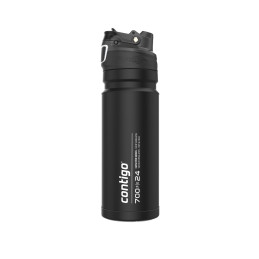
Customers often ask about brands such as Contigo, Kambukka, or steel mugs and thermos flasks associated with the Stanley line. If a specific variant is not currently available off the shelf, it may be possible to order it on request or suggest alternatives with similar ergonomics, leakproofness, and functionality.
If needed, you can also choose practical accessories such as spare seals, straws, brushes, or sleeves.
Care, safety, and hygiene
Regular care affects not only beverage taste, but also the leakproofness and durability of the product.
- After coffee or tea, rinse the vessel with warm water and leave it open to dry.
- Once a week, disassemble the lid and rinse the seals thoroughly.
- For thorough cleaning, use a gentle cleaning agent and a bottle brush.
- Avoid storing milk-based drinks for a long time.
- Check the manufacturer’s dishwasher recommendations – they often apply only to the body or selected parts.
- To neutralize odour, a rinse with water and a little baking soda may help.
- To maintain leakproofness, it is worth replacing seals periodically.
- During transport, always activate the spout lock if the model has one.
Clean, elastic seals and a regularly washed lid are the basis of fresh beverage taste and effective protection against leaks.
Ecology and cost-effectiveness of use
A reusable thermal mug, thermos flask, or bottle helps reduce single-use packaging and supports convenient daily habits. Combined with filtered water, it is also a practical way to reduce expenses and lower the amount of bottled drinks being transported.
The real benefit appears when durable insulation is combined with the simple habit of regularly refilling your mug or bottle.
How to quickly compare product types
| Product type |
Most common capacity |
Best use |
What to pay attention to |
| Thermal mug |
300–500 ml |
Coffee and tea for the car, office, university |
Spout, lock, holder-friendly base, ease of cleaning |
| Thermos flask |
0.35–1.2 l |
Longer temperature retention, trips, work |
Stopper, leakproofness, pouring convenience, opening type |
| Bottle |
350–1000 ml |
Everyday hydration, training, walking |
Type of spout, handiness, capacity, ease of cleaning |
Next steps and help
If you want to buy consciously, start by defining three things: capacity, drinking style, and place of use. This is usually enough to quickly narrow the choice down to a few sensible models.
It is also worth remembering a practical point of reference: a 480 ml thermal mug made of 18/8 steel, with vacuum insulation and a transport lock is a very universal configuration for everyday use. Current availability and colour variants depend on the offer.
If you are comparing 2–3 models and do not know which one will be better, it helps to compare capacity, spout type, leakproofness, and ease of cleaning. These are the features that most often determine satisfaction with the purchase.
Frequently asked questions
What is the difference between a thermal mug and a thermos flask?
A thermal mug is mainly for frequent sipping on the go and usually has a convenient spout and a slimmer shape. A thermos flask is better for longer temperature retention and a larger amount of beverage when you pour less often.
Which thermal mug should I choose for the car?
The most practical choice is a model with a capacity of around 300–450 ml, with a narrow base that fits a car cup holder, one-hand operation, and an anti-drip lock. It is also worth paying attention to the anti-slip surface of the body.
What thermal mug capacity should I choose for everyday coffee?
For a small coffee, 300–360 ml is usually enough. If you drink less often but prefer a larger portion, a 400–500 ml model may be more convenient.
Which thermos flask works well for coffee or tea at work?
For everyday commuting and work, 0.5–0.75 l thermos flasks are often chosen. It is worth paying attention to pouring convenience, leakproofness, and the type of stopper, especially if you open the flask several times during the day.
What should I choose for soup and stew?
The best choice is a soup thermos flask with a wide opening, usually in the 0.5–0.7 l range for one portion. This design makes filling, eating, and thorough cleaning easier.
Can a thermal mug or thermos flask be washed in a dishwasher?
It depends on the model and the manufacturer’s recommendations. Often the steel body may be dishwasher-safe, but lids, spouts, and seals are better washed by hand to preserve leakproofness longer.
Are carbonated drinks suitable for a thermos flask or thermal mug?
This is usually not recommended. Increased pressure may affect the seals and cause splashing when opening. Still water is a safer choice, and for carbonated drinks it is worth checking the manufacturer’s explicit recommendations.
Will a thermal mug with a straw be leakproof in a backpack?
It depends on the design. Some straw models are semi-leakproof, so for transport in a bag or backpack it is best to choose versions with a full lock and a well-sealed closing system.
How should I care for hygiene and fresh beverage taste?
After each use, rinse the vessel with warm water, clean the lid and seals regularly, and leave the product open to dry. For persistent odours, a rinse with water and a small amount of baking soda can help.
What should I do if there is a metallic aftertaste?
First, wash the product thoroughly, especially the lid and seals, and then rinse it with warm water. In many cases, rinsing the inside with water and a little baking soda also helps, followed by very thorough rinsing of the vessel before the next use.