
- There are no more items in your cart
- Shipping
- Total 0.00 zł




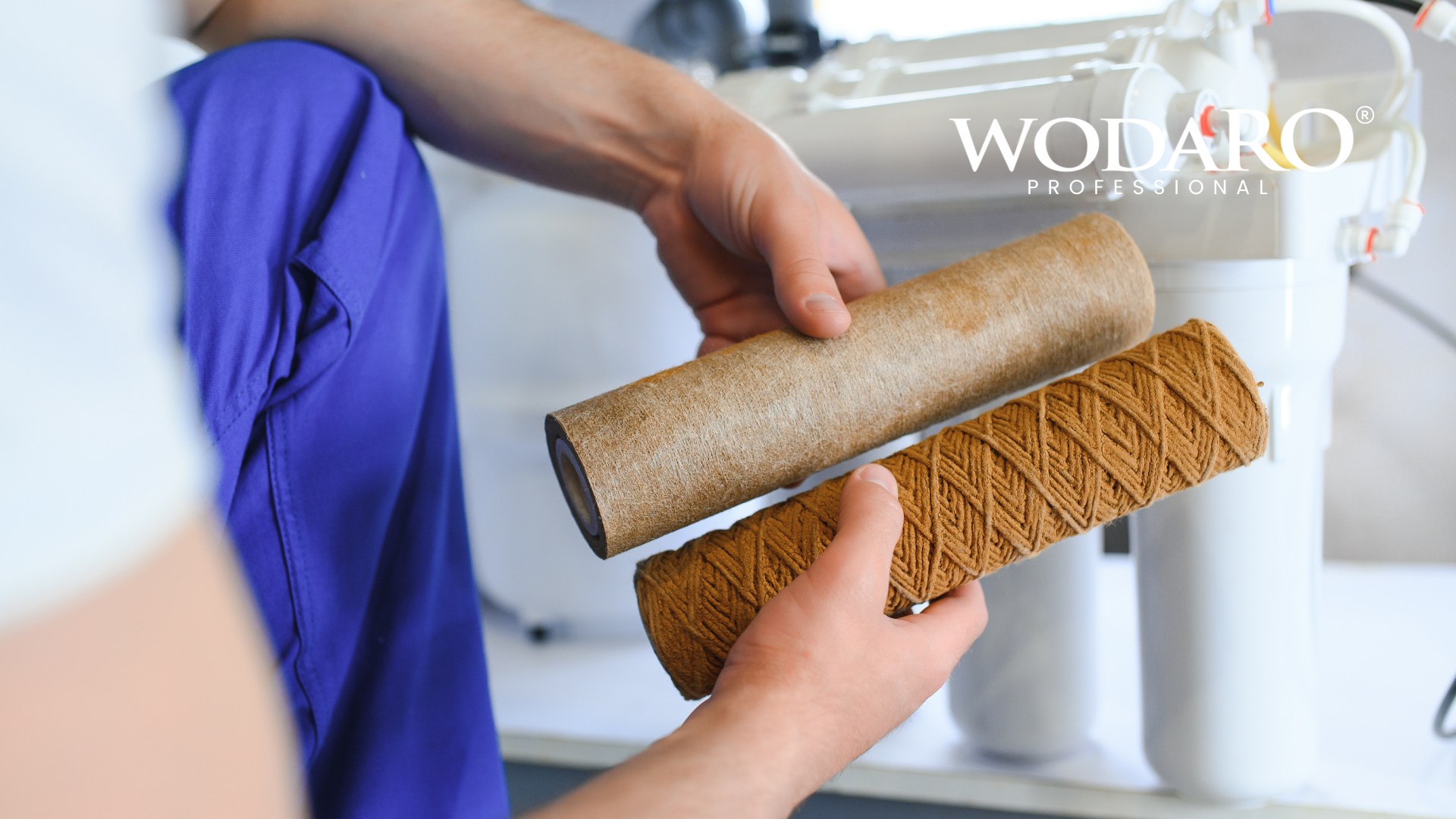
Water filtration - why? Hit or miss?
The topic of water treatment in home conditions evokes extreme emotions. On one hand, we hear that tap water in Poland is safe and meets standards, while on the other – every day you see limescale in the kettle and smell chlorine. Is water filtration just a marketing gimmick, or a real investment in health and comfort? In this article, we break down this process into its components, analyzing facts, costs, and technologies.
Table of contents
- Does filtering tap water make sense?
- How to recognize the problem in yourself? Mini-audit
- Water filtering device – overview of solutions
- How to filter water? Selection scenarios
- And what about recreation? Water filtering in basenie
- Common mistakes and myths
- Summary
- Frequently Asked Questions (FAQ)
In this article, you will learn:
- Why safe tap water can lose quality in your pipes.
- How to check in 2 minutes if you need a filter.
- When to choose a softener and when to choose reverse osmosis.
- What are the real costs and savings from filtration.
Does filtering tap water make sense?
Short answer: Yes, filtering tap water makes sense, even if the tap water meets sanitary standards. These standards specify valuesthe boundary "at the exit" from the waterworks, but they do not guarantee that the water will reach your tap in perfect condition after traveling kilometers of pipes, often old and corroded.
Water in Polish cities is tested and safe from a bacteriological standpoint. However, "safe" does not always mean "tasty" or "friendly to household appliances." The main reasons we choose water filtration,
- Water hardness: Excess calcium and magnesium ions cause the formation of limescale, which damages washing machines, dishwashers, and kettles.
- Chlorine and its derivatives: Essential for disinfection, but it spoils the taste and smell of water, and can also dry out the skin.
- Mechanical impurities: Sand, rust, and deposits thatdetach from the supply pipes.
Key thought: Water utilities are responsible for the quality of water up to the main meter. What happens in the internal installation of the building and what ultimately ends up in the glass depends on you.
How to recognize a problem at your place? Mini-audit in 2 minutes
Before you buy any water filtering device, You need to know what you're dealing with. You don't always need expensive laboratory tests to start. Perform a simple organoleptic test.
Checklist – what to check?
- White residue: Does a white coating quickly appear on bathroom fixtures, the shower cabin, or in the kettle? This is a sign of hard water.
- Smell: Does the water smell like chlorine (like at a swimming pool) or have a metallic odor when poured into a glass?
- Color: Is the water perfectly clear? A yellowish tint may suggest the presence of iron compounds or contaminants from pipes.
- Taste: Does the tea or coffee have a "film" on the surface and is cloudy? This is a sign thatwater filtration for drinking would improve the taste qualities of beverages.
If you notice a problem mainly with limescale, your goal is softening. If the issue is taste and odor for food purposes, you are aiming for carbon or osmotic filtration.
Water filtration device – overview of solutions
The market offers technologies tailored to different needs. There is noone ideal filter "for everything," which is why selecting the right one for a specific problem is crucial.
Reverse osmosis (RO)
This is the most advanced water filtration device available for home use. These systems are usually installed under the kitchen sink. They remove up to 99% of contaminants, including heavy metals, viruses, bacteria, and microplastics. Modern RO systems are equipped with mineralizers thatenrich the purified water with valuable elements. Check how reverse osmosis works if you care about crystal clear drinking water.
Central water softeners
This is a solution for the whole house. The device is installed at the water entry point into the building. Its main task is to exchange calcium and magnesium ions for sodium ions, which completely eliminates the problem of scale. If you want to protect the heating boiler, washing machineand the skin from drying out, water softeners are the only effective choice.
Inline filters (mechanical and carbon)
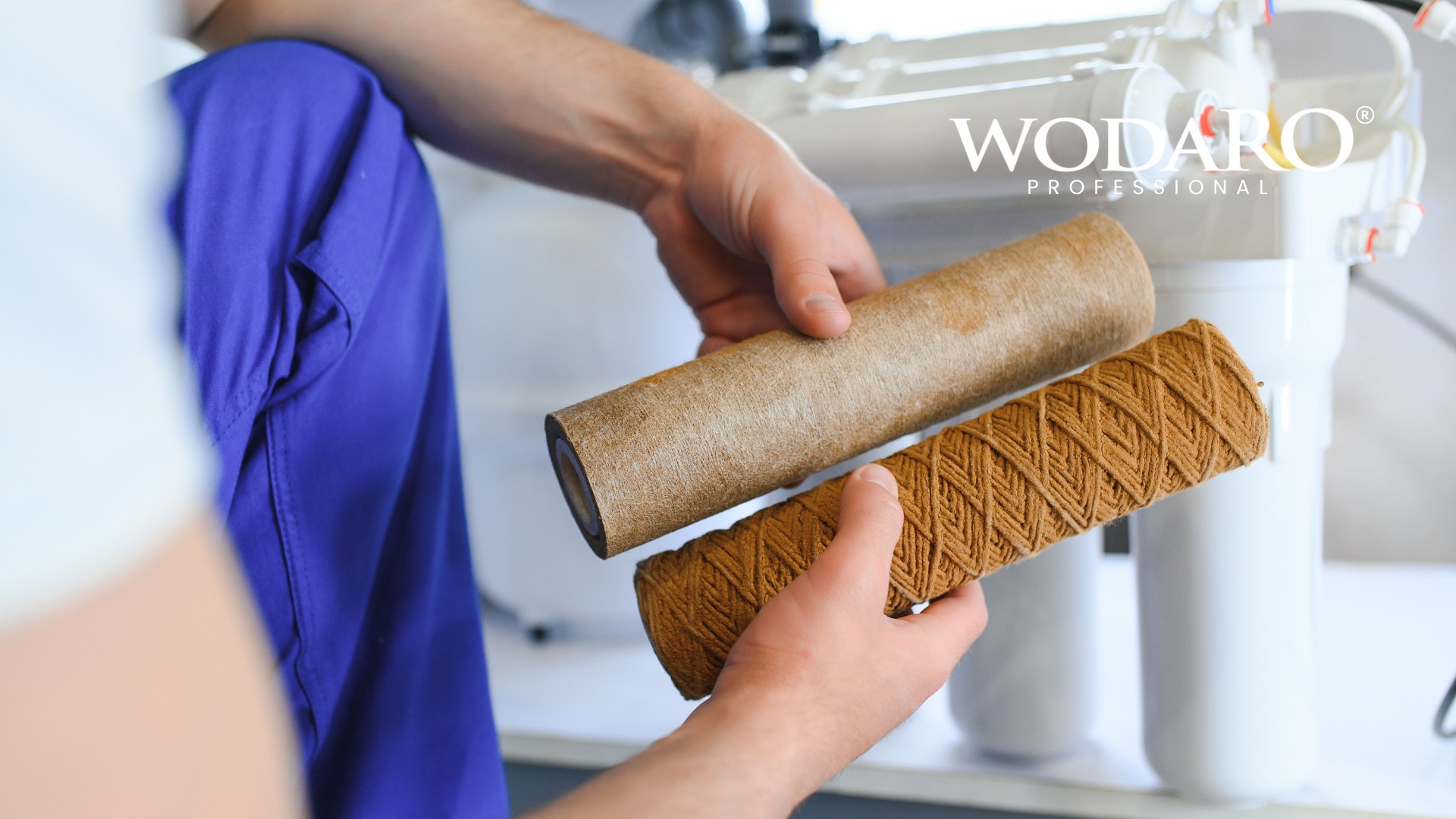
They serve as the first barrier. Mechanical filters trap sand and silt. Carbon filters greatly improve taste and remove chlorine. They are often used as a supporting element in water treatment stations.
How to filter water? Selection scenarios
Many customers ask: how to filter water effectively and economically? Below we present proven decision-making scenarios.
Scenario A: “I have hard water throughout the house, it damages my fixtures” Choose: Central water softener. No oneA jug or a small under-sink filter will not protect the heating system or the washing machine. It is an investment that pays off through reduced detergent usage and the absence of appliance failures.
Scenario B: "The tap water tastes bad, smells of chlorine, but I don't have space for large devices" Choose: An under-sink system with a carbon cartridge or reverse osmosis. It is the ideal device for filtering water at home for those focused on water quality.food. You gain a source of clean water for cooking and drinking straight from a separate tap.
Scenario C: "I have my own water source (well)" In this case, filtering water at home requires prior physicochemical testing. Well water often contains exceeded levels of iron, manganese, or ammonia. Here, iron removers or multifunctional stations may be necessary.
Important: Do not choose water devices for wells "by eye." Without test results, you risk purchasing expensive equipment that won't work.
What about recreation? Water filtration in pools
While we focus on utility water, it is worth mentioning recreation. Water filtration in pools operates under different rules. HereThe goal is not to remove minerals, but to maintain clarity and microbiological purity in a closed circuit.
Key elements include a pump with a filter (sand or cartridge) and pool chemicals. Remember that even the best pool filter cannot replace disinfection. Water in a pool that stands and is not filtered becomes a breeding ground for algae and bacteria within 24-48 hours.
Common mistakes and myths – what tobe careful?
When deciding on a water filtration device for home use, it's easy to fall into traps.
- Myth: Filtration removes everything good. Modern RO systems have mineralizers that restore the proper mineral balance to water after the purification process.
- Mistake: Lack Knowledge about how to filter tap water is also knowledge about replacing cartridges. A filter whose cartridges are not replaced on time (usually every 6-12 months) can become a breeding ground for bacteria. It is better to drink water straight from the tap than from a neglected filter.
- Error: Incorrect performance selection. Buying too small a softener for a large house will result in the deviceit will continuously regenerate, consuming huge amounts of water and salt, or pass hard water.

Are you looking for a reliable solution tailored to your water? Don't guess. Contact us, and we will help you choose the perfect filter or softener for your needs. ? Consult the device selection with an expert from MojaWoda.com
Summary
The answer to the question of whether water filtration is a hit or a miss is clear: it is a necessity if you value quality of life, the taste of food, and the durability of household appliances. How to filter tap water effectively? First of all, consciously – by choosing the technology (softening vs drinking filtration) that addresses the real problems present in yourinstallation.
Frequently Asked Questions (FAQ)
Is tap water filtration healthy?
Yes, provided that the cartridges are replaced regularly. Filtration removes harmful substances (e.g., chlorine, heavy metals, sediments), leaving the water clean and safe. Systems with mineralization additionally enrich it with magnesium and calcium.
How much does it cost to maintain the device for
Costs depend on the type of device. For under-sink systems (e.g., RO), the cost of replacing cartridges is around 100-300 PLN per year. Water softeners require the purchase of tablet salt (about 20-60 PLN per month) and servicing once a year.
How to filter water to avoid limescale in the kettle?
To completely eliminate limescale, it is best to use a central ion-exchange water softener.When it comes to water for cooking, an effective solution will be water filtering device of the reverse osmosis type.
Is a filtering jug sufficient for home use?
A jug is a basic solution that improves taste and slightly reduces hardness, but it has limited efficiency. It will not protect the washing machine or plumbing and is less accurate than under-sink systems.
How to tell if the deviceIs the water filter not working properly?
The main symptoms are a drop in water pressure (clogged cartridges), return of scale in the kettle, or a change in the taste of water for the worse. For RO systems, it's worth periodically measuring TDS (total dissolved solids) with a simple meter.
Does pool water filtration require chlorine?
Mechanical filtration alone (pump) removes dirt visible to the naked eye, but does not kill bacteria.Therefore, the use of chemicals (chlorine or active oxygen) alongside filtration is essential for the safety of bathers.
Sources:
- https://www.gov.pl/web/gis - Chief Sanitary Inspectorate (water quality standards).
- https://www.who.int/publications/i/item/9789241549950 - WHO Guidelines for drinking-water quality.
- Regulation of the Minister of Healthfrom December 7, 2017, regarding the quality of water intended for human consumption.
Author: Maciej Waliduda - Expert in water treatment technology with many years of experience in selecting filtration systems for homes and industry. Last updated: 2026-02-10.
