
- There are no more items in your cart
- Shipping
- Total 0.00 zł



- Bestsellers
- Wholesale
- Water filters
- Whole house filters
- Kitchen filters
- Bathroom filters
- Aquarium filters
- Reverse osmosis
- Water demineralizers
- Filter cartridges
- UV bactericidal lamps
- Alkaline water ionizers
- Industrial water filters
- Accessories, parts, and others
- Descaling filters for the coffee machine
- Water softeners and iron removers
- Water saturators
- ACES
- AMBERLITE
- AQUA VITA
- AQUAFILTER
- AQUAPHOR
- AQUATOR
- BASSAU
- BERG
- BIOCERA
- BIONIQ
- BLUEFILTERS
- CHEMOFORM
- CINTROPUR
- DAFI
- DELONGHI
- DIAMOND
- DOM WODY
- ECOWATER
- FILMTEC
- FIT ALCO
- FITAQUA
- GREEN FILTER
- HANNA INSTRUMENTS
- HELIXPRO
- HELLO PURE
- HIDROTEK
- HM-DIGITAL
- HONEYWELL
- Ibo
- JAVEL
- KLARWOD
- KRUPS
- MIDEA
- OTOWODA
- OTTONE
- Palintest
- PENTAIR
- PHILIPS
- PLATINUM WASSER
- PUROLITE
- SIEMENS
- Steingraf
- SUPREME
- TAB-SOL
- TOP FILTER
- UST-M
- USTM
- VONTRON
- WODARO
-
PayU

Tips
-
The water in the osmosis system is constantly flowing to the sewage - what to do?
-
Hydrogen water – effects, benefits, reviews – is it a scam?
-
Reverse osmosis - operating costs
-
Elimination of chlorine from water – why is it worth doing?
-
Pesticides in water - what they are, health risks, how to remove them
-
The water in the osmosis system is constantly flowing to the sewage - what to do?
-
Organic compounds in water – harmfulness, removal, and where do they come from?
-
Ammonia in water – where does it come from, is it harmful, and how to remove it?
-
Water filtration - why? Hit or miss?
-
Drinking water - effects after a month, skin and weight loss
Demineralizing cartridges and media for water filters
Demineralizing media and cartridges with ion exchange resin are used to remove ions and dissolved contaminants from water, making it possible to obtain water of very high purity and low conductivity. This solution is particularly valued wherever standard water softening is not sufficient.
Demineralization helps reduce the presence of mineral components responsible for deposits, scale, and operational problems in installations. Water prepared in this way is used both in industrial processes and in more demanding utility applications, where stable quality and safe equipment operation matter.
In this category you will find Demineralizing cartridges for water filters, based on cation and anion resins, used in treatment systems that require effective removal of mineral salts and other ionic contaminants dissolved in water.
Filter
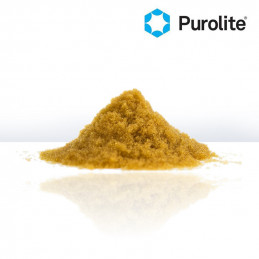
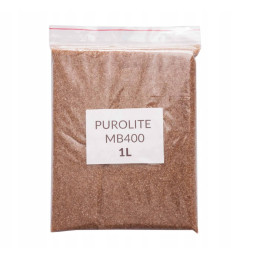
Demineralizing cartridges and media are specialist filtration materials designed for water treatment wherever very high chemical purity is required. Their operation is based on ion exchange, through which both cations and anions are removed from the water, and the final result is a significant reduction in mineral salt content and lower conductivity.
Key information about products in this category:
Demineralizing cartridges consist of ion exchange resins capable of exchanging ions present in water. They mainly use cation and anion resins. Cation resins remove cations such as calcium, magnesium, or sodium, while anion resins remove anions such as chlorides, sulfates, and nitrates. The cartridges can be regenerated, which extends their service life and efficiency. A typical demineralizing cartridge includes a housing, filtration filling with demineralizing resin, additional filtration layers, as well as connectors and seals.
What are demineralizing media and how do they work?
Demineralizing media, also called demineralizing resins, are used mainly in industrial filters, inline cartridges, and water treatment installations. Their task is to remove ions responsible for hardness, salinity, and the overall mineralization of water. In practice, this means that water flowing through the media is stripped of most mineral components, making it possible to obtain demineralized water with parameters suitable for demanding applications.
The demineralization process consists of water flowing through layers of ion exchange resins. Mineral ions are retained by the resins and exchanged for hydrogen ions (H+) and hydroxide ions (OH-). When they combine, pure water (H2O) is formed. As a result, both cations and anions are removed at the same time, and the electrical conductivity of the water is significantly reduced.
Basic stages of ion exchange
- Cation resins bind cations such as calcium, magnesium, and sodium, exchanging them for H+ ions.
- Anion resins remove anions such as chlorides, sulfates, and nitrates, replacing them with OH- ions.
- The combination of H+ and OH- leads to the formation of chemically pure water.
Demineralization goes further than water softening alone. In addition to reducing hardness, it also makes it possible to remove a wide spectrum of mineral salts and dissolved ionic contaminants.
Key benefits of using demineralizing cartridges
Water rich in salts and mineral compounds can pose a real threat to equipment, fittings, and technological processes. Boiler scale, deposits, corrosion, and unstable working medium parameters are common effects of inadequate water quality. Using a properly selected demineralizing cartridge or media helps reduce these problems.
- Effective ion removal – demineralization makes it possible to neutralize and eliminate nearly all undesirable ions present in water.
- Significant reduction in conductivity – this is especially important in laboratories, electronics, and processes requiring high purity.
- Protection of equipment and installations – reducing deposits and corrosion translates into longer system service life.
- More stable operation of technological processes – water with a controlled composition supports production repeatability.
- Possibility of regenerating selected cartridges – this extends service life and improves operating economy.
- High quality of treated water – a solution suitable for applications where medium purity is of key importance.
Where is demineralized water used?
Demineralizing cartridges are used in many industries and specialist installations. Depending on requirements, they can operate as an element of a standalone system or as part of a larger treatment station.
- Chemical and pharmaceutical industry – for the production of medicines, cosmetics, and chemical products requiring high water purity.
- Food industry – for preparing water for beverages and technological processes.
- Power industry – for boiler feed and equipment protection against deposits and failures.
- Electronics – in the production of semiconductors, printed circuits, and electronic components, as well as for washing and rinsing.
- Laboratories – for analyses and tests requiring water with the lowest possible conductivity.
- Pharmacy and cosmetics – wherever high purity and repeatable parameters matter.
- Marine aquaristics – for controlling water parameters and stabilizing living conditions for fish, corals, and other marine organisms.
In marine aquaristics, demineralization helps eliminate undesirable substances such as chlorine, heavy metals, nitrates, or phosphates, making it easier to maintain a stable aquatic environment.
How to choose the right demineralizing cartridge or media?
Selecting the right filtration material should result not only from the cartridge type, but also from the parameters of the raw water and the expected treatment effects. The more demanding the application, the greater the importance of proper configuration of the entire system.
What should you pay attention to before purchase?
- Chemical composition of the raw water – the quantity and type of cations and anions affect resin selection.
- Expected filtration volume – this determines the media capacity and the size of the cartridge or column.
- Type of installation – in food applications, media approved for contact with food should be selected.
- Operating mode – with continuous demand, it is worth considering solutions with regeneration and automation.
- Required water purity level – a laboratory has different needs than a production plant, and those differ from a marine aquarium.
- Compatibility with other treatment stages – demineralizing cartridges often work together with softening, mechanical filtration, iron removal, or reverse osmosis.
Organized technical information
| Area | Information |
|---|---|
| Basic operating mechanism | Ion exchange using cation and anion resins |
| Removed components | Cations and anions, including calcium, magnesium, sodium, chlorides, sulfates, nitrates |
| Process effect | Significant reduction in water mineralization and electrical conductivity |
| Structure of a sample cartridge | Housing, media with demineralizing resin, additional filtration layers, connectors and seals |
| Regeneration possibility | Yes, selected demineralizing cartridges can be regenerated |
| Typical applications | Chemical industry, pharmaceutical industry, food industry, power industry, electronics, laboratories, marine aquaristics |
Why choose solutions from this category?
In this category you will find cartridges and filtration media designed for effective ion removal from water in installations requiring high treatment efficiency. These are solutions useful both in advanced industrial processes and in selected specialist applications. A properly selected demineralizing cartridge helps protect equipment, improve installation operating stability, and obtain water with parameters unattainable through simpler filtration methods.
In practice, modern systems often have a modular design, which is why demineralizing media can be combined with other filtration materials and treatment stages to create a solution tailored to specific quality requirements.
What is a demineralizing cartridge?
It is a filtration element filled with ion exchange resin whose task is to remove mineral ions dissolved in water. Thanks to this, it is possible to obtain water of very high purity and low conductivity.
What resins are used in demineralizing cartridges?
Cation and anion resins are most commonly used. The former remove cations such as calcium, magnesium, and sodium, while the latter remove anions such as chlorides, sulfates, and nitrates.
What does the water demineralization process involve?
Water flows through ion exchange media, which retains mineral ions and exchanges them for H+ and OH-. These ions then combine into H2O, which is pure water.
Is demineralization the same as water softening?
No. Softening focuses mainly on removing ions responsible for hardness, while demineralization removes a much broader spectrum of cations and anions, leading to a much greater reduction in water mineralization.
Where is demineralized water most commonly used?
Among others, in the chemical, pharmaceutical, and food industries, in power generation, electronics, laboratories, and marine aquaristics. Wherever water purity affects process quality or equipment safety.
Can demineralizing cartridges be regenerated?
Yes, some demineralizing cartridges can be regenerated. This possibility extends the service life of the filtration medium and improves the operating efficiency of the entire system.
What benefits does using a demineralizing cartridge provide?
The most important benefits are high water purity, reduced deposits and corrosion, installation protection, more stable process parameters, and the possibility of use in demanding industries and specialist applications.
How to choose the right demineralizing cartridge for an installation?
You need to take into account the chemical composition of the raw water, the expected capacity, the type of installation, the required purity level, and whether the cartridge will operate independently or as part of a larger treatment system.
Are demineralizing cartridges suitable for industrial applications?
Yes, this is one of their primary applications. They are widely used in industrial filters and water treatment installations wherever medium quality is of key importance for the technological process.