Water aerators are a group of solutions used wherever improving water parameters, preparing it more effectively for filtration, or maintaining suitable biological conditions in tanks is important. In practice, this includes both domestic and hydrofor systems, as well as wells, aquariums, garden ponds, and ponds.
In this category, we have gathered devices and accessories that make it easier to choose the right aeration system: from simple aspirators using the Venturi effect to sets with a compressor and diffusers. This makes it possible to match the solution to the installation location, required performance, connection diameter, and available power supply.
In this category you will find: water aerators and aspirators for home, hydrofor tank, well, aquarium, garden pond, and pond, as well as installation accessories, diffusers, hoses, check valves, and variants matched to diameters 32, 50, and 75. Available options include both non-powered devices and 12 V and 230 V models. If a given variant is missing, please contact us — we will prepare a quote and delivery time.
What is aeration and when is it worth using?
Aeration is the forced contact of water with air, which increases the level of dissolved oxygen and initiates beneficial oxidation reactions, including the conversion of Fe²⁺ to Fe³⁺. As a result, further filtration becomes easier and more effective. In practice, this translates into clearer, more stable, and more odor-neutral water.
In domestic systems, aeration is most commonly used before iron and manganese removal filters. In aquariums, garden ponds, and ponds, it improves conditions for fish and nitrifying bacteria and supports water circulation.
Important: aeration does not solve every water problem on its own, but it significantly increases the effectiveness of iron and manganese removal and improves biological conditions in water tanks. After the aeration stage, an appropriate filter or further water treatment system should be selected.
Offer range and typical applications
Home and hydrofor tank
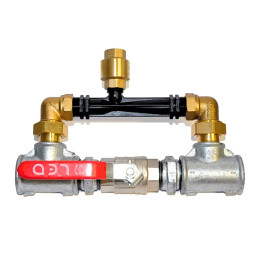
For domestic applications, injectors and water aspirators are most commonly chosen, including hydrofor aspirators. These are simple, economical solutions that often do not require electrical power.
- water aspirator and hydrofor aspirator,
- water aerator for a hydrofor tank,
- hydrofor aerator installed on the suction or discharge side depending on the system,
- variants for well–pump–tank systems.
Well
A water aerator for well water should be matched not only to the installation diameter, but also to the pump parameters, operating pressure, and tank configuration. In such systems, the correct installation location and stable flow are particularly important.
Pond and garden pond
In outdoor tanks, sets with a compressor and a fine-bubble diffuser are used primarily. They make it possible to achieve effective water aeration in a garden pond or pond and improve circulation.
- sets with a compressor and diffuser,
- solutions resistant to outdoor conditions,
- models for seasonal and year-round operation, depending on the application.
In a larger pond, more powerful compressors and better-planned circulation are usually needed, while in a garden pond smaller sets are often sufficient.
Aquarium
For aquariums, quiet air pumps, air stones, and small supporting accessories are used.
- water aerator for an aquarium,
- air stones,
- check valves, hoses, and splitters.
Diameters and accessories
The offer also includes typical connection diameters and installation elements needed to complete the system.
| Parameter | Available or typical variants | Importance for selection |
|---|
| Connection diameter | 32, 50 / fi 50, 75 | It should be matched to the pipeline and required performance |
| Power supply | non-powered, 12 V, 230 V | The choice depends on the installation location and device type |
| Accessories | fittings, clamps, nozzles, diffusers, hoses, check valves | Facilitates correct installation and stable system operation |
This category also includes products for drinking water. In such applications, only components approved for contact with water intended for consumption should be used.
How to choose a water aerator?
It is best to start the selection with two issues: application and flow rate. These determine whether a simple aspirator or a complete set with compressor and diffuser will be better.
- For home and hydrofor tank, injectors and aspirators using the Venturi effect work well, provided the system ensures a sufficient pressure differential.
- For a pond and garden pond, sets with a compressor and a fine-bubble diffuser are a better choice.
- For an aquarium, it is worth choosing quiet pumps with adjustable performance.
Most important selection criteria
- Connection diameter — an aerator 32, 50 / fi 50, or 75 should be matched to the installation.
- Required flow rate and pressure drop — especially important for injectors and aspirators.
- Power supply and installation location — available options include 230 V devices, mobile 12 V units, and non-powered models.
- Material and corrosion resistance — especially important in wells and outdoor use.
- Noise level — particularly important in aquariums and utility rooms.
- Drinking water compliance — mandatory in systems for consumption.
Practical tip: in well systems, it is worth checking the pump and tank parameters before purchase, such as pressure, hysteresis, and the presence of valves, and also planning the connection point of the injector or diffuser. In ponds, it is a good idea to place the diffuser closer to the bottom, while taking sediment and protection against sludge into account.
Installation and basic application diagrams
Domestic installation and hydrofor tank
The hydrofor aspirator is installed according to the manufacturer's recommendations and flow direction, usually before iron or manganese removal media. In systems with a tank, it is worth leaving a section of pipeline that allows water to mix with air. The tightness of the system and the presence of a check valve should also be checked.
If aeration is introduced into a domestic installation, it is worth planning for venting and, if necessary, an air settling chamber.
Well system
A water aerator for well water requires consideration of suction height and pump parameters. An injector works best with stable flow, so if in doubt, it is worth consulting the installation diagram before purchase.
Pond and garden pond
When aerating a pond or garden pond, a dry and ventilated place for the compressor should be provided. The diffuser should be placed where circulation will be most effective, usually lower down, but with fauna and sediment taken into account. A water aerator for pond water should have an appropriate protection rating for outdoor operation.
Aquarium
An aquarium aerator is installed with a check valve, and the air stone is selected according to the tank volume and the expected bubble size. For quiet and effective operation, correct hose routing and proper pump positioning are very important.
Operation, service, and safety
Regular maintenance helps maintain performance and reduce operating noise. In practice, this mainly means checking the aerating elements for blockage and periodically cleaning off deposits.
- clean nozzles and diffusers,
- in aquariums, periodically replace air stones,
- in ponds, inspect pre-filters and silencers,
- in domestic installations, check connection tightness and pressure stability.
In the case of a drinking water aerator, only components approved for contact with water intended for consumption should be used. Electrical devices, including 12 V models, should have an appropriate protection rating and be installed according to the manufacturer's instructions.
Most common mistakes and quick diagnostics
Most problems result from an incorrect diameter, improper installation location, or too small a pressure differential in the system. If aeration does not bring the expected effect, it is worth checking the basic operating elements of the installation.
- No air at the injector outlet — check the installation direction and pressure differential.
- Weak aeration effect — inspect the air hose for leaks and the diffuser for blockage.
- Injector restricts flow — possible mismatch of diameter to the installation.
- Excessive noise — check the device mounting, silencer, or the condition of consumable parts.
- Minimal effect in the aquarium — replacing the stone with a fine-bubble one often helps.
- Poor performance in the pond — it is worth verifying the diffuser position and the compressor’s actual performance.
Good diagnostic practice: most problems can be detected by starting with a check of flow, pressure, tightness, and system clearance. This is the shortest path to quickly restoring effective aeration.
How to buy the right model?
- Choose the application: home, hydrofor tank, well, pond, garden pond, or aquarium.
- Select the device type: water aeration aspirator or a set with compressor.
- Confirm the connection diameter: 32, 50 / fi 50, or 75.
- Choose the power supply: non-powered, 12 V, or 230 V.
- Add the necessary accessories: diffuser, hoses, check valve, fittings.
- If the required variant is not available, contact us — we will source the appropriate model.
Need consultation? Please contact us: . For technical matters, it is worth sending photos of the installation and a short description of the problem or planned installation in advance. Contact technician Tomasz: 505 020 040 between 15:00–17:00.
On request, we can also prepare variants matching a specific installation diameter, for example 32, 50 / fi 50, or 75. In practice, a hydrofor aspirator with a Venturi injector and a complete set of fittings and hose for quick installation often works very well.
Frequently asked questions
What is a water aerator used for?
An aerator increases the amount of dissolved oxygen in water and supports the oxidation process, which facilitates further filtration and improves biological conditions in aquariums, garden ponds, and ponds.
Does aeration help remove iron and manganese?
Yes, aeration initiates the oxidation of iron and manganese compounds, making their later removal on appropriate filter media more effective. However, aeration alone usually does not replace the full filtration stage.
Which aerator should I choose for a hydrofor tank?
In many hydrofor systems, an aspirator or Venturi injector matched to the installation diameter and flow conditions works well. It is crucial to check the pressure, installation location, and connection diameter.
What do the 32, 50, and 75 variants mean?
These are connection diameter markings. The aerator should be matched to the pipeline diameter so that it does not cause excessive flow losses and operates in accordance with the system design.
Are 12 V aerators available?
Yes, this category also includes 12 V powered variants. This is a practical solution, among others, for gazebos, summer houses, and other places where mobile power is more convenient than standard 230 V.
How to install a water aerator in a domestic system?
It is most often installed before the filtration stage, according to the flow direction and the manufacturer's recommendations. It is worth ensuring tight connections, proper circulation, and, if necessary, venting and an air settling chamber.
Why is the aerator not drawing in air?
The most common cause is too small a pressure differential, incorrect installation direction, a leaking hose, or a blocked aerating element. These are the first factors worth checking.
Which aerator should I choose for a pond or garden pond?
For ponds and garden ponds, sets with a compressor and a fine-bubble diffuser are most often chosen. Larger tanks require more powerful devices and better-planned circulation than small garden ponds.
Is an aerator suitable for drinking water?
Yes, but only if the components used are approved for contact with water intended for consumption. In such installations, special attention should be paid to the material compatibility of all components.
Can I get help with selection and an installation diagram?
Yes. Just send a description and photos of the installation, and we will help select the appropriate model and a basic connection diagram. Technical contact: 505 020 040 between 15:00–17:00 and e-mail: [email protected].