Filter media for an iron remover – how it works and why it is worth choosing
Filter media for an iron remover is a special filtration material that helps remove excess iron from water. As a result, its taste, smell, and color improve, and everyday water use becomes much more comfortable.
Properly selected filtration media also helps protect household and industrial equipment from deposits and corrosion. In our offer, you will find a wide selection of filter media for iron removers, matched to various installations, water parameters, and contamination levels.
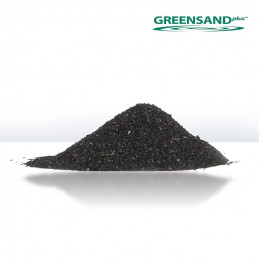
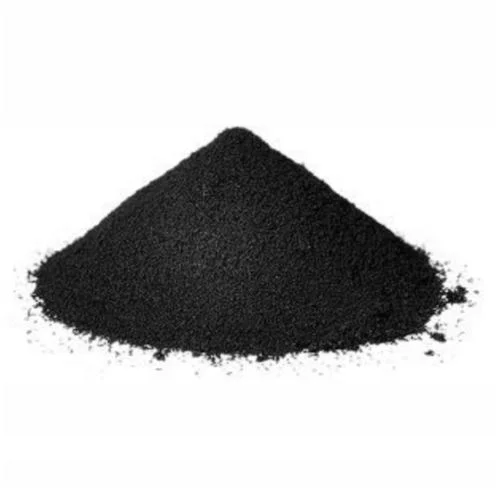
GREENSAND PLUS is a filter media for removing dissolved iron and manganese from water and reducing hydrogen sulfide. It can support the removal of arsenic and radium (the process depends on the presence of Fe and Mn ions in the raw water). The manganese dioxide layer acts catalytically, and the silica core facilitates operation in waters with low TDS, hardness, and silica content. The product requires regeneration before use. Price applies to1 liter packaging.
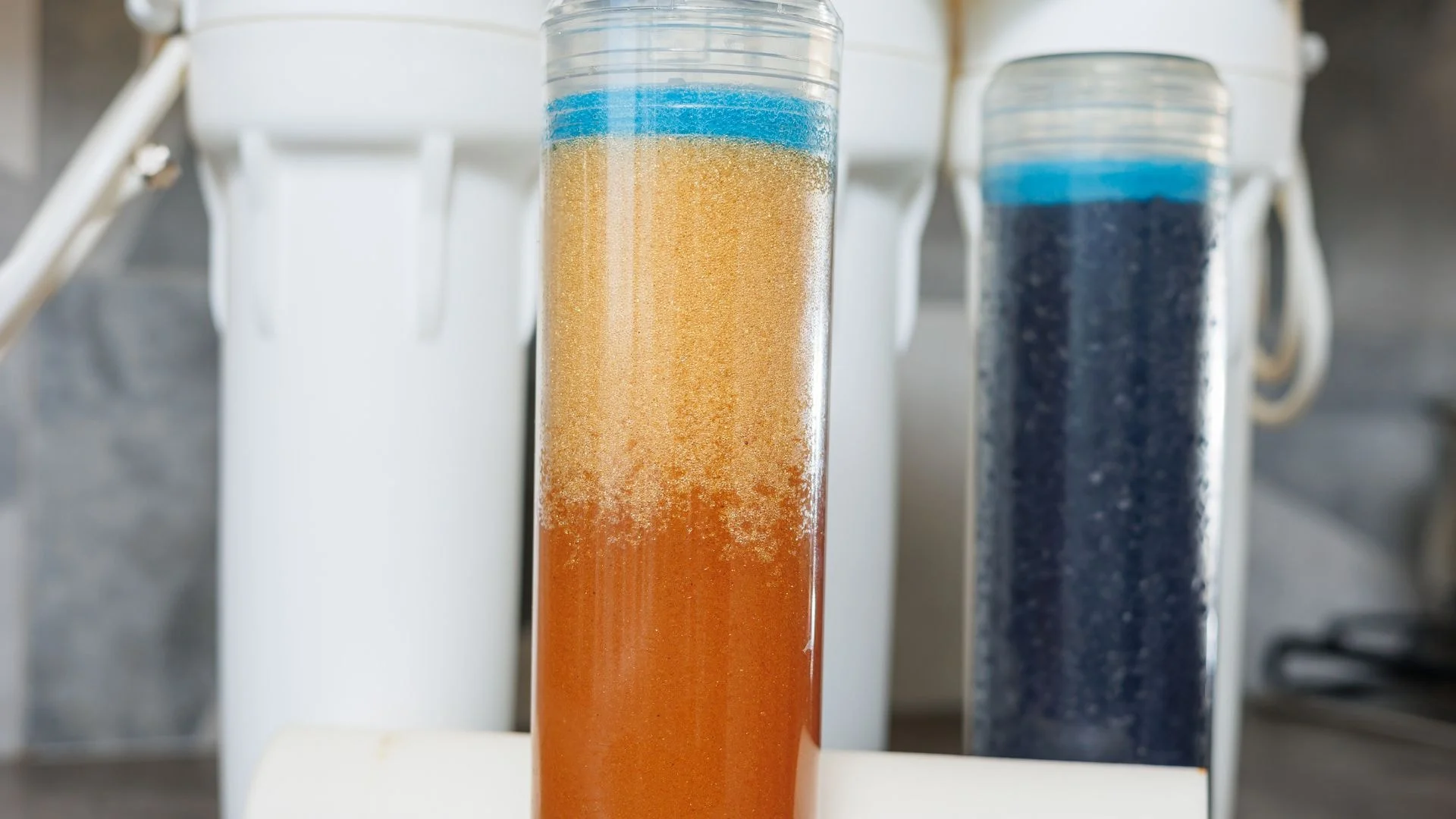
Filter media for iron removers are one of the most important elements of an effective water treatment system. They are responsible for removing iron, and depending on the type, they may also support the reduction of manganese or hydrogen sulfide. Properly selected media improves water quality, protects the installation, and helps maintain high efficiency of the entire filtration system.
In the category To the deionizer, you will find filtration media designed for effective iron removal from water. Available solutions include catalytic media, sand-manganese media, media with an active layer, and multifunctional blends. The selection of the right media depends primarily on the iron concentration, the presence of manganese and other contaminants, water parameters, and the installation requirements.
Properly selected media is the heart of an effective iron remover.
Why it is worth using filter media for an iron remover
Excessive amounts of iron in water affect not only its appearance and taste, but also the condition of installations and devices that come into contact with it. Properly selected filtration media helps reduce typical problems associated with iron-contaminated water.
Improved drinking water quality – less metallic aftertaste, better smell, and a more natural color.
Installation protection – lower risk of deposits accumulating in pipes, fittings, and tanks.
Support for household appliances and technical systems – washing machines, dishwashers, coffee machines, and boilers can operate more efficiently.
Reduction of corrosion and pressure drop problems – iron deposits can lead to blocked pipes.
Ease of use – cleaner water at home and more stable operating conditions in utility and industrial installations.
It is worth remembering that iron may also promote the growth of iron bacteria, which create slimy deposits in pipes, at the bottom of filters, and in tanks. This is another argument for using properly selected iron removal media.
How filtration media for an iron remover work
The operating principle of iron removal media is based on retaining contaminants as well as on catalytic processes or oxidation, which lead to the precipitation of iron compounds.
The process step by step
Iron oxidation – in contact with suitable filtration media, iron dissolved in water, most often in the form of Fe2+, is converted into Fe3+, which is an insoluble form.
Retention of precipitated particles – the resulting iron compounds settle within the structure of the media.
Backwashing – regular backwashing removes accumulated deposits and restores the media’s ability to continue working.
Regeneration – some media require periodic reactivation of the active layer, for example using potassium permanganate.
The effectiveness of iron removal depends not only on the type of media itself, but also on water parameters, correct installation, and proper operation of the entire device.
The most popular types of media for iron removers
The choice of the right filtration material depends on the iron concentration, the presence of manganese and other contaminants, as well as the operating conditions of the installation.
Type of media
Characteristics
Application and notes
Catalytic media (e.g. Birm)
Works by oxidizing iron into insoluble forms, which are retained on the surface of the media.
Does not require regeneration with chemicals, only regular backwashing.
Manganese sand-based media (e.g. Greensand)
Removes not only iron, but also manganese and hydrogen sulfide.
Regeneration may be carried out using potassium permanganate.
Media with an active layer (e.g. Pyrolox)
Thanks to its high manganese dioxide content, it is characterized by high catalytic capacity and long service life.
Suitable for higher concentrations of iron and manganese in water.
Multifunctional blends
Combine the properties of several filtration materials.
Used when several types of contaminants are present in the water at the same time.
The type of filtration media should be matched to the actual water parameters.
How to choose media for an iron remover
The selection of filtration media should be based on water analysis and installation requirements. This is the safest way to achieve effective iron removal and avoid unnecessary operating costs.
Iron, manganese, and other element concentrations – the basic parameter for assessing the scale of the problem.
pH, water hardness, and the presence of organic compounds – affect the performance of the selected media.
Flow rate – the media must be matched to the installation demand.
Required efficiency and operating conditions – particularly important in industrial applications and with higher water consumption.
If you are not sure which solution will be suitable, it is worth consulting an expert. Based on water test results, it is easier to choose media that ensure effective filtration and optimal operating costs.
Operation, installation, and maintenance
For media in an iron remover to maintain high effectiveness for a long time, proper operation and correct installation preparation must be ensured.
The most important rules of use
Regularly perform backwashing according to the manufacturer’s recommendations.
Monitor water parameters after filtration – an increase in iron levels may indicate the need for regeneration or replacement of the media.
If a given medium requires it, ensure a supply of regeneration agent, for example potassium permanganate.
Carry out periodic inspections and maintenance of the installation to avoid failures related to deposits.
What to remember before installation
Place the iron remover in a location with easy access for inspection and service.
Ensure proper connection to the sewage system for backwashing purposes.
Check whether the installation pressure meets the device manufacturer’s requirements.
Pay attention to the ambient temperature, because extreme conditions may affect the performance of the filtration media.
Media for an iron remover and other water treatment systems
In many cases, iron removal alone does not meet all the needs of an installation. Especially in industrial applications or with more challenging water parameters, it is worth considering a system supplemented with other treatment stages.
Water softeners – reduce calcium and magnesium ions, limiting water hardness.
Carbon filters – improve the taste and smell of water and help reduce chlorine and organic compounds.
Reverse osmosis systems – remove almost all dissolved substances, including salts and microcontaminants.
UV lamps – support water disinfection by eliminating bacteria, viruses, and other microorganisms.
Combining several technologies makes it possible to create a comprehensive water purification system tailored to a home, company, or production plant.
Effective water treatment starts with properly matching the filtration technology.
Why it is worth buying media for an iron remover from us
In our offer, you will find solutions designed for various operating conditions and different contamination levels. We offer a wide range of catalytic media, sand-manganese media, and other filtration media, as well as support in matching the product to a specific installation.
Wide selection of solutions for household and industrial applications.
Professional advice in selecting the media and the entire filtration system.
Proven quality and materials from reputable manufacturers.
Attractive prices and the ability to match the solution to the budget and required efficiency.
In addition to media for iron removers, we also offer a wide selection of other water filters that can complement the operation of the treatment system.
FAQ – frequently asked questions
How does media for an iron remover work?
The filtration media supports the iron oxidation process and retains precipitated compounds within its structure. As a result, excess iron is removed from water, and after regular backwashing, the medium can continue to work effectively.
Which media should be chosen for removing iron and manganese?
It depends on the water analysis results. When manganese is present, manganese sand-based media such as Greensand or media with high catalytic activity, such as Pyrolox, are often used. The final choice should also take into account pH, flow rate, and the installation operating conditions.
Does every medium for an iron remover require chemical regeneration?
No. Some media, such as catalytic media like Birm, do not require regeneration with chemicals and mainly need regular backwashing. Others, for example selected manganese media, may require regeneration with potassium permanganate.
How can you tell that there is too much iron in water?
Typical symptoms include a change in water color, a metallic aftertaste, an unpleasant smell, and brown deposits in fittings, devices, and the installation. However, final confirmation is provided by water analysis.
Why is water analysis important before buying media?
Without knowing the water parameters, it is difficult to choose the right filtration media. The iron concentration, the presence of manganese and other contaminants, pH, water hardness, organic compounds, and the required flow rate are of key importance.
How often should media in an iron remover be backwashed?
The backwashing frequency depends on the type of media, the amount of contaminants, and the device manufacturer’s recommendations. Regular backwashing is essential to remove accumulated iron deposits and maintain high filtration efficiency.
Does media for an iron remover improve the taste and smell of water?
Yes, removing excess iron usually results in improved water taste, smell, and color. However, if other contaminants are also present in the water, it is worth considering additional treatment stages, for example a carbon filter.
Is media for an iron remover suitable for home and business use?
Yes. Iron removal media is used both in household installations and in utility and industrial systems. The key is to match the type of medium and efficiency to the actual water demand.
What else can complement the operation of an iron remover?
Depending on the water quality and the expected result, the system can be supplemented with a softener, carbon filter, reverse osmosis, or a UV lamp. Such a combination makes it possible to achieve more comprehensive treatment.