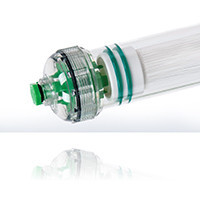
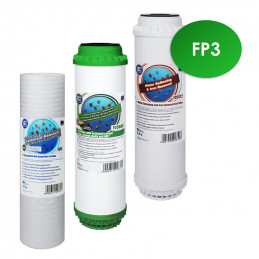
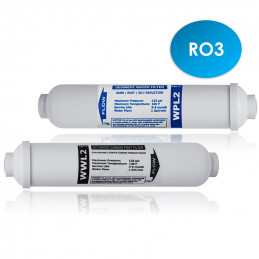
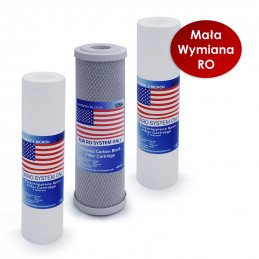
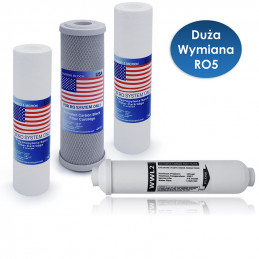
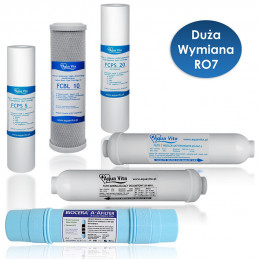
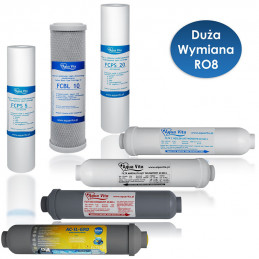
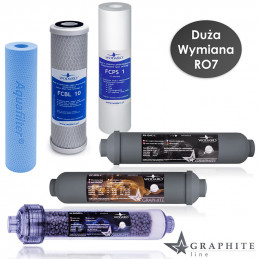
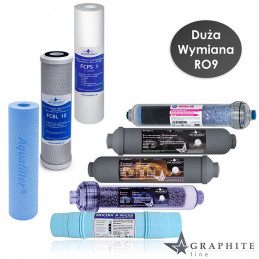
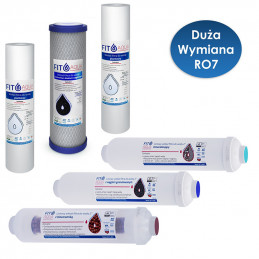
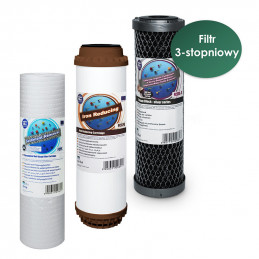
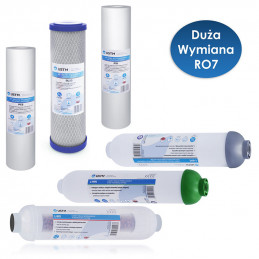
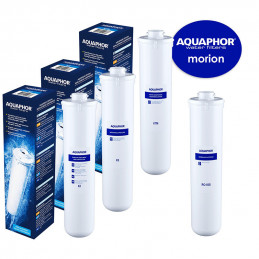
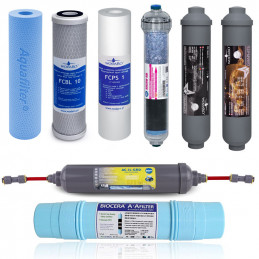
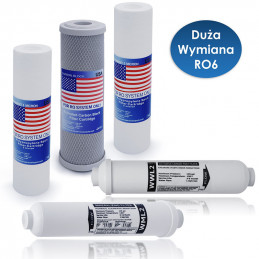
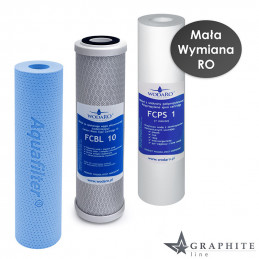
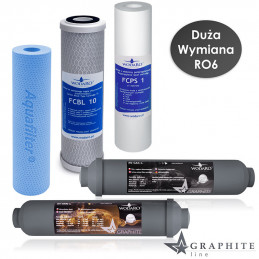
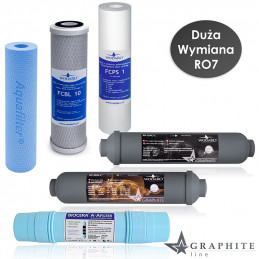
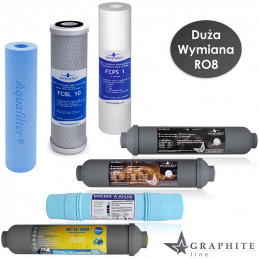
Filter cartridges are the heart of every water treatment system — from simple household solutions, through office systems, to technical and industrial applications. They are responsible for capturing mechanical impurities, reducing selected substances that affect the taste, smell, and quality of water, and depending on the type, also for softening, iron removal, demineralization, or mineralization.
This category includes various types of cartridges for water filters, selected depending on the type of contaminants, installation parameters, and the expected final result. The right cartridge choice matters not only for water quality, but also for the durability of devices and the convenience of everyday use.
Key information: water filter cartridges are used to remove mechanical impurities and selected chemical contaminants, improve the taste and smell of water, reduce sediment, and — depending on the type — enrich water with minerals or reduce hardness, iron, and mineral salts. The appropriate model should be selected according to water quality, the type of filtration system, the required flow rate, and the treatment goal.
Filter cartridges – what are they used for?
Filter cartridges are a key element of the water treatment process, regardless of whether they operate in a home, office, or production hall. Their main task is to remove impurities that may affect water quality. In practice, this means improved clarity, taste, and smell, as well as protection of installations and devices against sediment.
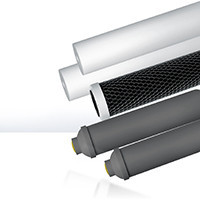
There are many types of filter cartridges, and choosing the right model depends on the type of substances present and the individual needs of the user. That is why, before purchasing, it is worth determining whether the priority is mechanical filtration, improvement of drinking water properties, hardness reduction, iron removal, or obtaining water with very low conductivity.
Types of filter cartridges
Foam cartridges
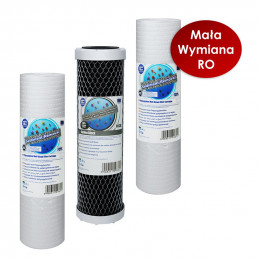
Foam cartridges are made of high-quality polypropylene (PP) and are commonly used to remove mechanical impurities such as sand, rust, sludge, and other sediment. They are built from densely packed polypropylene fibers that create micro-meshes trapping particles.
This type of cartridge effectively eliminates visible contaminants, which translates into water clarity. Their multi-stage construction provides above-average durability as well as resistance to chemicals and the growth of harmful bacteria. Foam cartridges are often used in filter jugs and water treatment systems.
String-wound cartridges
String-wound cartridges consist of compressed string fibers that create a structure with a high impurity retention capacity. They are exceptionally effective at removing sediment, rust, and dust, as well as improving water clarity.
They provide multi-stage filtration while also standing out for durability and efficiency, which is why they are a popular choice in water purification systems.
Carbon cartridges
Carbon cartridges are designed to eliminate undesirable mechanical contaminants, such as chlorine or heavy metals, and organic compounds, described in the source content also as bacteria. Activated carbon adsorbs these substances, binding them and limiting their presence in water.
An important advantage is also the improvement of water taste and smell, which is especially important in the case of tap water.
Mineralizing cartridges
Mineralizing cartridges enrich water with valuable minerals such as calcium, magnesium, and potassium. Since these components are needed for the proper functioning of the body, such filtered drinking water may have higher practical value. This type of solution is a particularly good choice where water is low in minerals.
Demineralizing cartridges
Demineralizing cartridges are used to remove excessive minerals and salts from water. They are used, among other places, in laboratories, industry, marine aquaristics, and chemical processes where it is necessary to obtain pure water with zero or near-zero conductivity.
Demineralizing cartridges use ion exchange and reverse osmosis processes.
Iron removal cartridges
Iron removal cartridges are designed to remove iron from water. Excess iron can cause unpleasant taste and smell, and also contribute to the formation of unsightly sediment. Cartridges of this type use chemical processes and adsorption to eliminate iron.
Their use also helps reduce yellow stains on clothing and brown streaks on sanitary fittings.
Softening cartridges
Softening cartridges are responsible for removing water hardness, that is, calcium and magnesium ions. Obtaining soft water — described in the source content as containing from 100 to 200 mg CaCO3/liter — prevents limescale buildup in household appliances.
Softening cartridges use ion exchange resins that replace calcium and magnesium ions with sodium ions.
Inline sediment cartridges
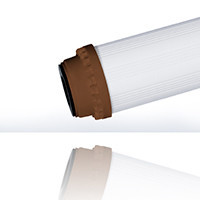
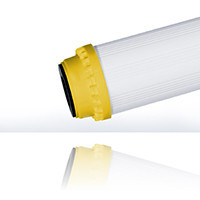
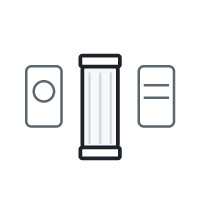
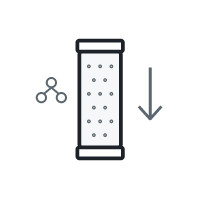
Inline sediment cartridges are intended for removing suspended solids, rust, silt, sand, and other mechanical impurities. They take the form of long cylindrical cartridges with micropores through which water flows.
During filtration, sediment of various sizes is retained — larger particles are captured at the surface, and smaller ones in deeper layers. These cartridges are often used in water wells and pumping systems.
Inline carbon cartridges
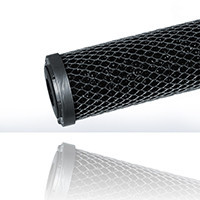
Inline carbon cartridges combine the advantages of carbon cartridges and inline sediment cartridges. They contain a carbon insert inside a cylindrical sediment cartridge, allowing them to simultaneously remove mechanical impurities and selected chemical contaminants.
They are used in more advanced filtration systems.
Ionizing cartridges
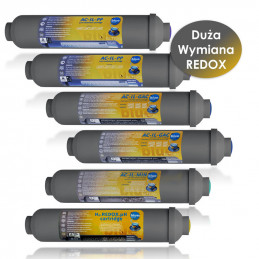
Ionizing cartridges are designed to modify water parameters, such as increasing pH to 9.5, lowering the ORP oxidation-reduction potential, and obtaining a negative REDOX potential.
According to the source content, water with additional ions may support neutralization of free radicals, slowing aging processes, and proper hydration of the body.
Ceramic cartridges
Ceramic cartridges can be used repeatedly — regeneration only requires rinsing them under running water. They effectively remove mechanical impurities such as rust, silt, or sand.
Capillary membranes
Capillary membranes provide very precise water filtration. Their main element is a capillary in the form of a thin tube, responsible for the upward flow of liquid. Solutions of this type are easy to use and have compact dimensions.
The main benefits of using water filter cartridges
A properly selected filter cartridge affects both water quality and the everyday convenience of using the installation.
- Contaminant removal — filter cartridges reduce the presence of mechanical and chemical contaminants, improving water quality and reducing the risk of sediment buildup in household appliances.
- Improved taste and smell — especially activated carbon cartridges help eliminate undesirable taste and odor notes.
- Enriching water with minerals — mineralizing cartridges provide calcium, magnesium, and potassium.
- Reduction of heavy metal content — selected cartridges help remove harmful heavy metals, for example lead.
- Removal of water hardness — softening cartridges reduce limescale buildup, which is very important for the performance and service life of devices.
- Ease of installation and maintenance — cartridges are usually easy to install and replace regularly, so their use does not cause major problems.
How to choose the right filter cartridge?
The selection of a filter cartridge should be based on the actual water parameters and the way the installation is used. This is important because different filter media are responsible for different effects.
The most important selection criteria
- Type of contaminants in the water — different types of cartridges are effective against different problems, which is why water quality analysis helps in selecting the right solution.
- Water hardness level — in places where water is hard, softening cartridges may be necessary to reduce limescale.
- Water flow rate — cartridge performance depends on the flow rate, so the product should be matched to the size and nature of the installation.
- Treatment purpose — different cartridges are selected for improving drinking water taste, and different ones for industrial, laboratory, or technical applications.
In practice, it is best to start by identifying the most important problem: mechanical sediment, unpleasant taste and smell, hard water, the presence of iron, or the need to obtain water with very low conductivity. Only then is it worth selecting the appropriate cartridge type and its replacement frequency.
Organized overview of cartridge types
| Cartridge type |
Main application |
Distinguishing features |
| Foam |
Removal of sand, rust, sludge, and sediment |
PP polypropylene, micro-meshes, multi-stage construction |
| String-wound |
Removal of sediment, rust, and dust |
High impurity retention capacity, durability |
| Carbon |
Improvement of taste and smell, reduction of selected contaminants |
Activated carbon, adsorption |
| Mineralizing |
Enriching water with minerals |
Addition of calcium, magnesium, and potassium |
| Demineralizing |
Removal of salts and excess minerals |
Ion exchange and reverse osmosis |
| Iron removal |
Removal of iron from water |
Reduction of streaks, sediment, and unpleasant taste |
| Softening |
Reduction of water hardness |
Ion exchange resin, limescale reduction |
| Inline sediment |
Removal of suspended solids and mechanical sediment |
Cylindrical form, layered filtration |
| Inline carbon |
Mechanical and chemical filtration |
Combination of sediment and carbon cartridge |
| Ionizing |
Modification of water parameters |
pH up to 9.5, reduced ORP, negative REDOX |
| Ceramic |
Removal of rust, silt, and sand |
Regeneration possible by rinsing |
| Capillary membrane |
Very precise filtration |
Compact design, easy operation |
Why does regular cartridge replacement matter?
Even the best filter cartridge requires periodic replacement or regeneration according to its intended use. Regular servicing is what allows filtration efficiency to be maintained, cleaner water to be preserved, and the installation to operate efficiently. A worn cartridge may lose performance, and its ability to retain contaminants decreases over time.
In the case of multi-stage solutions, the correct order and timely replacement of individual elements have a direct impact on the operation of the entire system.
Water filter cartridges – summary
Water filter cartridges are an essential element of treatment systems. They help eliminate mechanical impurities, improve the taste and smell properties of water, reduce hardness, remove iron, and depending on the application, also enrich water with minerals or remove excess mineral salts.
The right model should always be selected according to individual needs and water quality analysis. Thanks to this, it is possible to obtain water better suited to its application, ensure comfort of use, and more effectively protect a household or technical installation.
FAQ – frequently asked questions
What are water filter cartridges used for?
Water filter cartridges are responsible for removing mechanical impurities and selected chemical contaminants, improving the taste and smell of water, and depending on the type, also for softening, iron removal, mineralization, or demineralization.
How do you choose the right filter cartridge?
It is best to consider the type of contaminants present in the water, the hardness level, the required flow rate, and the treatment purpose. Water quality analysis is helpful, as it makes it easier to select the right type of cartridge.
What is the difference between a foam cartridge and a string-wound cartridge?
Both types are mainly used to remove mechanical impurities, but they differ in construction. Foam cartridges are made of polypropylene and create micro-meshes that trap particles, while string-wound cartridges are based on a structure of compressed string fibers with high sediment retention capacity.
What is a carbon cartridge used for?
A carbon cartridge improves the taste and smell of water and helps reduce the presence of selected substances such as chlorine, some heavy metals, and organic compounds. It works thanks to the adsorption phenomenon on activated carbon.
When is it worth choosing a softening cartridge?
A softening cartridge is worth using where there is a problem with hard water and limescale buildup. Such a cartridge removes calcium and magnesium ions, helping protect household appliances and the installation.
What applications are demineralizing cartridges used for?
Demineralizing cartridges are used wherever water with very low conductivity is needed, for example in laboratories, industry, marine aquaristics, and selected chemical processes.
Can ceramic cartridges be reused?
Yes, according to the source content, ceramic cartridges are suitable for repeated use. Their regeneration consists of rinsing them under running water.
What benefits does regular cartridge replacement provide?
Regular cartridge replacement helps maintain filtration effectiveness, preserve cleaner water, proper system operating parameters, and efficient operation of the entire installation. A used cartridge loses its performance over time.
Are filter cartridges difficult to install?
Filter cartridges are usually relatively easy to install and replace. The exact installation method depends on the type of system, but the use of such elements usually does not cause major problems.