Water Softeners for a Single-Family House - Comprehensive Guide
Water softener for a single-family house is a device that helps provide cleaner and soft water throughout the building, protecting the water system and household appliances from limescale deposits. Hard water, rich in calcium and magnesium compounds, can lead to problems with pipes, boilers, washing machines, and dishwashers, and can also affect everyday comfort when using water.
In this category, you will find solutions tailored to the needs of a single-family house, including tips on which water softener to choose for 4 people and when it is worth considering a more advanced water treatment station for a single-family house. A properly selected device helps reduce limescale, improve the operating conditions of the system, and extend the lifespan of household equipment.
CALCULATE BEFORE YOU CHOOSE
Useful calculators
Check the key values before choosing a solution.
01Convert water hardnessCompare common hardness units and better assess the scale of the problem.Open calculatorCollapse calculator→
Convert water hardness
Water hardness converter
Convert between °dH, mg/L and ppm as CaCO₃.
02Estimate softener sizeEstimate the unit size from water hardness and consumption.Open calculatorCollapse calculator→
Estimate softener size
Preliminary water-softener sizing
Estimate the minimum resin volume from household water use and hardness.
03Estimate salt consumptionCheck the approximate salt consumption for softener regeneration.Open calculatorCollapse calculator→
Estimate salt consumption
Indicative softener salt-use calculator
Estimate regeneration frequency and salt demand for a water softener.
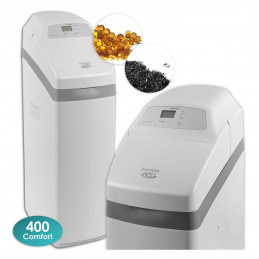
EcoWater COMFORT 400 is an intelligent water softener for the home that automatically monitors usage and adjusts the regeneration of the resin to reduce salt and water consumption. It provides soft water, helps reduce limescale deposits, and makes it easier to maintain fixtures and protect plumbing and appliances.
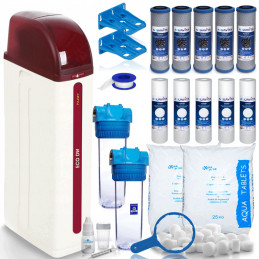
ECO DW20 RUBY BNT Water Softener is a compact device for removing water hardness in homes and service applications (restaurants, boiler rooms, car washes). Designed with low operating costs in mind. It features a by-pass, adjustable output water hardness, and a controller in Polish with a backlit display. During regeneration, it does not cut off the water supply.
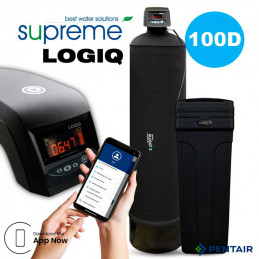
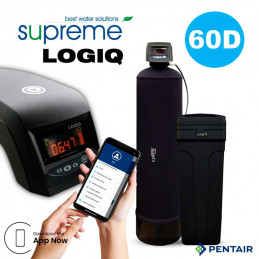
The SUPREME-LOGIQ series water softeners are technologically advanced devices equipped with the reliable "PERFORMA LOGIX 269" control valve from PENTAIR/USA. They offer high efficiency, low salt and water consumption, and the ability to operate in eco mode, making them an ideal choice for homes, public institutions, and industry.
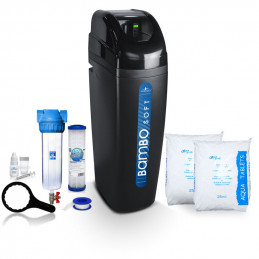
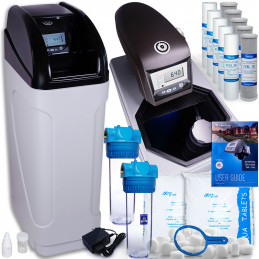
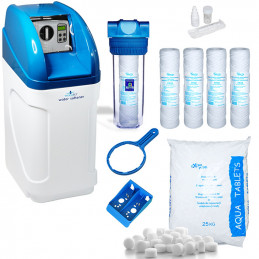
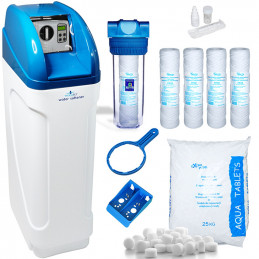
WodaRO BAMBO SOFT 25 is a compact water softener with a 25 l ion exchange resin bed PUROLITE C100-E. It removes calcium and magnesium ions responsible for hardness, protecting the installation and devices from scale. Equipped with a by-pass, residual hardness mixer, and a backlit programmer in Polish. The set includes, among others, a pre-filter with a drain valve, a hardness tester, and 2x tablet salt.
WodaRO ECO 30 BNT MAXI is a compact, automatic water softener for the whole house with 30 l of ion-exchange resin PUROLITE C100-E and volumetric control BNT7650 (PL menu). The package includes a BY-PASS valve and a MIXING valve to set the residual hardness, as well as an anti-overflow protection. Free of charge : 2-stage pre-filter with a mesh and antibacterial cartridge.
WORK 30 LOGIX is a proven water softener for home use with 30 l of Purolite C100E ion exchange resin and a volumetric head AUTOTROL LOGIX 255/760 with a built-in water meter. The device initiates regeneration based on water consumption and hardness, and the internal bypass ensures access to water during regeneration. The package includes, among others, tablet salt, inline filters, cartridges, andhardness tester.
WodaRO MONO 32 is a compact water softener with LEWATITT S1567 monospheric resin and BNT1650 control head. It removes hardness by exchanging calcium and magnesium ions for sodium, reducing scale buildup in the installation and appliances. The device features a by-pass, adjustable output water hardness, a backlit display, and a menu in Polish. Regeneration occurs with brine and does not cut off water during operation.
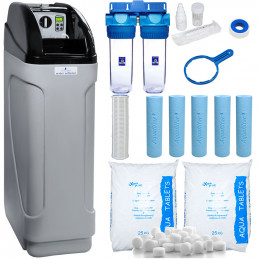
OCEAN RX 30 MAXI is a compact, fully automatic water softener with a modern volumetric controller, a by-pass with a mixer, and anti-overflow protection. It removes calcium and magnesium ions on a cation exchange resin, reducing the formation of scale in the installation and devices. The set includes, among other things, a 10" pre-filter with 5 PP20 cartridges, a hardness tester, and tablet salt.
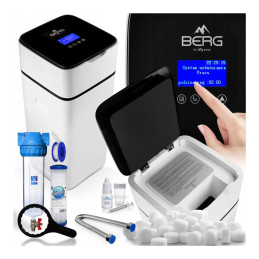
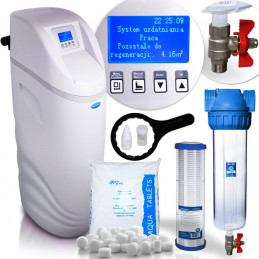
Small water softener BERG 15L for home or small business. Compact housing, Polish menu, and a large, backlit display make operation easier. The automatic head with up-flow and down-flow regeneration reduces water and salt consumption, while the built-in by-pass ensures access to water even during regeneration. Included: 2x 25 kg salt, pre-filter with drain valve and mesh cartridge, hardness tester.
WodaRO LOGIX 30 MAXI is a proven water softener with 30 l of LEWATIT resin , designed for households of 2-8 people . It operates on a volumetric head AUTOTROL LOGIX 760 (255/760) with a built-in water meter and a clear display. Thanks to the internal bypass, it ensures access to water during regeneration . The set includes, among others, tablet salt, housings.narrow, inserts and hardness tester.
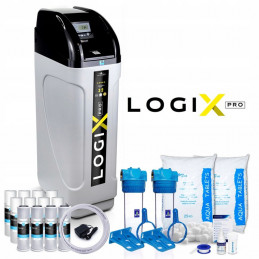
LOGIX PRO 32 is a fully automatic water treatment station for softening water in the home. Equipped with a LOGIX control head featuring SMART LOGIX intelligent control, a 9-cycle regeneration program, and brass connections with a BY-PASS. Inside, there is 32 liters of monospheric ion exchange resin. The package includes a large starter kit: 50 kg of tablet salt, pre-filters before and after the device, foam and carbon cartridges, a drain hose, and a hardness tester. We provideprogramming and lifetime technical support.
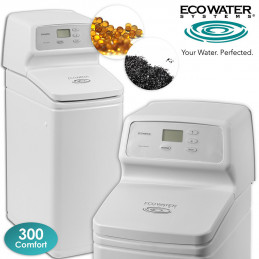
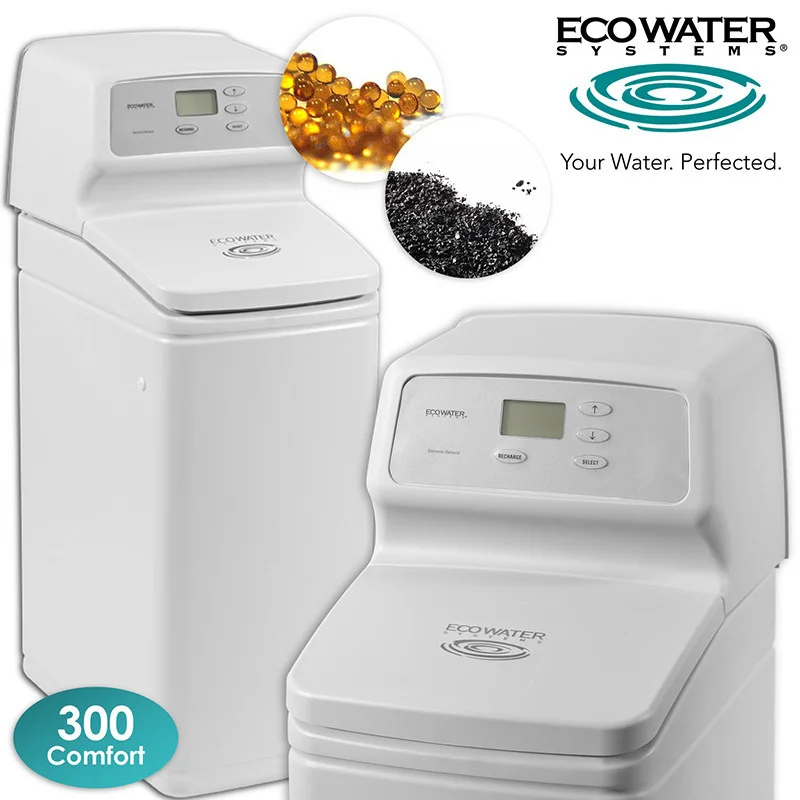
EcoWater COMFORT 300 is a home water softener with intelligent control that monitors consumption and adjusts regeneration to real needs. It provides soft water with very low salt and water consumption during regeneration. It protects the installation and appliances from scale, improves bathing comfort, and makes it easier to keep fixtures and dishes clean.
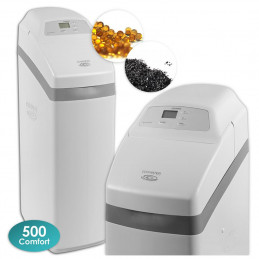
EcoWater COMFORT 500 is a water softener with intelligent control that continuously monitors usage and adjusts regeneration to reduce operating costs. It provides soft water throughout the home, supports the protection of installations and appliances against limescale, and helps keep fixtures clean. Low salt consumption (1.2-3.8 kg) and water for regeneration (about 3%).
OCEAN BNT MINI 10 is a compact water softener with 10 liters of PUROLITE C100-E ion exchange resin. It protects installations and heating devices as well as household appliances from scale, improves bathing comfort, and helps reduce detergent consumption. Automatic operation, BNT head with Polish menu, BY-PASS valve, and MIXING for setting residual hardness. Included: 25 kg of salt, 10" pre-filter with accessories, 5 cartridges of 20 microns, and a hardness tester.
The SUPREME-LOGIQ series water softeners are technologically advanced devices equipped with the reliable PERFORMA LOGIX 269 control valve from PENTAIR/USA. They offer high efficiency, low salt and water consumption, and the ability to operate in eco mode, making them an ideal choice for homes, public institutions, and industry.
Westa-XL FITaqua is a water softener for home use that removes hardness (calcium and magnesium salts), reducing scale and limescale in plumbing and household appliances. Recommended for 4-6 people (up to 20 dH). The RX electronic controller automates regeneration and allows you to set operational parameters. Connection 3/4", nominal flow 1.5 m3/h, power consumption 18 W.
CLACK PALLAS 30 waterRO is a modern water softener for home installation, designed for families of 4-8 people. It uses 30 liters of LEWATIT S1567 monospheric resin and the CLACK PALLAS head with a clear PL menu and LCD display. The up-flow (countercurrent) regeneration does not cut off the supply of raw water during operation. Included: 2x25 kg of salt, 2 inline filters, mechanical and carbon cartridges, and a hardness tester.
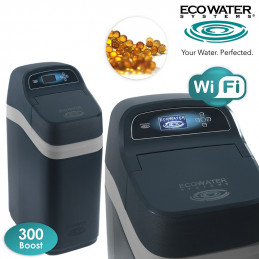
EcoWater eVOLUTION 300 BOOST is an advanced water softener with intelligent control and a standard Wi-Fi module. Thanks to its electronic, patented head, it reduces pressure drops and ensures high flow. The device automatically selects the regeneration moment, and the infrared sensor measures the salt level and can send SMS or email notifications. The set includes a practical bypass for bypassing the device.
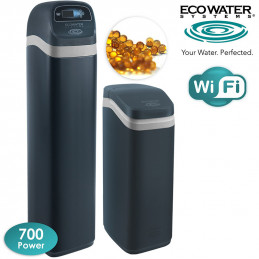
EcoWater eVOLUTION 700 POWER is an efficient water softener for larger homes, multi-family buildings, offices, and guesthouses. It provides high flow, intelligent regeneration tailored to consumption, and convenient operation through a clear panel. Standard features include a Wi-Fi module for monitoring and remote control, as well as notifications for low salt levels (SMS/email). Durable housing, bypass included, and device operation safeguards.
Ocean BNT MAXI 30 is a compact water softener with 30 liters of ion exchange resin PUROLITE C100-E and a controller BNT7650 with a Polish menu. It protects the installation and heating devices as well as household appliances from scale, improves bathing comfort, and helps reduce detergent consumption. Included: 25 kg of salt, a 10" inline pre-filter with accessories, 5 PP20 string filters, and a hardness tester.
SNOW SMART 25 RX is a compact water softener from the SMART BLUE series with 25 l of PUROLITE ion exchange resin and a built-in by-pass. The touch panel and Polish menu make operation easier, while the intelligent operating mode optimizes water and salt consumption. The set includes, among others, 2x 25 kg tablet salt , a pre-filter with a drain valve, a rinsable mesh insert, and a hardness tester.
WodaRO ECO 20 BNT MIDI is a compact water softener for home use, equipped with 20 l of PUROLITE C100-E resin and a BNT 7650 controller with a Polish menu. The package includes a BY-PASS valve and MIXING for setting residual hardness. It operates automatically (volumetric-timed control) and helps protect the installation, boiler, and household appliances from limescale buildup. Free: 2-stage pre-filter with mesh insert and antibacterial properties.
WodaRO ECO 25 BNT MAXI is a compact water softener with 25 l of ion exchange resin PUROLITE C100-E and a controller BNT7650 (menu PL). It operates automatically, features a BY-PASS valve and MIXING for setting residual hardness. The package includes 2-stage pre-filter (reusable mesh cartridge +antibacterial insert 20 µm), which protects the substrate and the installation.
In a single-family house, the problem of hard water quickly becomes noticeable: limescale builds up on fittings, in heating devices and household appliances, and the water system operates under more demanding conditions. That is why a properly selected water softener is a solution that supports everyday comfort and helps take care of the durability of home infrastructure.
In this category, we have gathered devices intended for household use, including models suitable for families of several people and solutions that fit into a broader water treatment station. It is a good choice for people who want to reduce the effects of hard water and consciously select a system according to their own consumption and installation conditions.
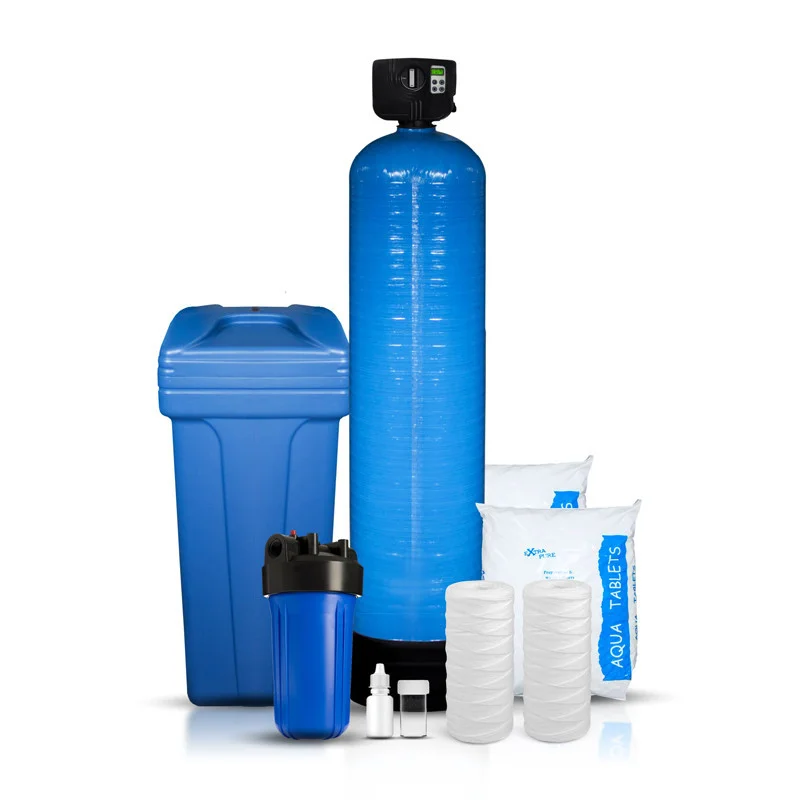
The most important information about products in this category: Water softeners for a single-family house use ion exchange resin, which removes calcium and magnesium ions from water, replacing them with sodium ions. This process is called ion exchange - an effective method of reducing the problem of hard water. A typical softener consists of a salt tank, a ion exchange resin tank, and a controller managing regeneration and device operation. It is worth remembering that a softener significantly improves the utility parameters of water, but does not provide 100% drinking water filtration.
What is a water softener and how does it work?
Water softener for a single-family house removes excess minerals responsible for water hardness, mainly calcium and magnesium. As a result, it reduces the buildup of deposits and improves the operating conditions of the system and household devices.
The basis of operation is ion exchange. Water flows through the ion exchange resin, and the controller controls operating and regeneration cycles. For proper operation, the device uses regeneration salt, so the capacity of the salt tank and the ease of refilling it are also important.
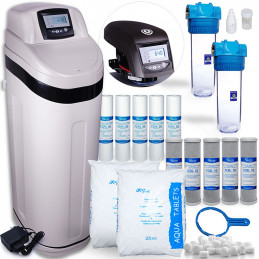
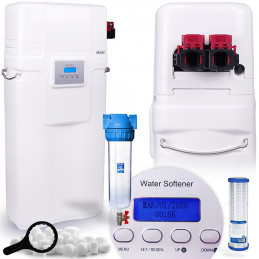
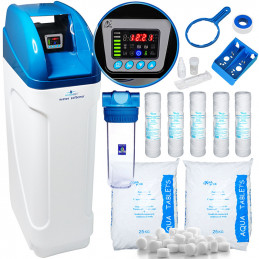
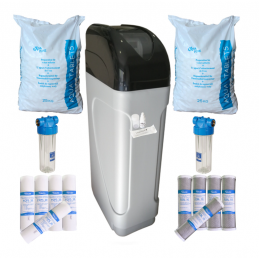
Example of a compact softener for use in a single-family house.
Benefits of installing a softener in a single-family house
A properly selected water softening system can bring real operational and practical benefits:
Protection of the water system - soft water reduces limescale buildup in pipes, which can extend their lifespan and reduce the risk of failures.
Better utility water quality - water is more skin- and hair-friendly.
Improved taste of food and beverages - this is one of the benefits indicated when using water with better utility parameters.
Energy savings - boilers and other heating devices operate more efficiently when they are not covered with limescale deposits.
Lower detergent consumption - soft water works better with soaps and detergents.
Longer lifespan of household appliances - washing machines, dishwashers, and other devices can operate longer and more efficiently.
Which water softener for 4 people?
The choice of a device for a family of four depends primarily on water hardness, actual water consumption, and the amount of space available for installation. It is assumed that an average household uses about 150-200 liters of water per person per day, which in the case of 4 people gives around 600-800 liters per day.
In practice, for a family of four, a softener sized for 20-30 liters of ion exchange resin is often sufficient. However, the final selection should be based on an analysis of water parameters and the way the house is used.
Modern models offer automatic control and convenient regeneration.
What should you pay attention to when choosing?
Capacity - determines the amount of water the device can treat between regenerations.
Salt tank capacity - a larger tank usually means less frequent salt refilling.
Size and compactness - the device should fit the intended installation space.
Control and automation - modern controllers automatically manage regeneration and the softening process.
Matching the number of household members - a model that is too small or too large may be less optimal in everyday use.
Water treatment station for a single-family house
Water treatment station for a single-family house is a more advanced solution than a softener alone. It may include additional filtration elements that support improving water quality on different levels.
A typical water treatment station may consist of the following elements:
Water softener - removes hard minerals from water.
Carbon filter - helps remove chlorine and organic compounds, improving the taste and smell of water.
Mechanical filter - traps solid particles such as sand and rust.
Additional modules - depending on water quality, solutions for removing iron, manganese, or other contaminants may be needed.
If you care not only about reducing hardness, but also about broader water treatment throughout the house, it is worth considering a complete station rather than just a single softener.
Modern water softeners - features worth knowing
Modern devices offer not only softening itself, but also solutions that increase the convenience of everyday operation. Depending on the model, these may include:
automatic regeneration systems,
salt consumption monitoring,
intuitive control panels,
water consumption monitoring functions,
solutions with app support.
Central water softener installed on the main connection allows treatment of the water supplied to the entire building. As a result, all points of use - from the kitchen to the bathrooms - benefit from soft water.
More advanced solutions can combine softening with additional filtration stages.
Ranking and example solutions for a single-family house
When choosing a device, it is worth using current rankings, opinions, and user reviews. Among the models indicated in the category content are, among others:
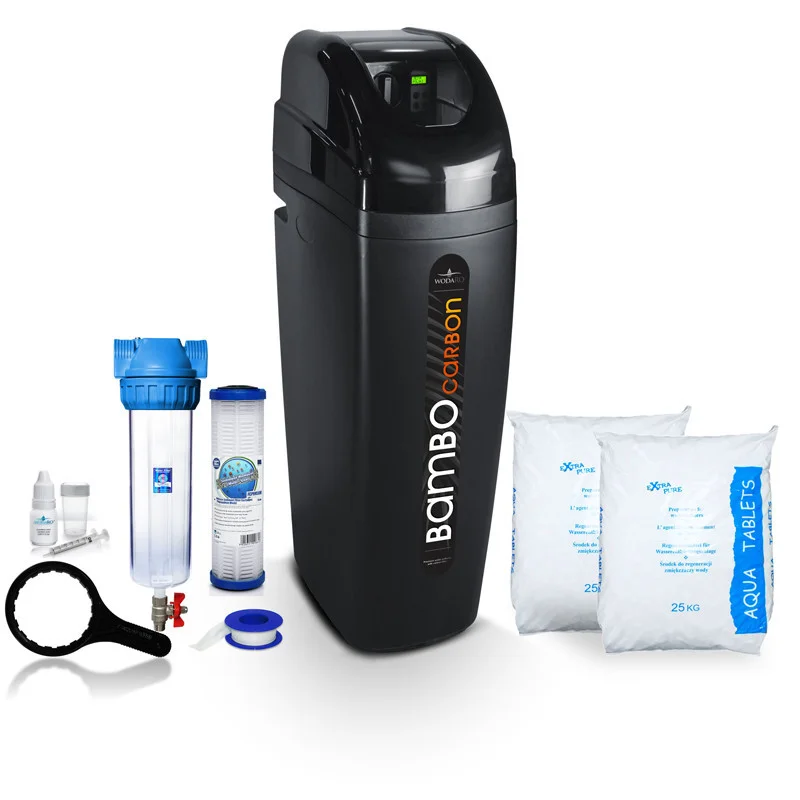
BAMBO CARBON softener - a compact and efficient model suitable for medium-sized households.
WODARO SOFTCARBON softener - a high-capacity device, also recommended for larger families.
ECOWATER COMFORT 300 softener - a technologically advanced solution with water consumption monitoring and automatic regeneration.
EcoWater EVOLUTION - a professional line of water softening devices.
When selecting a specific model, it is worth looking not only at the product's popularity, but above all at its operating parameters and suitability for conditions in the house.
How to choose the best water softener?
The best choice is one that matches the actual operating conditions of the system and the needs of the household members. During the purchasing process, it is worth going through several steps:
Perform a water hardness analysis - using a tester or laboratory testing.
Determine water consumption - the number of household members and the style of water use matter greatly.
Check the available installation space - pay attention to the dimensions of the device and service convenience.
Compare features - automatic regeneration, salt monitoring, or modern controls can increase comfort of use.
Read opinions and reviews - this is a helpful source of practical information.
Consult an expert - especially if the water also requires removal of other contaminants.
The most important parameters in an organized form
Parameter
Meaning
Operating type
Ion exchange - removal of calcium and magnesium ions and replacing them with sodium ions
Basic components
Salt tank, ion exchange resin tank, controller
Application
Reducing water hardness throughout a single-family house
Selection for 4 people
Usually 20-30 liters of ion exchange resin, depending on hardness and water consumption
Salt tank capacity
Affects the frequency of salt refilling
Important note
A softener improves utility water quality, but does not provide 100% drinking water filtration
Water treatment unit for a single-family house
Water treatment unit for a single-family house may combine the functions of softening, filtration, and purification. This type of device helps remove limescale and other contaminants, improving water quality in the house and the comfort of everyday use.
In practice, this means better protection of the system, support for household appliances, and greater convenience in using tap water. In many homes, effective softeners and water filters form the basis of a modern treatment system.
FAQ - frequently asked questions
What is the difference between a water softener and a complete treatment station?
A softener is mainly responsible for removing water hardness, that is, reducing the content of calcium and magnesium. A treatment station may additionally include mechanical filters, carbon filters, and solutions for removing iron, manganese, or other contaminants.
Is a water softener suitable for every single-family house?
In many cases yes, but the selection of the device should take into account water hardness, the number of household members, water consumption, and the installation location. The best results come from a choice based on an analysis of water parameters.
Which water softener should you choose for a 4-person family?
For a four-person household, a model with about 20-30 liters of ion exchange resin is often suitable. However, the final decision should depend on water hardness and actual daily consumption.
Does a water softener improve drinking water quality?
A softener significantly improves utility water quality and eliminates the hardness problem, but it does not provide 100% filtration for drinking water. If you care about broader purification, it is worth considering additional filtration stages.
What benefits does soft water provide in everyday use?
Soft water helps protect the system from limescale, supports longer operation of household appliances, can reduce detergent consumption, and improves comfort of water use, also in relation to skin and hair.
Does a water softener need to be refilled regularly?
Yes, the device requires replenishment of regeneration salt. The frequency depends on the capacity of the salt tank, operating settings, water hardness, and intensity of use.
Where is a central water softener installed?
Most often on the main water supply connection to the building. This means all water supplied to the house is treated, and all points of use benefit from the softening effect.
What should you pay attention to when comparing models?
The most important factors are capacity, resin bed size, salt tank capacity, device compactness, control method, automatic regeneration functions, and suitability for the number of users.
Is it worth checking rankings and opinions before buying?
Yes, rankings and reviews are helpful because they show user experiences and popular market solutions. However, they should not replace technical analysis and matching the device to a specific house.