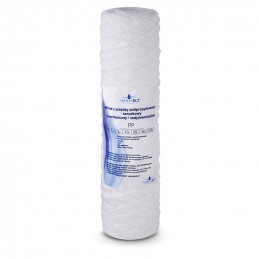
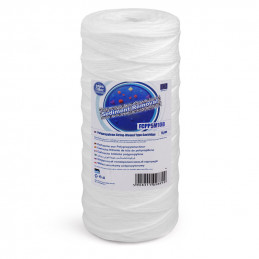
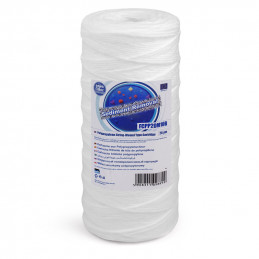
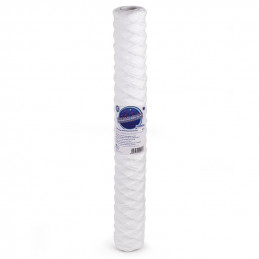
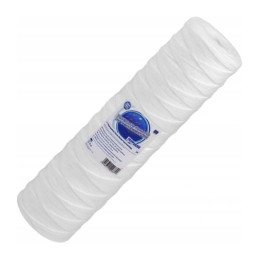
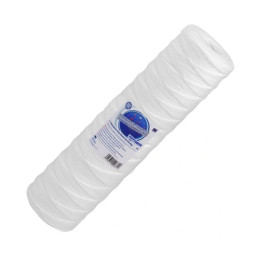
String filters – cartridges for effective mechanical water filtration
String cartridges for water filters are among the most frequently chosen solutions for removing mechanical impurities. They effectively trap sand, rust, silt, and other solid particles present in water, helping protect the installation and subsequent filtration stages.
Thanks to their characteristic layered structure, string filters offer a large filtration surface area and good performance in both household and industrial applications. In this category, you will find cartridges with different micron ratings and sizes that can be matched to most standard filter housings.
If you want to choose the right string filter, check how a string cartridge works, what the differences are between 5, 10, and 20 micron variants, and how often to replace the cartridge to maintain high filtration quality and proper water flow.
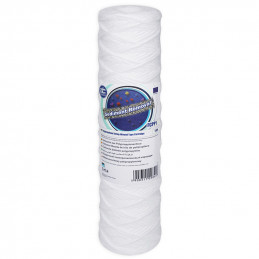
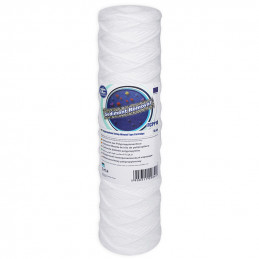
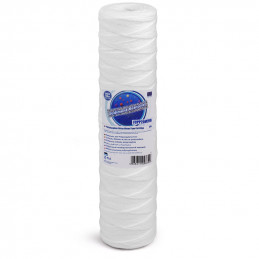
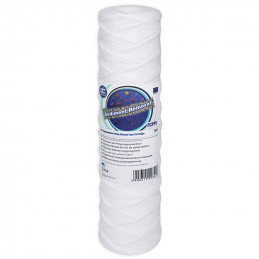
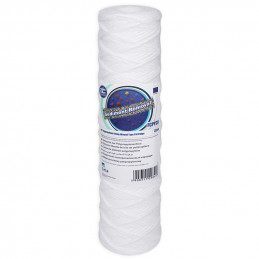
FCPP1 Aquafilter is a sediment filter (string) made of polypropylene fiber with a precision of 1 micron. It effectively captures fine solid contaminants such as sand, silt, sludge, and rust. The design with increasing filtration density towards the core aids in efficient pre-filtration, protecting the installation as well as household and heating devices from mechanical deposits.
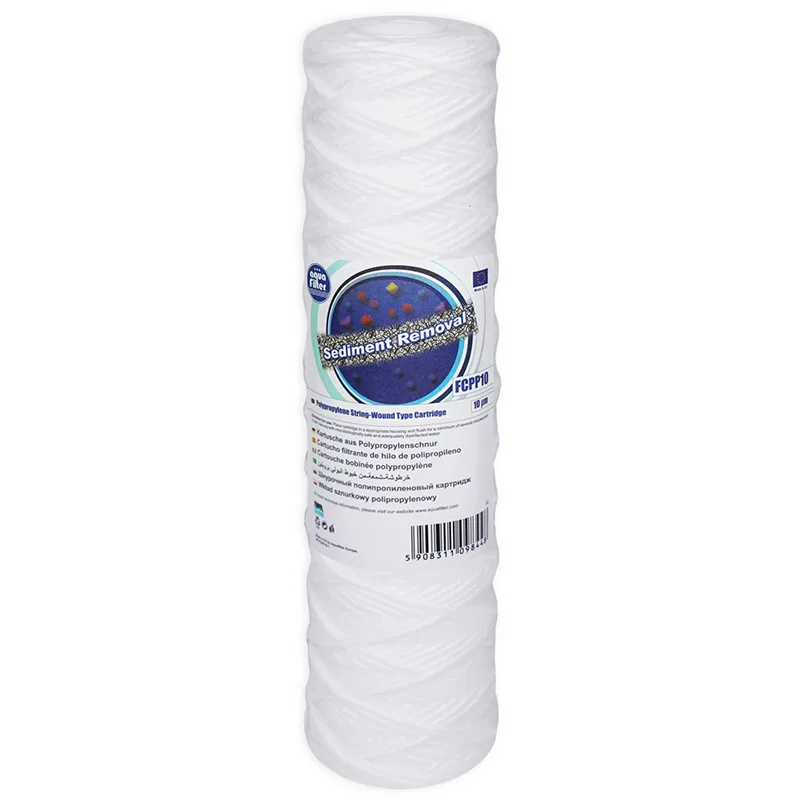
FCPP10 Aquafilter is a string wound polypropylene fiber sediment filter for preliminary water filtration. It effectively captures fine solid contaminants such as sand, sludge, silt, and rust. The wound structure provides increasing filtration density towards the core, which helps protect the installation as well as household and heating devices from mechanical deposits.
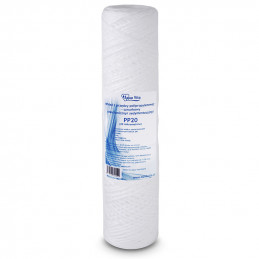
PP20 WodaRO is a 10" string wound sediment filter for pre-filtration of cold and hot water. Made of pure polypropylene wound around a core, with a density gradient for more effective contaminant retention. It removes sand, silt, and rust, protecting the installation and devices. Filtration accuracy: 20 microns .
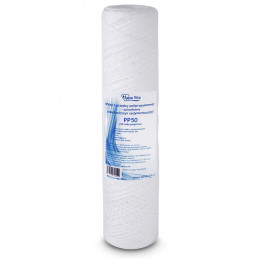
WodaRO PP50 is a 10" string wound (sedimentary) cartridge for pre-filtration of cold and hot water. Made of pure polypropylene fiber with a density gradient, it effectively captures mechanical impurities such as sand, silt, and rust. It fits 10" inline filters as well as under-sink and reverse osmosis systems. Filtration accuracy: 50 microns .
Aquafilter FCPP20M20B is a polypropylene string filter cartridge 20 for BIG BLUE 20 . It is used for preliminary water filtration and captures mechanical impurities such as sand, mud, and rust, with a size of up to 20 microns . The design with increasing density towards the core ensures effective sediment capture and protection of the installation and devices.
PP50 AquaVita is a universal polypropylene string sediment filter for mechanical water filtration. It effectively captures sand, silt, and rust, and the density gradient design extends the filter's lifespan. Filtration accuracy: 50 microns. Fits standard 10" (2.5") housings. Recommended replacement: up to 6 months or up to 14,000 liters (depending on water quality).
FCPP5 Aquafilter is a string sediment filter with a precision of 5 microns, made from pure polypropylene fiber. It effectively removes fine solid impurities from water, such as sand, silt, mud, and rust. Designed for preliminary mechanical filtration, it helps protect household appliances and heating systems from deposits.
The Aquafilter FCPP20 string sediment filter is made of pure polypropylene fiber. It is designed for pre-filtration of water and for trapping fine solid contaminants such as sand, silt, mud, and rust. The winding on the core provides a gradual increase in density towards the center of the filter, which improves the effectiveness of sediment capture and helps protect household and heating appliances.
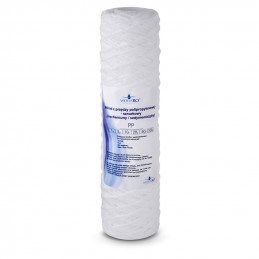
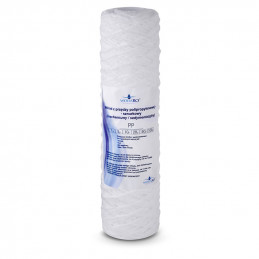
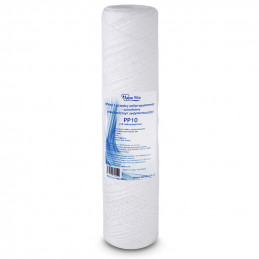
PP10 Aqua Vita is a string filter made of polypropylene yarn for 10" pipe housings and under-sink filters. It mechanically filters with an accuracy of 10 microns, capturing sand, silt, and rust. It ensures high efficiency with low pressure drop, protecting the installation and subsequent cartridges (e.g., carbon, softening, iron removal).
PP20 Aqua Vita is a string filter made of polypropylene yarn for 10" pipe bodies and under-sink filters. It mechanically filters water with an accuracy of 20 microns , capturing sand, silt, and rust among others. It protects the installation and subsequent filters (e.g., carbon, softening). Low pressure drop 0.2-0.4 bar . Performance up to 25 l/min .
PP50 Aqua Vita is a string filter made of polypropylene fiber for 10" pipe bodies and under-sink filters. It mechanically filters with an accuracy of 50 microns, trapping sand, silt, and rust. It ensures a low pressure drop (0.2-0.4 bar) and a flow rate of up to 25 l/min. It protects the installation and subsequent filters (e.g., carbon filters). Hygienic certificate PZH, NSF and FDA materials.
WodaRO PP5 is a universal string filter cartridge 10" for pre-filtration of cold and hot water. Made of pure polypropylene fiber with a precision of 5 microns . It captures mechanical impurities (sand, silt, rust), protecting the installation as well as heating devices and household appliances. Designed for 10" cartridge housings and under-sink and RO systems.
WodaRO PP10 is a universal 10" string filter cartridge for pre-filtration of cold and hot water. Made of pure polypropylene with a gradient structure, it effectively captures mechanical impurities (sand, silt, rust). It fits standard 10" cartridge housings as well as under-sink and osmotic systems. Accuracy: 10 microns .
Aquafilter FCPP5M10B is a polypropylene string filter cartridge for mechanical filtration of cold water. It stops sand, rust, and silt down to 5 microns . Recommended as the first stage of filtration to protect subsequent cartridges (e.g., carbon, softening, iron removal). Fits BIG BLUE 10" housings.
Aquafilter FCPP20M10B is a polypropylene string filter cartridge for mechanical filtration of cold water. It captures sand, rust, and silt up to 20 microns , making it suitable as a first stage of filtration and protects subsequent cartridges (e.g., carbon, softening, de-ironing). It fits BIG BLUE 10" housings.
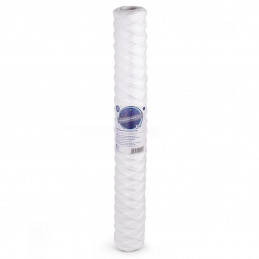
Aquafilter FCPP10-L is a polypropylene string filter cartridge for LONG 20" housings. It is used for pre-filtration of water and effectively removes mechanical impurities such as sand, silt, or rust, down to 10 microns . The layered construction with increasing density improves sediment retention and protects the installation and household appliances.
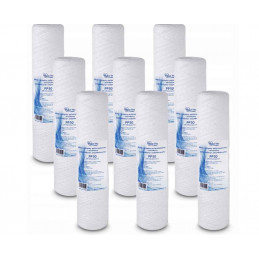
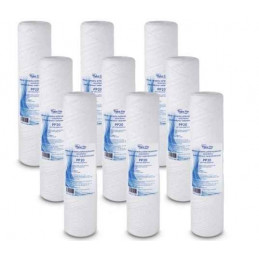
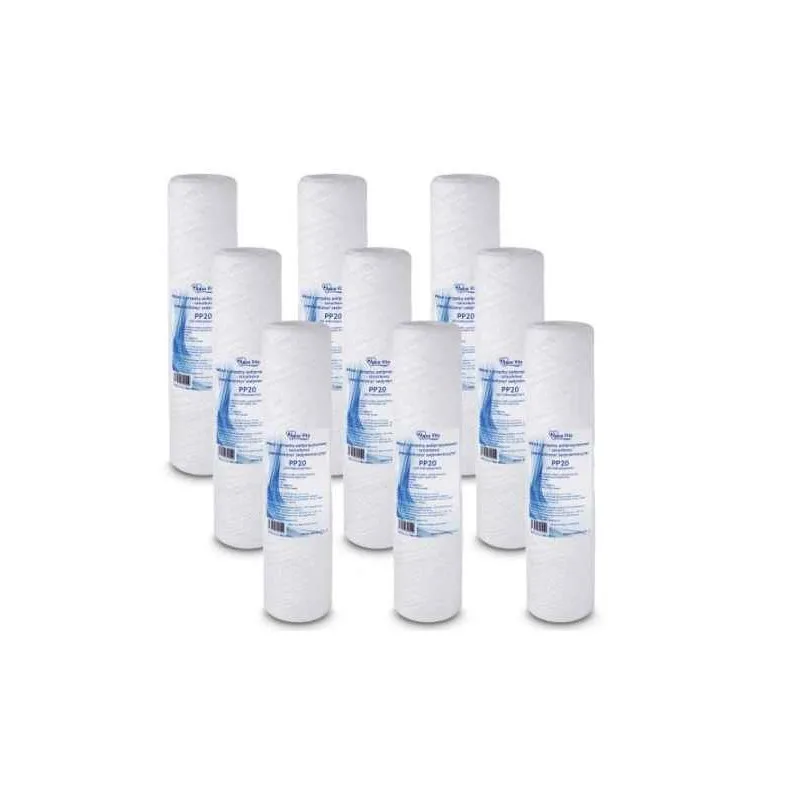
PP20 AquaVita is a universal string filter cartridge made of polypropylene fiber for mechanical water filtration. It effectively reduces sand, silt, and rust, and thanks to its gradient density design, it retains impurities in layers, which promotes longer cartridge life. It fits standard 10" housings. The set includes 9 pcs.
PP10 AquaVita is a universal string sediment filter cartridge for preliminary water filtration. Made from pure polypropylene fiber, it removes mechanical impurities such as sand, silt, and rust. The density gradient of the winding helps extend the cartridge's lifespan, and the design ensures minimal pressure drop. The set includes 9 pieces of 10" cartridges.
Aquafilter FCPP20-L is a 20" sediment filter for LONG type housings, made of polypropylene string. It filters mechanical impurities such as sand, silt, or rust, with a precision of 20 microns . Recommended for pre-filtration in water installations in residential buildings and commercial facilities.
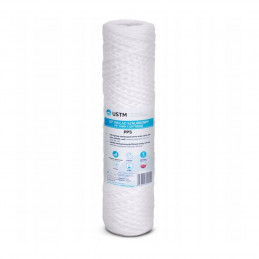
The UST-M PP5M 10" string filter is a sedimentation mechanical filter for cartridge housings. It captures impurities down to 5 microns, reducing sand, silt, and rust in the system. The gradient structure and dense fiber weave promote more precise filtration and longer operation before clogging. Recommended for water filtration in homes and in kitchen systems under the sink. Product with PZH certification, manufactured in Poland.
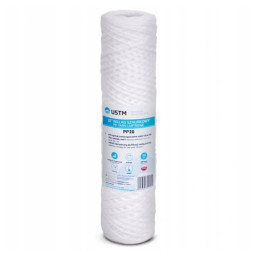
UST-M PP20M 10" string filter cartridge for mechanical water filtration. It captures impurities up to 20 microns, and the gradient structure of the fibers improves efficiency and extends the lifespan before clogging. Designed for inline filters in homes/apartments and under-sink filters. Helps protect plumbing, fixtures, and household appliances. Product certified by PZH, manufactured in Poland.
Aquafilter FCPP5M20B is an original string filter for preliminary water filtration, designed for BIG BLUE 20" housings. Made of gradient-structured polypropylene string, it effectively captures mechanical impurities such as sand, silt, and rust , helping to protect the installation and household appliances. It operates within the range of 1-52°C . Recommended replacement every 3-6.months (depending on water quality).
Aquafilter FCPP50M20B is a string wound sediment filter for preliminary water filtration. Made of braided polypropylene string with a density gradient, it effectively captures mechanical impurities such as sand, silt, and rust at low pressure drops. Designed for cold and hot potable water, it fits 20" x 4 1/2" housings.
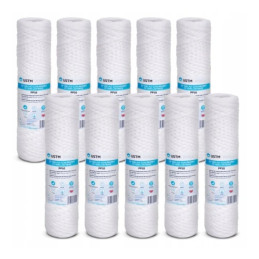
Set of 10 UST-M PP10M 10" string filter cartridges for cartridge filters. Effective mechanical filtration of impurities up to 10 microns due to dense weaving and gradient structure. Recommended for protecting installations, fittings, and household appliances. Suitable for use in homes and under sinks. Cartridge with PZH certification, made in Poland.
String filters are proven cartridges for mechanical water filtration, used wherever solid contaminants need to be effectively stopped before further treatment. Their task is to capture deposits such as sand, rust, silt, and other particles suspended in water, which translates into better protection for the installation, fittings, and subsequent filtration stages.
In this category, you will find string cartridges made of polypropylene nonwoven material wound onto a filter core. These solutions are designed for the mechanical removal of contaminants from water and are available in various micron ratings and sizes. The most popular variants include 5, 10, and 20 microns, and a commonly chosen standard is 10-inch string filters, which fit most standard корпус filter housings.
String cartridges help effectively remove mechanical impurities from water.
What are string filters?
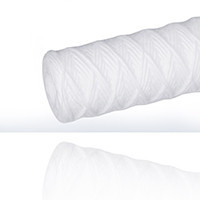
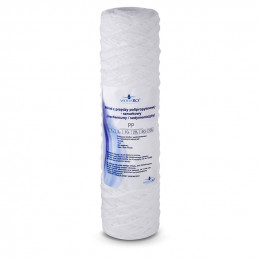
String filters, also called string cartridges, are filtration elements made of polypropylene nonwoven material wound onto a filter core. This design creates a layered structure resembling string, thanks to which the cartridge effectively traps mechanical impurities present in water.
This solution is widely chosen for both household and industrial applications. String cartridges are available in various sizes and filtration accuracy classes, so they can be matched to individual user needs and to most filtration systems.
How does a string cartridge work?
A string cartridge works on the principle of mechanically trapping contaminants. During water flow, solid particles settle on the fibers of the polypropylene string. The layered winding of the material provides a large filtration surface area, which affects both efficiency and cartridge lifespan.
In practice, this means that a string filter can serve as a very good preliminary stage, preparing water for further, more precise filtration.
Key benefits of using string filters
effective removal of mechanical impurities such as sand, rust, silt, and suspended matter,
protection of the water system, fittings, and devices against deposits,
extended lifespan of subsequent filtration stages,
the ability to match the micron rating to water quality and the expected effect,
availability of popular sizes fitting standard housings,
use in both home applications and selected industrial installations.
Types of string cartridges by micron rating
The basic difference between string cartridges is the micron rating, meaning the size of particles the filter can retain. Choosing the right filtration accuracy affects both cleaning efficiency and water flow.
Cartridge type
What it retains
Typical application
5 microns
Fine particles, silt, grains of sand
More precise mechanical filtration
10 microns
Rust, coarser impurities, larger particles
A compromise between efficiency and flow
20 microns
Larger solid particles
Preliminary cleaning before further filtration
5-micron string filter
This is a good choice when water contains fine impurities such as silt or grains of sand. It provides high filtration accuracy, but it may affect water flow reduction more than cartridges with a higher micron rating.
10-micron string filter
The 10-micron variant is often chosen as a universal solution. It traps larger particles such as rust and coarser impurities, while usually maintaining a favorable balance between filtration efficiency and flow performance.
20-micron string filter
20-micron cartridges are primarily suitable for preliminary filtration. Their task is to capture larger particles before subsequent, more precise stages of water treatment. An advantage of this solution is also higher flow capacity.
The micron rating of a string cartridge should be matched to the type of contaminants and the expected flow.
How to choose the right string cartridge for a water filter?
Choosing the right model depends primarily on water quality and the specifics of the installation. Before purchasing, it is worth paying attention to a few basic issues.
Type of contaminants – for fine deposits such as silt or fine sand, 5 microns may be worth considering; for larger impurities, 20 microns may be a good choice.
Required filtration level – the lower the micron rating, the more precise the filtration.
System specification – make sure the cartridge fits the filter housing being used.
Water flow – more precise cartridges may restrict flow more, so they should be selected according to the actual needs of the installation.
Tip: the most popular are 10-inch string filters, which fit most standard filter housings. This is a common choice for home water filtration systems.
String filter or foam filter?
The choice between a string cartridge and a foam cartridge depends on the type of contaminants and the expected filtration effect.
String filter retains larger particles such as sand, silt, and rust better. It is more resistant to clogging and usually has a longer lifespan.
Foam filter performs better with finer impurities such as mineral sediment, but it may require more frequent replacement.
If the main problem is typical mechanical impurities present in the water system, a string cartridge very often proves to be a practical and economical solution.
String filters as pre-filter cartridges
String cartridges are often used as pre-filters. Their task is to stop larger contaminants before further, more precise filtration. Thanks to this, they help protect subsequent cartridges and extend their lifespan.
This is particularly important in multi-stage systems, where the first stage is meant to take on the greatest load associated with the presence of deposits and suspended matter.
10-inch string filter, PP20 and PP10
10-inch string filter
10-inch string filters are a standard size fitting most popular filtration systems. They are versatile, readily available, and offered in a wide range of micron ratings, which is why they can be used both at home and in many utility applications.
PP20 and PP10 string filter
Models referred to as PP20 and PP10 differ primarily in the degree of filtration accuracy resulting from the density of the polypropylene string winding.
PP20 – retains larger particles, is well suited for preliminary water cleaning, and usually provides higher flow capacity.
PP10 – is responsible for more precise filtration, removes finer impurities better, but may restrict flow more.
How often should a string filter be replaced?
Replacement frequency depends on water quality, the degree of contamination, and the amount of filtered water. It is generally assumed that string filters should be replaced every 3 to 6 months to maintain optimal performance.
regularly check the level of cartridge contamination, preferably once a month,
pay attention to pressure drop or reduced water flow,
if you notice a change in the taste or smell of the water, it is also worth checking the condition of the filtration.
Bacterial growth and a string cartridge
Cartridges made of polypropylene do not have antibacterial properties. For this reason, regular inspection and timely filter replacement are very important to maintain the effectiveness of the entire system. In installations where microbiological safety is also important, it is worth remembering that mechanical filtration and protection against bacteria are two different issues.
Why choose string cartridges from this category?
In this category, you will find water string filters designed for installation in standard filter housings. These are solutions valued for simple installation, a wide selection of variants, and a favorable price-to-quality ratio. Among popular products, users also often point to UST M string cartridges.
A properly selected string cartridge helps improve the quality of mechanical filtration, protects the installation, and supports the proper operation of the entire water treatment system.
FAQ – frequently asked questions about string filters
What does a string filter retain?
A string filter retains mechanical impurities such as sand, rust, silt, and other solid particles suspended in water.
How does a string water cartridge work?
It works by mechanically capturing contaminants. Solid particles settle on the layered polypropylene fibers, and the cleaned water continues to flow through the system.
What micron rating should I choose for a string cartridge?
The choice depends on the type of contaminants and the expected effect. 5 microns works well for fine deposits, 10 microns is a universal compromise, and 20 microns is well suited for preliminary filtration.
Does a 10-inch string filter fit most housings?
Yes, 10-inch string filters are the most popular standard and fit most standard filter housings.
How often should a string cartridge be replaced?
Most often every 3 to 6 months, although the actual timing depends on water quality, usage volume, and the degree of cartridge contamination.
How can you tell that a string filter is worn out?
Typical signs include reduced water flow, lower pressure, visible cartridge contamination, and deterioration in the taste or smell of the water.
String filter or foam filter – which one should you choose?
A string filter handles larger mechanical impurities better and is more resistant to clogging. A foam cartridge may work better with finer mineral deposits.
Does a string cartridge remove bacteria?
No. Polypropylene cartridges do not have antibacterial properties, so they should not be treated as microbiological protection.
Are string filters suitable as the first stage of filtration?
Yes, they are very often used as pre-filter cartridges. They retain larger contaminants and protect subsequent, more precise filtration stages.