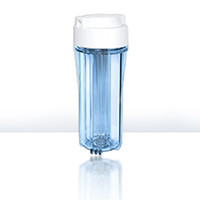
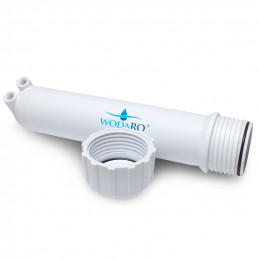
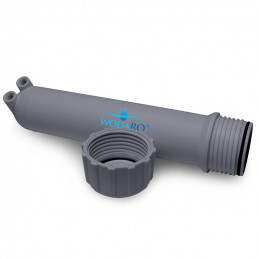
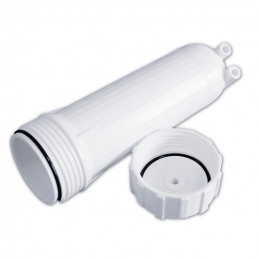
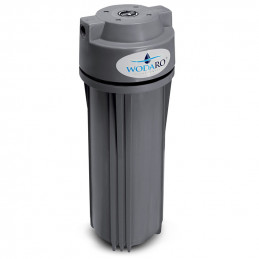
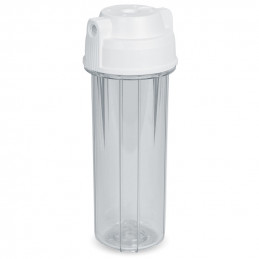
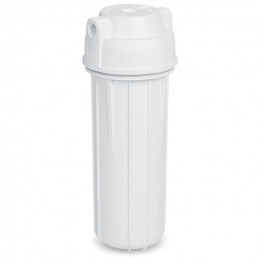
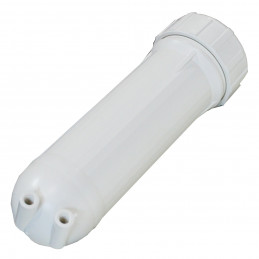
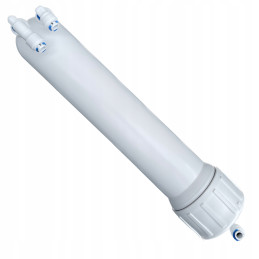
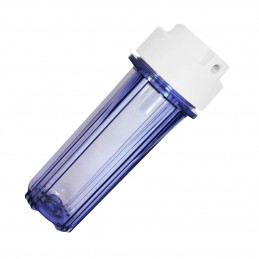
A water filter housing, also called a body, is an essential part of every filtration set. It is installed directly on the water system pipe or as part of a larger setup forming a water filtration station. The filter cartridge works inside the housing, which is why the quality of the housing determines tightness, ease of servicing, and proper water flow.
The filter housings category includes both models for simple domestic installations and solutions for reverse osmosis systems, multi-stage sets, and higher-capacity filtration. A properly selected housing makes later operation easier and helps match the entire system to the actual parameters of the installation.
In this category, you will find water filter housings and inline filter bodies designed for various applications: from the main water entry to the house, through prefiltration before a water softener, to compact RO systems under the sink. Variants with different connection diameters, cartridge sizes, and installation configurations are available, including single, double, triple, and 4-stage models. The MojaWoda.com range also includes housings from reputable brands such as wodaRO and Aquafilter.
What is a water filter housing?
A complete water filter consists of two main parts: the housing and the filter cartridge. The housing serves a protective and mounting function — it keeps the cartridge in the correct position, directs the water flow, and protects the system against leaks. The operation of the entire filtration system starts with it.
A properly selected inline water filter housing creates a tight, pressure-resistant “seat” for the filter cartridge. If the housing is mismatched or too weak, the installation may lose efficiency and safety.
Why does a solid filter housing matter?
In practice, the housing affects not only installation, but also the daily operation of the entire treatment system. The right housing helps maintain stable operating parameters and simplifies later servicing.
- Stable pressure — lower risk of uncontrolled drops and system overloads.
- Cartridge protection — the cartridge can operate evenly, without the undesirable bypass effect.
- Convenient serviceability — quick unscrewing of the sump and easier cartridge replacement.
- Longer installation lifespan — fewer failures and lower risk of costly downtime.
- Better fit for the application — from whole-house protection to point-of-use filtration and RO systems.
Types of water filter housings and their applications
The range of housings is broad because every installation requires a different flow rate, connection size, and cartridge type. Below are the most commonly chosen variants.
1” water filter housing
The 1″ thread ensures a high flow rate of around 30–50 l/min, which is why it is often used at the main water entry to the house or in smaller facilities such as guesthouses. The larger internal diameter makes it possible to use larger sediment and carbon cartridges without significant pressure loss.
3/4” water filter housing
The 3/4″ thread is a universal solution for many apartments and smaller houses. Such a housing works well as a prefilter before a water softener or as a single filtration stage before the drinking water outlet.
1/2” water filter housing
This solution is less common in classic inline installations. The small thread works well for protecting point-of-use devices such as washing machines, coffee machines, or water dispensers.
1/4” water filter housing
The 1/4″ diameter is the standard in reverse osmosis systems. This size fits thin RO tubing and allows the housing to fit into limited space, for example under the sink.
Filter housing materials — advantages and limitations
The housing material should be selected not only based on price, but also according to working conditions, expected durability, and the nature of the installation.
| Material |
Advantages |
Limitations |
| Plastic (PP/AS) |
Lightweight, corrosion resistance, attractive price |
Lower resistance to high temperature, usually above 40 °C |
| Stainless steel |
Highest pressure resistance, aesthetics |
Higher price, greater weight, grounding required |
| Brass |
Very durable thread, excellent sealing |
Higher cost, limited size range |
Transparent or blue sump?
The colour and type of sump are of practical importance, especially in mechanical filtration and installation in different lighting conditions.
- Transparent sump allows you to quickly assess the level of contamination of a mechanical cartridge, e.g. string-wound or foam. It works best in places protected from light.
- Blue sump limits access to UV radiation, which helps prevent algae growth in brighter rooms. It also protects carbon cartridges against photo-oxidation.
Most popular filter housing sizes
When choosing a housing, you need to match not only the thread, but also the cartridge length and diameter. This is one of the most important parameters affecting compatibility.
10” water filter housing
The 10″ size is the most common choice in single-family homes. It is very universal and accepts most popular cartridges available on the market, making it easy to change filtration media without replacing the housing itself.
10” Big Blue water filter housing
The Big Blue 10″ series has a larger diameter than standard slim housings. This allows the use of thicker media layers and reduces pressure drops. It is a good choice where more efficient filtration is needed.
20”, 20” Big Blue and 5” housings
The 20″ and 20″ Big Blue models offer greater capacity than standard 10″ housings, which is why they are used where longer cartridge operation or higher system efficiency matters. The 5″ size is very compact, but today it is less common due to the limited availability of replacement cartridges.
When is it worth choosing a Big Blue housing?
A larger Big Blue housing makes sense when the installation requires higher capacity or longer intervals between servicing.
- water consumption exceeds 5000 l per month,
- the pressure in the installation is high, e.g. above 4 bar, and you want to reduce pressure drops,
- you need specialist cartridges, e.g. for iron removal, manganese removal, multi-layer media, or strong softening,
- you plan less frequent servicing and want a higher cartridge capacity.
Single and multi-stage configurations
Filter housings can be combined into sets matched to the level of water contamination and the expected treatment effect.
Single and double housings
One or two housings create basic filtration, for example as sediment filtration before the meter or a prefilter before a water softener. The advantage of this solution is modularity — the system can later be expanded with additional stages.
Triple water filter housing
A 3-stage housing enables the installation of three filtration stages in one frame, e.g. sediment, activated carbon, and an ion exchange media cartridge. This is a practical solution where saving space matters.
4-stage water filter housing
A fourth housing allows the system to be expanded with an additional module, e.g. for iron removal or antibacterial treatment. Such configurations are especially appreciated by users of well water and installations requiring more advanced filtration.
How to choose a housing for a water filter?
Choosing the right housing does not have to be difficult if you go through a few basic steps.
- Check the connection thread — most often it will be 1″, 3/4″, or 1/2″.
- Measure the amount of installation space — leave clearance for unscrewing the sump, preferably at least 10 cm.
- Assess water consumption and required flow rate — the larger the installation, the more practical a larger housing may be.
- Consider water parameters — with high iron content or more demanding media, larger housings often work better.
- Check cartridge compatibility — the cartridge length and diameter must match the housing specification.
If you are not sure which housing to choose, it is worth starting with three parameters: connection diameter, cartridge size, and available installation space. These are the factors that most often determine compatibility and ease of use.
Water filter housings at MojaWoda.com
The MojaWoda.com store offers water filter housings from many well-known brands, including models also intended for osmosis systems. Among the available products are solutions from brands such as wodaRO and Aquafilter. These are options for people looking for durable water filtration accessories and wanting to conveniently match a housing to their own installation.
While browsing the available models, you can choose both compact housings for RO systems and larger inline bodies for domestic installations. For each product, it is worth checking the description of technical parameters and compatible cartridges.
FAQ — frequently asked questions about filter housings
What is a water filter housing?
A filter housing, or body, is the part in which the filter cartridge is placed. It is responsible for system tightness, proper water flow, and the safe operation of the entire filter.
Does a filter housing fit every cartridge?
Not always. The housing must match the cartridge length and diameter, e.g. 10" Slim, 10" Big Blue, or 20". Before purchase, it is always worth checking the product specification.
Which filter housing thread should you choose for a home?
The most commonly chosen housings are 3/4" and 1". A 3/4" thread works well in many apartments and smaller houses, while 1" is more often used where higher flow demand is required, e.g. at the main water entry to the building.
When is it worth choosing a Big Blue housing?
Big Blue is a good choice for higher water consumption, the need for greater capacity, reducing pressure drops, and when using specialist cartridges, e.g. for iron removal or softening.
Transparent or blue sump — which one should you choose?
A transparent sump makes it easier to monitor the contamination level of the cartridge, which is why it is practical in shaded places. A blue sump provides better protection against UV light and works well in brighter rooms.
How do you check the maximum operating pressure of a housing?
You should read the maximum pressure parameter from the label or product sheet and compare it with the operating pressure in the installation. If the values are close, it is worth considering additional protection, e.g. a pressure reducer.
How do you replace a water filter housing?
First, shut off the water supply, release the pressure from the installation, and then unscrew the old housing with a housing wrench. When installing the new one, it is worth checking the condition of the gasket and, if necessary, lightly lubricating it.
How do you loosen a stuck filter housing?
It is best to use a dedicated housing wrench and apply even pressure. If the gasket adheres strongly, sometimes a gentle tap with a rubber mallet helps break the vacuum.
How often should the gasket in a filter housing be replaced?
The gasket should be replaced when it shows flattening, cracks, or when leaks appear after replacing the cartridge. Regular inspection of the seal helps avoid operational problems.
Are filter housings suitable for reverse osmosis systems?
Yes, this category also includes housings used in RO systems. The most common are models with a 1/4" connection, adapted to thin tubing and under-sink installation.