Results could not be refreshed. Your previous selection was restored.
Price
Filtering products…
Baskets and screens for water softeners and water treatment systems
Baskets and screens are small but very important components of water treatment systems. They are used in devices such as water softeners, iron removal filters, manganese removal filters, and carbon columns, where they are responsible for protecting the control valve head and ensuring the proper operation of the entire installation.
Their task is to retain fine particles of the filter media before they reach the nozzles and moving parts. Thanks to this, baskets and screens support efficient filtration, convenient maintenance, and long-lasting, safe operation of water treatment systems.
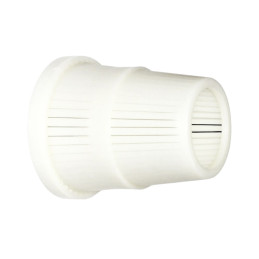
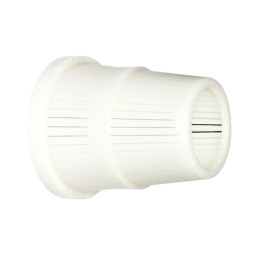
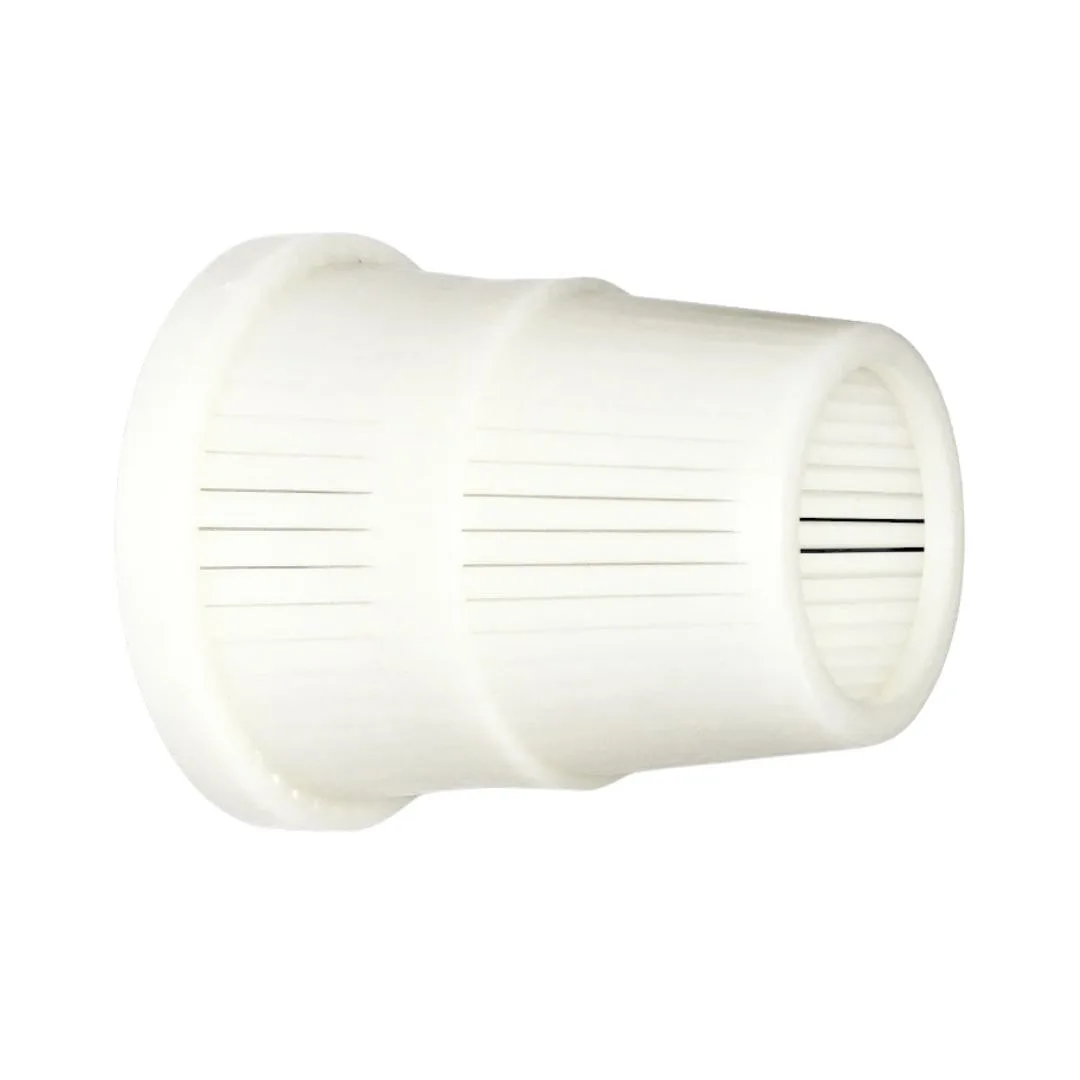
Upper basket 1 inch for the distribution pipe mounted in the head of the treatment station. A protective element placed inside the tank with the filtration medium, which limits the passage of medium particles to the controller. Version for gluing onto standardized profiles of the head, does not fit heads with hooks (teeth).
Upper basket 3/4 inch for bottles and water treatment station heads. Installed inside the tank on the distribution pipe, it protects the controller from the ingress of substrate particles into the nozzles and moving parts. Version for gluing, intended for heads with a standardized profile (not for heads with hooks, so-called teeth).
In water treatment systems, operational reliability is often determined by small components. Baskets and screens for water treatment systems perform a protective and filtration function, protecting control valve heads and moving parts from filter media particles entering the system. These are accessories that help maintain high equipment efficiency and reduce the risk of failure.
This category includes solutions used in popular residential and commercial installations, where proper matching to the valve head, distributor tube, and pressure vessel size is essential. A properly selected basket or screen makes system operation easier and supports its long service life.
Key information: baskets and screens are installed in pressure vessels of water treatment systems such as water softeners, iron removal filters, manganese removal filters, and carbon columns. Their function is to retain fine particles of filter media, protect nozzles and the moving parts of the control valve, and maintain trouble-free equipment operation. The category includes, among others, top and bottom baskets, glue-in versions, clip-on versions, standard versions, and cylindrical disassemblable models.
Baskets and screens help protect control valve heads and maintain the proper operation of water treatment systems.
What are baskets and screens for water softeners and treatment systems?
Baskets and screens are filters placed in the pressure vessels of water treatment systems. They are used, among others, in water softeners and iron removal filters, where their main task is to retain fine particles of filter media that could damage nozzles and the moving parts of control valves.
Thanks to such protection, devices can operate longer and more steadily, and the user reduces the risk of failures and frequent repairs. That is why a properly selected screen or basket is one of the basic elements of a well-functioning water treatment system.
Main benefits of using baskets and screens
A properly matched basket or screen affects not only the protection of a single component, but the operation of the entire system.
Protection of the control valve head against fine media particles that may damage nozzles and moving parts.
Effective filtration thanks to longitudinal openings with a width of a fraction of a millimeter, which ensure water flow while simultaneously retaining particles.
Extended equipment service life by reducing deposits and contaminants reaching sensitive parts of the installation.
Lower risk of failure and less frequent need for repairs and service interventions.
More convenient maintenance, especially in the case of models allowing easy disassembly and cleaning.
Where are baskets and screens used?
Baskets and screens are an indispensable element of many water treatment systems:
Water softeners – remove water hardness by exchanging calcium and magnesium ions for sodium ions, which helps prevent scale build-up in domestic installations.
Iron removal filters – remove iron from water, reducing the risk of rust in pipes and unpleasant water taste.
Manganese removal filters – reduce manganese content, which can cause brown deposits.
Carbon columns – filter organic compounds and chlorine, improve the taste and smell of water, and help remove harmful chemical substances.
Types of baskets and screens
Top baskets
Top baskets are mounted on the lower part of control valve heads, usually intended for distributor tubes with a diameter of 1" or 3/4". After the valve head is screwed onto the vessel, the basket is located inside, filled with the appropriate filtration or treatment media.
There are two basic solutions in this group:
Glue-in baskets – mounted directly on standardized valve head profiles. They are suitable for devices that do not have clips, i.e. the so-called tabs.
Clip-on baskets – intended for valve heads equipped with clips, which allows quick and stable attachment of the basket.
Bottom baskets
Bottom baskets are mounted on the ends of distributor tubes placed inside pressure vessels. They are most commonly available in sizes 1" and 3/4" to fit standard treatment systems.
The most common variants are:
Standard baskets – easy to install, intended for vessels with maximum dimensions of 13x54 cm.
Glue-in baskets – mounted directly on distributor tubes, most often available in gray or black.
Cylindrical disassemblable baskets – intended for larger pressure vessels, allowing easy disassembly and cleaning.
Construction, materials, and practical features
Baskets are made of materials resistant to operating conditions in water treatment systems. Depending on the model, these may be plastics or stainless steel, materials valued for their resistance to corrosion and the chemicals used during treatment.
In practice, design details are also important. Longitudinal, precisely made openings allow free water flow while retaining media particles. Some models are also available in different colors, e.g. white, gray, or black, and some of them have a design that facilitates replacement and maintenance.
Before purchase, it is worth checking not only the diameter of the distributor tube, but also the basket mounting method and the valve head type. This is crucial for correct installation and trouble-free operation of the system.
How to choose the right basket or screen?
The selection of the right component should be based on several basic technical and installation parameters.
Distributor tube diameter – most commonly 1" or 3/4".
Mounting type – glue-in or clip-on, depending on the design of the control valve head.
Basket type – top or bottom, depending on the installation location in the system.
Pressure vessel size – standard baskets are usually used for vessels up to 13x54 cm, while cylindrical disassemblable models are intended for larger tanks.
Material – important in terms of durability, corrosion resistance, and operating conditions.
Organized technical information
Feature
Information
Installation location
Pressure vessels of water treatment systems
Application
Water softeners, iron removal filters, manganese removal filters, carbon columns
Main function
Retention of fine filter media particles and protection of the control valve head
Types of top baskets
Glue-in, clip-on
Types of bottom baskets
Standard, glue-in, cylindrical disassemblable
Common tube diameters
1" and 3/4"
Vessel compatibility
Standard baskets for vessels up to max. 13x54 cm, cylindrical disassemblable for larger vessels
Materials
Plastics or stainless steel
Available colors of selected models
White, gray, black
Operating tips
To ensure that the basket or screen performs its function for a long time, it is worth remembering a few simple rules:
regularly inspect the condition of the component during water treatment system check-ups,
clean it according to the recommendations of the device or component manufacturer,
check whether mechanical damage or wear has occurred,
select the part according to the technical specification of the system you have,
if in doubt, consult a specialist or the equipment manufacturer.
Why does proper selection matter?
Not every basket fits every valve head and every vessel. The differences concern the mounting method, diameter, design, and intended use for a specific type of system. In practice, this means that even seemingly similar parts may not be interchangeable.
A properly selected basket supports effective filtration, protects the valve head, and helps avoid problems related to leaks, improper mounting, or incomplete protection against media particles.
FAQ – frequently asked questions
What are baskets and screens used for in a water treatment system?
They are used to retain fine particles of filter media and protect nozzles as well as the moving parts of the control valve. Thanks to this, they support trouble-free operation of the device.
Is a basket or screen a mandatory component of a water softener or iron removal filter?
It is a very important working component of many water treatment systems. It is responsible for protecting components and ensuring proper flow, so in practice its role is crucial for the correct operation of the installation.
How can I check whether I need a 1-inch or 3/4-inch basket?
You should check the diameter of the distributor tube or the technical specification of the device. The most common sizes are 1" and 3/4".
What is the difference between a glue-in basket and a clip-on basket?
A glue-in model is mounted on standardized valve head profiles and is used where there are no clips. A clip-on basket is intended for valve heads equipped with tabs that enable quick and stable fastening.
What are the differences between a top basket and a bottom basket?
A top basket is mounted on the lower part of the control valve head, while a bottom basket is mounted on the end of the distributor tube inside the vessel. Both have a protective function, but they work in different parts of the system.
Which vessels do standard bottom baskets fit?
According to the available information, standard bottom baskets are intended for vessels with maximum dimensions of 13x54 cm. In the case of larger vessels, cylindrical disassemblable models are often used.
Can baskets be cleaned and maintained?
Yes, regular inspection and cleaning are an important part of operation. Disassemblable models are especially convenient to handle, as they make disassembly and maintenance easier.
What materials are baskets and screens made of?
Depending on the model, durable plastics or stainless steel are used. These materials are resistant to corrosion and the operating conditions present in water treatment systems.
Does the color of the basket have any technical significance?
The category content indicates that some baskets are available in colors such as white, gray, or black. The color may help match the system's aesthetics, but technical compatibility and the mounting method remain the most important factors.
What should I do if I do not know which basket to choose?
The safest approach is to compare the technical specification of the device, the distributor tube diameter, the valve head type, and the mounting method. If you still have doubts, it is worth consulting a specialist or the manufacturer of the treatment system.