
- There are no more items in your cart
- Shipping
- Total 0.00 zł



Organic compounds in water – harmfulness, removal, and where do they come from?
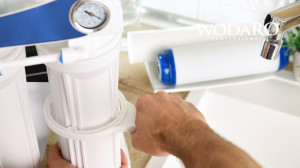
A change in water color to tea-like, a specific smell, or a high result for the "oxidizability" parameter in testing – these are the most common signals that organic compounds have appeared in your system. While some of them are of natural origin and do not pose an immediate threat to life, others can be toxic or create dangerous by-products during disinfection. In this article, we explain what these substances are and how to effectively get rid of them.
Table of contents
- What are organic compounds and how do they differ from inorganic ones?
- Where do organic compounds come from in water?
- How to recognize the problem? Diagnostics and standards
- Harmfulness: When are organic substances dangerous?
- How to remove organic compounds from water? Overview of methods
- Quick guide: How to choose a solution step by step?
- Frequently Asked Questions (FAQ)
In this article, you will learn:
- What are the organic compounds found in Polish waters and where do they come from?they take.
- Why is the "Oxidizability with KMnO4" parameter in water testing crucial.
- How to distinguish harmless humic acids from dangerous pesticides.
- Which filter to choose: activated carbon or reverse osmosis?
What are organic compounds and how do they differ from inorganic ones?
To understand the problem, it is worth first explaining, whatthese are organic compounds. In chemistry, these are all chemical compounds containing carbon (with a few exceptions like carbon dioxide), which forms the backbone of the molecule. This is a very broad group of substances – from simple hydrocarbons, through proteins and fats, to complex pesticides and detergents.
The fundamental difference regarding organic and inorganic compounds in the context of water treatment lies in their behavior andfiltration methods. Inorganic compounds (such as iron, manganese, calcium) are usually removed through oxidation and ion exchange. On the other hand, organic chemical compounds are most effectively removed through adsorption (e.g., on activated carbon) or through osmotic membranes. Some of them are biodegradable, while others are very persistent.
Key thought: Not every organic compound is a poison. Natural water always contains a certain amount oforganic matter, e.g. from the decomposition of plants.
Where do organic compounds in water come from?
Are you wondering where the organic compounds in your tap water come from? Sources are divided into two main groups: natural and anthropogenic (originating from human activity).
- Natural sources: These are primarily products of the decomposition of plant residues andanimal substances that reach groundwater and surface waters. These are known as humic substances (humic and fulvic acids). They are often responsible for the yellowish color of the water.
- Anthropogenic sources: Here the situation is more serious. Water can be contaminated by:
- Pesticides and herbicides from agriculture.
- Solvents and petroleum hydrocarbons from industry.
- Detergents and pharmaceuticals from municipal wastewater (leaky septic tanks).
Regardless of the source, organic compounds in water provide a nutrient for bacteria, which promotes the formation of biofilm in pipes.
How to recognize the problem? Diagnostics and standards
Many customers ask what organic compounds in research results, as laboratories rarely specify the names of substances (unless you commission a targeted pesticide test). In standard physicochemical analysis, two parameters are indicators of overall organic pollution:
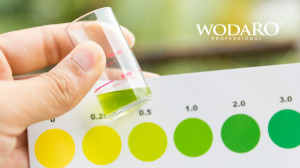
- Oxidizability with KMnO4 (Permanganate Index): Indicates how much oxygen is needed to oxidize organic matter in the sample. The standard in Poland is 5.0 mgO2/l. A result above this value indicates that there is too much "organic matter" in the water.
- TOC (Total Organic Carbon): Measures the total amount of organic carbon. It is a more accurate parameter but less commonly used in basic home tests.
Mini-diagnostic checklist "do it in 2 minutes":
- Smell: Does the water smell musty, earthy, fishy, or chemical? (Indicates the presence of organic pollutants).
- Sight: Pour water into a white bucket or bathtub. Does it have a slightly yellow, straw-like hue that does not settle at the bottom (like iron), but is "dissolved" in the water? (This is likely due to humic compounds).
- Taste: Does the water havebland, unusual aftertaste?
Harmfulness: When are organic substances dangerous?
The answer to the question of whether an organic compound in water is harmful depends on the specific substance in question. Natural humic acids are not toxic to humans, but they spoil the taste and appearance of water. However, organic substances of industrial origin(benzenes, phenols, pesticides) are highly toxic, and even carcinogenic.
There is also a hidden danger that is rarely discussed. If your water contains organic compounds and is chlorinated (e.g., by water utilities or in a home well), trihalomethanes (THM) may form. These are by-products of disinfection with proven carcinogenic effects. Therefore, removing organics is crucial not onlyfor aesthetics, but for the long-term safety of your entire family.
How to remove organic compounds from water? Overview of methods
Now that we know what organic compounds are and what dangers they pose, let's move on to practice. How to get rid of them? The effectiveness of the method depends on the molecular weight of the contaminant and its concentration.
1. Activated carbon (Adsorption)
It is the most popular and very effective method. Activated carbon has a huge specific surface area (pores), which acts like a sponge for organic chemical compounds. It captures chlorine, pesticides, phenols, and compounds responsible for bad taste and odor. Application: Carbon columns for the whole house or kitchen water filters.
2. Reverse osmosis
This is the most precise filtration method available for households. The osmotic membrane removes organic molecules with a molecular weight above 200 daltons, including viruses, bacteria, pesticides, and most chemical compounds. Application: Ideal for obtaining crystal-clear drinking water (see: reverse osmosis).
3. Ion exchange resins (Ion Exchange/Adsorption)
There are specialized media (so-called scavengers) that are dedicated to removing color and organic compounds. They are often used in multifunctional stations when the issues are hardness, iron, and color at the same time.

Not sure if your "Oxidizability" result requires the installation of a large station or if a sink filter will suffice? We will analyze your water tests.Contact us for a free expert consultation.
Quick guide: How to choose a solution step by step?
Many people search on Google: how to remove organic compounds from water, but get lost in the offerings. Use the scenarios below to narrow down your choices:
- Scenario A: Tap water, noticeable chlorine, you want to drink tasty water straight from the tap. Solution: Activated carbon filter under the sink or reverse osmosis system. Just point-of-use treatment in the kitchen.
- Scenario B: Well water, exceeded oxidation norm, yellow color of the water inSolution: Central carbon column at the water entry to the building (requires periodic media replacement) OR multifunctional media station, if you additionally have hard water or other contaminants. Scenario C: Suspected pesticides (proximity to agricultural fields), clear water. Solution: Absolutely a systemreverse osmosis for food purposes. Only the membrane ensures the removal of agricultural micro-pollutants.
What to watch out for? The most common mistakes
When dealing with organic compounds, it's easy to make a mistake. Here’s what to avoid:
- Ignoring disinfection: Carbon beds that absorb organic compounds are an ideal breeding ground for bacteria.If you are removing organics throughout the house, remember about the UV lamp behind the carbon filter.
- Too infrequent replacement of cartridges: Activated carbon has a limited capacity. When it becomes saturated, it can "release" contaminants back into the water. Follow service deadlines and regularly replace the cartridges.
- Confusing iron with organic color: Yellow water is not alwaysiron. If the water does not become cloudy after standing and remains clear and yellow, it is usually humic compounds that a regular iron remover (with aeration) will not eliminate.
Frequently Asked Questions (FAQ)
Does boiling water remove organic compounds?
Most of them – no. Boiling kills bacteria and viruses, but does not remove pesticides, metalsheavy or most persistent organic compounds. Moreover, boiling water reduces its volume (evaporation), which may slightly increase the concentration of these substances.
How to check if I have organic compounds in water without a laboratory?
The simplest test is the "white bucket test." Pour water into a clean, white container. If the water has a straw or tea color and does not leave sediment at the bottom after an hour, it is likelycontains humic (organic) compounds. A sharp chemical smell is also a strong indicator.
Does activated carbon remove all organic compounds?
Activated carbon is extremely effective at removing most organic contaminants, including pesticides, herbicides, and halogenated compounds. Some very light organic molecules may be more difficult to remove, but in home conditions, carbon is the standard no.1.
What does a high oxidation parameter mean?
High oxidation (above 5 mg O2/l) means that there is a lot of organic matter in the water. This can be a signal of contamination from sewage, fertilizers, or simply the presence of natural plant debris. Such water requires treatment before consumption.
How much does a filter that removes organic compounds cost?
A simple filterA carbon filter under the sink costs from 300 PLN. An advanced reverse osmosis system is an expense ranging from 800 to 2000 PLN. A central carbon column for the whole house usually costs from 2500 PLN upwards, depending on the size of the deposit.
Sources:
- https://isap.sejm.gov.pl/isap.nsf/DocDetails.xsp?id=WDU20170002294 - Regulation of the Minister of Health on the quality of water intended for human consumption (standardsoxidation.
- https://www.who.int/publications/i/item/9789241549950 - Guidelines for drinking-water quality (WHO) - guidelines for organic compounds and pesticides.
- https://www.gov.pl/web/wsse-poznan/parametry-chemiczne - Interpretation of water test results, Provincial Sanitary-Epidemiological Station.
Author: MaciejWaliduda - An expert in water treatment with many years of experience in selecting filtration systems for home and industry.
Last updated: 2026-02-10.
