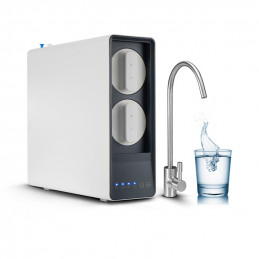
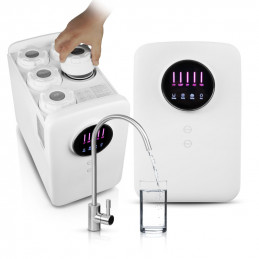
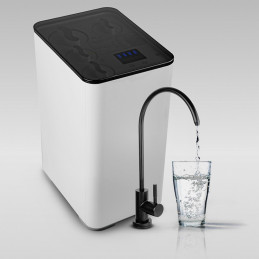
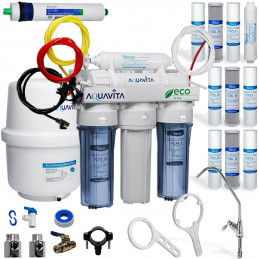
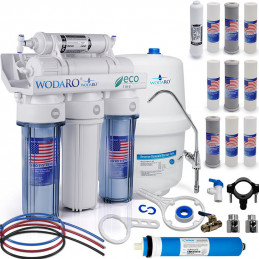
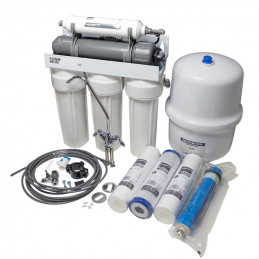
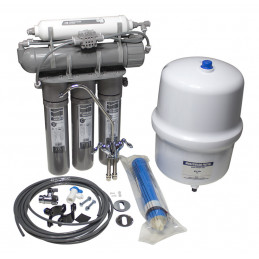
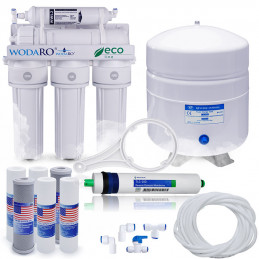
Reverse osmosis filters without mineralization are a category for users who are looking for an effective way to obtain very well-purified water, but without the final stage of enriching it with magnesium and calcium. This solution works well wherever high contaminant removal efficiency and the ability to consciously choose the final composition of the water matter.
In this category, you will find RO filters without a mineralizer, i.e. reverse osmosis systems that purify water using a semi-permeable membrane. These devices help remove virtually all of the most commonly indicated contaminants from water, including bacteria, viruses, heavy metals, and chemical compounds. Unlike models with a mineralizer, they do not add extra minerals to the purified water.
Why choose an RO filter without mineralization?
Osmosis systems without mineralization are chosen by people who expect effective water purification and want to maintain full control over whether the water should be additionally enriched after filtration. This is a practical solution both for everyday use and for applications where water without additional minerals is preferred.
- Effective water purification – reverse osmosis filters without mineralization remove virtually all contaminants from water, including dangerous viruses, bacteria, heavy metals, and chemical compounds.
- No additional minerals – the purified water is not enriched with magnesium or calcium, which is a significant advantage for some users.
- A solution for people with specific preferences – the lack of mineralization may be especially desirable when the user has special dietary requirements or wants to independently decide how the water will be used further.
- Quick access to clean water – the osmosis filter ensures convenient daily use of purified drinking water.
- Support for a healthy lifestyle – drinking clean water is an important part of everyday care for the body.
How does reverse osmosis without a mineralizer work?
The system is based on the reverse osmosis process. Water flows through a semi-permeable membrane, which retains a very large portion of undesirable substances. As a result, the user gets water intended for drinking after an effective filtration stage, but without the final mineralization module.
The most important difference compared to models with a mineralizer is that after purification the water is not additionally enriched with trace elements such as magnesium or calcium.
When is a filter without mineralization a good choice?
This category is especially worth considering if you want the simplest possible RO system operating scheme and water without an additional stage of composition modification after filtration.
- When you want to use purified water, but without the addition of minerals from a mineralizing cartridge.
- When you are comparing RO systems and consciously choosing a model without a mineralizer.
- When you are looking for a solution for home or business.
- When the most important thing for you is the effectiveness of removing contaminants from water.
Key information at a glance
| Area |
Information |
| Device type |
Reverse osmosis filters without water mineralization |
| Operating method |
Water purification through a semi-permeable membrane |
| Removed contaminants |
Virtually all contaminants, including bacteria, viruses, heavy metals, and chemical compounds |
| Final mineralization |
No addition of magnesium and calcium after filtration |
| Application |
Clean water for home or business |
What should you pay attention to when choosing a system?
When buying an RO filter without mineralization, it is worth comparing not only the presence or absence of a mineralizer itself, but also how the system will be used and your own expectations regarding the water after filtration.
- Define your preferences – consider whether you specifically want water without additional minerals after the purification process.
- Check the place of use – a household may have different needs than an office or a small business.
- Compare the system design – within reverse osmosis, different solutions are available, so it is worth choosing a model suited to the expected intensity of use.
- Pay attention to later operation – regular cartridge replacement and proper system handling are important for filtration effectiveness.
Tip: if you are considering buying an RO system, the most important point of comparison in this category is that the devices do not have a final mineralization stage. This is what distinguishes them from reverse osmosis filters with a mineralizer.
Osmosis filters without mineralization at the MojaWoda.com store
Reverse osmosis filters without mineralization are effective devices for eliminating contaminants from water. If you are looking for a solution tailored to your needs, in this category you will find systems designed to obtain clean water without additionally enriching it with minerals.
FAQ - frequently asked questions
What is the difference between reverse osmosis without mineralization and a model with a mineralizer?
The basic difference is that a system without mineralization does not enrich purified water with additional trace elements such as magnesium and calcium. The purification process itself in both solutions is based on reverse osmosis.
What contaminants does an RO filter without mineralization remove?
According to the category description, these filters remove virtually all contaminants from water, including bacteria, viruses, heavy metals, and chemical compounds.
Can the lack of mineralization be an advantage?
Yes. For some users, the lack of additional minerals in purified water is an advantage, especially with specific preferences or special dietary requirements.
How does the membrane work in a reverse osmosis system?
The semi-permeable membrane allows water to pass through while retaining most undesirable contaminants. This is the key element responsible for high purification efficiency.
Are filters in this category suitable for home use?
Yes, these are solutions designed to obtain clean water for everyday household use. The category description and meta data also indicate the possibility of selecting a solution for business use.
Does an RO filter without mineralization provide drinking water?
Yes, these are devices designed to purify drinking water. Their task is to effectively eliminate contaminants and provide access to clean water.
Who is a filter without a mineralizer suitable for?
First of all, for people who want to use water after reverse osmosis, but without adding minerals to it at the final stage of filtration.
Does drinking clean water matter for a healthy lifestyle?
Yes. The category content emphasizes that drinking clean water is important for maintaining a healthy lifestyle, and osmosis filters without mineralization provide quick access to such water.