
- There are no more items in your cart
- Shipping
- Total 0.00 zł




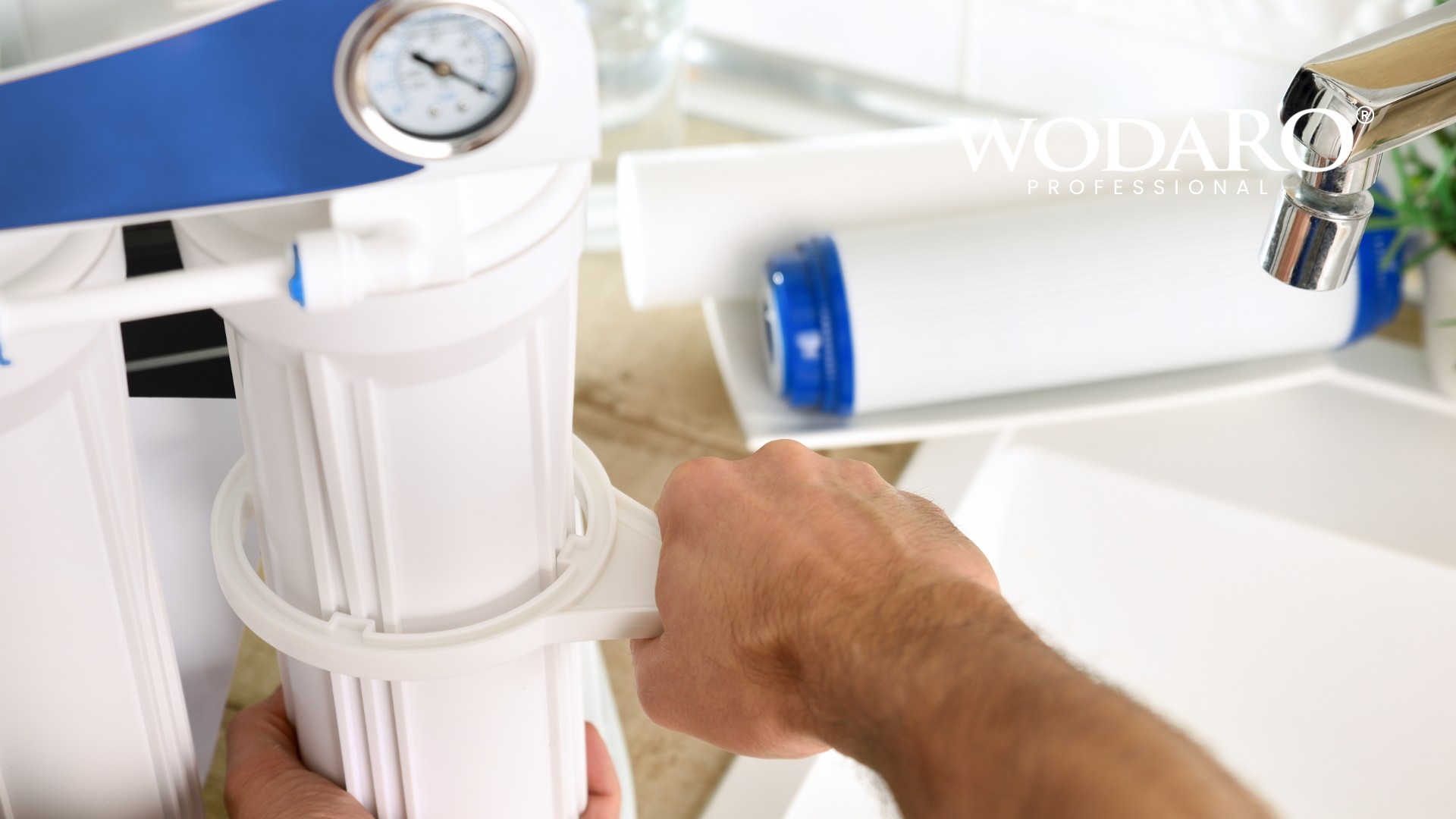
The water in the osmosis system is constantly flowing to the sewage - what to do?
A continuous flow of water from the filtration system is one of the most common concerns among users. If you notice that water in the osmosis system is constantly flowing to the drain, you don't need to assume the worst and call for service right away. In this article, we will guide you through a simple diagnostic process. You will learn how to independently check the condition of the valves, pressure, and proper venting of the system to restore your filter's full functionality.
Table of contents
- Why does water go into the sewage system? (Short answer)
- Step 1: System verification - 3-minute test
- Step 2: How to check the check valve?
- Step 3: Water pressure and air in the system
- Step 4: WhenIs the four-way valve guilty?
- Common mistakes during diagnostics
In this article, you will learn:
- How to check in 3 minutes if your filtration system is actually damaged.
- How to perform a home "glass test" to diagnose the check valve.
- Why is there air in the system?devices after cartridge replacement delay the operation of shut-off valves.
- When is it worth investing in a booster pump to reduce water losses?
Why does water go to the sewage system?
Water rejection is a natural and absolutely necessary process in every reverse osmosis system. It results from the very principle of operation of the semi-permeable membrane – its pores are so microscopic that they retainpollutants directly on its surface. To prevent the membrane from clogging within a few minutes, it must be continuously rinsed with pressurized running water. This stream continuously washes away the pollutants, and the resulting concentrate goes directly to the sewage system.
Knowing this, it is easier to understand the specifics of the device's operation. Customers often worry about the noise of water flowing to the drain, expecting the filter to turn off after a few minutes. In realityA reverse osmosis system typically needs between 1 to 3 hours to completely fill the storage tank. During this time, a continuous discharge of water to the drain is a completely normal and desired phenomenon. The problem arises only when the tank is already full, and water is still flowing to the drain. In such a situation, the most common cause of the malfunction is a damaged check valve, air in the system, or too low pressure in the water supply network.
Key thought: Before you start unscrewing the filter, make sure that the appropriate time has passed for the storage tank to be completely filled with water.
Step 1: System verification - 3-minute test
Before you proceed with replacing parts, perform a quick verification. This will help eliminate unnecessary costs. Close the main valve on the water storage tank. Wait exactly 3 minutes and check if the water is stillflows into the sewage system.
- If the water has stopped flowing: Your system and valve assembly (including the four-way valve) are functioning correctly. The continuous noise was due to the device still replenishing the supply in the tank.
- If the water is still flowing: You are dealing with a malfunction or leak. Detailed diagnostics of the valves should be performed.
Key point: The 3-minute test is the fastest method to distinguish between the natural operation of the device and an actual hydraulic failure.
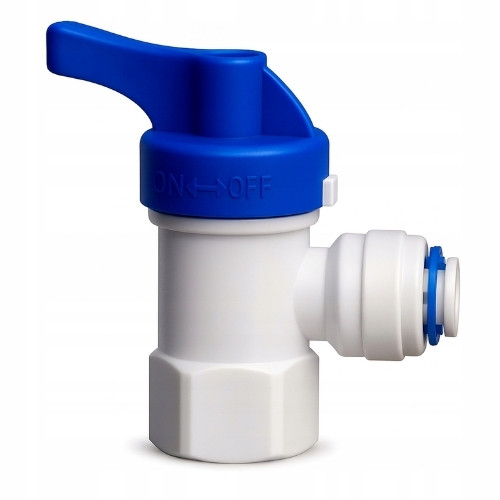
Step 2: How to check the check valve?
If the test with the closed tank confirmed the problem, the main suspect is the check valve. The elementit is responsible for retaining clean water in the system and preventing it from flowing back. To check it, follow these steps:
- Unscrew the valve from the osmotic membrane housing.
- Connect about 10 centimeters of clean tubing to it.
- Place the valve into a glass filled with water.
- Try blowing hard into the tubing.
If the valveBubbles are escaping, which means that the component is not holding pressure and is allowing the medium to flow in the wrong direction. The worn component should be replaced with a new one, which usually resolves the issue of continuous discharge into the sewer.
Key takeaway: A leaking check valve causes water from the tank to backflow, and the system incorrectly diagnoses a pressure drop, resuming continuous operation.
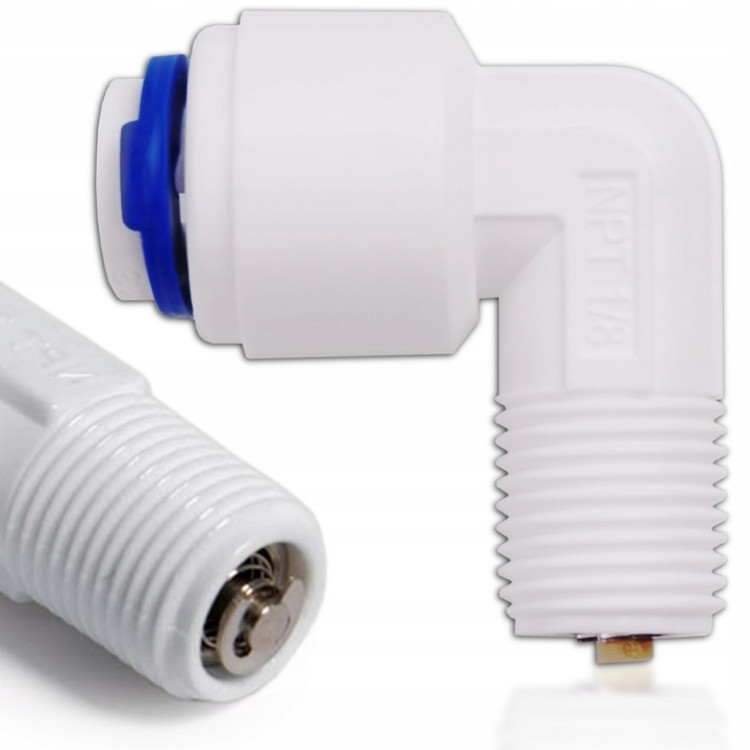
Step 3: Water Pressure and Air Lock in the System
Another common reason for continuous water spitting is trapped air in the system - especially after recent installation or replacement of cartridges. The compressibility of air significantly prolongs the response time of the shut-off valves. To eliminate this problem, open the tap and gently tilt the entire system during the flow.filter at an angle of about 30 degrees. Trapped bubbles will flow out with the stream of water.
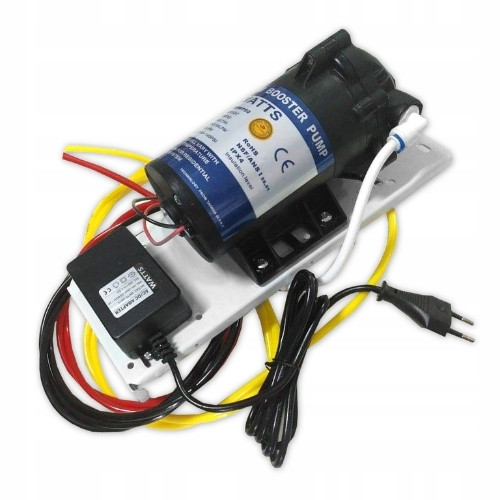
It is also important to check the hydraulic parameters. The minimum for the proper operation of the filter without a factory pressure-boosting pump is 2.8 bar. If the pressure in the network is around 3.5 bar, the device will operate, but its efficiency will remain at an average level. In such a situation, an additional pump is a great solution.supporting, which significantly raises the working pressure. Thanks to it, the filling time is reduced to about 1 hour, and water loss is proportionally and drastically reduced.
Key thought: Proper pressure and the absence of air bubbles in the system guarantee a quick cutoff of the raw water supply after the tank is filled.
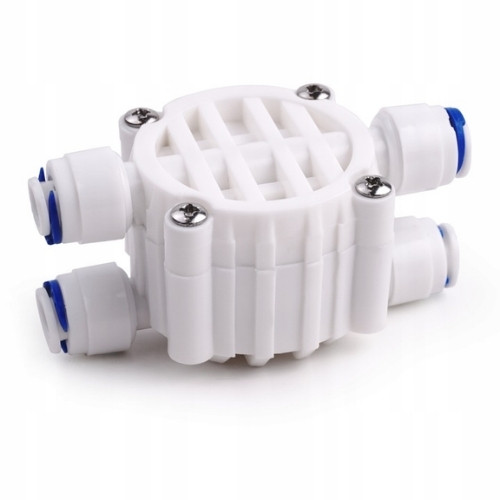
Step4: When is the four-way valve to blame?
Users often wrongly blame the four-way valve for a malfunction. In practice, damage to this component occurs extremely rarely. This element controls the opening and closing of the supply based on pressure differences. It usually lasts several years of trouble-free operation. Only after this long period of natural use, if other diagnostic steps fail, should its replacement be considered.replacement. We always recommend starting the diagnosis with the simplest serviceable elements.

Are you unsure which part has worn out? Check out our offer of top-quality cartridges and replacement components. We guarantee professional support in selection, click: Cartridges and accessories for water filters.
Key thought: The cutoff element with four inlets is a robust construction that fails last in the entire filtration chain.
Most common mistakes during diagnostics
When searching for the causes of continuous discharge into the sewage system, it's easy to make mistakes that generate additional costs and frustration. What should you pay special attention to?
- Lack of patience after cartridge replacement: Users expect an immediate cut-off of the flow, forgetting that an empty membrane and tank require time to equalize pressures.
- Buying a membrane instead of a valve: An expensive membrane is often unnecessarily replaced, while the culprit is a small and cheap component that prevents backflow of water.
- Ignoring network pressure: Attempting to calibrate the device without knowledge of the actual pressure at the tap - in old installations, drops below 2.5 bar prevent the shut-off valve from operating.
- Incorrect pressure in the tank: An empty air cushion in the storage tank prevents water from being pushed to the outlet, disrupting the entire control system.
Key takeaway: You will avoid unnecessary expenses if you maintain the chronology of diagnosis - start with a 3-minute test and pressure verification.
Frequently Asked Questions (FAQ)
How long should reverse osmosis discharge water?
The water discharge lasts as long as the tank filling process. In standard home systems, at the correct pressure, it takes from 1 to 3 hours. After this time, the noise from the drain tube should completely cease.
Does every osmotic filter generate a discharge to the sewage?
Yes, the natural discharge is an integral part of osmotic technology. It is used to rinse the membrane of accumulated impurities, which extends its lifespan and guarantees the highest quality of the obtained liquid.
When to installthe auxiliary pump?
Do this when the pressure in your system is below 2.8 bar, or when you want to drastically shorten production time and reduce the amount of rejected concentrate. Increasing the operating pressure improves the ratio of pure water recovery.
How to recognize a worn four-way valve?
If the check valve is functioning, the pressure is appropriate, and the 3-minute test with the closedThe tank indicates that the flow is still escaping to the sewage system, which is a sign that the main shut-off valve has suffered mechanical wear and is not responding to pressure differences.
How much water does reverse osmosis use for 1 liter of pure water?
Typically, systems without a pump reject about 4 to 6 liters for every 1 liter produced. The use of a pump and modern membranes allows this ratio to be reduced to 1:2, or even 1:1.
Why tilt the filter during the first startup?
Tilting the body by about 30 degrees allows the trapped air bubbles inside to escape through the spout. Without this step, compressible air simulates pressure spikes, which prevents the cutoff automation from functioning stably.
Where to seek help if the diagnosis failed?
If all the above steps did not yield results,If the problem persists despite the result, consult with professionals. We encourage you to contact us through the form: check our technical support.
Sources:
- https://www.gov.pl/web/wsse-warszawa/woda-przeznaczona-do-spozycia - Quality and installation requirements for drinking water (Sanepid).
- https://pkn.pl/ - Polish StandardPN-EN 1717 concerning protection against secondary contamination of water in water supply installations.
- https://www.who.int/teams/environment-climate-change-and-health/water-sanitation-and-health - Guidelines from the World Health Organization (WHO) on the safe operation of household water treatment devices.
Author: Maciej Waliduda. Expert in systemsfiltration with many years of experience in the diagnostics and servicing of water installations. Last updated: 2026-02-19.
