
- There are no more items in your cart
- Shipping
- Total 0.00 zł



Reverse osmosis - operating costs
Reverse osmosis is associated with very precise water purification, but many people are concerned about its costs. In this article, I break down all the expenses: from purchasing the device, through replacing filters, to the cost of water, waste, and electricity. This way, you can easily assess whether this solution is cost-effective in your situation.
Table of contents
- What is reverse osmosis and what aretypes of systems?
- How much does reverse osmosis cost to start?
- Costs of replacing cartridges and membranes
- Cost of water, waste, and electricity
- Example annual costs of different systems
- Does reverse osmosisIs it worth it? Summary
In this article, you will learn:
- How reverse osmosis works and how home, aquarium, and larger systems differ
- What are the typical costs of purchasing filters for kitchens, aquariums, and professional applications
- How much does it cost to replace cartridges andmembranes in the standard under-sink filter
- How much water rejection and electricity consumption affect the bills in practice
- What are the estimated annual costs for several popular filter configurations
- When reverse osmosis is cost-effective and how to choose a solution for your own needs
What is reverse osmosis and what are the types of systems?
In the natural process we call osmosis, water seeks to equalize concentrations on both sides of a semipermeable membrane. In home filtration, we reverse this process – reverse osmosis involves pushing water under pressure through a very fine membrane that retains most dissolvedpollutants.
A ready-to-use device that utilizes such a membrane is often described as a reverse osmosis system. Water is purified in stages, and the membrane ensures that the osmosis of water is truly deep – significantly reducing the level of salts, metal parts, and many other unwanted substances.
Home reverse osmosis filter up tokuchni
The most commonly encountered solution in apartments and houses is a reverse osmosis filter for home installation under the sink. The device connects to cold water, and the purified water goes to a separate faucet or three-way tap.
In this type of setup, it is commonly referred to as osmosis under the sink. In practice, it is a small water treatment station: the water passes throughpre-filters, membrane and post-filters, and the user has constant access to clean water in the kitchen.
The entire device can therefore be treated as a compact reverse osmosis filter that works in the background on a daily basis and does not require complicated handling – apart from periodic replacement of filters.
RO filter for aquariums and other special applications
A separate group consists of sets designed for aquaristics – a typical RO filter for aquariums allows obtaining water with very low mineralization, which is then "tailored" for specific species of fish and plants. Such a set usually does not have a separate kitchen faucet, and water is prepared in batches.
In the descriptions of such devices, the abbreviation RO (reverse osmosis) often appears, which refers to the same membrane technology used in kitchen filters. The difference lies in the way of use and the fact that in aquaristics, precise control of parameters is more important than the convenience of water extraction.
Check out RO filters for aquariums
Industrial osmosis and larger
Where a large amount of water with consistent quality is needed, larger installations are used, where industrial osmosis often operates for many hours a day. Such systems are found, for example, in the food service industry, beverage production, car washes, or manufacturing plants.
In practice, this can be an advanced reverse osmosis water filter that works in conjunction with other devices, such as water softeners or pre-filters. The whole systemIt is designed individually for specific consumption, required parameters, and operating conditions.
Key thought: the same membrane can work in a small kitchen filter, an aquarium set, and a large installation for a company. The final costs are mainly determined by the size of the system and the way it is used, rather than the fact that it is reverse osmosis.
How much does reverse osmosis cost to start?
Short answer: a basic kitchen osmosis typically costs several hundred zlotys, modern tankless systems are more expensive, and large installations for businesses and commercial facilities cost several thousand zlotys or more. Key factors include: efficiency, equipment, and quality.used components.
Osmotic filters with a tank
The most popular are classic under-sink sets with a tank for clean water. You can buy such a reverse osmosis filter in an economical version usually in the range of about 400 to 700 PLN, while models with additional filtration stages, better faucets, or more interesting designs typically fall within the range of approximately 700–1400.zł.
Modern reverse osmosis systems without a tank
More and more people are opting for compact devices without a tank, where water is filtered on demand. Such a reverse osmosis system takes up less space, works faster, and often notifies when a replacement is needed.cartridges on the display or in the app.
Many of these devices come standard with reverse osmosis filter with a mineralizer, which means the water is not only purified but also has a pleasant taste and contains added minerals. Such solutions usually cost between approximately 1000 to 2500 PLN, depending on the brand and equipment.
Cost of special solutions
Sets prepared for aquaristics or operating continuously under higher water demand are priced individually. In the case of companies where a larger installation operates, industrial osmosis is often a part of a larger technological project, and its price depends on efficiency, automation, and the scope of additional safeguards.
Key takeaway: the purchase cost primarily depends on the type of device and its equipment. A simple kitchen set can be purchased for a fraction of the price of a modern tankless system or installation for a company, but each of these variants has its application.
Costs of replacing cartridges and membranes
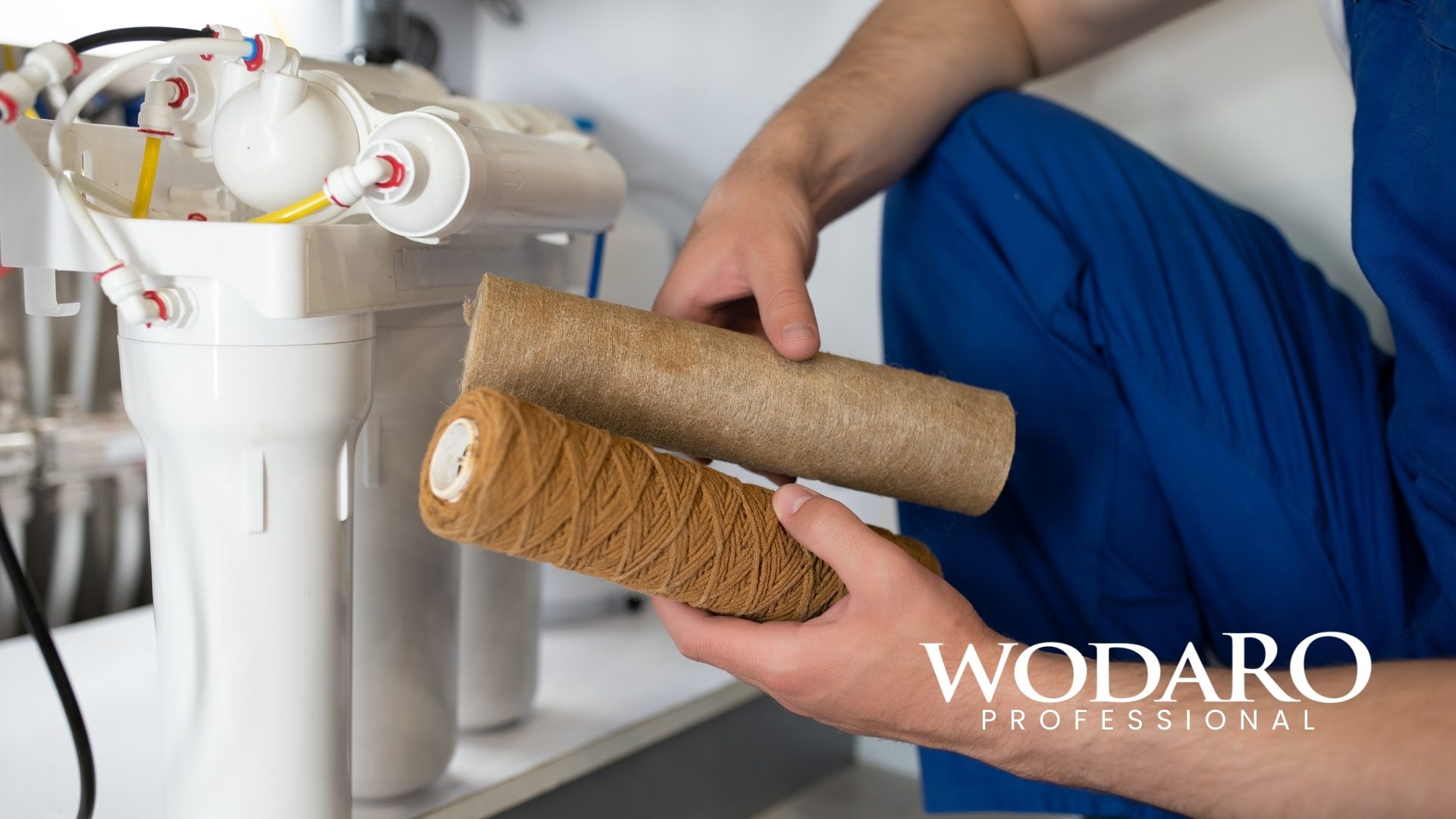
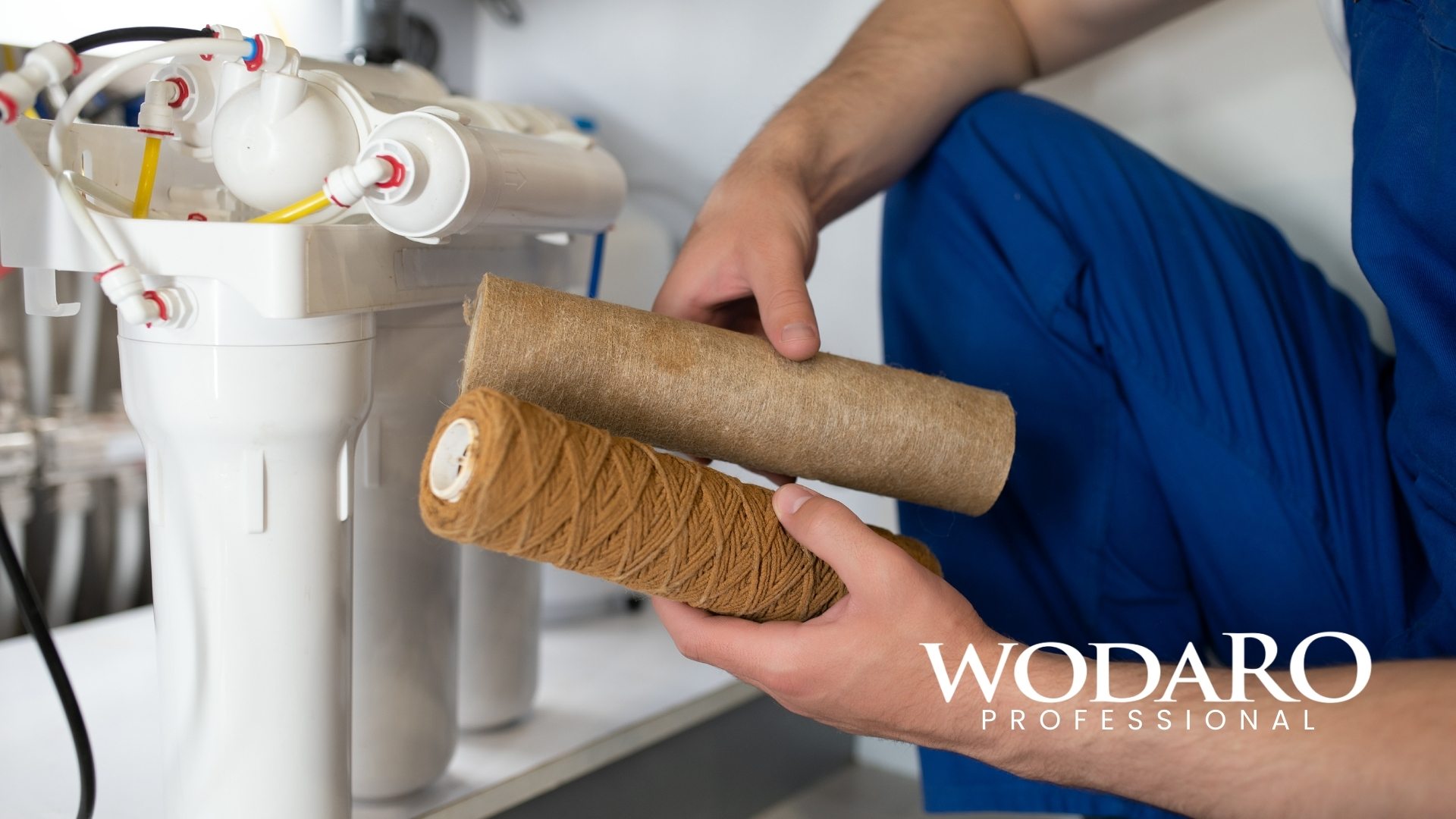
After purchasing the device, the profitability is mainly determined by the operating costs. It is aboutfirst of all, for the regular replacement of pre-filters, post-filters, and the membrane, which is responsible for the most precise purification.
Pre-filters and post-filters
In a typical under-sink set, you will find mechanical filters (which stop sand, rust, and suspensions) and carbon filters, which reduce chlorine and improve the taste of water. Post-filtersthey are responsible for the final correction of taste and smell. For home use, replacing most of them every 6–12 months is a reasonable, safe standard.
A complete set of cartridges for a year for popular models usually costs between 50 and about 350 PLN, depending on the manufacturer and the number of filtration stages. For clarity, it is worth calculating this into a monthly cost – usually, it is an amount that is easy to accept in exchange for the comfort of daily use of the filter.and savings on bottled water.
Membrane in reverse osmosis
Membrane lasts longer than pre-filters, but it is the one that "does the heaviest work." In home systems, replacement every 2–5 years is the most common interval, with installations with very hard or demanding water being closer to the lower end.water.
On the market, you can find systems described as double osmosis (two membranes). This solution is rather considered a curiosity, because although in certain configurations it reduces water rejection, later you have to replace two membranes instead of one. In practice, the savings can be minimal, which is why in most homes it is better to opt for a well-chosen single module and reasonable service.
Additional purification stages instead of another membrane
If you care about even more precise parameter closure, additional filtration stages are often used behind the membrane, for example, a housing with demineralizing resin. In this way, an expanded reverse osmosis filter can more effectively refine water quality, while not doubling the cost of the main component, which ismembrane. Such a solution is used, for example, in autoclaves, where crystalline water quality is a requirement.
Key thought: the regular replacement of cartridges and membranes generates the main operating costs. A well-chosen set and a reasonable service schedule are more important than complicated combinations with additional membranes.
Cost of water, waste, and energy
In reverse osmosis, part of the water goes to the tap with clean water, while part of it, as a concentrate of impurities, goes to the sewage system. There is also the issue of potential power consumption in osmotic systems with a pump. In practice, these elements are rarely the main components of costs.
Water consumption and rejection
The ratio of the amount of clean water to rejection depends on the specificdevices, the quality of the supply water, and pressure. In home systems, values around 1:2 to 1:4 are typical – for every liter of drinking water, several liters are discharged into the sewage system. With standard consumption for drinking and cooking, this usually results in several dozen additional liters per week.
In practice, this means that the filter's contribution to the total water bill is minimal. Other factors are definitely more significant.collection points, such as shower, washing machine, or garden watering.
Electricity consumption
Some systems – especially newer tankless devices and larger installations – have a built-in booster pump. Such a pump only activates during water withdrawal, so its contribution to the electricity bill is usually minimal. Many simple kitchen sets do not have any componentselectric-powered.
How to reduce operating costs?
You will gain the most not by "fiddling" with the device's construction, but by consciously selecting a system that meets your needs. It is important that the filter is matched to the amount of water consumed, as well as to the quality of the incoming water – this way, the cartridges and membrane wear out more slowly, and costs remain predictable.
Key think: water discharge and electricity consumption in a typical household installation usually account for a small percentage of total costs. It is crucial to choose the right device and ensure regular maintenance.
Example annual costs of various systems
To organize the information, below you will find an approximate summary of annual costs for typical configurations. These are estimates that facilitate comparison, notfixed pricing – specific values depend on the model, manufacturer, and working conditions.
- Kitchen set with tank – economical variant: annual replacement of cartridges usually costs around 100–200 PLN, and if we spread the cost of the membrane over several years, it adds another several dozen PLN per year. When calculated monthly, this is an amount that can easily be "hidden" in the household budget.
- Setkitchen with a tank – standard or premium variant: with a larger number of filtration stages and higher quality cartridges, annual costs usually range from about 150–300 PLN plus the cost of the membrane, spread over several years.
- Modern system without a tank: cartridges can be more expensive here, but the device offers greater convenience and better control of operation. In practice, the annual operating cost is usually several hundredzlotys, broken down into several exchanges of inserts.
- Aquarium set: annual expenses depend on the size of the tank and the frequency of water changes, but are often similar to or lower than those of simple kitchen filters, as in many households less water is used for aquaristics than in the kitchen.
- Larger systems for businesses and commercial facilities: absolute costs are higher, butWhen we convert it to liters of prepared water, it turns out that membrane technology is very competitive compared to other methods of preparing process water.
Key point: in a typical home, the main cost is the cartridges and membrane, and annual expenses usually fall within a range that is easy to accept in exchange for convenience and constant access to good quality water.
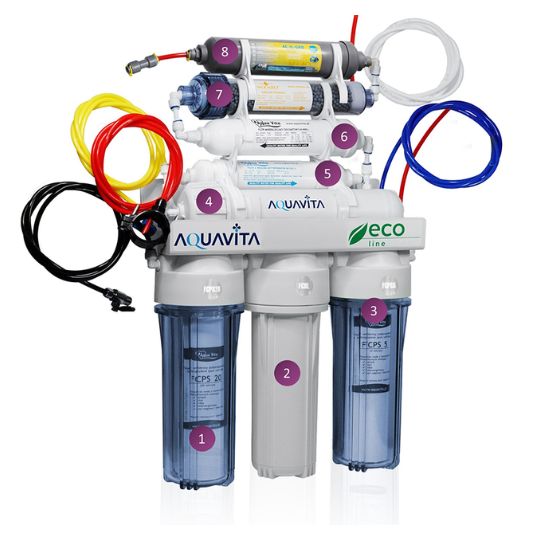
If you want to choose a specific reverse osmosis filter with a remineralizer tailored to your needs, check the current sets in our store and take advantage of individual advice on mojawoda.com.
Is reverse osmosis worth it? Summary
Reverse osmosis is an investment inthe convenience and quality of water. Instead of carrying packs from the store, you have constant access to water with consistent parameters straight from the tap. When calculated per liter, the cost is usually many times lower than that of bottled water.
In practice, we often see that the biggest differences in costs arise not from the device model itself, but from the quality of the incoming water and the regularity of cartridge replacements. A well-chosen reverse osmosis filter for home use, installedproperly maintained and serviced according to recommendations, can work for many years without problems.
If you are wondering which osmotic filter will work best for your situation – for the kitchen, business, or aquarium – it is worth starting with a brief contact and discussing your needs. Based on this, a solution can be selected that makes sense both qualitatively and cost-wise.
Key takeaway: reverse osmosis is cost-effective when the system is well-suited to the user and consciously maintained. It doesn't have to be the most expensive model – what's more important is that it is reasonably selected and regularly serviced.
Frequently Asked Questions (FAQ)
How much does it cost to install a home reverse osmosis filter?
WhenIn self-assembly, you mainly pay for the device itself and any minor accessories. If you hire an installer, there is an additional labor cost that depends on the region and scope of work – it is usually a one-time service lasting a few hours, which ranges from 200 to 500 PLN.
How often should the cartridges and membrane in the filter be replaced?
Pre-filters and final filters are usually replaced every 6–12 months, and the membrane every 2–5 years.The exact schedule depends on the quality of the feed water and the intensity of use, so in more challenging conditions, it is advisable to stick to shorter time intervals.
Does reverse osmosis significantly increase water bills?
Water rejection increases consumption, but when filtering only for drinking and cooking, it is a small percentage of the total household consumption. Usually, the increase in the bill is less noticeable thansavings resulting from giving up bottled water.
Is a reverse osmosis water filter suitable for well water?
It can also work with well water, but it is particularly important to test the water beforehand. Additional treatment steps are often necessary to ensure that the membrane operates under safe conditions. In case of doubt, it is best to consult the results with an experienced advisor.
Is a system with two membranes cost-effective for home use?
A system described as double osmosis (two membranes) can reduce water rejection, but it requires replacing two modules instead of one. In a typical home, it is often more sensible to use a single membrane and possibly an additional filtration stage behind it, rather than complicating the setup.
Is a reverse osmosis filter with a remineralizer expensive in maintenance?
Mineralizer is an additional cartridge that is most often replaced once a year. This raises the annual operating costs by the price of one cartridge, but in return, you get water with a more pleasant taste and added minerals. Overall, it still remains cost-effective compared to buying bottled water.
When is it worth considering a larger system for a business or service facility?
A larger installation makes sensewhere a lot of water of consistent quality is used – for example, in gastronomy, car washes, manufacturing plants, or hotels. In such places, the investment costs are spread over a very large number of liters of prepared water.
Is reverse osmosis a good choice for every household?
It is a very convenient solution, but the decision is best made after a brief analysis: of water quality, the number of household members, and how muchYou consume drinking water. For many families, a reverse osmosis filter becomes a natural substitute for bottled water, but in some cases, other types of filters may be sufficient.
Sources:
- https://mojawoda.com/odwrocona-osmoza — example reverse osmosis systems for home and office.
- https://mojawoda.com/odwrocona-osmoza/z-mineralizacja — filters with reverse osmosiswith water mineralization.
- https://mojawoda.com/reverse-osmosis-industrial-station-aquaphor-np1200 — an example of an osmosis station for industrial applications.
- Manufacturer catalogs and offers from specialized stores with water filters — indicative price ranges and device configurations.
Author: Maciej Waliduda —specialists in the selection and servicing of water filtration systems for homes, businesses, and aquariums.
Last updated: 2025-11-23.
