
- There are no more items in your cart
- Shipping
- Total 0.00 zł



Water filtration using reverse osmosis. What is worth knowing about it?
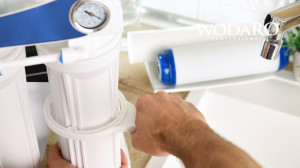
Water filtration using reverse osmosis is one of the most effective technologies for obtaining clean and healthy drinking water. By using semi-permeable membranes, this process effectively eliminates contaminants, which is crucial for health and quality of life. In this article, we will discuss the principles of this technology and its advantages in the context of modern filtration systems.
Last updated: 26August 2025
In this article, you will learn…
What is natural osmosis?
Before we explain reverse osmosis, we first need to define osmosis, which occurs spontaneously under natural conditions. In general terms, this phenomenon involves the diffusion of a solvent (for example, water) through a membrane.semipermeable, which separates two solutions of different concentrations. In nature, a substance with a lower concentration always flows to one with a higher concentration. As a result, the concentrations of both solutions equalize.
It's worth remembering: The process of reverse osmosis is crucial in many fields, including industrial production of drinking water and aquaristics.
How it worksreverse osmosis process?
Reverse osmosis, as the name suggests, works in the opposite way – in this case, a substance with a higher concentration flows to one with a lower concentration. This phenomenon is forced and requires the application of appropriate pressure to the membrane. Because all impurities are retained on it, we obtain crystal clear, healthy water ready forconsumption!
Reverse osmosis and modern filtration systems
The reverse osmosis system is widely used in water filters because it allows for:
- water softening, making it crystal clear and leaving no residue;
- enrichment of water with essential elements for the proper functioning of the human body;
- obtaining healthy water free from chlorine, pesticides, microorganisms, and toxic heavy metals;
- improving the smell and taste qualities of water;
- obtaining ionized water, which among other things: neutralizes the pH of body fluids, oxygenates the body, and cleanses it of toxins;
- reduction of water conductivity (a parameter particularly important from the perspective of aquarists).
As can be seen, there are many advantages to using reverse osmosis filters. If we care about our health, purchasing them should not be up for discussion.
It is worth remembering: Reverse osmosis filters are increasingly being used not only inhouseholds, but also in industry, which demonstrates their versatility and efficiency.
Applications of reverse osmosis
Reverse osmosis is used not only in home filtration systems but also in various industrial sectors. In the food industry, it is used for the production of bottled water, as well as in the purification processes of juices and otherof beverages. In aquaristics, it allows for obtaining water with appropriate parameters for fish and plants. Moreover, this technology is used in medicine for producing water for dialysis and in chemical laboratories for preparing high-purity solutions.
Frequently Asked Questions (FAQ)
What is reverse osmosis?
Reverse osmosis is a processosmosis is safe for drinking?
Yes, water from this process is clean and free from harmful substances.
What contaminants does reverse osmosis remove?
It removes chlorine, pesticides, heavy metals, and microorganisms.
Is reverse osmosis water healthy?
Yes, water from this process is pure and free from harmful substances.
Does reverse osmosis affect the taste of water?
Yes, it improves the taste of water by eliminating unpleasant odors and flavors.
How often should the filter in a reverse osmosis system be replaced?
It is recommended to replace the filters every 6-12 months, depending on usage intensity.
Can reverse osmosis be used in aquaristics?
Yes, it is a popular method.obtaining water with appropriate parameters for fish.
Author: Maciej Waliduda — a specialist in water filtration, with many years of experience in the industry. He assists in selecting the appropriate filtration systems for various needs.
