
- There are no more items in your cart
- Shipping
- Total 0.00 zł



- Bestsellers
- Wholesale
- Water filters
- Whole house filters
- Kitchen filters
- Bathroom filters
- Aquarium filters
- Reverse osmosis
- Water demineralizers
- Filter cartridges
- UV bactericidal lamps
- Alkaline water ionizers
- Industrial water filters
- Accessories, parts, and others
- Descaling filters for the coffee machine
- Water softeners and iron removers
- Water saturators
- ACES
- AMBERLITE
- AQUA VITA
- AQUAFILTER
- AQUAPHOR
- AQUATOR
- BASSAU
- BERG
- BIOCERA
- BIONIQ
- BLUEFILTERS
- CHEMOFORM
- CINTROPUR
- DAFI
- DELONGHI
- DIAMOND
- DOM WODY
- ECOWATER
- FILMTEC
- FIT ALCO
- FITAQUA
- GREEN FILTER
- HANNA INSTRUMENTS
- HELIXPRO
- HELLO PURE
- HIDROTEK
- HM-DIGITAL
- HONEYWELL
- Ibo
- JAVEL
- KLARWOD
- KRUPS
- MIDEA
- OTOWODA
- OTTONE
- Palintest
- PENTAIR
- PHILIPS
- PLATINUM WASSER
- PUROLITE
- SIEMENS
- Steingraf
- SUPREME
- TAB-SOL
- TOP FILTER
- UST-M
- USTM
- VONTRON
- WODARO
-
PayU

Tips
-
The water in the osmosis system is constantly flowing to the sewage - what to do?
-
Hydrogen water – effects, benefits, reviews – is it a scam?
-
Reverse osmosis - operating costs
-
Elimination of chlorine from water – why is it worth doing?
-
Pesticides in water - what they are, health risks, how to remove them
-
The water in the osmosis system is constantly flowing to the sewage - what to do?
-
Organic compounds in water – harmfulness, removal, and where do they come from?
-
Ammonia in water – where does it come from, is it harmful, and how to remove it?
-
Water filtration - why? Hit or miss?
-
Drinking water - effects after a month, skin and weight loss
Water Softeners for a Single-Family House - Comprehensive Guide
Water softener for a single-family house is a device that helps provide cleaner and soft water throughout the building, protecting the water system and household appliances from limescale deposits. Hard water, rich in calcium and magnesium compounds, can lead to problems with pipes, boilers, washing machines, and dishwashers, and can also affect everyday comfort when using water.
In this category, you will find solutions tailored to the needs of a single-family house, including tips on which water softener to choose for 4 people and when it is worth considering a more advanced water treatment station for a single-family house. A properly selected device helps reduce limescale, improve the operating conditions of the system, and extend the lifespan of household equipment.
Filter
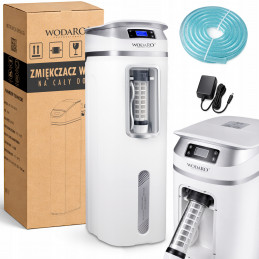
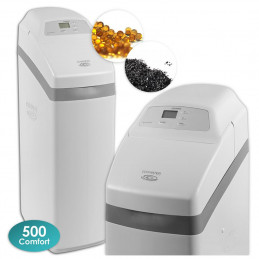
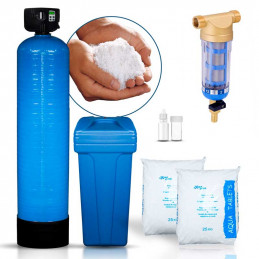
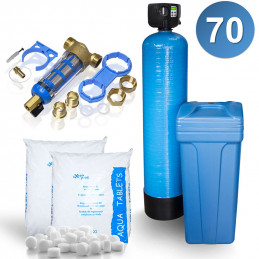
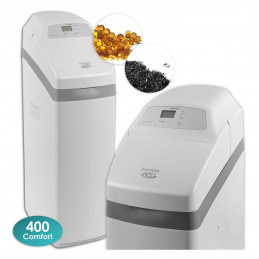
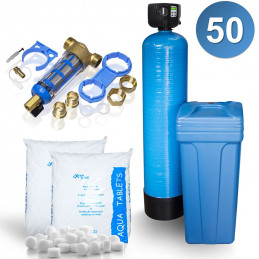

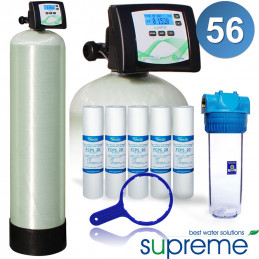
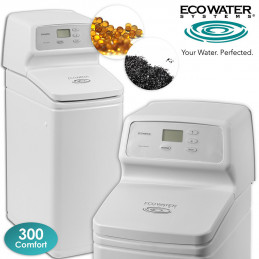
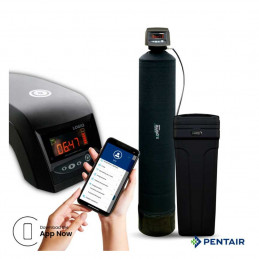
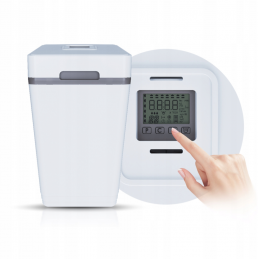
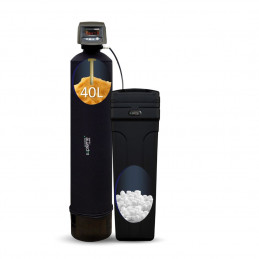
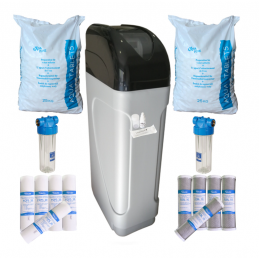
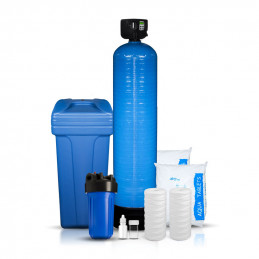
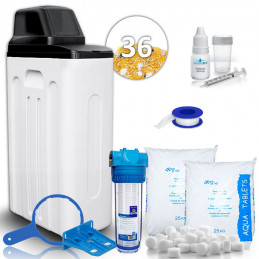
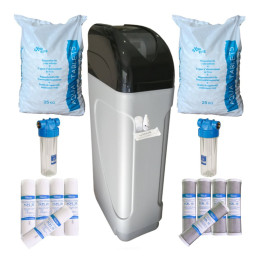
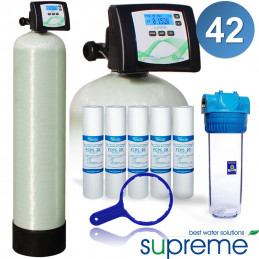
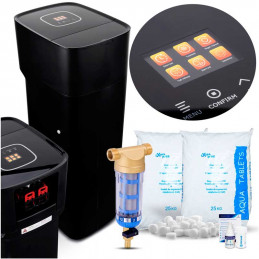
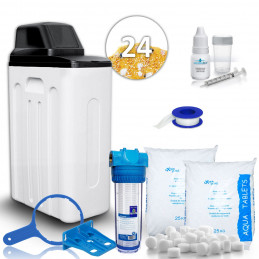
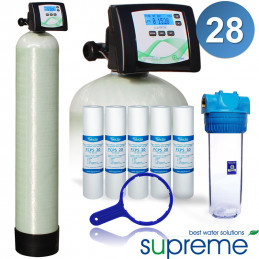
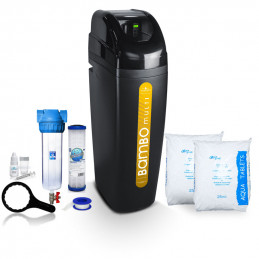
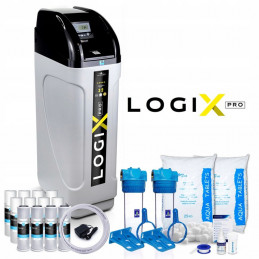
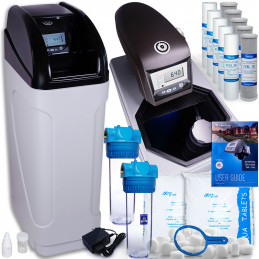
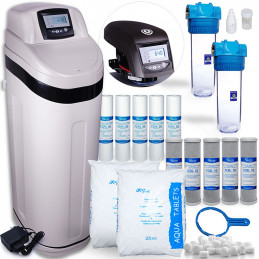
In a single-family house, the problem of hard water quickly becomes noticeable: limescale builds up on fittings, in heating devices and household appliances, and the water system operates under more demanding conditions. That is why a properly selected water softener is a solution that supports everyday comfort and helps take care of the durability of home infrastructure.
In this category, we have gathered devices intended for household use, including models suitable for families of several people and solutions that fit into a broader water treatment station. It is a good choice for people who want to reduce the effects of hard water and consciously select a system according to their own consumption and installation conditions.
The most important information about products in this category:
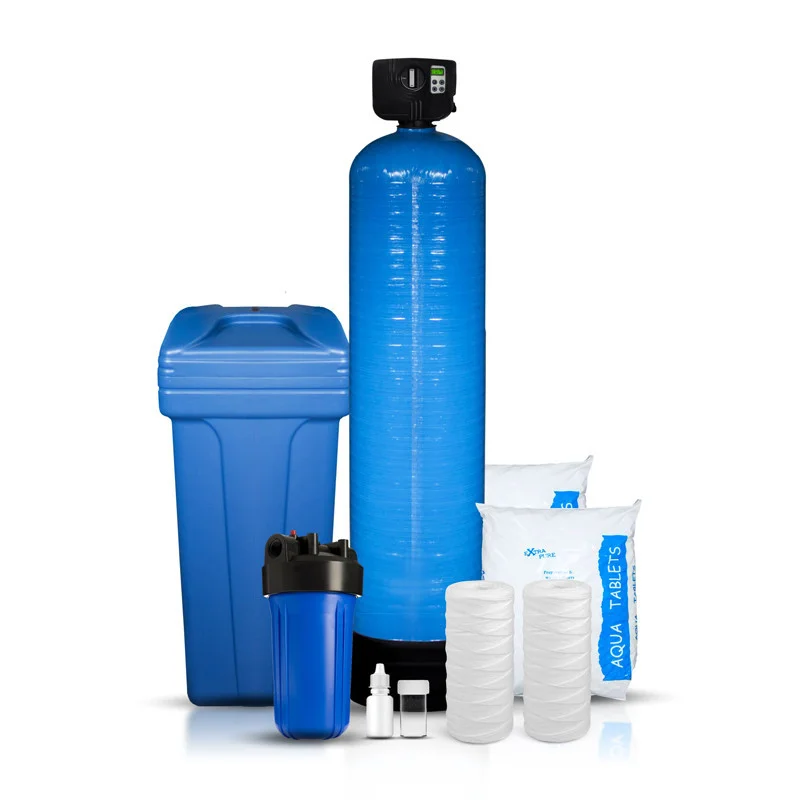
Water softeners for a single-family house use ion exchange resin, which removes calcium and magnesium ions from water, replacing them with sodium ions. This process is called ion exchange - an effective method of reducing the problem of hard water. A typical softener consists of a salt tank, a ion exchange resin tank, and a controller managing regeneration and device operation. It is worth remembering that a softener significantly improves the utility parameters of water, but does not provide 100% drinking water filtration.
What is a water softener and how does it work?
Water softener for a single-family house removes excess minerals responsible for water hardness, mainly calcium and magnesium. As a result, it reduces the buildup of deposits and improves the operating conditions of the system and household devices.
The basis of operation is ion exchange. Water flows through the ion exchange resin, and the controller controls operating and regeneration cycles. For proper operation, the device uses regeneration salt, so the capacity of the salt tank and the ease of refilling it are also important.
Benefits of installing a softener in a single-family house
A properly selected water softening system can bring real operational and practical benefits:
- Protection of the water system - soft water reduces limescale buildup in pipes, which can extend their lifespan and reduce the risk of failures.
- Better utility water quality - water is more skin- and hair-friendly.
- Improved taste of food and beverages - this is one of the benefits indicated when using water with better utility parameters.
- Energy savings - boilers and other heating devices operate more efficiently when they are not covered with limescale deposits.
- Lower detergent consumption - soft water works better with soaps and detergents.
- Longer lifespan of household appliances - washing machines, dishwashers, and other devices can operate longer and more efficiently.
Which water softener for 4 people?
The choice of a device for a family of four depends primarily on water hardness, actual water consumption, and the amount of space available for installation. It is assumed that an average household uses about 150-200 liters of water per person per day, which in the case of 4 people gives around 600-800 liters per day.
In practice, for a family of four, a softener sized for 20-30 liters of ion exchange resin is often sufficient. However, the final selection should be based on an analysis of water parameters and the way the house is used.
What should you pay attention to when choosing?
- Capacity - determines the amount of water the device can treat between regenerations.
- Salt tank capacity - a larger tank usually means less frequent salt refilling.
- Size and compactness - the device should fit the intended installation space.
- Control and automation - modern controllers automatically manage regeneration and the softening process.
- Matching the number of household members - a model that is too small or too large may be less optimal in everyday use.
Water treatment station for a single-family house
Water treatment station for a single-family house is a more advanced solution than a softener alone. It may include additional filtration elements that support improving water quality on different levels.
A typical water treatment station may consist of the following elements:
- Water softener - removes hard minerals from water.
- Carbon filter - helps remove chlorine and organic compounds, improving the taste and smell of water.
- Mechanical filter - traps solid particles such as sand and rust.
- Additional modules - depending on water quality, solutions for removing iron, manganese, or other contaminants may be needed.
If you care not only about reducing hardness, but also about broader water treatment throughout the house, it is worth considering a complete station rather than just a single softener.
Modern water softeners - features worth knowing
Modern devices offer not only softening itself, but also solutions that increase the convenience of everyday operation. Depending on the model, these may include:
- automatic regeneration systems,
- salt consumption monitoring,
- intuitive control panels,
- water consumption monitoring functions,
- solutions with app support.
Central water softener installed on the main connection allows treatment of the water supplied to the entire building. As a result, all points of use - from the kitchen to the bathrooms - benefit from soft water.
Ranking and example solutions for a single-family house
When choosing a device, it is worth using current rankings, opinions, and user reviews. Among the models indicated in the category content are, among others:
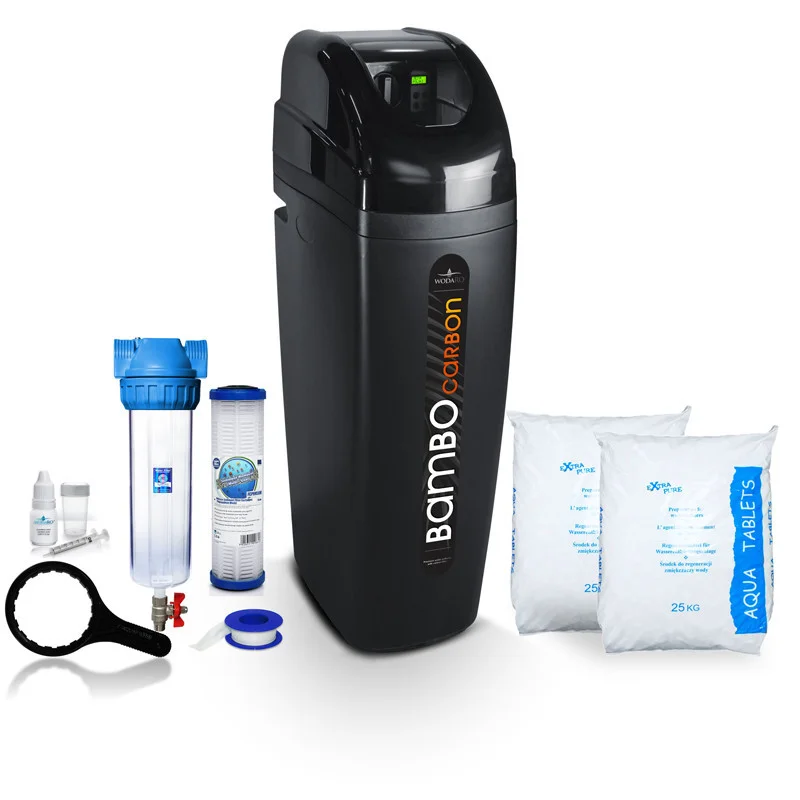
- BAMBO CARBON softener - a compact and efficient model suitable for medium-sized households.
- WODARO SOFTCARBON softener - a high-capacity device, also recommended for larger families.
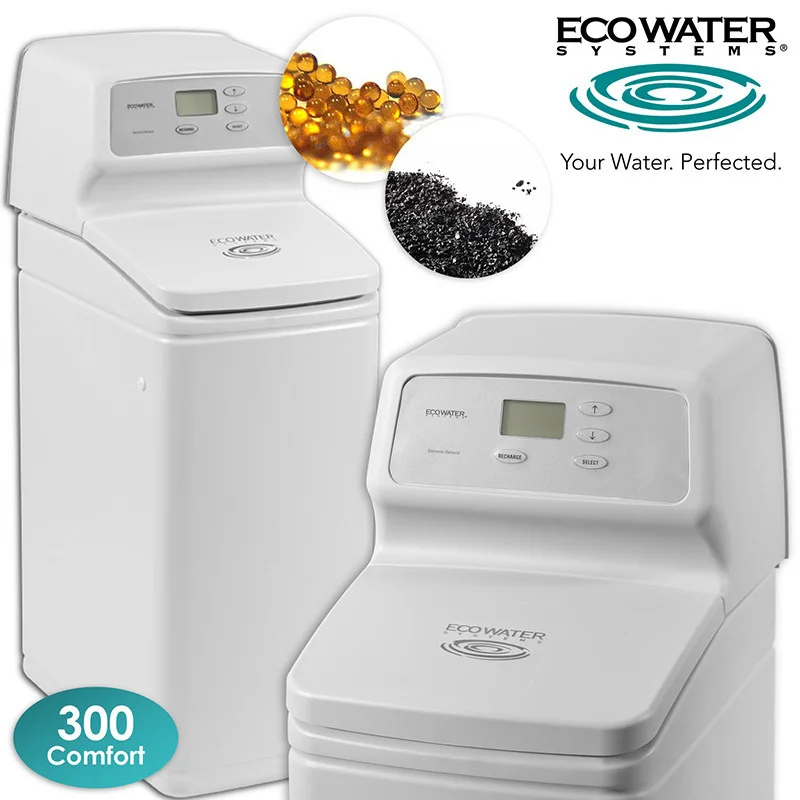
- ECOWATER COMFORT 300 softener - a technologically advanced solution with water consumption monitoring and automatic regeneration.
- EcoWater EVOLUTION - a professional line of water softening devices.
When selecting a specific model, it is worth looking not only at the product's popularity, but above all at its operating parameters and suitability for conditions in the house.
How to choose the best water softener?
The best choice is one that matches the actual operating conditions of the system and the needs of the household members. During the purchasing process, it is worth going through several steps:
- Perform a water hardness analysis - using a tester or laboratory testing.
- Determine water consumption - the number of household members and the style of water use matter greatly.
- Check the available installation space - pay attention to the dimensions of the device and service convenience.
- Compare features - automatic regeneration, salt monitoring, or modern controls can increase comfort of use.
- Read opinions and reviews - this is a helpful source of practical information.
- Consult an expert - especially if the water also requires removal of other contaminants.
The most important parameters in an organized form
| Parameter | Meaning |
|---|---|
| Operating type | Ion exchange - removal of calcium and magnesium ions and replacing them with sodium ions |
| Basic components | Salt tank, ion exchange resin tank, controller |
| Application | Reducing water hardness throughout a single-family house |
| Selection for 4 people | Usually 20-30 liters of ion exchange resin, depending on hardness and water consumption |
| Salt tank capacity | Affects the frequency of salt refilling |
| Important note | A softener improves utility water quality, but does not provide 100% drinking water filtration |
Water treatment unit for a single-family house
Water treatment unit for a single-family house may combine the functions of softening, filtration, and purification. This type of device helps remove limescale and other contaminants, improving water quality in the house and the comfort of everyday use.
In practice, this means better protection of the system, support for household appliances, and greater convenience in using tap water. In many homes, effective softeners and water filters form the basis of a modern treatment system.
FAQ - frequently asked questions
What is the difference between a water softener and a complete treatment station?
A softener is mainly responsible for removing water hardness, that is, reducing the content of calcium and magnesium. A treatment station may additionally include mechanical filters, carbon filters, and solutions for removing iron, manganese, or other contaminants.
Is a water softener suitable for every single-family house?
In many cases yes, but the selection of the device should take into account water hardness, the number of household members, water consumption, and the installation location. The best results come from a choice based on an analysis of water parameters.
Which water softener should you choose for a 4-person family?
For a four-person household, a model with about 20-30 liters of ion exchange resin is often suitable. However, the final decision should depend on water hardness and actual daily consumption.
Does a water softener improve drinking water quality?
A softener significantly improves utility water quality and eliminates the hardness problem, but it does not provide 100% filtration for drinking water. If you care about broader purification, it is worth considering additional filtration stages.
What benefits does soft water provide in everyday use?
Soft water helps protect the system from limescale, supports longer operation of household appliances, can reduce detergent consumption, and improves comfort of water use, also in relation to skin and hair.
Does a water softener need to be refilled regularly?
Yes, the device requires replenishment of regeneration salt. The frequency depends on the capacity of the salt tank, operating settings, water hardness, and intensity of use.
Where is a central water softener installed?
Most often on the main water supply connection to the building. This means all water supplied to the house is treated, and all points of use benefit from the softening effect.
What should you pay attention to when comparing models?
The most important factors are capacity, resin bed size, salt tank capacity, device compactness, control method, automatic regeneration functions, and suitability for the number of users.
Is it worth checking rankings and opinions before buying?
Yes, rankings and reviews are helpful because they show user experiences and popular market solutions. However, they should not replace technical analysis and matching the device to a specific house.