- There are no more items in your cart
- Shipping
- Total 0.00 zł



- Bestsellers
- Wholesale
- Water filters
- Whole house filters
- Kitchen filters
- Bathroom filters
- Aquarium filters
- Reverse osmosis
- Water demineralizers
- Filter cartridges
- UV bactericidal lamps
- Alkaline water ionizers
- Industrial water filters
- Accessories, parts, and others
- Descaling filters for the coffee machine
- Water softeners and iron removers
- Water saturators
- ACES
- AMBERLITE
- AQUA VITA
- AQUAFILTER
- AQUAPHOR
- AQUATOR
- BASSAU
- BERG
- BIOCERA
- BIONIQ
- BLUEFILTERS
- CHEMOFORM
- CINTROPUR
- DAFI
- DELONGHI
- DIAMOND
- DOM WODY
- ECOWATER
- FILMTEC
- FIT ALCO
- FITAQUA
- GREEN FILTER
- HANNA INSTRUMENTS
- HELIXPRO
- HELLO PURE
- HIDROTEK
- HM-DIGITAL
- HONEYWELL
- Ibo
- JAVEL
- KLARWOD
- KRUPS
- MIDEA
- OTOWODA
- OTTONE
- Palintest
- PENTAIR
- PHILIPS
- PLATINUM WASSER
- PUROLITE
- SIEMENS
- Steingraf
- SUPREME
- TAB-SOL
- TOP FILTER
- UST-M
- USTM
- VONTRON
- WODARO
-
PayU

Tips
-
The water in the osmosis system is constantly flowing to the sewage - what to do?
-
Hydrogen water – effects, benefits, reviews – is it a scam?
-
Reverse osmosis - operating costs
-
Elimination of chlorine from water – why is it worth doing?
-
Pesticides in water - what they are, health risks, how to remove them
-
The water in the osmosis system is constantly flowing to the sewage - what to do?
-
Organic compounds in water – harmfulness, removal, and where do they come from?
-
Ammonia in water – where does it come from, is it harmful, and how to remove it?
-
Water filtration - why? Hit or miss?
-
Drinking water - effects after a month, skin and weight loss
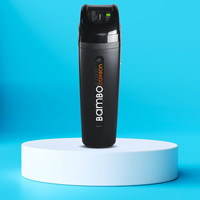
Water softeners
Water softeners reduce water hardness through the exchange of calcium and magnesium ions for sodium ions. Calcium and magnesium are responsible for the formation of limescale, which builds up in installations, fittings, and household appliances.
Using a water softener helps remove troublesome deposits and protect everyday equipment such as a washing machine or dishwasher. Softer water can also improve the comfort of water use at home, having a positive effect on the condition of skin and hair.
In this category, you will find solutions for homes and businesses that help take care of the water system, device performance, and the convenience of everyday water use.
Filter
Price
Brand
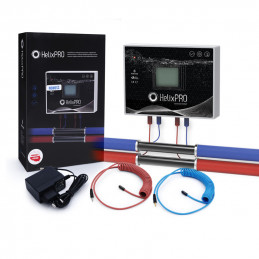
HelixPRO impulse generator water softener
Water softeners are among the most frequently chosen water treatment devices for homes and commercial facilities. Their main task is to reduce water hardness and, in practice, also to protect installations, fittings, and devices against limescale buildup. This solution improves the comfort of everyday water use and helps limit the effects of the presence of calcium and magnesium ions.
This category includes water softeners for various applications: from compact models for apartments and houses to more advanced devices intended for small businesses, hotels, restaurants, and selected industrial applications. A properly selected water softener supports the efficient operation of the installation and allows better control of the effects of hard water.
Key information about water softeners:
Devices in this category operate on the principle of ion exchange and remove calcium ions (Ca²⁺) and magnesium ions (Mg²⁺) from water, replacing them with sodium ions (Na⁺). As a result, the water becomes softer, which reduces limescale buildup in pipes, boilers, washing machines, dishwashers, and fittings. Water softeners use ion exchange resin, which requires periodic regeneration with a table salt solution (NaCl). The range includes compact and two-piece models as well as devices with manual, time-based, and volume-based regeneration.
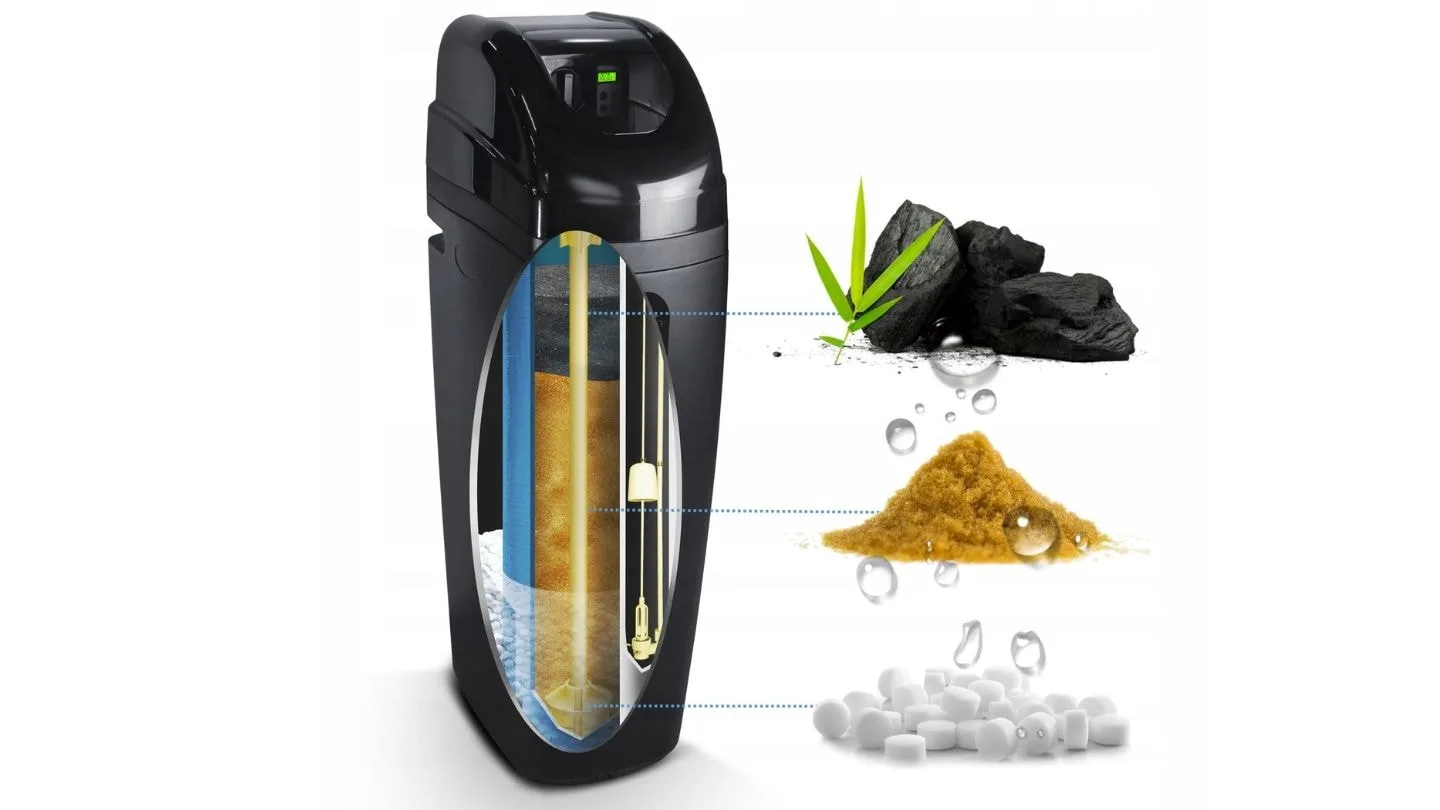
How does a water softener work?
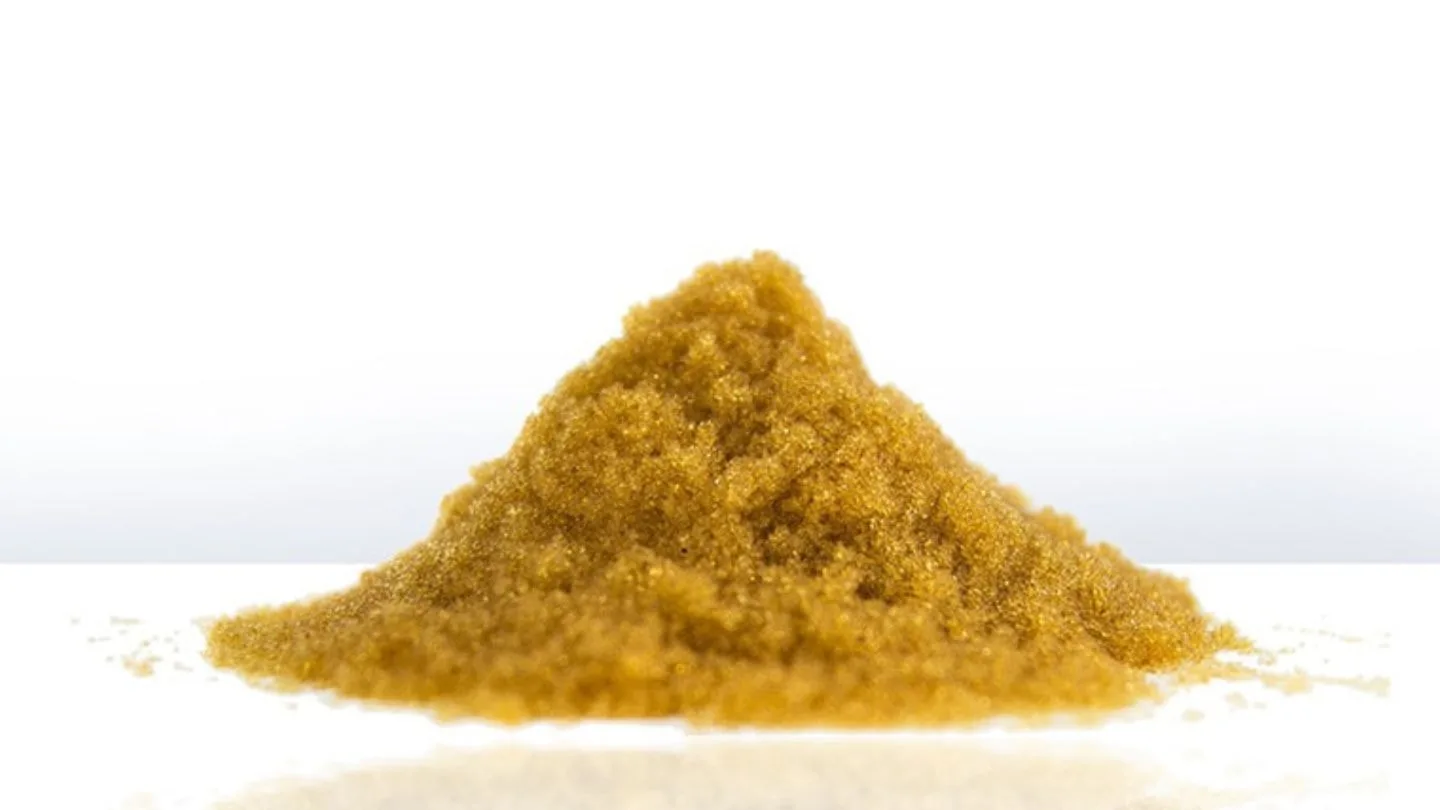
The operation of a water softener is based on ion exchange. Hard water contains calcium ions (Ca²⁺) and magnesium ions (Mg²⁺), which are responsible for its hardness. The device contains an ion exchange resin, often based on cation resin, thanks to which liquid with a pH level above 7 undergoes the ion exchange process.
During the operation of the softener, calcium and magnesium ions are removed from the water, and sodium ions (Na⁺) are introduced in their place. The result is significantly softer water, which prevents limescale from building up in devices and pipes.
Why is it worth using water softeners?
The benefits of using a water softener are noticeable both at home and in service facilities or selected business installations. Soft water makes everyday use of the installation easier and helps reduce many problems associated with hard water.
- Protection of fittings and installations – lower risk of limescale buildup in pipes, lines, and on fitting components.
- Longer lifespan of household appliances – washing machines, dishwashers, boilers, and heat exchangers are less exposed to failures and reduced performance.
- Greater efficiency of device operation – reducing limescale supports better heat transfer and lower energy consumption.
- Better comfort of everyday water use – soft water is often perceived as more pleasant during bathing and washing.
- Benefits for skin and hair – reducing hardness may improve care comfort and reduce the feeling of dryness.
- Lower consumption of detergents and cleaning products – soft water usually requires smaller amounts of soaps, detergents, and cleaning agents.
- Reduction of deposits and waste – less limescale on sanitary equipment and household appliances means easier cleaning.
Water softener regeneration
Water softeners have a limited capacity for removing calcium and magnesium ions. As the device is used, the ion exchange resin becomes saturated with these ions, so regeneration is necessary.
The regeneration process consists of rinsing the resin with a table salt solution (NaCl). This releases the calcium and magnesium ions, and sodium ions take their place again. After regeneration is complete, the water softener is ready for another water treatment cycle.
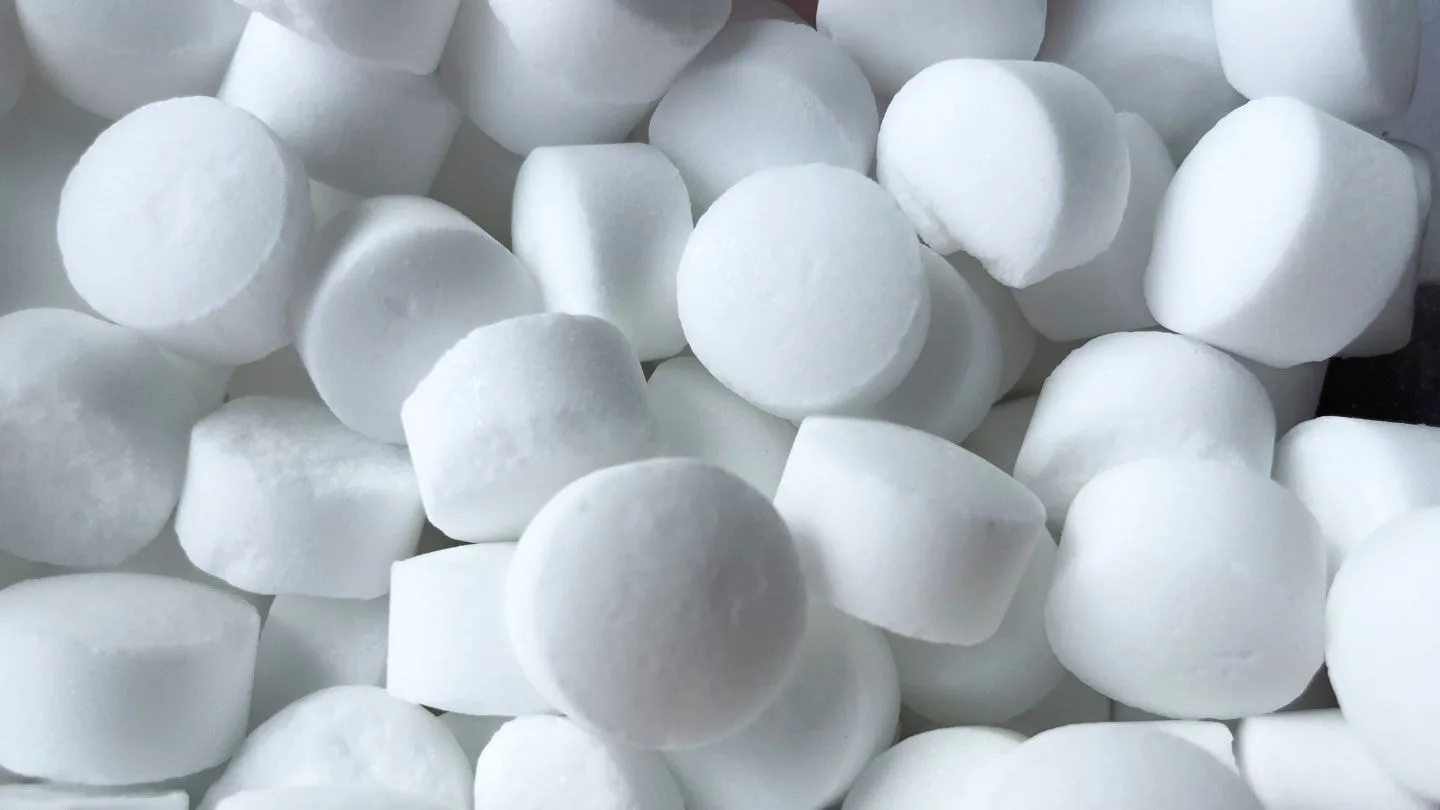
Practical tip: the softener requires regular refilling with tablet salt, as it is essential for the proper regeneration of the ion exchange resin.
Types of ion exchange resins
An important element of every water softener is the type of ion exchange resin used. Materials describing this technology most often mention three basic types of resin.
- Cation resin – used to remove calcium and magnesium ions; this is the typical solution for classic water softeners.
- Anion resin – used when it is necessary to remove anions such as chloride or sulfate ions.
- Mixed resin – a combination of cation and anion resins that allows water treatment for various types of contaminants.
Types of water softeners by design
Compact water softeners
Compact water softeners are a common choice in households and small businesses. Their advantage is their small size, simple operation, and easy installation and maintenance.
These are standalone devices that do not require a separate tank for tablet salt or a separate pressure vessel with filtration media. Due to their limited capacity, they are best suited mainly for less demanding applications.
Two-piece water softeners
Two-piece water softeners consist of two separate units: a salt tank and a pressure vessel filled with filtration media with a control head. This is a more advanced solution than compact models.
A larger salt tank and greater working capacity mean that such devices can handle higher water flow. For this reason, they are often used in hotels, restaurants, or industrial plants, where water demand is higher.
Types of softeners by regeneration method
Manual regeneration softeners
This is the basic type of device in which the user starts and controls the regeneration process themselves. The solution is relatively simple, but it requires more attention and regular operation.
Time-controlled softeners
Time-controlled models, also called timer-based models, start regeneration automatically at set time intervals. This is a convenient solution, but with irregular water consumption it may lead to higher salt and water usage.
Volume-controlled softeners
The most advanced devices monitor water consumption and start regeneration only when it is actually necessary. This is an efficient and economical solution that helps minimize salt and water losses.
How to choose a water softener for a home or business?
Choosing the right device should be based on the actual needs of users and the nature of the installation. In practice, not only the dimensions of the device matter, but also the expected intensity of use.
- Scale of water consumption – the greater the demand, the more important the appropriate capacity and performance of the device become.
- Installation location – in smaller boiler rooms or technical rooms, compact models often work better.
- Type of facility – a single-family house, small business, restaurant, or hotel may require different design solutions.
- Regeneration method – with regular and higher water consumption, automatic models are usually the most convenient, especially volume-controlled ones.
- Operation and maintenance – it is worth considering the ease of adding salt, servicing, and ongoing monitoring of device operation.
Key information at a glance
| Area | Information |
|---|---|
| Operating principle | Exchange of calcium and magnesium ions for sodium ions. |
| Working media | Ion exchange resin, often cation resin. |
| Effect | Reduction of water hardness and limitation of limescale buildup. |
| Regeneration | Rinsing the resin with a table salt solution (NaCl). |
| Division by design | Compact and two-piece water softeners. |
| Division by regeneration | Manual, time-controlled, and volume-controlled. |
| Application | Homes, small businesses, hotels, restaurants, and selected industrial applications. |

Water softeners for homes and commercial applications
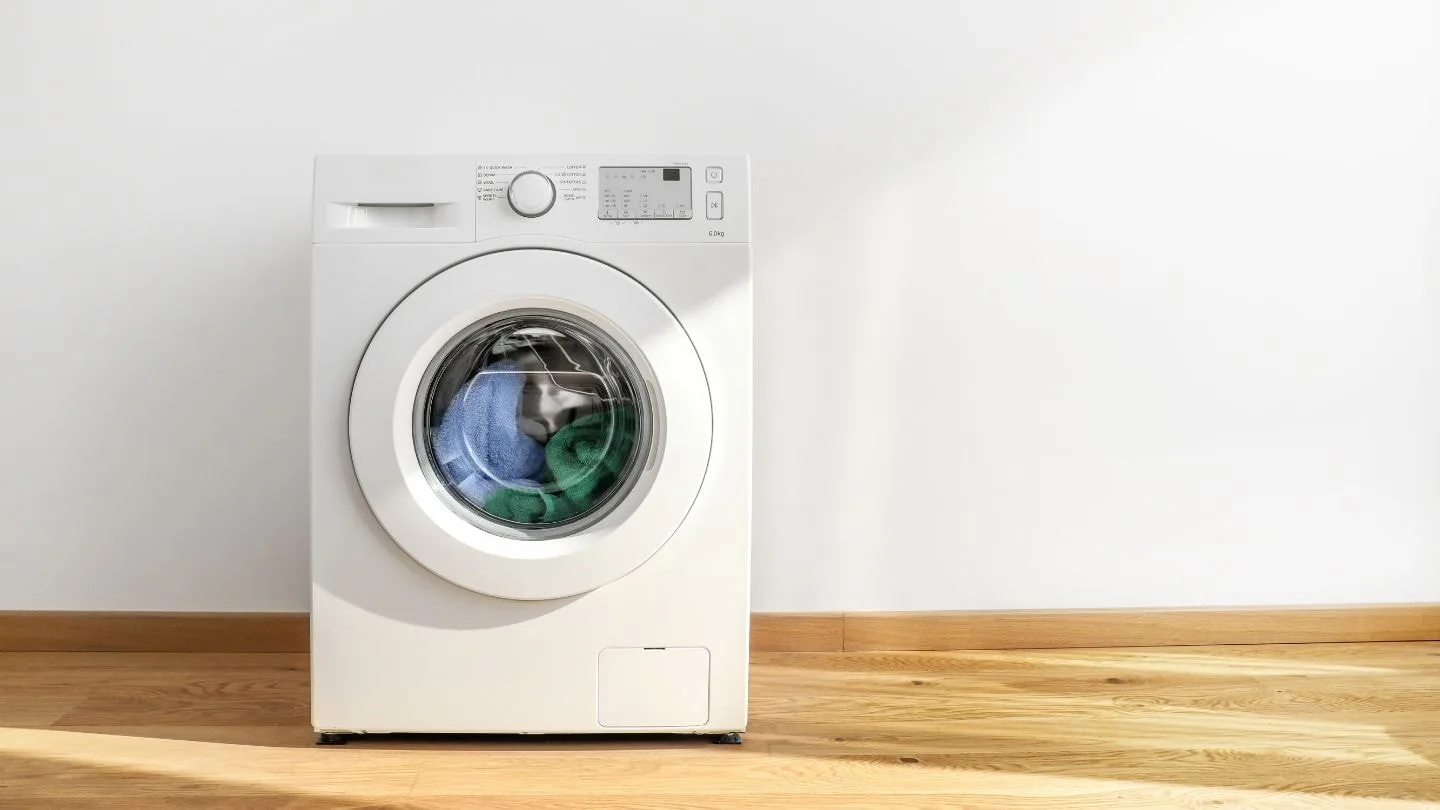
In households, water softeners help protect fittings, washing machines, dishwashers, boilers, and installations from the effects of hard water. In small businesses and service facilities, they support maintaining device efficiency and predictable installation performance.
In many branches of industry, softer water is important for process stability and device protection against failures. Reducing hardness can translate into better efficiency and a lower risk of downtime resulting from deposit buildup.
FAQ – frequently asked questions about water softeners
What is a water softener?
A water softener is a device that reduces water hardness by removing calcium and magnesium ions and replacing them with sodium ions. As a result, it limits limescale buildup in the installation and devices.
How does a water softener work?
The device works on the principle of ion exchange. Hard water flows through ion exchange resin, which captures calcium and magnesium ions and releases sodium ions into the water.
Why is a water softener used at home?
A water softener is used to limit limescale buildup, protect fittings and household appliances, improve the comfort of bathing and washing, and also reduce the consumption of detergents and cleaning products.
Does a water softener help protect a washing machine, dishwasher, and boiler?
Yes. Reducing water hardness helps limit limescale deposits, which reduce device performance and may accelerate wear or lead to failure.
What does water softener regeneration involve?
Regeneration consists of rinsing the ion exchange resin with a table salt solution (NaCl). This process restores the resin’s ability to continue removing calcium and magnesium ions.
What types of water softeners are there?
By design, there are compact and two-piece water softeners. By regeneration method, there are manual, time-controlled, and volume-controlled models.
When should you choose a compact water softener?
A compact model is a good choice when saving space, simple operation, and use in a home or small business with moderate water demand are important.
When is a two-piece water softener a better choice?
A two-piece water softener is worth considering for higher water consumption and where greater working capacity is needed, for example in hotels, restaurants, or some industrial applications.
Which regeneration method is the most economical?
Volume-controlled softeners are usually the most economical because they start regeneration only when it results from actual water consumption.
Does soft water affect the comfort of skin and hair?
Soft water is often perceived as gentler during daily care. Reducing hardness can improve the comfort of bathing and washing and reduce the feeling of dryness of the skin and hair.