
- There are no more items in your cart
- Shipping
- Total 0.00 zł



- Bestsellers
- Wholesale
- Water filters
- Whole house filters
- Kitchen filters
- Bathroom filters
- Aquarium filters
- Reverse osmosis
- Water demineralizers
- Filter cartridges
- UV bactericidal lamps
- Alkaline water ionizers
- Industrial water filters
- Accessories, parts, and others
- Descaling filters for the coffee machine
- Water softeners and iron removers
- Water saturators
- ACES
- AMBERLITE
- AQUA VITA
- AQUAFILTER
- AQUAPHOR
- AQUATOR
- BASSAU
- BERG
- BIOCERA
- BIONIQ
- BLUEFILTERS
- CHEMOFORM
- CINTROPUR
- DAFI
- DELONGHI
- DIAMOND
- DOM WODY
- ECOWATER
- FILMTEC
- FIT ALCO
- FITAQUA
- GREEN FILTER
- HANNA INSTRUMENTS
- HELIXPRO
- HELLO PURE
- HIDROTEK
- HM-DIGITAL
- HONEYWELL
- Ibo
- JAVEL
- KLARWOD
- KRUPS
- MIDEA
- OTOWODA
- OTTONE
- Palintest
- PENTAIR
- PHILIPS
- PLATINUM WASSER
- PUROLITE
- SIEMENS
- Steingraf
- SUPREME
- TAB-SOL
- TOP FILTER
- UST-M
- USTM
- VONTRON
- WODARO
-
PayU

Tips
-
The water in the osmosis system is constantly flowing to the sewage - what to do?
-
Hydrogen water – effects, benefits, reviews – is it a scam?
-
Reverse osmosis - operating costs
-
Elimination of chlorine from water – why is it worth doing?
-
Pesticides in water - what they are, health risks, how to remove them
-
The water in the osmosis system is constantly flowing to the sewage - what to do?
-
Organic compounds in water – harmfulness, removal, and where do they come from?
-
Ammonia in water – where does it come from, is it harmful, and how to remove it?
-
Water filtration - why? Hit or miss?
-
Drinking water - effects after a month, skin and weight loss
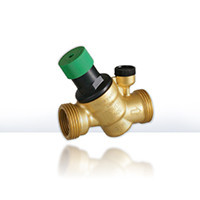
Water pressure reducer - introduction
Water pressure reducers are essential components of plumbing systems, designed to maintain stable and appropriate water pressure. They help preserve proper operating parameters of water installations and filtration systems.
They are especially important where large pressure fluctuations occur in the water supply network. Excessively high or unstable pressure can lead to damage to the installation, fittings, and household appliances, which is why a properly selected reducer increases safety and everyday water use comfort.
Filter
Price
Brand
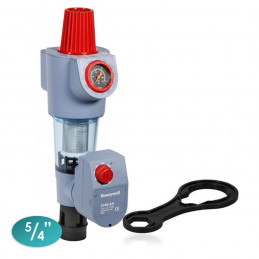
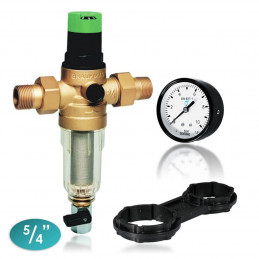
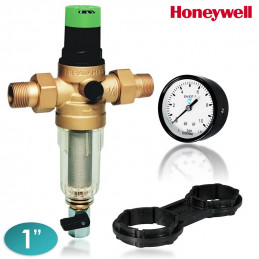
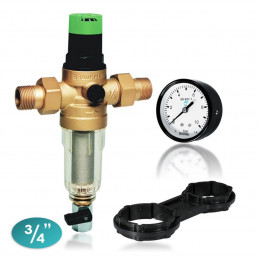
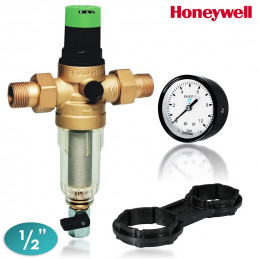
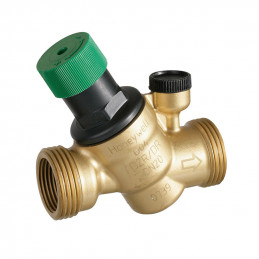
Pressure reducers are practical and very important components of water systems, responsible for the reduction and stabilization of water pressure supplied to a building or selected devices. Their use helps protect pipes, valves, fittings, and filtration devices from the effects of pressure surges, while also improving the comfort of using taps, showers, and other water intake points.
In this category, you will find pressure reducers for water installations and filtration systems, including models with a filter. These devices help maintain stable operating parameters, protect the installation from excessive pressure, and may reduce the risk of leaks, cracks, and accelerated wear of hydraulic components.
What are pressure reducers and why are they important?
Water pressure reducer is a mechanical device designed to reduce water pressure and maintain it at a safe, set level. In practice, this means protecting the installation from excessive load, which can cause leaks, cracks, and other damage.
Properly set pressure also affects the comfort of water use. If it is too high, it can strain the installation and fittings, while if it is too low, it reduces the comfort of everyday use of a tap or shower. That is why a reducer is an important component both in single-family homes, apartments, and larger facilities.
The main benefits of using a pressure reducer
- stabilization of water pressure in the installation,
- protection of pipes, valves, and fittings against pressure surges,
- increased operational safety of household appliances and filtration systems,
- reduced risk of leaks and cracks,
- improved comfort of use at water intake points,
- possibility of additional protection against contaminants in models with a filter,
- water and energy savings thanks to maintaining a constant pressure level.
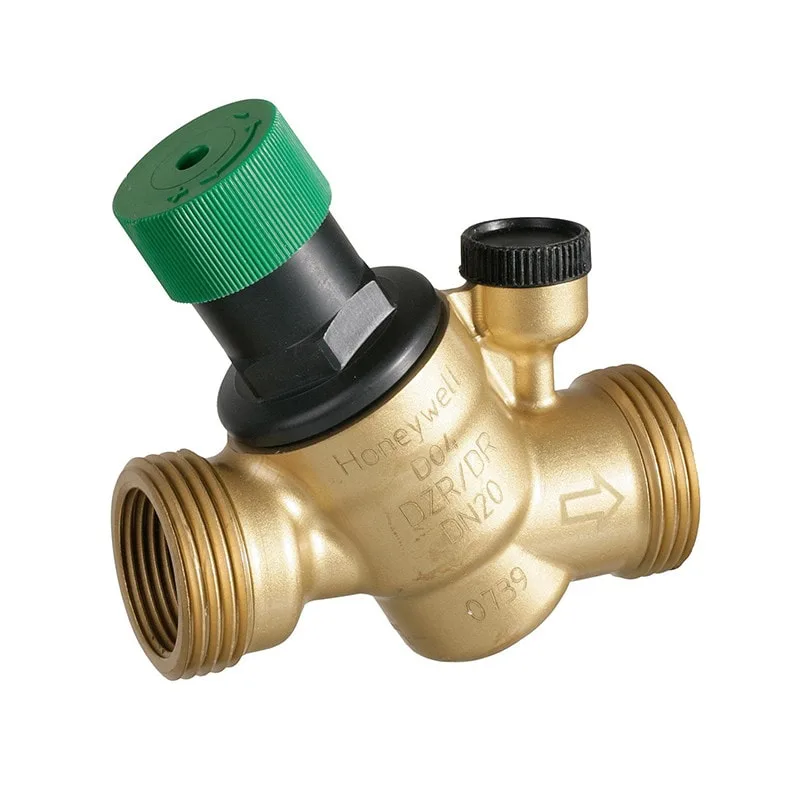
Types of water pressure regulators
Basic pressure regulators
Water pressure regulators come in various types and sizes to meet diverse installation needs. A basic regulator usually consists of a control valve, spring, and diaphragm, which together are responsible for reducing pressure to the desired level.
Pressure reducers with a filter
Water pressure reducers with a filter offer additional protection against contaminants that may enter the installation. The filter retains solid particles such as sand or rust, which helps limit the buildup of impurities in pipes and valves. This solution is particularly recommended where water quality is lower or the risk of contamination is high.
In practice, you may also encounter solutions referred to as a water filter with a reducer, which combine two functions in one unit.
Structure of a water pressure reducer
A water reducer is most often made up of durable components, often made of brass, which supports long and trouble-free operation. The overview below organizes the most important structural elements.
| Component | Function |
|---|---|
| Pressure gauge | Allows pressure monitoring. |
| Control valve | Controls water flow and reduces pressure. |
| Filter slot | Allows installation of a filter that retains contaminants. |
| Spring and diaphragm | Work together to stabilize water pressure. |
| Housing | Made of durable materials, protects internal components. |
How to choose the right pressure reducer?
The choice of reducer should take into account the size of the installation, the required flow rate, and the pressure level in the network. In this category, you will find, among others, popular connection sizes used in household installations and larger systems.
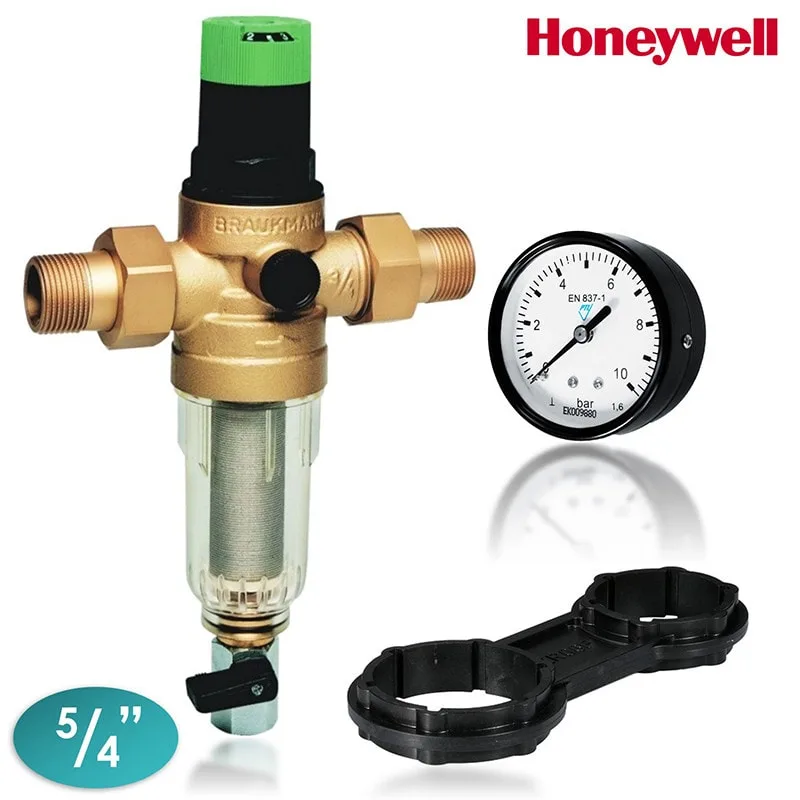
1/2 inch water pressure reducer
This solution is most commonly used in small household installations, where water flow is low. It works well in apartments where water pressure is too high and needs to be reduced to a safe level.
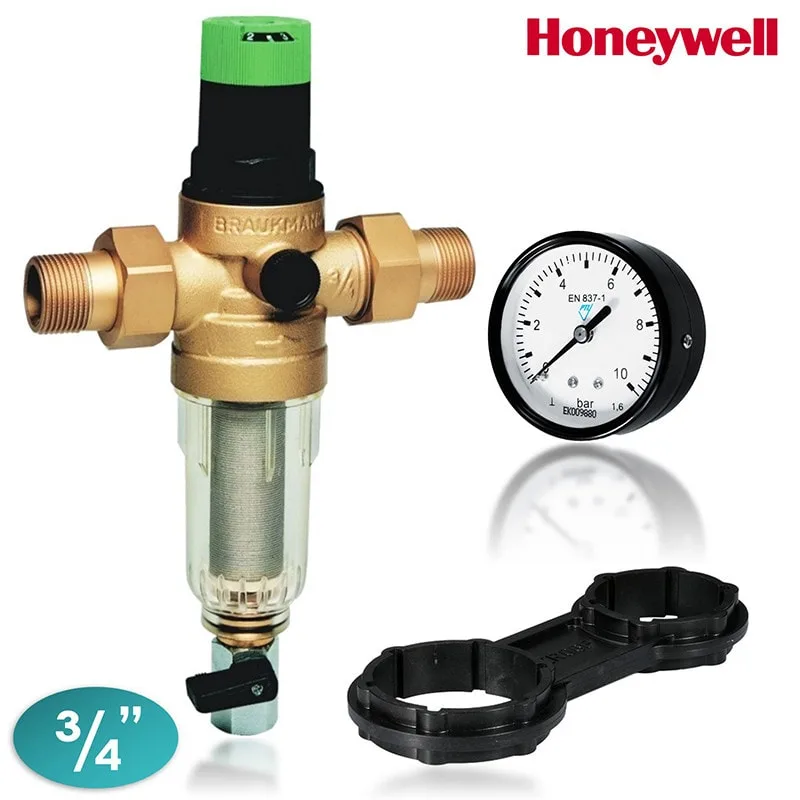
3/4 inch water pressure reducer
The 3/4 inch reducer is a popular choice for medium household installations. It is suitable where water flow is moderate and pressure in the water supply network tends to vary. Maintaining constant pressure may translate into water and energy savings.
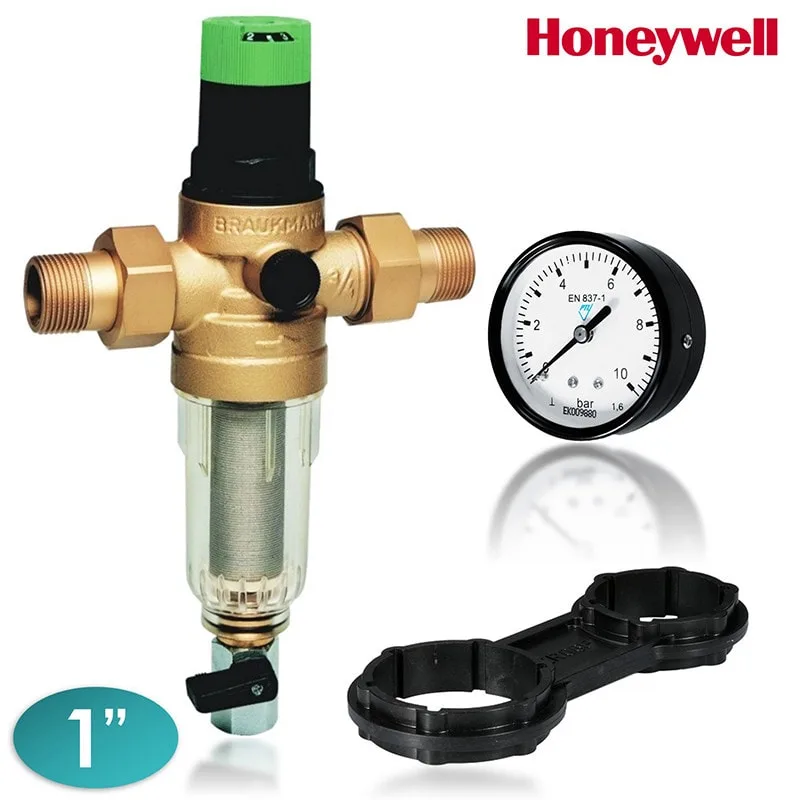
1 inch water pressure reducer
A larger 1 inch reducer is used in larger installations, such as multi-family buildings or industrial facilities. It is designed to handle higher flow rates and copes better with high network pressure, supporting long-lasting and trouble-free operation of the plumbing system.
Pressure limiter vs. pressure reducer - what is the difference?
Water pressure limiter has a protective function against excessive pressure increase, while a reducer actively lowers pressure to a specified level and stabilizes its value during installation operation. Limiters are sometimes used as additional protection, but it is the reducer that is responsible for the ongoing regulation of operating parameters.
Installing a pressure reducer - basic principles
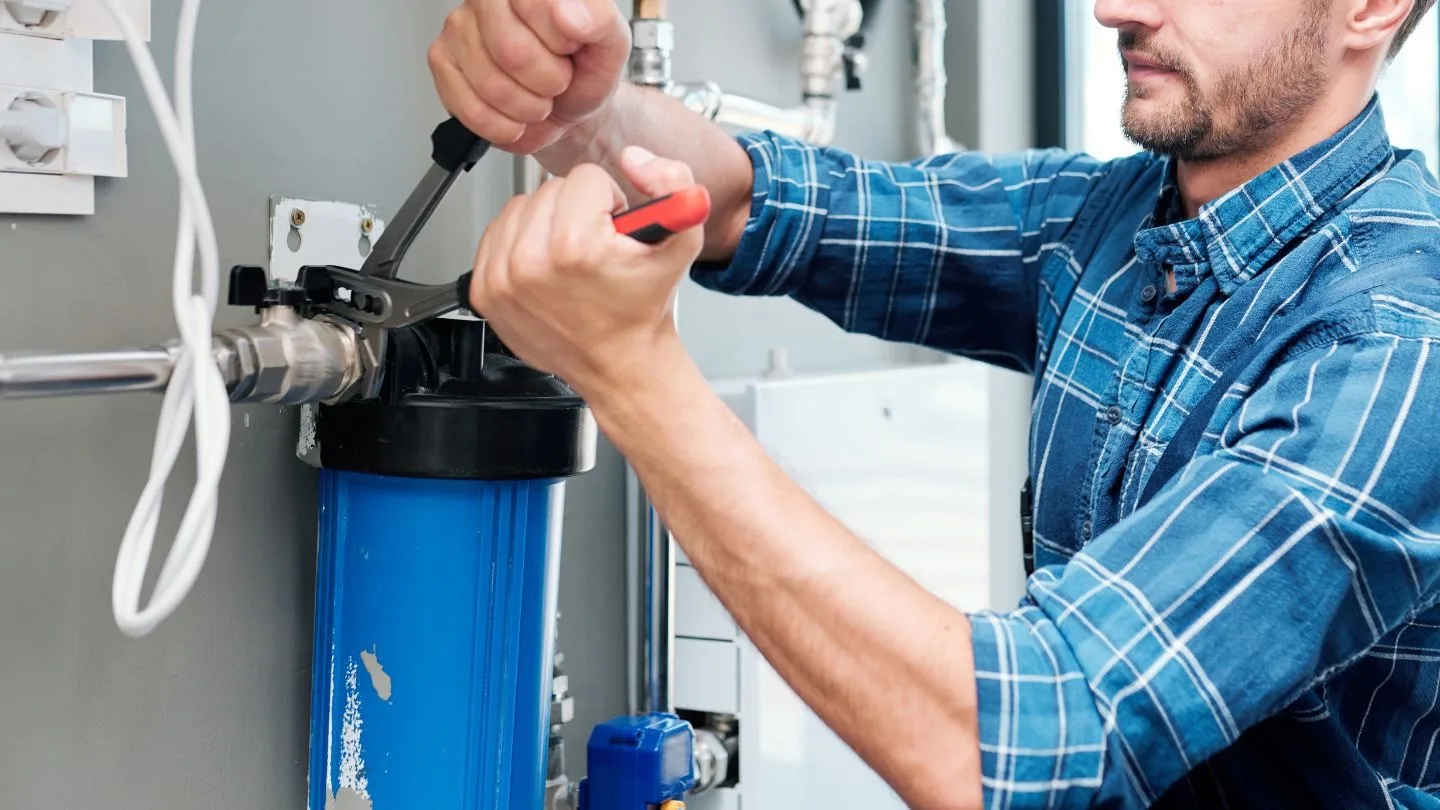
It is best to install a reducer with a plumber, although self-installation is also possible if the manufacturer's recommendations are followed. The most important thing is to carefully read the instructions included with the device, as they contain installation requirements, the sequence of steps, and technical details.
- Read the manufacturer's instructions carefully.
- Turn off the main water valve.
- Install the reducer on the main water supply line, preferably after the water meter, to control pressure throughout the entire installation.
- Make sure that the arrow on the reducer indicates the correct direction of water flow.
- Tighten all connections carefully.
- Turn the water back on and check the installation for leaks.
For household installations, the recommended pressure setting is usually 3-4 bar. In the case of water filters, the minimum operating pressure is approximately 2.8 bar.
How to regulate water pressure?
Pressure adjustment in a reducer is usually simple and is done by turning the adjustment screw located on top of the device. Depending on the direction of rotation, the pressure can be increased or decreased to the expected level. After adjustment, it is worth checking the pressure gauge reading and verifying the operation of the installation in everyday use.
Maintenance and operation
To ensure long-lasting and trouble-free operation of the pressure reducer, it is worth regularly checking the condition of the device. If the reducer has a built-in filter, it should be cleaned periodically. In practice, this means shutting off the water supply, disassembling according to the instructions, rinsing the filter under running water, removing deposits, and reassembling it.
Regular maintenance helps maintain stable operating parameters and reduces the risk of decreased installation performance.
Pressure reducers in the offer
In the MojaWoda offer, you will find specialist pressure reducers designed for pressure stabilization and reliable, durable operation. The assortment includes solutions for household and industrial needs, making it easier to choose a model suitable for a specific installation.
A properly selected reducer means greater safety, higher user comfort, and better protection of water installation components over a long period.
FAQ - frequently asked questions
What is a water pressure reducer used for?
A reducer is used to lower and stabilize the water pressure supplied to the installation. It protects pipes, valves, fittings, and devices from the effects of excessive pressure.
What is the optimal water pressure in a home?
The optimal water pressure in a home is usually between 3 and 4 bar. This range ensures comfort of use and at the same time helps protect the installation from excessive load.
What water pressure should be maintained at the tap?
It is most commonly assumed that water pressure at the tap should be around 3-4 bar. This is a level that is comfortable for everyday use and safe for most household installations.
When should you choose a 1/2 inch water pressure reducer?
A 1/2 inch reducer is most commonly used in small household installations and apartments, where water flow is lower and the pressure needs to be reduced to a safe level.
When should you choose a 3/4 inch water pressure reducer?
The 3/4 inch model is a popular choice for medium household installations. It works well where flow is moderate and pressure in the water supply network tends to fluctuate.
When should you choose a 1 inch water pressure reducer?
A 1 inch reducer is most commonly used in larger installations, for example in multi-family buildings or industrial facilities, where higher water flow rates occur.
What is the difference between a pressure limiter and a reducer?
A limiter prevents excessive pressure increase, while a reducer actively lowers pressure to a specified level and stabilizes its value during installation operation.
How to install a water pressure reducer?
First, read the manufacturer's instructions, turn off the main water valve, install the device on the water supply line, preferably after the water meter, pay attention to the flow direction, and check the tightness of the connections after starting the installation.
How to regulate pressure in a reducer?
Adjustment is usually carried out using the adjustment screw on top of the device. Turning the screw allows you to increase or decrease the pressure to the desired level.
How to clean a water pressure regulator?
If the device has a filter, shut off the water supply, disassemble the reducer according to the instructions, rinse the filter under running water, remove deposits, and reassemble the components.
What should you do if there is low water pressure in the house?
Low pressure may result from contaminants in the pipes, installation damage, or incorrect reducer settings. It is worth checking the filters, the condition of the pipes, and the device settings.
How to reduce excessively high pressure in a water installation?
This can most often be done by adjusting the pressure reducer. If the problem persists, check the condition of the device, the correctness of the installation, and the tightness of the connections, and replace the reducer if necessary.