
- There are no more items in your cart
- Shipping
- Total 0.00 zł



- Bestsellers
- Wholesale
- Water filters
- Whole house filters
- Kitchen filters
- Bathroom filters
- Aquarium filters
- Reverse osmosis
- Water demineralizers
- Filter cartridges
- UV bactericidal lamps
- Alkaline water ionizers
- Industrial water filters
- Accessories, parts, and others
- Descaling filters for the coffee machine
- Water softeners and iron removers
- Water saturators
- ACES
- AMBERLITE
- AQUA VITA
- AQUAFILTER
- AQUAPHOR
- AQUATOR
- BASSAU
- BERG
- BIOCERA
- BIONIQ
- BLUEFILTERS
- CHEMOFORM
- CINTROPUR
- DAFI
- DELONGHI
- DIAMOND
- DOM WODY
- ECOWATER
- FILMTEC
- FIT ALCO
- FITAQUA
- GREEN FILTER
- HANNA INSTRUMENTS
- HELIXPRO
- HELLO PURE
- HIDROTEK
- HM-DIGITAL
- HONEYWELL
- Ibo
- JAVEL
- KLARWOD
- KRUPS
- MIDEA
- OTOWODA
- OTTONE
- Palintest
- PENTAIR
- PHILIPS
- PLATINUM WASSER
- PUROLITE
- SIEMENS
- Steingraf
- SUPREME
- TAB-SOL
- TOP FILTER
- UST-M
- USTM
- VONTRON
- WODARO
-
PayU

Tips
-
The water in the osmosis system is constantly flowing to the sewage - what to do?
-
Hydrogen water – effects, benefits, reviews – is it a scam?
-
Reverse osmosis - operating costs
-
Elimination of chlorine from water – why is it worth doing?
-
Pesticides in water - what they are, health risks, how to remove them
-
The water in the osmosis system is constantly flowing to the sewage - what to do?
-
Organic compounds in water – harmfulness, removal, and where do they come from?
-
Ammonia in water – where does it come from, is it harmful, and how to remove it?
-
Water filtration - why? Hit or miss?
-
Drinking water - effects after a month, skin and weight loss
Pool and hot tub filters – sand, pump, Bestway and Intex
Dreaming of crystal-clear water in your backyard pool or spa? A properly selected pool filter helps remove fine impurities from the water, improves bathing hygiene, and supports the efficient operation of the entire system.
In this category, you will find pool and spa filters, including filter and pump sets, cartridge inserts, and sand solutions for popular systems such as Bestway and Intex. These products are suitable for both small garden pools and hot tubs, as well as larger tanks used throughout the season.
By choosing a filter carefully, you gain not only better water clarity, but also easier operation, less strain on the pump, and lower consumption of water treatment chemicals.
Filter
Keeping the water in a pool or hot tub clean does not depend solely on pool chemicals. A high-performance filtration system plays a key role, as it is responsible for capturing impurities, improving water clarity, and protecting system components from excessive wear. That is why it is worth matching the right filter to the size of the tank, the intensity of use, and the type of pump.
In the Pool and spa filters category, you will find solutions for garden pools, frame pools, inflatable pools, and hot tubs, including sand, cartridge, diatomaceous, and ready-made pump + filter sets. Variants dedicated to popular brands such as Bestway, Intex, and Lay-Z-Spa, as well as compatible replacements, are also available.
What will you find in this category?
Sand, cartridge, diatomaceous, and bucket filters, pool pump cartridges, pump with filter sets, and solutions for hot tubs and spa systems. These products help keep water clean, reduce cloudiness and odor, lower chemical consumption, and support the proper operation of pumps and fittings.Who is it for?
For users of small garden pools, larger frame pools, mobile hot tubs, and people looking for filters for Bestway, Intex, and Lay-Z-Spa systems.The most important practical rule:
It is worth aiming for the entire volume of water in the pool to pass through the filter at least twice a day.
Why is pool and hot tub water filtration so important?
Clean water is the foundation of safe and comfortable bathing. Without an efficient filter, algae, bacteria, and unpleasant odors may appear in the pool, and the water itself quickly loses clarity. In practice, this means more frequent use of chemical corrective agents and more expensive operation.
Regular filtration provides several very specific benefits:
- better water quality – less cloudiness, a more neutral smell, and a lower risk of skin and eye irritation,
- lower wear on pumps and fittings – fewer particles reaching seals, impellers, and pipes,
- savings on pool chemicals – filtration takes over a large part of the work involved in maintaining clear water.
Tip: if you want good clarity, choose the filter and pump operating time so that the entire volume of water is filtered at least 2 times per day.
Types of pool and spa filters
Different tanks have different requirements. A small inflatable pool does not need the same solution as a large frame pool or an intensively used hot tub. Below you will find the most popular types of filters and their typical applications.
Sand filters for pools and hot tubs
A pool sand filter works by passing water through a bed of sand or filter glass. Such a system effectively traps algae, pollen, and cosmetic residues, and accumulated dirt is usually removed by backwashing using a 6-way valve.
This solution is valued for its low operating costs and ease of use, also during intensive use in hot tubs.
- Advantages: simple operation, long-lasting media usually working for 2–3 years, self-cleaning by backwashing.
- Disadvantages: larger tank and the need to drain water during rinsing.
- Typical capacities: 4 m³/h, 6 m³/h, 10 m³/h.
The set should always be matched to the actual flow rate of the pool pump and the size of the tank.
Cartridge filters
A cartridge insert is pleated filter paper mounted in a plastic basket. The letter or number marking indicates the dimensions of the insert and, indirectly, its flow capacity and compatibility with a specific pump.
The most common variants are:
- type A – the smallest inserts, usually for pools with a capacity of up to about 5 m³; a type A filter for an Intex pool fits the Easy-Set series and works with a flow rate of around 1 m³/h,
- type II – a popular choice for Bestway and Intex pumps with pools of 8–12 m³,
- type III – a larger filtration surface, suitable for tanks of around 15–20 m³.
Cartridge inserts should be rinsed under running water every 3–5 days. When the filter paper turns gray or pressure and flow decrease, the cartridge usually needs to be replaced – most often every 2–4 weeks.
Diatomaceous filters
Diatomaceous pool filters use diatomaceous earth powder and are able to capture particles down to 3 µm. This is a solution for people who want very high water clarity. They require gentler handling, but reward you with exceptionally clean water.
They are most often recommended for premium pools, where maximum aesthetics and filtration quality matter.
Bucket filters
A bucket pool filter is a compact solution for inflatable spas and small tanks, such as children’s pools. Installation is quick – usually you only need to hang it on the rim and connect the hose.
It is a practical seasonal option, especially when simplicity, low power consumption, and low cartridge replacement costs matter.
Ready-made sets: pump + filter
Many people choose a pool pump with filter, which is a complete solution combining the pump body and filter tank in one housing. Such a set reduces problems with selecting adapters and speeds up installation.
- for pools below 10 m³ – a cartridge set with a flow rate of 1–2 m³/h is usually sufficient,
- for pools of 10–30 m³ – pumps with a sand filter and a flow rate of 4–6 m³/h are a common choice,
- for large tanks – more efficient systems above 10 m³/h are used, sometimes with an automatic salt chlorination option.
Water filtration at the inlet – when is it worth considering?
If you fill your pool with well water or water from a system with more demanding parameters, the problem may appear even before the pump is started. Hard water or water with a high iron content can damage the liner, create deposits, and cause yellowish or rusty discoloration.
In such situations, the following can be helpful:
- water softeners – reducing scale build-up,
- iron removal filters – stopping iron and rusty residue.
Such devices can be connected to the entire home installation or only to the line supplying the garden hose. It is also worth remembering that softened water may require less chlorine, because limescale does not weaken the effect of active chlorine as much.
Filters for popular brands: Bestway, Intex, Lay-Z-Spa
Bestway
Bestway is a brand known for affordable inflatable pools, frame pools, and hot tubs. It also offers compatible pumps and filters designed for easy installation and simple matching.
- Bestway type II pool filter – usually replaced about every 2 weeks or after 10 rinse cycles,
- Bestway pool sand filter – often comes as a set with a 6-way valve, pressure gauge, and hoses,
- Bestway hot tub filter – type VI cartridge with finer filter paper, helping to retain cosmetic residues as well.
Bestway is an international brand with over 25 years of experience.
Intex
Intex is an American brand with over 50 years of experience, valued for durable frame pools and a wide range of compatible accessories.
- type A filters – used, among others, in the Easy-Set series with a diameter of up to 366 cm,
- Intex pool filter A – often works with a 1.25 m³/h pump and is sometimes replaced about every 2 weeks,
- type II and III cartridges – intended for larger pumps and bigger frame pools.
Lay-Z-Spa
Lay-Z-Spa is a mobile hot tub by Bestway with a capacity of about 600–1400 l, equipped with an AirJet or HydroJet massage system. Because the water circulates there almost around the clock, the filter must be efficient and easy to use.
- type VI cartridge insert with dimensions of about 104 mm × 80 mm – fits models in this series and usually requires replacement every 4–7 days or when the water loses clarity,
- type VI cartridge with antibacterial nonwoven fabric – may slow algae growth and extend the filter life by a few days,
- 2 kW pump-heater block + filter – allows temperature, massage, and water circulation to be controlled from one panel.
How to choose the right filter for a garden pool or hot tub?
It is worth basing filter selection on a few simple criteria. This makes it easier to avoid situations where the pump has too little capacity or the cartridge needs replacing too often.
- Check the pool volume – in liters or m³, according to the manual or based on the tank dimensions.
- Select the minimum pump flow rate – it is good if all the water is filtered 2–3 times per day; a practical tip is to divide the volume by the planned operating time.
- Consider drain access – sand filters require backwashing, while cartridge filters mainly require periodic cartridge replacement.
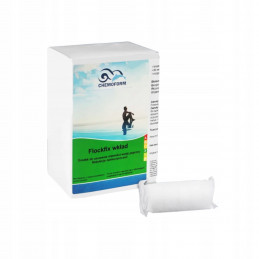
- Assess the style of use – with frequent bathing, cosmetics, and foam, more efficient cartridges or sand systems supported by a coagulant work better.
- Take usage frequency into account – daily operation usually requires higher filtration efficiency.
- Compare operating costs – sand is usually cheaper in the long run, cartridges are quick and convenient to replace, and diatomaceous systems offer the highest filtration precision.
How to check replacement compatibility?
If you choose a replacement instead of the original cartridge, pay attention to several technical parameters:
- outer diameter and cartridge height,
- mounting type and any thread,
- declared flow rate in relation to pump power.
Many replacements are in practice compatible with popular systems, but before purchasing it is always worth confirming dimensions and markings.
Comparison of the most popular solutions
| Model | Type | Flow rate | Media | Main advantages | Energy consumption |
|---|---|---|---|---|---|
| Sand set 6 m³/h + 6-way valve | Sand | 6 m³/h | Sand / Glass | Low operating costs, backwashing | 300 W |
| Cartridge pump 2 m³/h + filter II | Cartridge | 2 m³/h | PP paper | Quick cartridge replacement, quiet operation | 90 W |
| Diatomaceous filter 3 m³/h + diatomaceous earth | Diatomaceous | 3 m³/h | Diatomaceous earth powder | Very high clarity, filtration of particles down to 3 µm | 250 W |
| Filter bucket 1 m³/h | Bucket | 1 m³/h | PP cartridge | Ultra-compact format, low power consumption | 30 W |
| Sand pump 10 m³/h + chlorinator | Sand | 10 m³/h | Sand / Glass | For large pools, salt chlorination option | 550 W |
Operation and maintenance of pool filters
How often should cartridges and media be replaced?
- media in a sand filter – usually every 2–3 years or when the water clearly takes longer to become clear,
- cartridge inserts – usually every 2–4 weeks, although during hot weather and intensive use, rinsing and replacement may be needed more often.
Cleaning, backwashing, and winterizing
- Turn off the filter pump and close the valves.
- Set the valve to Backwash and run the pump for about 2 minutes to flush out dirt.
- Switch to Rinse for about 30 seconds to settle the media again.
- For winter, drain the filter and pump of water and disconnect the connections to reduce the risk of frost damage.
Practical tip: weak flow often means a clogged cartridge insert or sand-filled pipes. First check the cartridge and perform backwashing where the system allows it.
FAQ – frequently asked questions about pool and spa filters
Which filter should you choose for a garden pool to start with?
For small garden pools, a cartridge filter is usually enough, especially if the tank has a small capacity and is used seasonally. For larger pools and more frequent use, a sand filter is often more convenient and cheaper in the long term.
Is a sand filter better than a cartridge filter?
It depends on the application. A sand filter is usually more convenient for larger tanks and frequent use because it has long-lasting media and the possibility of backwashing. A cartridge filter is simpler, cheaper at the start, and works well in smaller pools and hot tubs.
How often should the cartridge in a pool filter be replaced?
A cartridge insert is usually replaced every 2–4 weeks, and rinsed every 3–5 days between replacements. If the filter paper turns gray, pressure drops, or the water loses clarity, replacement may be needed sooner.
How often do you need to replace sand in a pool filter?
Sand or glass media is usually replaced every 2–3 years. If the water becomes clear noticeably more slowly despite the pump working properly, this may mean the media has lost effectiveness and needs replacing.
Which filter fits an Intex pool?
It depends on the pump model and the pool capacity. In Intex systems, type A, II, or III cartridges are often used. Before buying, it is worth checking the pump marking, the cartridge diameter and height, and the recommended flow rate.
Which filter should you choose for a Bestway or Lay-Z-Spa hot tub?
In mobile Bestway and Lay-Z-Spa hot tubs, type VI cartridges are very commonly used. With intensive use and the presence of cosmetics, it is worth considering cartridges with a finer structure or antibacterial variants, if they are compatible with the given model.
What should you do if the filter pumps water poorly?
First, check whether the cartridge insert is dirty and whether the pipes are not filled with sand. In a sand system, perform backwashing. Weak flow is often caused precisely by dirty filter media or blockages in the installation.
Is the filter alone enough to keep the water clean?
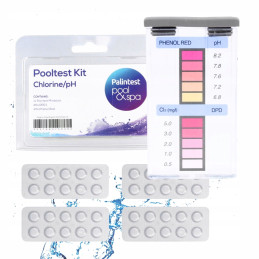
Filtration is the foundation, but it usually does not completely replace pool chemicals. The best results come from combining proper filtration, regular monitoring of water parameters, mechanical removal of impurities, and proper dosing of treatment products.
How do you match filter capacity to pool volume?
It is assumed that the entire volume of water should pass through the filter 2–3 times per day. Therefore, the tank capacity should be compared with the pump performance and the planned operating time of the filtration system.
Is it worth buying an original filter, or can you choose a replacement?
An original filter gives certainty of fit, but a good-quality replacement can provide similar effectiveness at a lower cost. The most important things are the correct marking, proper dimensions, and matching it to the pump flow rate.