
- There are no more items in your cart
- Shipping
- Total 0.00 zł



- Bestsellers
- Wholesale
- Water filters
- Whole house filters
- Kitchen filters
- Bathroom filters
- Aquarium filters
- Reverse osmosis
- Water demineralizers
- Filter cartridges
- UV bactericidal lamps
- Alkaline water ionizers
- Industrial water filters
- Accessories, parts, and others
- Descaling filters for the coffee machine
- Water softeners and iron removers
- Water saturators
- ACES
- AMBERLITE
- AQUA VITA
- AQUAFILTER
- AQUAPHOR
- AQUATOR
- BASSAU
- BERG
- BIOCERA
- BIONIQ
- BLUEFILTERS
- CHEMOFORM
- CINTROPUR
- DAFI
- DELONGHI
- DIAMOND
- DOM WODY
- ECOWATER
- FILMTEC
- FIT ALCO
- FITAQUA
- GREEN FILTER
- HANNA INSTRUMENTS
- HELIXPRO
- HELLO PURE
- HIDROTEK
- HM-DIGITAL
- HONEYWELL
- Ibo
- JAVEL
- KLARWOD
- KRUPS
- MIDEA
- OTOWODA
- OTTONE
- Palintest
- PENTAIR
- PHILIPS
- PLATINUM WASSER
- PUROLITE
- SIEMENS
- Steingraf
- SUPREME
- TAB-SOL
- TOP FILTER
- UST-M
- USTM
- VONTRON
- WODARO
-
PayU

Tips
-
The water in the osmosis system is constantly flowing to the sewage - what to do?
-
Hydrogen water – effects, benefits, reviews – is it a scam?
-
Reverse osmosis - operating costs
-
Elimination of chlorine from water – why is it worth doing?
-
Water filtration using reverse osmosis. What is worth knowing about it?
-
The water in the osmosis system is constantly flowing to the sewage - what to do?
-
Organic compounds in water – harmfulness, removal, and where do they come from?
-
Ammonia in water – where does it come from, is it harmful, and how to remove it?
-
Water filtration - why? Hit or miss?
-
Drinking water - effects after a month, skin and weight loss
Kitchen water filters
Water used for drinking and everyday kitchen tasks should be free from chemical and biological contaminants, which is why water filtration is so important today. A properly selected filter helps improve water quality, taste, and odor, while also increasing everyday convenience.
More and more people choose kitchen water filters to have constant access to clean drinking and utility water. Depending on their needs, these may include water filter pitchers, faucet filters, under-sink solutions, or more advanced reverse osmosis systems.
Filter
Price
Brand
In the kitchen, good water quality matters every day — it affects not only the taste of drinks and meals, but also the comfort of using household appliances. In this category, you will find solutions designed for various needs: from simple filters for everyday use to advanced systems that provide very precise filtration.
Kitchen filters help reduce the presence of many undesirable substances found in tap water, while also improving its odor, taste, and clarity. This is a practical solution both for people looking for convenience and for those who want to take better care of the water used for drinking, cooking, and operating kitchen appliances.
In the Kitchen filters category, available products include: under-sink filters, faucet filters, water filter pitchers, refrigerator filters, dishwasher filters, countertop filters, filtering bottles, and reverse osmosis systems. Individual solutions differ in installation method, filtration range, performance, and operating costs, so it is worth matching your choice to your tap water quality, expected results, and budget.
Why is access to clean water so important?

Tap water, although usually considered safe, may contain various types of contaminants. The most commonly mentioned include:
- heavy metals such as lead, mercury, and cadmium,
- chemical compounds, for example chloroform and pesticides,
- microorganisms, including bacteria and viruses,
- mechanical impurities such as sand, silt, and rust,
- other substances, including chlorine used for water disinfection.
Long-term consumption of water containing such contaminants may lead to health problems, including disorders of the digestive system, kidneys, and liver, as well as cancer. For this reason, filtering water in the kitchen is not a luxury for many households, but a part of everyday care for quality of life.
Main benefits of kitchen water filters
Kitchen water filters significantly improve drinking water quality by removing harmful contaminants. In practice, this translates into greater convenience and a better experience when drinking and preparing meals.
- Better water taste and odor — reducing chlorine and other substances that affect organoleptic properties.
- Improved drinking water quality — more effective removal of chemical, biological, and mechanical contaminants, depending on the type of filter.
- Protection for household appliances — less limescale buildup in refrigerators and dishwashers may positively affect their durability and operating efficiency.
- Convenience in everyday use — filtered water is available immediately at the point of use.
- The ability to reduce bottled water purchases — especially in the case of pitchers and permanently installed solutions.
There is no single best filter for every kitchen. For some, a simple faucet filter or pitcher will be optimal, while for others, an under-sink filter or an advanced RO system will be the best choice.
What kitchen filters can you find in this category?
Under-sink filters
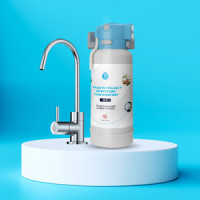
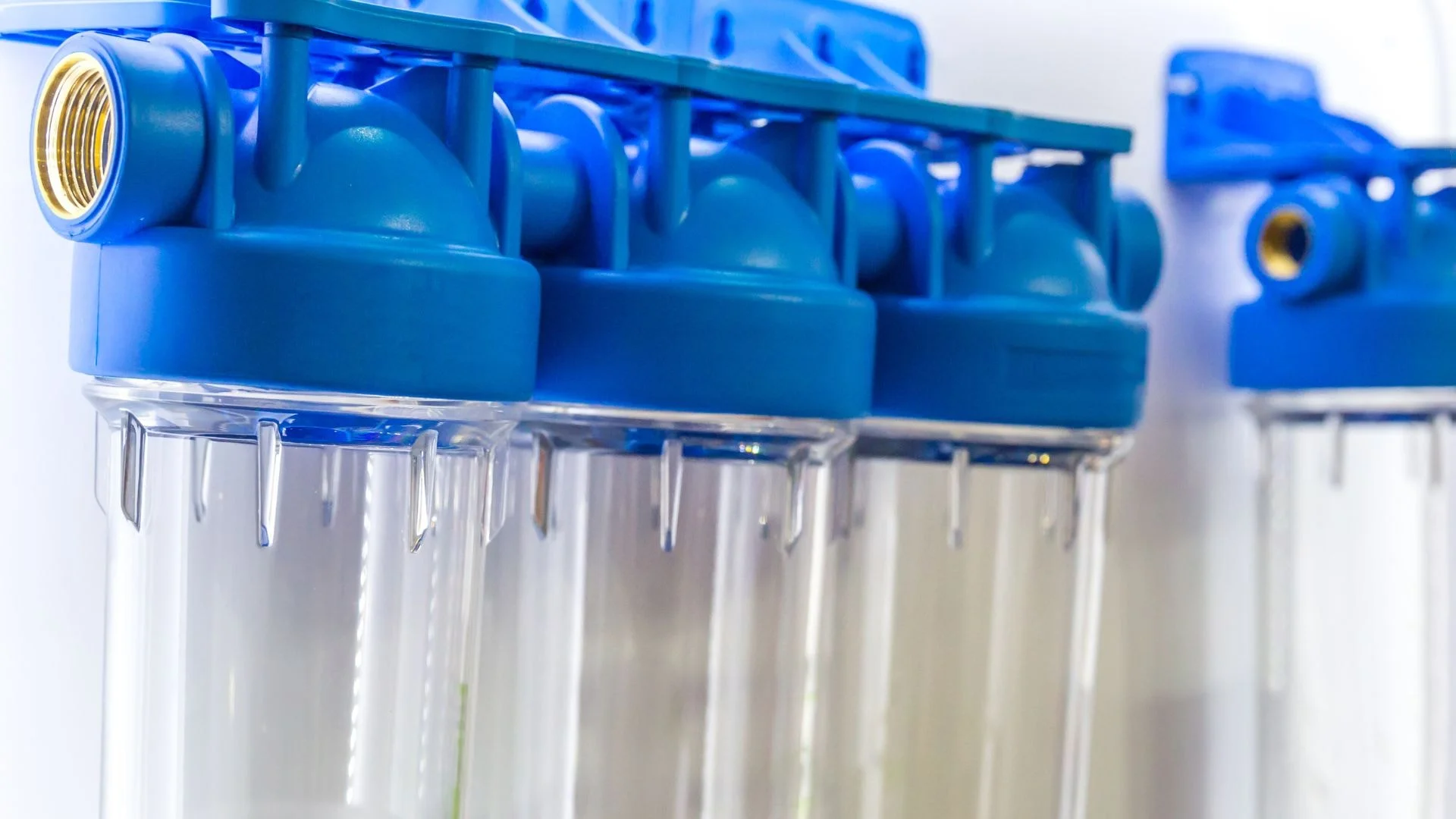
Under-sink filters are installed beneath the kitchen sink and connected to the water supply system. They usually consist of several filtration stages, which allows them to effectively eliminate contaminants. Their major advantage is high performance and convenient access to filtered water directly from the tap.
Faucet filters
Faucet filters are mounted directly on the spout. This solution is easy to install and use, and also relatively inexpensive. These types of filters effectively remove basic contaminants such as chlorine and sediment, improving the taste and odor of water. However, it should be remembered that their ability to remove more complex contaminants is limited, and the cartridges require regular replacement.
Water filter pitchers
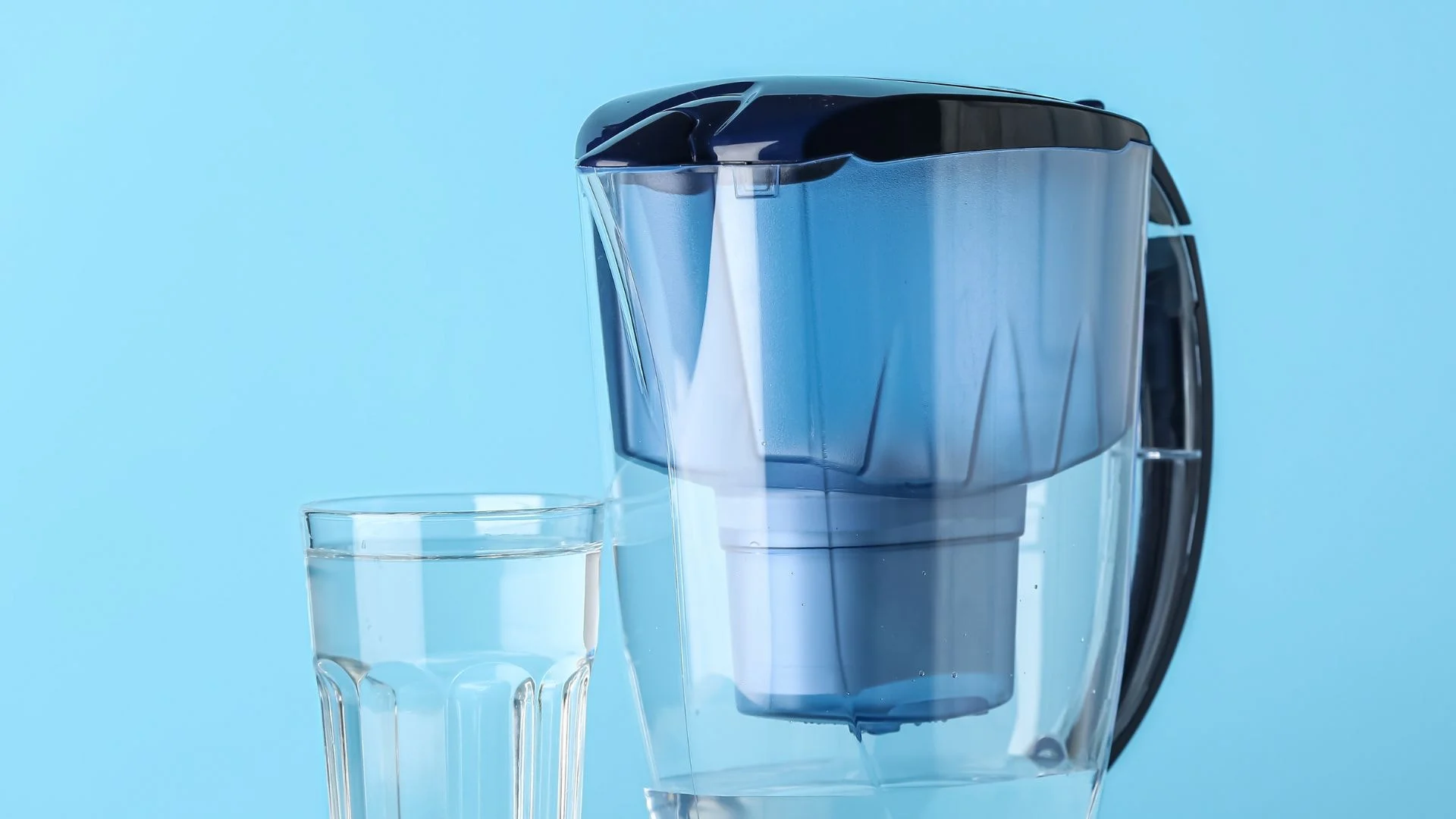
Water filter pitchers are among the simplest and most affordable ways to treat tap water. Water poured into the pitcher flows through a cartridge that removes contaminants such as chlorine, heavy metals, and organic impurities, and in many cases also enriches the water with selected minerals, such as magnesium. Pitchers are easy to use, portable, and require no installation, so they can effectively replace part of your bottled water consumption.
Refrigerator water filters
Refrigerator filters are installed inside the appliance and are used to purify water intended for drinking and ice production. They help remove chlorine, heavy metals, sediment, and some organic contaminants, while also improving the taste and odor of water.
Dishwasher water filters
Dishwasher filters are responsible for reducing contaminants and deposits in the water used for washing dishes. Their use can improve washing results and reduce the risk of streaks and stains on plates, glasses, and cutlery.
Countertop water filters
Countertop water filters are connected to the faucet in place of the aerator. Their installation is simple, and the solution itself is an interesting alternative to filter pitchers, especially when you care about greater convenience and constant access to filtered water.
Filtering bottles
Filtering bottles are portable containers equipped with an integrated filter. They remove the most common contaminants, such as chlorine, heavy metals, pesticides, and microorganisms, while also improving the taste and odor of drinking water. This is a practical solution for active people and for those who want to have filtered water outside the home.
Reverse osmosis systems (RO)
Reverse osmosis filters are among the most effective filtration systems for the kitchen. Their operation is based on the flow of water through a semipermeable membrane that retains most contaminants, including microorganisms, heavy metals, and mineral salts. RO systems often consist of several filtration stages, also including carbon and mechanical filters. Although they are more expensive than simpler solutions, they stand out for their very high effectiveness.
Selected reverse osmosis system models may also offer mineralization and drinking water ionization.
How to choose the right kitchen filter?
The choice of filter depends primarily on individual needs and the conditions in a given household. Before buying, it is worth analyzing several key issues.
- Tap water quality — it is a good idea to check what contaminants are present in the water and in what concentration.
- Expected result — for some users, improving taste and odor will be most important, while for others, very precise filtration will matter most.
- Installation location — not every kitchen offers the same installation possibilities.
- Purchase and operating budget — pitchers and faucet filters usually cost less, while under-sink filters and RO systems require a greater investment.
- Ease of use — the speed of water dispensing, system capacity, and cartridge replacement frequency all matter.
Costs, installation, and operation
The cost of purchasing and using kitchen filters can vary significantly. Simple solutions such as filter pitchers or faucet-mounted filters are usually cheaper at the start, but they require regular cartridge replacement. In contrast, under-sink filters and RO systems involve a higher purchase cost while offering greater effectiveness and convenience.
Some devices can be installed independently, while others may require professional installation. Regardless of the system type, regular maintenance and timely replacement of filtration components are essential to maintain effective performance.
Comparison of popular solutions
| Filter type | Installation | Main advantages | Limitations |
|---|---|---|---|
| Pitcher | No installation | Low cost, mobility, ease of use | Lower performance, frequent cartridge replacement |
| Faucet | On the faucet spout | Easy installation, quick improvement in water taste and odor | Limited effectiveness against more complex contaminants |
| Under-sink | Under the sink | High performance, convenient access to filtered water | Higher purchase and installation cost |
| Refrigerator | In the household appliance | Better drinking water and ice quality | Need to select a compatible model |
| RO | Usually under the sink | Very high filtration effectiveness, multi-stage purification | Higher purchase and operating cost |
Kitchen filters in the MojaWoda.com offer

The MojaWoda.com store offers a wide range of devices designed for water filtration in the kitchen. The offer includes solutions for people looking for simple and economical ways to improve water quality, as well as for users expecting advanced purification systems.
- under-sink kitchen water filters,
- modern reverse osmosis filters,
- models with drinking water mineralization and ionization,
- kitchen filters for household appliances, for example refrigerators and dishwashers,
- countertop kitchen filters,
- faucet water filters,
- filter pitchers and filtering bottles.
Thanks to such a wide selection, it is easier to match a solution to the number of household members, water quality, and everyday habits related to its use.

FAQ – frequently asked questions
Why is it worth installing a water filter in the kitchen?
A kitchen water filter helps reduce chemical, biological, and mechanical contaminants present in tap water. Additionally, it improves the taste and odor of water, and in many cases also helps protect household appliances from deposits.
What contaminants can be found in tap water?
The water may contain, among other things, heavy metals such as lead, mercury, and cadmium, chemical compounds such as chloroform and pesticides, microorganisms, mechanical impurities such as sand, silt, and rust, as well as chlorine used for disinfection.
Which kitchen filter should you choose: a pitcher, faucet filter, or under-sink system?
It depends on the expected filtration effectiveness, budget, and ease of use. Pitchers are simple and inexpensive, faucet filters are easy to install, and under-sink systems are convenient and efficient for everyday use.
How does a reverse osmosis system work?
An RO system uses a semipermeable membrane through which water flows. The membrane retains most contaminants, including microorganisms, heavy metals, and mineral salts. Usually, the entire system also includes additional mechanical and carbon filtration stages.
Is a faucet filter effective?
A faucet filter works well in removing basic contaminants such as chlorine and sediment, and in improving the taste and odor of water. However, in the case of more complex water problems, it may be insufficient.
Can a filter pitcher replace bottled water?
In many households, yes. A filter pitcher provides quick access to filtered water and can significantly reduce bottled water purchases, which helps reduce plastic consumption.
Does a refrigerator filter improve the quality of ice and water?
Yes, a refrigerator filter purifies the water used for drinking and ice production, helping remove chlorine, sediment, heavy metals, and some organic contaminants. As a result, taste and odor also improve.
How often do filter cartridges need to be replaced?
The replacement frequency depends on the type of filter, water quality, and intensity of use. To maintain filtration effectiveness, follow the manufacturer's recommendations regarding operation and system servicing.
Can every kitchen filter be installed independently?
No. Pitchers, filtering bottles, and many faucet filters do not require specialist installation. More advanced systems, such as under-sink filters or reverse osmosis, may require more precise installation and sometimes the help of a professional.