
- There are no more items in your cart
- Shipping
- Total 0.00 zł



- Bestsellers
- Wholesale
- Water filters
- Whole house filters
- Kitchen filters
- Bathroom filters
- Aquarium filters
- Reverse osmosis
- Water demineralizers
- Filter cartridges
- UV bactericidal lamps
- Alkaline water ionizers
- Industrial water filters
- Accessories, parts, and others
- Descaling filters for the coffee machine
- Water softeners and iron removers
- Water saturators
- ACES
- AMBERLITE
- AQUA VITA
- AQUAFILTER
- AQUAPHOR
- AQUATOR
- BASSAU
- BERG
- BIOCERA
- BIONIQ
- BLUEFILTERS
- CHEMOFORM
- CINTROPUR
- DAFI
- DELONGHI
- DIAMOND
- DOM WODY
- ECOWATER
- FILMTEC
- FIT ALCO
- FITAQUA
- GREEN FILTER
- HANNA INSTRUMENTS
- HELIXPRO
- HELLO PURE
- HIDROTEK
- HM-DIGITAL
- HONEYWELL
- Ibo
- JAVEL
- KLARWOD
- KRUPS
- MIDEA
- OTOWODA
- OTTONE
- Palintest
- PENTAIR
- PHILIPS
- PLATINUM WASSER
- PUROLITE
- SIEMENS
- Steingraf
- SUPREME
- TAB-SOL
- TOP FILTER
- UST-M
- USTM
- VONTRON
- WODARO
-
PayU

Tips
-
The water in the osmosis system is constantly flowing to the sewage - what to do?
-
Hydrogen water – effects, benefits, reviews – is it a scam?
-
Reverse osmosis - operating costs
-
Elimination of chlorine from water – why is it worth doing?
-
Pesticides in water - what they are, health risks, how to remove them
-
The water in the osmosis system is constantly flowing to the sewage - what to do?
-
Organic compounds in water – harmfulness, removal, and where do they come from?
-
Ammonia in water – where does it come from, is it harmful, and how to remove it?
-
Water filtration - why? Hit or miss?
-
Drinking water - effects after a month, skin and weight loss
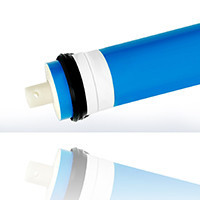
Osmotic membranes for reverse osmosis systems
Osmotic membranes are a key component of modern reverse osmosis systems. They are responsible for the flow of clean water while effectively blocking many contaminants, helping to provide high-quality drinking water at home, in businesses, and in selected industrial applications.
These are specialist filter cartridges that operate at the molecular level and help remove most contaminants, including heavy metals. A properly selected osmosis membrane has a direct impact on filtration efficiency, the performance of the entire system, and the comfort of everyday use of purified water.
In this category, you will find membranes for reverse osmosis filters designed for various needs: from compact household systems to higher-capacity solutions for commercial and industrial applications.
Filter
Price
Wysokość wkładu
Brand
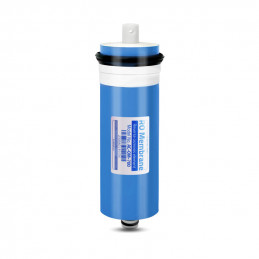
High-efficiency osmotic membrane 300 GPD (2642 l / 24h)
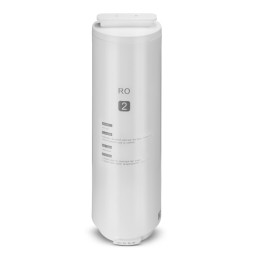
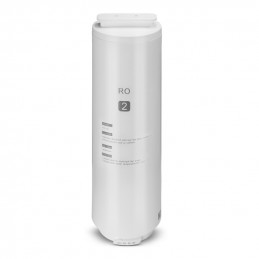
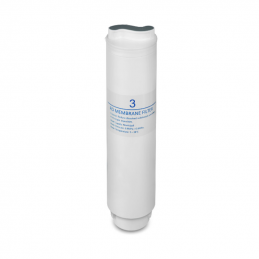
Third replacement membrane cartridge for the waterRO RO600 filter.
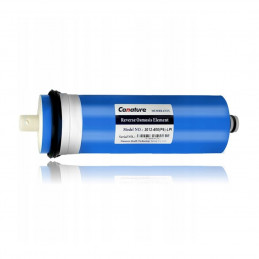
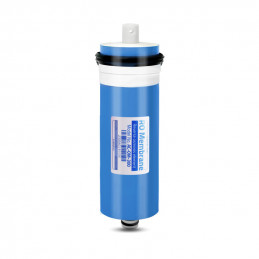
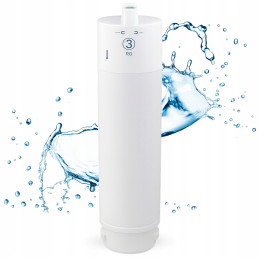
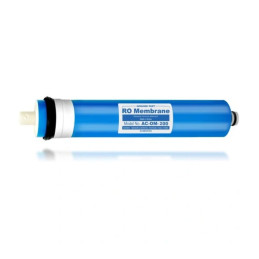
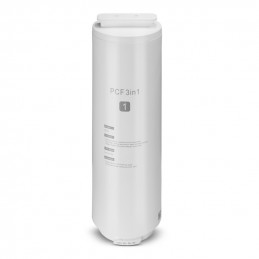
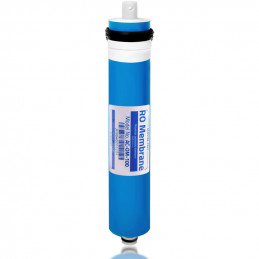
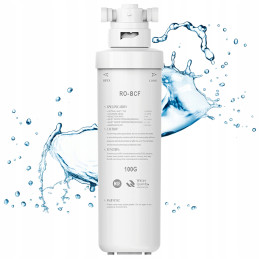
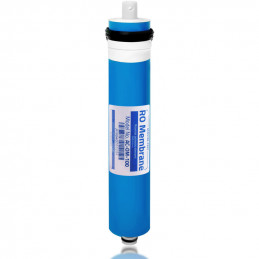
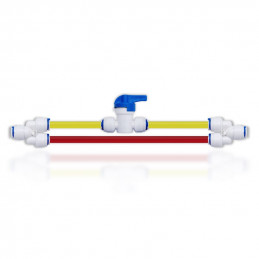
An osmotic membrane is the heart of every reverse osmosis system. It is responsible for precisely separating water molecules from many unwanted substances, supporting effective filtration and improving the quality of utility and drinking water. In practice, choosing the right model affects not only water purity, but also the performance of the entire system and how well the installation matches actual demand.
This category includes osmotic membranes for reverse osmosis systems with various capacities, from solutions for smaller households to membranes for commercial and industrial applications. These membranes are semi-permeable filtration barriers that selectively allow water molecules to pass through while retaining many contaminants, including bacteria, viruses, chlorine, heavy metals, and numerous organic and inorganic compounds. Typical filtration accuracy reaches approximately 0.0001 micron.
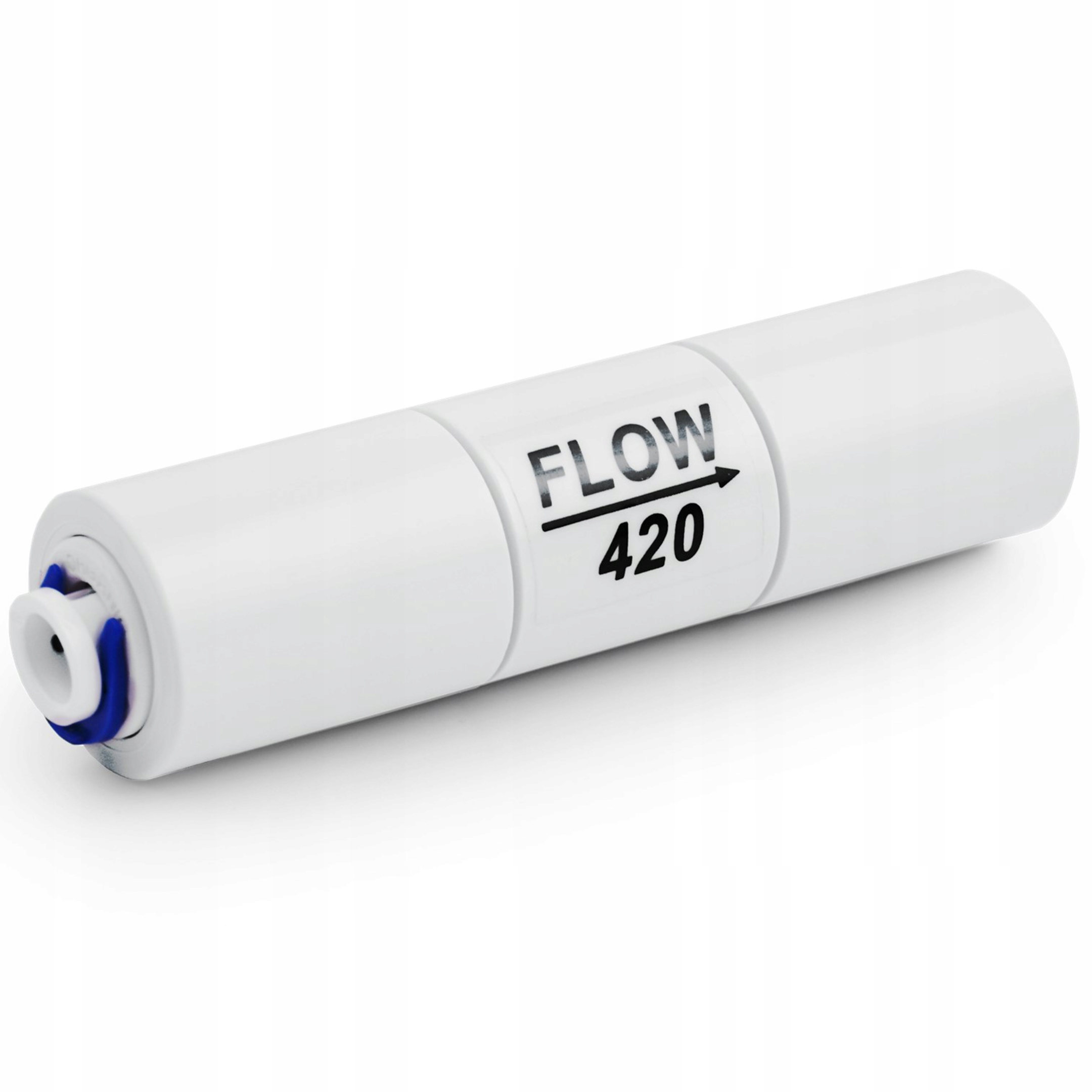
What is an osmotic membrane?
An osmotic membrane, also called a filtration membrane, is a semi-permeable barrier used in reverse osmosis filters. Its task is to selectively allow water molecules to pass through while blocking many unwanted substances. Thanks to a structure capable of eliminating contaminants larger than approximately 0.0001 micron, the membrane is the most important element responsible for the final quality of filtration.
This is exactly why RO membranes are so commonly used wherever high-quality water is needed — from household applications to more demanding specialist installations.
Key benefits of using osmotic membranes
A properly selected osmosis membrane supports effective water treatment and enhances the functionality of the entire filtration system.
- Effective removal of contaminants at the molecular level.
- Improved drinking water quality at home and in business.
- Reduction of heavy metals, bacteria, viruses, chlorine, and many organic and inorganic compounds.
- Reduction of calcium and magnesium ions, which helps limit limescale formation.
- Capacity matched to different applications — from small household systems to larger commercial and industrial setups.
- Versatile use in drinking water filtration, car washes, laboratories, hospitals, and selected branches of industry.
Types of osmotic membranes by capacity
Osmotic membranes can be divided primarily according to their throughput, meaning the amount of purified water they are able to produce per day. This is the basic criterion for selecting a model for a specific system.
| Membrane capacity | Clean water production | Typical application |
|---|---|---|
| 50 GPD | up to 189 liters per day | Smaller households |
| 75 GPD | up to 283 liters per day | Medium-sized homes, sufficient capacity for most family needs |
| 100 GPD | up to 378 liters per day | Larger households or small businesses |
| 150 GPD | up to 567 liters per day | Homes with higher water demand or small enterprises |
| 400 GPD | up to 1500 liters per day | Larger commercial installations, small industrial plants, tankless systems |
| 600 GPD | up to 2280 liters per day | Large industrial applications, large car washes, tankless systems |
| 2400 GPD | up to 9074 liters per day | Large industrial plants and large car washes |
Applications of osmotic membranes
RO membranes are a versatile solution and are used in many areas where stable water quality is crucial.
- Drinking water purification in homes — systems with a 75 GPD membrane are especially popular.
- Pharmaceutical industry — wherever high-quality water is required.
- Car washes — clean water helps reduce streaks on vehicles.
- Hospitals and laboratories — purified water is essential in many medical and technical processes.
- Small and large industrial plants — depending on the scale of the installation and water demand.
How to choose the right osmosis membrane?
Choosing the right membrane should take several practical factors into account. The most important of these are daily water consumption, feed water quality, and system configuration.
Water demand
- 50 GPD or 75 GPD — usually sufficient for smaller households.
- 100 GPD or 150 GPD — a good choice for larger homes or small businesses.
- 400 GPD, 600 GPD, or 2400 GPD — solutions for larger enterprises and industrial applications.
Feed water quality
If the water is especially hard or contains a lot of contaminants, it is worth paying attention to proper membrane selection for operating conditions and to regular monitoring of the entire filtration system.
System size and configuration
The design of the installation and the amount of available installation space also matter. Spiral-wound membranes are widely used due to their high efficiency and compact size.
Tip: membrane selection should always be linked to the parameters of the entire reverse osmosis system, not just the declared capacity itself. This is important for user comfort, filtration speed, and proper system operation.
Which flow restrictor should you choose for an osmotic membrane?
The flow restrictor should be matched to the membrane capacity because it affects the balance between filtration rate and water loss.
- For a 100 GPD membrane:
420 restrictor — recommended for those who want to minimize water loss.
550 restrictor — provides a faster filtration rate and may be beneficial when there is higher demand for clean water. - For a 75 GPD membrane:
350 restrictor — for those who want to minimize water consumption as much as possible.
420 restrictor — a compromise between savings and efficiency. - For a 50 GPD membrane:
350 restrictor — optimal for very small systems where minimizing water loss is important.
Structure of an osmotic membrane
Understanding the membrane structure helps better assess its capabilities and operating principle. It is a key component of reverse osmosis systems, responsible for high filtration efficiency.
Membrane material
- TFC polyamide (Thin Film Composite) — the most commonly used material in modern membranes. A thin-film composite with a polyamide layer effectively removes a wide range of contaminants at the molecular level.
- Cellulose acetate (CA/CAB) — a material encountered less often, more commonly in older solutions. It is more susceptible to chemical damage, has limited chlorine tolerance, but can be less costly to produce and is biodegradable.
Membrane layers
- Polyamide layer — the outer layer in direct contact with water, responsible for rejecting a large amount of contaminants.
- Support layer — usually made of polysulfone, it reinforces the membrane structure and helps it operate under high pressure.
- Protective layer — present in selected models and protects the more delicate layers against mechanical damage and contamination.
Which brand of osmotic membrane should you choose?
Among recognizable manufacturers of osmotic membranes are brands valued for quality, durability, and good filtration effectiveness.
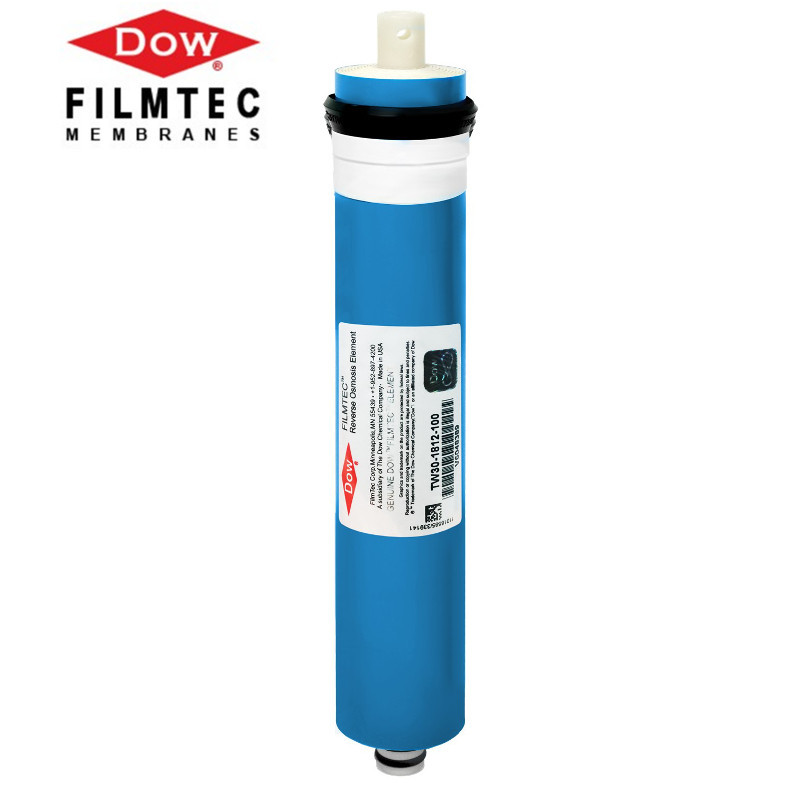
- Filmtec (Dow Chemical) — high-quality membranes valued for durability and resistance to contaminants.
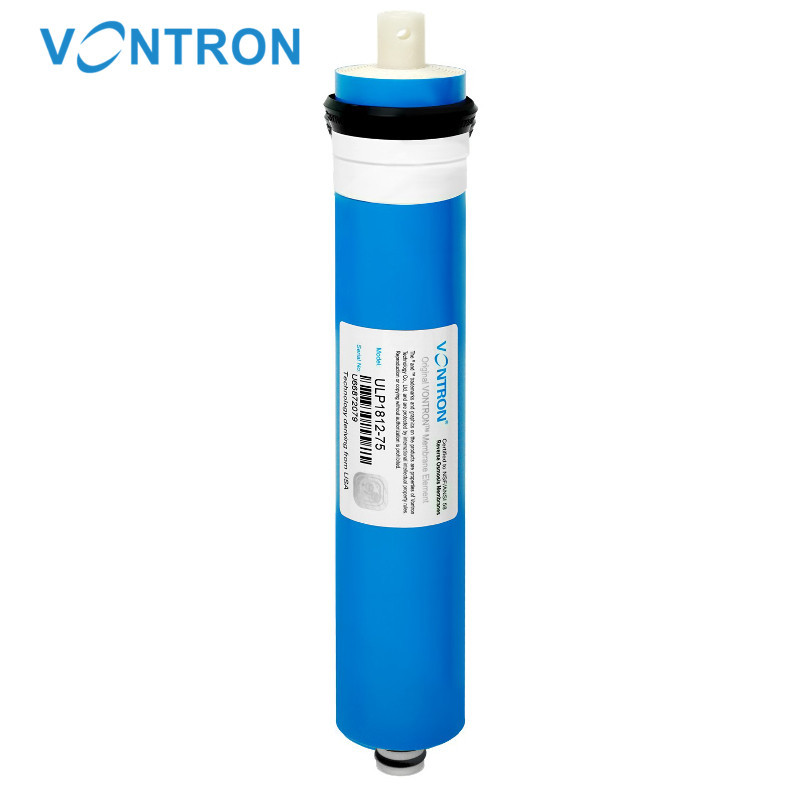
- Vontron — a popular choice due to its favorable price-to-quality ratio.
- AC-OM and Aquafilter — brands known for reliable solutions in various applications.
- Pentair — a manufacturer associated with innovation and advanced membrane technology.
FAQ – frequently asked questions
How often should an osmotic membrane be replaced?
It is recommended to replace the osmotic membrane every 3–4 years, although the actual frequency depends on feed water quality and the intensity of system use.
What does an osmotic membrane remove?
An osmotic membrane helps remove bacteria, viruses, heavy metals, chlorine, and many organic and inorganic compounds. Thanks to its highly precise structure, filtration takes place at the molecular level.
Does an osmosis filter remove limescale?
Yes. Reverse osmosis effectively removes calcium and magnesium ions from water, which significantly reduces the risk of limescale formation in appliances and installations using purified water.
Which osmosis membrane is suitable for home use?
For smaller households, 50 GPD or 75 GPD membranes are the most common choice. In larger homes, 100 GPD or 150 GPD models work better, especially when water demand is higher.
How do you match a membrane to water demand?
The best approach is to determine how much purified water you need per day. On this basis, the membrane capacity is selected: from household models to 400 GPD, 600 GPD, or 2400 GPD solutions for commercial and industrial applications.
Which restrictor should you choose for a 75 GPD, 100 GPD, and 50 GPD membrane?
For a 75 GPD membrane, a 350 or 420 restrictor is usually used; for 100 GPD, a 420 or 550 restrictor; and for 50 GPD, a 350 restrictor. The choice depends on whether lower water loss or a faster filtration rate is the priority.
Does a higher GPD number mean a better membrane?
Not always. Higher capacity means greater purified water production per day, but the best membrane is one that is properly matched to the system, water quality, and the user’s actual demand.
Where are osmotic membranes used outside the home?
Osmotic membranes are used, among other places, in the pharmaceutical industry, car washes, hospitals, laboratories, and in small and large industrial plants.
What materials are osmotic membranes made from?
The most commonly used material is TFC polyamide, a thin-film composite with high filtration efficiency. Less commonly, cellulose acetate CA/CAB membranes are found, mainly in older solutions.