
- There are no more items in your cart
- Shipping
- Total 0.00 zł





Nitrates and nitrites in water – standards, health, removal
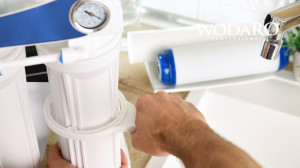
Nitrates and nitrites in water are among the most common contaminants detected in water testing, especially in areas where wells or sources are used on agricultural land. When there is information that nitrates have been found in drinking water or elevated nitrites in the water, there is naturally concern for the health of household members. In this article, I explain what these nitrogen compounds are, where they come from, what standards apply, and what solutions effectively allow them to be removed.safely remove at home.
Table of Contents
- Nitrates and nitrites in water - basics and definitions
- Where do nitrates and nitrites in water come from
- Standards for nitrates and nitrites in drinking water
- Are nitrates harmful - impact onhealth
- How to test nitrates and nitrites in your water
- Removing nitrates from water - practical methods
- How to choose a device and when to contact a specialist
- Summary - safe water at home
In this article, you will learn:
- What are nitrates and nitrites and how to understand the terms nitrate nitrogen and nitrite nitrogen in test results
- Where do nitrogen compounds in water come from - the role of agriculture, wastewater, and biological processes in the soil
- What are the standards for drinking water and when it is worthtreat the results as a signal to act
- How nitrates and nitrites can affect the health of children and adults and in what situations they are considered particularly risky
- What does the removal of nitrates from water involve in practice - from kitchen filters to whole house systems
- How to prepare for a conversation with an expert, so thatefficiently select the appropriate device for your installation
Nitrates and nitrites in water - basics and definitions
In water test results, you often see several parameters related to nitrogen. Most commonly, these are ammonia, nitrites, nitrates, and total nitrogen compounds. These are the starting point for answering the question of whether the water is suitable for drinking without additional treatment.
What arenitrates?
Nitrates are a form of oxidized nitrogen represented as NO3-. Laboratories often refer to them as nitrate nitrogen, which is the amount of nitrogen present in this specific form. Nitrates are highly soluble in water and easily move through the soil, which is why they frequently appear in water quality analyses.
What are nitrites?
Nitritesis an intermediate form between ammonium and nitrates, denoted as NO2-, in short no2. In the laboratory report, it may also appear as nitrous nitrogen. This form of nitrogen is more reactive, and at higher concentrations, also more dangerous, which is why regulations provide for a lower permissible value for it.
What is the relationship between nitrification and denitrification?
In nature, nitrogen transitions from one form to another. The process in which nitrogenammonium is sequentially converted into nitrites and then into nitrates, a process called nitrification.
Conversely, denitrification is the reverse phenomenon: under appropriate conditions, microorganisms reduce nitrates to gaseous nitrogen, which escapes into the atmosphere. It is the balance between these processes that determines the final result of water testing.
In service practicewe most often encounter a situation where the nitrate form dominates in water, and the presence of nitrites indicates fresh contamination or specific conditions in the soil or installation. Therefore, a single result should always be interpreted in a broader context, rather than looking at just one parameter.
Key thought: nitrates and nitrites are different forms of the same element. For you as a water user, what matters most is that,fit within the norms and whether the result is stable over time.
How to read test results for nitrates and nitrites
In the laboratory report, you may come across a note that the concentration of nitrates in the water exceeds the permissible value or that nitrites were detected in the sample at a level close to the limit. Sometimes this information is provided in terms of nitrogen, other times in terms of total ions. If you have doubts about how to interpret them,interpret, it is best to send the result to our specialists along with the other parameters.
In search engines, many people type in the phrase nitrites in water standard, as they are looking for a quick answer to whether a given result is still "okay" or if it requires action. In the further part of the article, I show what values are considered acceptable and how tohow to approach it in practice.
Where do nitrates and nitrites in water come from
The main sources of nitrogen pollution are related to human activity. Most often, this concerns agriculture, sewage, and the way the area around the well is managed. Nitrates in well water usually appear when a lot of fertilizers have been entering the soil over the years or when there is a lack of a tight sewage infrastructure.
Mineral and natural fertilizers provide plants with the necessary nitrogen, but an excess of this element seeps deeper into the soil. Microorganisms carry out the aforementioned nitrification process, causing the primary form of nitrogen to gradually change into nitrites and then into nitrates. Rainwater transports these ions down to the aquifers.
The most common causes of problems in private wells
In wells near homesNitrates in water from single-family homes often increase after periods of heavy rainfall and fertilization of fields. Additional risks arise where the well is shallow or poorly secured. The most common causes include:
- the short distance from intensively fertilized fields and pastures,
- the lack of a protective zone around the intake,
- a leaky septic tank or improperly constructed home wastewater system.sewage treatment plant,
- old concrete rings, through which water from the surface easily enters the well.
If your well is located in such an environment, elevated nitrates in the water are more likely. In such a situation, regular water testing should be the standard, not a one-time action.
Tap water and nitrogen compounds
Water from the networkthe water supply is monitored much more frequently than private wells. Nitrates and nitrites in tap water usually fall within the norms, although locally their levels can be elevated due to the nature of the sources. However, if the water supply informs about exceedances, it is usually associated with specific recommendations for residents.
In the distribution network, in addition to nitrogen compounds, disinfection processes, pressure, and the residence time of water also play an important role.rurach. All of this can affect the parameters you see in the water testing report.
Key takeaway: in wells, the nitrogen issue mainly arises from what happens on the surface, while in water supply systems, the influence of the network and treatment methods also comes into play. Therefore, when interpreting the results, not only the number on the paper matters, but also the source of the water.
.jpg)
Standards for nitrates and nitrites in drinking water
Short answer: the limit for nitrates is set at 50 mg/l, and for nitrites at 0.5 mg/l. If your water exceeds these values, it should not be considered safe for drinking, especially at home where there are small children.
Applicable regulations inIn Poland and the European Union, maximum concentrations are defined at which water can be considered safe for consumption. This applies to both public water supplies and private wells used for household supply.
- nitrates (NO3-) – the permissible concentration in drinking water is 50 mg/l,
- nitrites (NO2-) – the permissible concentration is 0.5 mg/l.
Test results may bepresented in various ways, which sometimes causes confusion. Therefore, people who are just starting their journey in water testing often type the phrase "nitrates in water standard" into the search engine and try to compare their result with the values from regulations. If the units or the way of recording do not match, it is better to ask for help from someone who professionally interprets such reports (including us :))
Are nitrates harmful?
The question "are nitrates harmful"there is no one answer for every situation. It all depends on the concentration, exposure time, and who is drinking the water. At values below the norm, the risk is significantly lower, but in cases of exceedance – especially in the case of infants and small children – the problem must be taken very seriously.
It is worth remembering that the standards are set with a certain safety margin, but that does not mean that water with a parameter "just below the limit" isjust as comfortable as water with values close to zero. If you have the opportunity to reduce the concentration of nitrates and nitrites in the water, it is usually worth taking advantage of it.
Key thought: the standards indicate the limit at which water can be deemed safe for consumption, but from the perspective of everyday comfort and the safety of household members, it is worth striving for the lowest possible values.
Is nitrates are harmful - impact on health and quality of life
The topic of the impact of nitrates and nitrites on health generates the most emotions. In the case of infants, elevated concentrations in water can contribute to the development of methemoglobinemia, a disorder of oxygen binding by the blood. That is why it is recommended that infants fed with formula should not be given mixtures prepared with water of uncertain quality.
In older children andthat adults' bodies are more resistant, but long-term consumption of water with elevated levels of nitrogen in the form of nitrates and nitrites is not neutral. The literature describes various possible links to health problems within the gastrointestinal tract, so in cases of significant exceedances, it is always worth discussing with a doctor and taking preventive measures.
A separate aspect is mental comfort. The awareness that nitrates and nitrites in the water are under control makesthat you can prepare meals more calmly, bathe the children, and use water daily. A well-chosen water treatment system allows you to close the topic "once and for all" instead of returning to it with every new laboratory result.
Important: if there are infants, pregnant women, or individuals with more serious health issues in the home, and the water has significantly elevated levels of nitrates or nitrites, it is better to immediately opt for water withconfirmed quality and simultaneously plan actions related to its treatment.
How to test nitrates and nitrites in your water
Before discussing devices and costs, it is worth checking what problem you are actually dealing with. Without current tests, it is difficult to talk about responsible selection of a filter or treatment station.
In practice, you have three main options to choose from.paths:
- full testing in an accredited laboratory,
- strip or drop tests as a quick screening (e.g., before ordering tests),
- testing organized by our company, combined with result interpretation and solution indication.
Home tests are useful when you want to quickly check if there is a problem. Up toWhen designing a treatment system for nitrates and nitrites, it is better to rely on a reliable laboratory report, where, in addition to nitrogen, other significant parameters are also measured.

Removal of nitrates from water - practical methods
When the analysis shows exceedances, the next stage arises: selecting a technology that can handle nitrogen in your installation. The term nitrate removalIt often comes up in conversations with our clients, but behind this term lies several different solutions. It is important not to choose them "blindly," but based on reliable data.
The two most commonly used approaches are: special ion-exchange resins that work for the entire house and membrane systems installed in the kitchen. Depending on the situation, it may be beneficial to combine both methods to take care ofsimultaneously for drinking water and utility water.
Removal of nitrates from water for the whole house
When exceedances are significant, and water from the well supplies the entire house, an anion exchange resin column is often checked. Water flows through the bed, which "captures" some ions, and after a certain period, the bed needs to be regenerated with a salt solution. This solution allows for reducing the nitrate content throughout the entire system, which meansin all taps in the building.
This solution works particularly well when you are also planning a water treatment station with softening or iron removal functions. The nitrogen module is simply added as another stage, or we can add it to the treatment station. It is important that the entire system is calculated based on specific water consumption and test results.
Kitchen filters and reverse
If you primarily care about water for drinking and cooking, reverse osmosis installed under the sink works great. The osmotic membrane effectively reduces many types of contaminants, including nitrates and nitrites, and additional cartridges (e.g., mineralizing) allow you to adjust the taste and composition of the water to your preferences.
Such a solution makes sense.especially when the parameters of the tap water are relatively correct, but you want to have absolute certainty about the quality of the water poured into a glass, kettle, or pot. Then, removing nitrates from the water focuses only on the kitchen line, which reduces the investment cost.
When does which solution make sense?
In simple terms, it can be assumed that a kitchen filter is a good solution when the exceedances aremoderate, and water is mainly used for drinking and cooking. A whole house system is a better choice when the level of contaminants is clearly high, especially when you use the same water in the shower, in the bathtub, or for laundry.
There is no one-size-fits-all device. Each case requires a comprehensive look at all results, not just nitrogen compounds. Often, only after analyzing the full report can you see whether it is moreIs it worth investing in one comprehensive system, or for example, in a simpler kitchen filter, and solving the rest with another technology?
Key thought: removing nitrates is not the name of a single device, but a direction of action. The best effect comes from a calm analysis of research results, selecting technology for the specific situation, and a well-calculated installation.
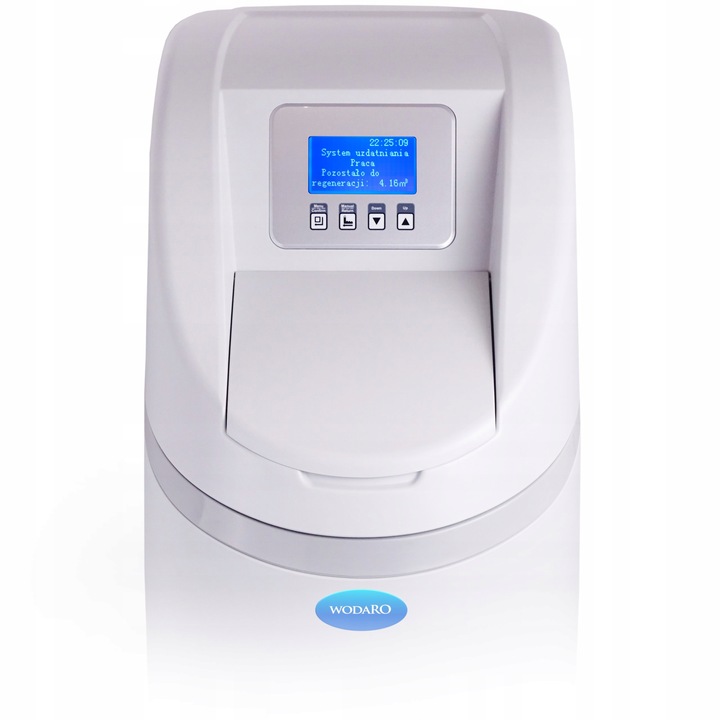
If your water has elevated nitrates or nitrites, consider installing a dedicated nitrogen filter. In our offer, you will find both compact kitchen systems and whole-house treatment stations. Check out the solutions on our website or contact us, and we will help translate the test results into a ready installation project.
How to choose a device and when to contact a specialist
It's worth starting the device selection by preparing some information. This way, the conversation with the specialist will be specific, and the proposed solution will be tailored to your situation, rather than general.
When contacting, it's good to have on hand:
- current water test results (nitrogen content, hardness, iron, manganese, conductivity, pH, and other available parameters),
- information on how many people live in the house and how you use water,
- estimated monthly water consumption,
- description of the source (municipal water or private well) and installation (one building or several, additional extraction points, etc.).
On thiswe can choose the solution: sometimes it's an under-sink filter, sometimes a compact station, and sometimes an advanced system combining several technologies. In practice, we see that a well-designed system works for years, and the user is limited to simple operational tasks and periodic inspections.
If you are just planning studies and don't know what parameters to request, let us know – we will advise you on what is worth marking so that based on the report it can be...responsibly plan the treatment.
Summary - safe water at home
Nitrates and nitrites in water is a topic that should not be underestimated, but it also does not have to be a cause for panic. The key is to calmly go through three steps: testing, interpreting the results, and selecting the appropriatesolutions.
If the study indicates elevated nitrogen compounds, especially when using a well, it is worth treating this as a signal to take action. Modern filtration systems allow for effective removal of nitrates from water on a kitchen scale or for the entire house, and a well-chosen technology enables you to "forget" about the problem for many years.
If you want to go through this process as painlessly as possible, justGather your test results, briefly describe your situation, and contact our specialist. The rest is just a matter of selecting the right devices, for which we will gladly help you find the best solution.
Frequently Asked Questions (FAQ)
What are the permissible standards for nitrates and nitrites in drinking water?
The upper limit for water intended for human consumption is set at 50mg/l for nitrates and 0.5 mg/l for nitrites. These numbers should be treated as maximums, not goals – the lower the values, the better for the household.
What do the parameters nitrate nitrogen and nitrite nitrogen mean in the test result?
This is a way of recording that indicates how much nitrogen is present in the water in the form of nitrates or nitrites. Some laboratories report the result in terms of nitrogen, while others report it in terms of total ions. If you are unsure how to relate the result to the standards,ask our water treatment specialist for help.
Can I drink water from the well if the test showed elevated nitrates?
In case of significant exceedance of the norms, it is better not to give such water to infants and small children. The risk is lower for adults, but it is still advisable to quickly plan an appropriate treatment system and consult a doctor if someone in the household has health issues.
What is thisWhat are nitrates and what are nitrites in home practice?
Nitrates and nitrites are forms of nitrogen present in water. Nitrates are more stable and are more commonly found in groundwater, while nitrites are an intermediate form, more sensitive from a health perspective. For the user, it is crucial whether their levels fall within the applicable standards.
What methods work best for removing nitrates from water?
The most commonly used are columns with anion exchange resin for the whole house and reverse osmosis systems in the kitchen. Which solution will be the best depends on the test results, the type of water source, and how you use water on a daily basis.
Will a regular pitcher filter lower the nitrogen level in the water?
Pitcher filters primarily improve the taste and smell of water, but they are usually not designed for permanently reducing the concentration ofnitrates and nitrites. When there is a real problem with nitrogen, solutions based on ion exchange or membranes are needed.
How often should the filter or nitrate station be serviced?
It depends on the type of device, the concentration of pollutants, and water usage. Usually, it is necessary to regularly replenish the salt for regenerating the medium and perform periodic maintenance checks. When purchasing, it is worth asking about the typical maintenance plan and costs right away.exploitation.
What should I start with if I suspect a problem with nitrates in the water?
It's best to start with testing at an accredited laboratory. Then, it's advisable to consult the results with a specialist from mojawoda.com. Based on this, specific solutions can be proposed instead of acting on a trial-and-error basis.
Sources:
- https://www.who.int — materials on drinking water quality and risk assessment related to nitrates and nitrites
- https://eur-lex.europa.eu — legal acts of the European Union defining the quality parameters of water intended for human consumption
- Regulation of the Minister of Health on the quality of water intended for human consumption — national regulations defining permissible concentrations of nitrates andazotynów
- Scientific publications and reports on nitrogen pollution in groundwater and the impact of agricultural activities on water quality
Author: The team of specialists at mojawoda.com — we help select effective water treatment systems for homes, apartments, and businesses.
Last updated: 2025-11-23.
