
- There are no more items in your cart
- Shipping
- Total 0.00 zł



- Bestsellers
- Wholesale
- Water filters
- Whole house filters
- Kitchen filters
- Bathroom filters
- Aquarium filters
- Reverse osmosis
- Water demineralizers
- Filter cartridges
- UV bactericidal lamps
- Alkaline water ionizers
- Industrial water filters
- Accessories, parts, and others
- Descaling filters for the coffee machine
- Water softeners and iron removers
- Water saturators
- ACES
- AMBERLITE
- AQUA VITA
- AQUAFILTER
- AQUAPHOR
- AQUATOR
- BASSAU
- BERG
- BIOCERA
- BIONIQ
- BLUEFILTERS
- CHEMOFORM
- CINTROPUR
- DAFI
- DELONGHI
- DIAMOND
- DOM WODY
- ECOWATER
- FILMTEC
- FIT ALCO
- FITAQUA
- GREEN FILTER
- HANNA INSTRUMENTS
- HELIXPRO
- HELLO PURE
- HIDROTEK
- HM-DIGITAL
- HONEYWELL
- Ibo
- JAVEL
- KLARWOD
- KRUPS
- MIDEA
- OTOWODA
- OTTONE
- Palintest
- PENTAIR
- PHILIPS
- PLATINUM WASSER
- PUROLITE
- SIEMENS
- Steingraf
- SUPREME
- TAB-SOL
- TOP FILTER
- UST-M
- USTM
- VONTRON
- WODARO
-
PayU

Tips
-
The water in the osmosis system is constantly flowing to the sewage - what to do?
-
Hydrogen water – effects, benefits, reviews – is it a scam?
-
Reverse osmosis - operating costs
-
Elimination of chlorine from water – why is it worth doing?
-
Pesticides in water - what they are, health risks, how to remove them
-
The water in the osmosis system is constantly flowing to the sewage - what to do?
-
Organic compounds in water – harmfulness, removal, and where do they come from?
-
Ammonia in water – where does it come from, is it harmful, and how to remove it?
-
Water filtration - why? Hit or miss?
-
Drinking water - effects after a month, skin and weight loss
Foam inserts for water filters
Foam inserts are an important component of water purification and treatment systems, used both in households and in larger industrial installations. Thanks to their porous structure, they effectively support mechanical filtration by trapping solid contaminants present in water.
Their task is to remove particles such as sand, rust, deposits, and other suspended matter, which translates into improved water quality and greater safety of installation use. Foam inserts are often used as a preliminary filtration stage, protecting subsequent system components from excessive wear.
Filter
Price
Wysokość wkładu
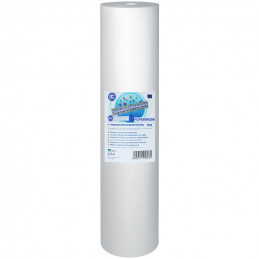
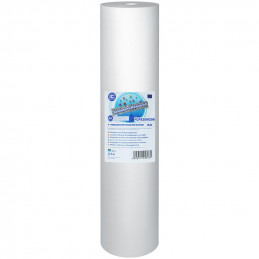
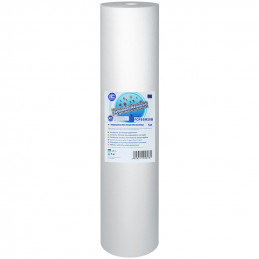
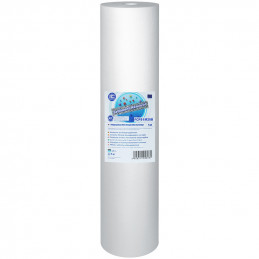
Foam inserts for water filters are a proven solution for mechanically removing solid contaminants. They are used wherever effective installation protection, improved water quality, and support for more advanced filtration stages are important. Thanks to their design, they perform well both in household conditions and in industrial applications.
Key information: foam inserts are most often made of polypropylene nonwoven fabric with a porous structure. They are used to trap mechanical contaminants such as sand, silt, rust, deposits, and other suspended matter. They provide high flow capacity, long service life, and low flow resistance. They can operate as a pre-filter in water treatment systems, including reverse osmosis installations.
Foam insert – key information
Foam inserts are most often made of polypropylene, which stands out for its good chemical and physical resistance. The special structure of the material allows for effective high-level mechanical filtration while maintaining proper water flow.
Polypropylene foam effectively traps solid particles present in water without affecting its taste or odor. The material itself is non-toxic and corrosion-resistant, which is why inserts of this type are valued in household installations as well as in more demanding environments, including the food and pharmaceutical industries.
In practice, a polypropylene insert very often serves as a pre-filter, meaning initial protection for subsequent filtration stages against larger contaminants that could reduce the efficiency of the entire system.
What contaminants do foam inserts remove?
The porous structure of foam inserts makes it possible to trap mechanical contaminants of various sizes. This is exactly why they are so versatile in everyday use.
- Sand and silt – fine particles that may enter the installation from water sourced from rivers, lakes, wells, and other natural sources.
- Rust – metallic contaminants appearing as a result of corrosion of pipes and water system components.
- Organic and inorganic deposits – including plant residues, pollen, or clay particles.
- Other solid particles – for example fragments of rock, soil, and other suspended matter present in raw water.
Foam inserts are responsible for mechanical filtration, meaning the removal of solid particles. Their role is primarily to protect the installation and improve water quality in terms of the presence of physical contaminants.
Applications of foam inserts
Drinking water filtration
In household conditions, foam inserts are commonly used in drinking water filtration systems. They trap mechanical contaminants, so improvement in the quality of water supplied to the point of use can be quickly noticeable. They can operate in various parts of the installation, for example in inline filters and under-sink systems.
Industrial water filtration
In industrial applications, foam inserts are used in technological processes, cooling systems, and wastewater treatment, wherever the removal of mechanical contaminants is necessary. Their durability and efficiency help maintain the appropriate quality of water used in industrial procedures.
Reverse osmosis systems
Foam filters work very well in reverse osmosis systems as a pre-filtration stage. They then serve as sediment filters, whose main task is to protect delicate and costly osmotic membranes against damage and premature wear.
- Mechanical pre-filtration – trapping sand, silt, rust, and other solid particles at the very beginning of the process.
- Protection of the osmotic membrane – reducing the risk of membrane blockage and damage.
- Reduced system load – relieving subsequent components such as carbon filters and membranes, which supports more efficient operation of the entire system.
Key benefits of using foam inserts
- Effective mechanical filtration of solid contaminants of various sizes.
- High flow capacity while maintaining low water flow resistance.
- Long service life resulting from durable construction and material resistance.
- Chemical and physical resistance, important in household and industrial installations.
- Safe use thanks to the use of non-toxic, corrosion-resistant polypropylene.
- No impact on the taste and odor of water.
- Effective protection of subsequent filtration stages, especially in multi-stage and RO systems.
How to choose the right foam insert?
When choosing a foam insert, it is worth considering primarily the installation location and the function it is to perform in the system. One insert will be suitable as a basic mechanical filter at home, while another will be appropriate as a pre-filter in a more advanced treatment system.
- Check whether the insert is intended to operate as a standalone mechanical filter or as a pre-filter before subsequent treatment stages.
- Match the solution to the type of installation – household, under-sink, inline, or industrial.
- Pay attention to the nature of contaminants present in the water, such as sand, rust, silt, or suspended matter.
- If the system is multi-stage, choose inserts that effectively protect more advanced filtration components.
Organized information about foam inserts
| Area | Information |
|---|---|
| Material | Most often polypropylene nonwoven fabric / polypropylene foam |
| Filtration type | Mechanical filtration of solid contaminants |
| Removed contaminants | Sand, silt, rust, organic and inorganic deposits, other suspended matter and solid particles |
| Main advantages | High flow capacity, low flow resistance, durability, chemical and physical resistance |
| Application | Household installations, food industry, pharmaceutical industry, cooling systems, wastewater treatment, RO systems |
| Role in the system | Often a pre-filter protecting subsequent filtration stages |
| Effect on water | No effect on the taste and odor of filtered water |
Foam inserts at the MojaWoda.com store
The MojaWoda.com offer includes various models of foam inserts – from standard polypropylene inserts, through dual-layer foam inserts with activated carbon, to bacteriostatic solutions. This makes it easier to choose a variant suited to a specific installation and the expected level of protection.
What are foam inserts for water filters?
These are filtration elements, most often made of polypropylene foam or nonwoven fabric, designed for the mechanical removal of solid contaminants from water. They trap, among others, sand, rust, deposits, and other suspended matter.
What contaminants do polypropylene foam inserts remove?
They primarily remove mechanical contaminants such as sand, silt, rust, organic and inorganic deposits, and other solid particles present in water.
What applications can foam inserts be used for?
They are used in household drinking water filtration systems, industrial installations, cooling systems, wastewater treatment, and as pre-filtration in reverse osmosis systems.
Why are foam inserts suitable for reverse osmosis systems?
They serve as pre-filters that trap larger mechanical contaminants. Thanks to this, they protect osmotic membranes against damage and reduce the load on subsequent filtration stages.
What are the main benefits of using foam inserts?
The key advantages are effective mechanical filtration, high flow capacity, low flow resistance, durability, chemical and physical resistance, and no impact on the taste and odor of water.
Are foam inserts suitable for household installations?
Yes, they are commonly used in household water filtration systems, including inline and under-sink filters. They help improve water quality and protect fittings and subsequent filtration components.
Does polypropylene affect the taste or odor of water?
No, polypropylene is a non-toxic and corrosion-resistant material, and foam inserts made of this material should not affect the taste or odor of filtered water.
Can a foam insert work as a pre-filter?
Yes, this is very often its role. As a pre-filter, it traps larger contaminants and protects more advanced filtration systems against faster wear or damage.
What types of foam inserts can be found in the offer?
Depending on your needs, standard polypropylene inserts, dual-layer variants with activated carbon, and bacteriostatic solutions are available.