
- There are no more items in your cart
- Shipping
- Total 0.00 zł



- Bestsellers
- Wholesale
- Water filters
- Whole house filters
- Kitchen filters
- Bathroom filters
- Aquarium filters
- Reverse osmosis
- Water demineralizers
- Filter cartridges
- UV bactericidal lamps
- Alkaline water ionizers
- Industrial water filters
- Accessories, parts, and others
- Descaling filters for the coffee machine
- Water softeners and iron removers
- Water saturators
- ACES
- AMBERLITE
- AQUA VITA
- AQUAFILTER
- AQUAPHOR
- AQUATOR
- BASSAU
- BERG
- BIOCERA
- BIONIQ
- BLUEFILTERS
- CHEMOFORM
- CINTROPUR
- DAFI
- DELONGHI
- DIAMOND
- DOM WODY
- ECOWATER
- FILMTEC
- FIT ALCO
- FITAQUA
- GREEN FILTER
- HANNA INSTRUMENTS
- HELIXPRO
- HELLO PURE
- HIDROTEK
- HM-DIGITAL
- HONEYWELL
- Ibo
- JAVEL
- KLARWOD
- KRUPS
- MIDEA
- OTOWODA
- OTTONE
- Palintest
- PENTAIR
- PHILIPS
- PLATINUM WASSER
- PUROLITE
- SIEMENS
- Steingraf
- SUPREME
- TAB-SOL
- TOP FILTER
- UST-M
- USTM
- VONTRON
- WODARO
-
PayU

Tips
-
The water in the osmosis system is constantly flowing to the sewage - what to do?
-
Hydrogen water – effects, benefits, reviews – is it a scam?
-
Reverse osmosis - operating costs
-
Elimination of chlorine from water – why is it worth doing?
-
Pesticides in water - what they are, health risks, how to remove them
-
The water in the osmosis system is constantly flowing to the sewage - what to do?
-
Organic compounds in water – harmfulness, removal, and where do they come from?
-
Ammonia in water – where does it come from, is it harmful, and how to remove it?
-
Water filtration - why? Hit or miss?
-
Drinking water - effects after a month, skin and weight loss
Antibacterial Water Filters
Today, care for cleanliness and hygiene is crucial for health and safety. That is why antibacterial water filters are becoming increasingly popular, helping to effectively reduce the presence of dangerous microorganisms.
These solutions are used wherever a high level of installation hygiene and water safety matters. A properly selected antibacterial filter supports protection against bacteria and can also improve the comfort of everyday water use.
Filter
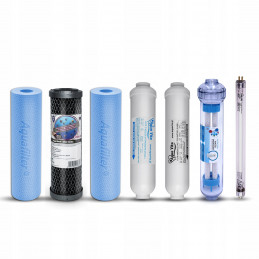
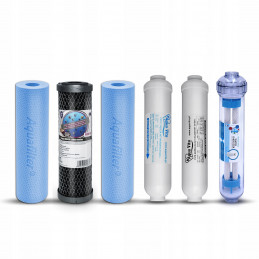
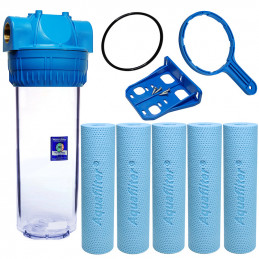
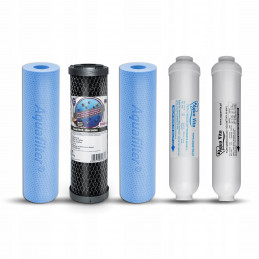
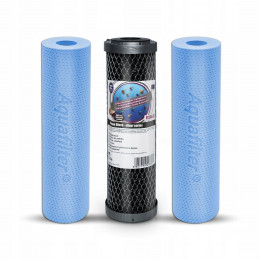
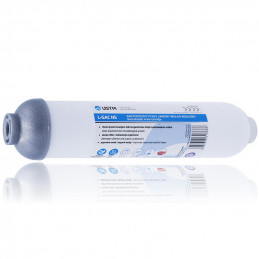
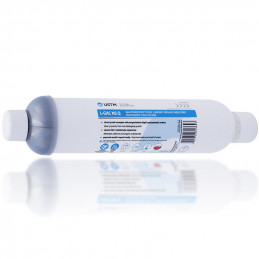
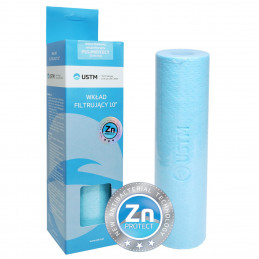
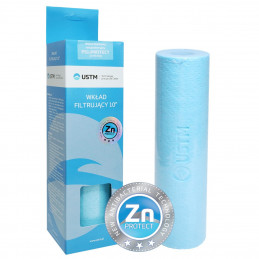
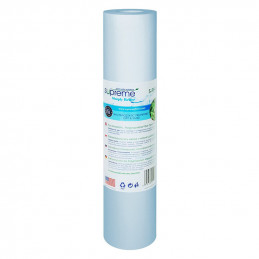

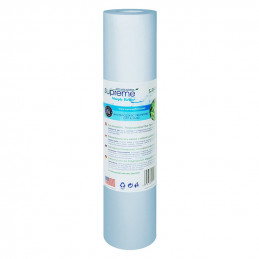

Antibacterial filters are an important element of modern water filtration systems. They support the removal of contaminants and help eliminate bacteria, viruses, and other microorganisms, while also improving the taste and smell of water. This is a category of solutions chosen both for domestic use and in places where hygiene and safety are of particular importance.
This category includes antibacterial water filters and cartridges, intended for applications where limiting bacterial growth and supporting installation hygiene are important. Products of this type may work through mechanical filtration, adsorption, and the use of bacteriostatic cartridges, and in selected solutions also with the use of UV radiation or chemical agents. Antibacterial filters are used in homes, offices, public institutions, medical facilities, and the food industry.
What are antibacterial filters?
Antibacterial filters are specialized devices designed to purify drinking water. Their task is to effectively eliminate bacteria, viruses, and other dangerous microorganisms. They operate by mechanically retaining biological contaminants and through chemisorption, meaning the chemical adsorption of microorganisms, which makes it possible to achieve a high level of liquid purification.
Such solutions are used wherever water purity is crucial for health and safety. Therefore, antibacterial filters are used not only in households, but also in offices and in various branches of industry.
Bacteriostatic cartridges and their role
One of the key elements of many antibacterial filters is bacteriostatic cartridges. They contain substances with bacteriostatic properties, meaning those that inhibit the growth and development of bacteria. Thanks to this, the filter not only helps eliminate microorganisms, but also reduces the risk of their regrowth.
This solution has a positive effect on the durability and effectiveness of the filtration system. In practice, this means better support for installation hygiene and more stable filter operation during regular use.
The most important advantages of antibacterial filters
Antibacterial filters are chosen primarily wherever water safety and everyday comfort of use matter. Their most important advantages include:
- elimination of bacteria from drinking water, which helps reduce the risk of bacterial infections and waterborne diseases,
- improved taste and smell of water, making the water not only cleaner but also more pleasant for everyday consumption,
- easy installation and operation in the case of many popular models,
- health protection, especially important for children, seniors, and people with weakened immunity,
- cost savings in the long term, among other things by reducing the need to buy bottled water.
Even the best antibacterial filter requires regular replacement of filter cartridges. Only then can it maintain optimal performance and support safe installation use.
Where are antibacterial filters used?
An antibacterial filter is used in various areas, wherever clean water has a direct impact on health, safety, or the quality of operational processes.
Households
In homes, antibacterial filters are used especially where tap water does not meet expected quality standards. They can be installed at kitchen taps, in drinking water dispensers, or in complete household water systems.
Offices and public institutions
In workplaces and public institutions, where many people use one water source, antibacterial filters help ensure a high level of safety and support maintaining an appropriate level of hygiene.
Hospitals and medical facilities
In medical facilities, hygiene is critically important for preventing infections. For this reason, antibacterial filters are essential there not only for obtaining clean drinking water, but also for applications related to medical devices used in operating rooms.
Food industry
In the food industry, water purity is extremely important for product quality. Antibacterial filters are used there to ensure a high level of safety for produced food.
How does an antibacterial water filter work?
An antibacterial filter may use various operating mechanisms. Depending on the system design and the type of cartridge, water purification takes place using one or several complementary processes.
- Mechanical filtration – consists of passing water through a filter material that mechanically retains bacteria and other contaminants. Popular examples include ceramic and nonwoven filters.
- Adsorption filtration – selected models contain adsorptive materials, such as activated carbon, which help remove bacteria and chemical substances from water.
- Use of UV radiation – in more advanced systems, UV rays destroy bacterial DNA, preventing them from multiplying.
- Use of chemical agents – some filters contain special cartridges with chemical substances, for example chlorine, which help eliminate dangerous bacteria present in water.
How to choose an antibacterial filter?
Choosing the right solution should be based on the actual needs of the installation and the way the water is used. When selecting, it is worth paying attention to several basic issues:
- place of use – home, office, public, medical, or industrial facility,
- system type – single water draw-off point, dispenser, under-sink system, or larger installation,
- type of cartridge used – including the presence of bacteriostatic cartridges,
- filter operating method – mechanical, adsorption, UV, or mixed,
- maintenance requirements and frequency of cartridge replacement,
- expected additional effect, such as improved taste and smell of water.
Safety of use
Antibacterial filters meet specific safety standards and are designed for effective operation under appropriate working conditions. To maintain their effectiveness and safety of use, the manufacturer's recommendations should be followed, especially regarding installation, operation, and replacement of filtering elements.
Regular servicing and a properly selected cartridge have a direct impact on filtration quality, device durability, and the level of hygienic protection.
Key information at a glance
| Area | Information |
|---|---|
| Purpose | Water purification and support for the elimination of bacteria, viruses, and other microorganisms. |
| Key element | Bacteriostatic cartridges that inhibit the growth and development of bacteria. |
| Benefits | Improved taste and smell of water, health protection, ease of use, and possible cost savings. |
| Application | Homes, offices, public institutions, medical facilities, and the food industry. |
| Maintenance | Regular replacement of filter cartridges is required to maintain effectiveness. |
Antibacterial filters at the MojaWoda.com store
Antibacterial filters are an important element of water filtration systems. They help remove contaminants, support the elimination of bacteria and viruses, and can additionally improve the taste and smell of water. These are solutions that support health protection and can bring real savings in everyday use. If you are looking for an efficient antibacterial filter, it is worth choosing a model suited to your system and the way you use water.
FAQ
What is an antibacterial water filter?
It is a filter designed to purify water from bacteria, viruses, and other dangerous microorganisms. Depending on the design, it may work through mechanical filtration, adsorption, bacteriostatic cartridges, UV radiation, or chemical solutions.
Does an antibacterial filter remove only bacteria?
Not always. According to the description of this category, antibacterial filters may also help eliminate viruses and other microorganisms, and some solutions additionally improve the taste and smell of water.
What are bacteriostatic cartridges used for?
Bacteriostatic cartridges contain substances that inhibit the growth and development of bacteria. Thanks to this, they support not only the elimination of microorganisms, but also help limit their regrowth in the filtration system.
Where can antibacterial filters be used?
Such filters are used in households, offices, public institutions, hospitals, medical facilities, and the food industry – wherever water purity is of key importance.
Does an antibacterial filter improve the taste and smell of water?
Yes, many filters with bacteriostatic cartridges help not only reduce the presence of microorganisms, but also improve the taste and smell of water, which increases the comfort of everyday use.
Is installing an antibacterial filter difficult?
Many models are easy to install and operate. However, it is crucial to choose the right solution for the system and regularly replace the filter cartridges according to the manufacturer's recommendations.
How often should cartridges in an antibacterial filter be replaced?
The replacement frequency depends on the type of filter, the cartridge used, and the intensity of use. To maintain optimal effectiveness, cartridges should be replaced regularly according to the manufacturer's recommendations.
Is an antibacterial filter a good choice for children and seniors?
Yes, this type of solution is especially important wherever water is used by children, seniors, and people with weakened immune systems, because it supports health protection and the safety of utility water.
Can an antibacterial filter help reduce spending on bottled water?
Yes, although the initial cost of purchasing the filter may be higher than in the case of simpler solutions, in the long term it can bring savings by reducing the purchase of bottled water.