
- There are no more items in your cart
- Shipping
- Total 0.00 zł



- Bestsellers
- Wholesale
- Water filters
- Whole house filters
- Kitchen filters
- Bathroom filters
- Aquarium filters
- Reverse osmosis
- Water demineralizers
- Filter cartridges
- UV bactericidal lamps
- Alkaline water ionizers
- Industrial water filters
- Accessories, parts, and others
- Descaling filters for the coffee machine
- Water softeners and iron removers
- Water saturators
- ACES
- AMBERLITE
- AQUA VITA
- AQUAFILTER
- AQUAPHOR
- AQUATOR
- BASSAU
- BERG
- BIOCERA
- BIONIQ
- BLUEFILTERS
- CHEMOFORM
- CINTROPUR
- DAFI
- DELONGHI
- DIAMOND
- DOM WODY
- ECOWATER
- FILMTEC
- FIT ALCO
- FITAQUA
- GREEN FILTER
- HANNA INSTRUMENTS
- HELIXPRO
- HELLO PURE
- HIDROTEK
- HM-DIGITAL
- HONEYWELL
- Ibo
- JAVEL
- KLARWOD
- KRUPS
- MIDEA
- OTOWODA
- OTTONE
- Palintest
- PENTAIR
- PHILIPS
- PLATINUM WASSER
- PUROLITE
- SIEMENS
- Steingraf
- SUPREME
- TAB-SOL
- TOP FILTER
- UST-M
- USTM
- VONTRON
- WODARO
-
PayU

Tips
-
The water in the osmosis system is constantly flowing to the sewage - what to do?
-
Hydrogen water – effects, benefits, reviews – is it a scam?
-
Elimination of chlorine from water – why is it worth doing?
-
Reverse osmosis - operating costs
-
Pesticides in water - what they are, health risks, how to remove them
-
The water in the osmosis system is constantly flowing to the sewage - what to do?
-
Organic compounds in water – harmfulness, removal, and where do they come from?
-
Ammonia in water – where does it come from, is it harmful, and how to remove it?
-
Water filtration - why? Hit or miss?
-
Drinking water - effects after a month, skin and weight loss
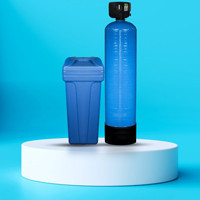
Water demineralizers
Water demineralizers are used to obtain demineralized water, also called deionized water, meaning water free of mineral salts and other unwanted substances. Water prepared in this way is used both at home, in businesses, and in technical processes.
This is a practical solution wherever very high water purity, reduced deposits, and effective protection of equipment against limescale matter. A properly selected demineralizer helps extend the service life of equipment and supports trouble-free operation of installations and utility devices.
Filter
Price
Wysokość wkładu
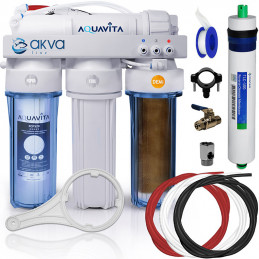
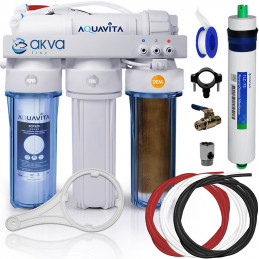
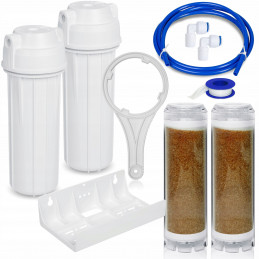
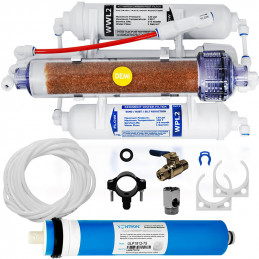
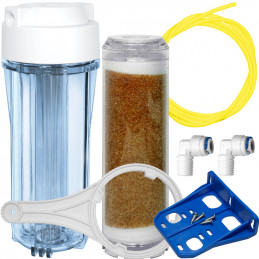
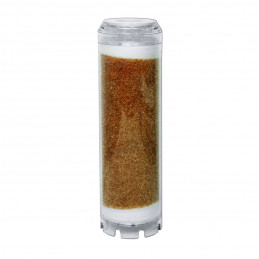
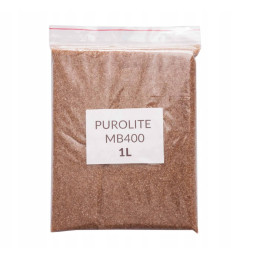
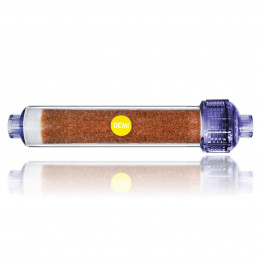
Water demineralizers are chosen wherever standard filtration is not enough. Their purpose is to prepare water with a very high degree of purity, free of mineral salts and ions that may cause deposits, impair technological processes, or shorten the service life of equipment. These solutions are used in domestic, technical, aquarium, laboratory, and industrial applications.
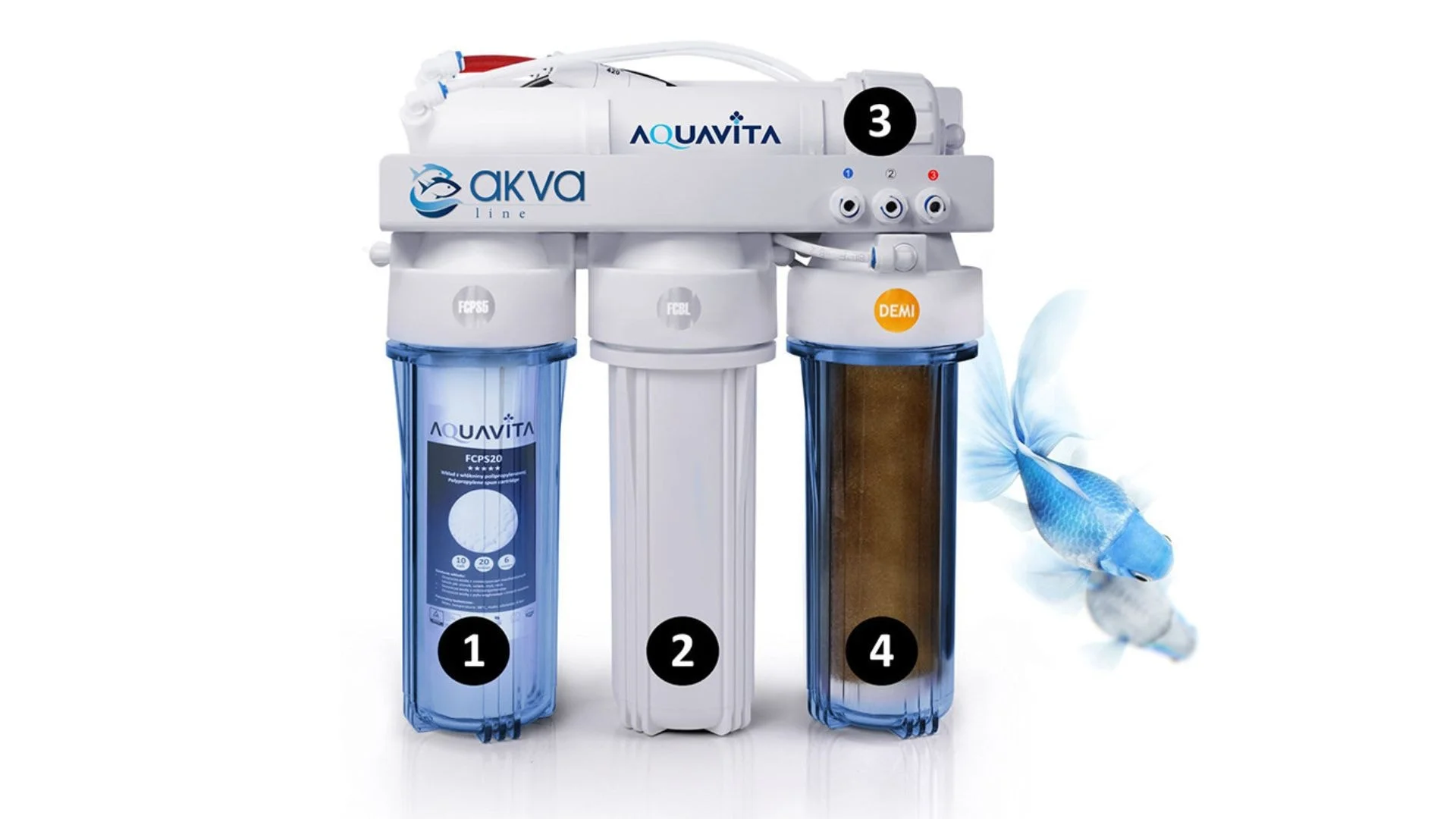
This category includes water demineralizers for domestic and technical applications. These devices are used to obtain demineralized water, also referred to as deionized water. Such water is free of mineral salts and ions such as calcium, magnesium, or sodium. The range includes solutions based, among others, on reverse osmosis technology and demineralizing resins. Demineralization is particularly useful wherever it is important to protect equipment against limescale, reduce deposits, and obtain high-purity water.
What is demineralized and deionized water?
Demineralized water, also called deionized water, is water free of mineral salts and ions such as calcium, magnesium, or sodium. The source description also indicates that this process may remove dissolved gases from the water, including carbon dioxide. The result is water with a very high level of purity, used in many industries and everyday applications.

This type of water is used in industry, laboratories, pharmaceuticals, aquatics, as well as in household devices such as steam irons, air humidifiers, and steam cleaners. Its most important feature is its very high purity, which helps limit limescale buildup and reduce the risk of operational problems.
How does water demineralization work?
Demineralization involves removing minerals, salts, and other unwanted components present in natural water. Depending on the application, different purification methods are used.
Most commonly used methods
- Reverse osmosis – uses special membranes that retain contaminants; according to the source content, it can remove up to 99.99% of impurities.
- Demineralizing resins – used to eliminate ions from water.
- Thermal method – involves evaporating the water; solutions of this type are most commonly used, among others, in power plants and petrochemical facilities.
This category includes demineralizers based on technologies used to obtain water free of mineral salts and other unwanted substances. In practice, the choice of the right solution should depend on whether the water is to be used at home, in an aquarium, in a business, in a laboratory, or in a technical process.
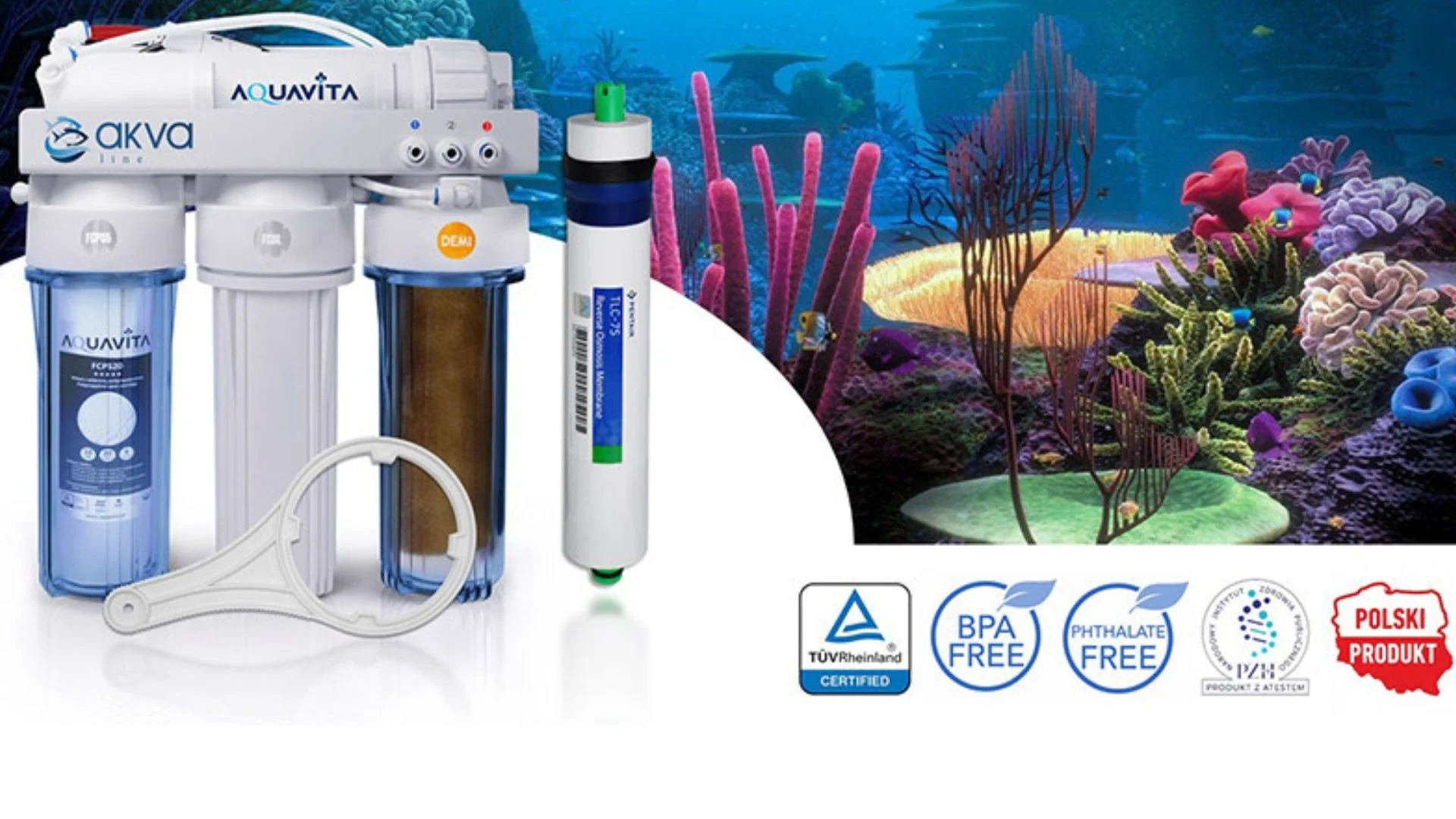
Key benefits of using water demineralizers
Demineralizers are used wherever stable water quality and equipment protection matter. The main benefits include:
- reduction of limescale buildup in devices and installations,
- extended service life of equipment operating with high-purity water,
- lower risk of operational problems resulting from the presence of mineral salts,
- the possibility of use at home, in business, and in industry,
- support for processes requiring clean water, for example in laboratories, pharmaceuticals, or aquatics.
Demineralization is chosen when simply removing mechanical impurities is not enough. In many applications, it is also crucial to reduce dissolved salts and ions that affect equipment operation, deposit formation, and the quality of technological processes.
Applications of demineralized water
Demineralized water has a wide range of uses both in industry and in everyday use. Thanks to its purity, it is used in many fields.
Home and utility devices
Demineralized water is readily used in devices where limescale buildup may impair performance or shorten the service life of components.
- steam irons,
- air humidifiers,
- steam cleaners.
The complete removal of mineral salts helps protect devices against deposits and supports their longer, more trouble-free operation.
Aquatics
Water demineralization is also important in aquatics. Demineralized water helps create suitable conditions for plants and fish and reduces the risk of problems related to the presence of unwanted compounds in the water.

Industry, laboratories, and technical applications
Demineralized water is used, among others, in:
- chemical laboratories,
- the pharmaceutical industry,
- cooling systems,
- car washes,
- industrial processes requiring very high-purity water.
The source content also indicated its use in cosmetics production and in systems where reducing deposits and maintaining high medium purity are important.
Can demineralized water be drunk?
The question of drinking demineralized water comes up very often. According to the source content, demineralized water is not recommended for daily consumption, because it does not contain mineral salts. In small amounts, drinking it may be safe, but regular consumption may contribute to electrolyte imbalance and, in the longer term, lead to deficiencies of important minerals.
The source description indicated an exception in the form of medical recommendations, for example in certain conditions such as kidney stones, when a doctor may recommend limiting the intake of some minerals. In such situations, it is always worth consulting the method of use individually.
For consumption purposes, it is generally better to choose water intended for drinking. Demineralized water, on the other hand, is a very good choice for many technical and utility applications where reducing deposits and the absence of mineral salts are important.
Demineralized water vs. distilled water
Although these terms are sometimes used interchangeably, they do not mean exactly the same thing.
| Type of water | Method of obtaining | Information from the source content |
|---|---|---|
| Demineralized water | Removal of mineral salts and ions, among others through reverse osmosis or demineralizing resins | Used at home, in aquatics, laboratories, industry, and utility devices |
| Distilled water | Distillation, meaning evaporation and re-condensation of water | Used, among others, in chemical laboratories, the pharmaceutical industry, steam boilers, cooling systems, and car washes |
Both types of water have similar applications in many areas, but they differ in the way they are prepared. In practice, the choice depends on the requirements of a specific process or device.
How to choose a water demineralizer?
The selection of a device should primarily be based on its intended application. This makes it easier to choose a solution suitable for the home, business, or a technical process.
- Determine the application – a household user has different needs than an aquarist, a laboratory, or an industrial facility.
- Check the operating technology – this category includes solutions based on reverse osmosis and demineralizing resins.
- Pay attention to equipment protection – if limiting limescale is a priority, effective reduction of mineral salts will be important.
- Consider operating conditions – in some technical systems or older devices, it is necessary to check whether the manufacturer allows the use of demineralized water.

If you want to protect equipment against limescale and obtain water of very high purity, it is worth matching the right demineralization system to specific operating needs.
Frequently asked questions
What is demineralized water?
It is water free of mineral salts and ions such as calcium, magnesium, or sodium. The source content also indicated that the demineralization process may remove dissolved gases from water, including carbon dioxide, resulting in water of very high purity.
Is demineralized water the same as deionized water?
In the description of this category, these names are used in parallel. In practice, they refer to water free of ions and mineral salts, used in domestic, technical, laboratory, and industrial applications.
How to make demineralized water?
It can be obtained, among others, through ion exchange or reverse osmosis. According to the source content, osmotic membranes can remove up to 99.99% of impurities, including some organic contaminants, bacteria, and heavy metals.
What is demineralized water used for?
Demineralized water is used in aquatics, laboratories, pharmaceuticals, cosmetics production, cooling systems, car washes, and household devices such as steam irons, humidifiers, and steam cleaners.
Can you drink demineralized water?
It is not recommended for daily drinking because it does not contain mineral salts. In small amounts, drinking it usually should not be harmful, but regular use as drinking water is not recommended unless a doctor advises otherwise.
Is demineralized water harmful?
In technical and utility applications, it is commonly used safely. For drinking in excess, it may be inadvisable due to the lack of minerals. The source content also noted that it is not always suitable for some devices, such as coffee machines, central heating systems, or older cooling systems, because it may accelerate corrosion of selected components.
What pH does demineralized water have?
According to the source information, demineralized water may have a neutral or slightly acidic pH. This depends on the purification method and the conditions of the water’s contact with its surroundings.
Is demineralized water suitable for an iron and a humidifier?
Yes, it is often used in steam irons, air humidifiers, and steam cleaners. Its main advantage is reducing limescale buildup, which helps protect devices and extends their service life.
What is the difference between demineralized water and distilled water?
The difference primarily concerns the method of obtaining it. Distilled water is produced by evaporation and condensation, while demineralized water is prepared by removing mineral salts and ions, for example using reverse osmosis or demineralizing resins.

If you are looking for a solution for the home, business, or technical applications, a water demineralizer should be selected according to the specific purpose of use. A properly selected system will help obtain high-purity water and effectively reduce problems related to mineral deposits.