




Water filters

Filter cartridges

Reverse osmosis

Softeners & Iron Filters

Accessories & Parts

Soda makers
Bestsellers
Wholesale

Soda makers
BLOG
Kontakt
Services
PayU

Tips
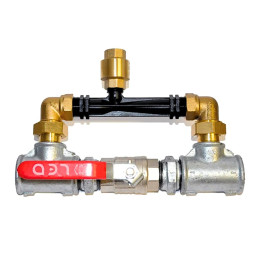
Water aerator with a Venturi nozzle and a ball valve (1-inch connection) for water treatment systems with a deironsing or demanganizing unit. It creates a vacuum, draws in air, and intensively mixes it with water, which supports the oxidation and precipitation of iron and manganese compounds before the filtration stage. You can adjust the aeration level using the ball valve.
Water aerator with Venturi nozzle and ball valve – 1 inch is an important component of a water treatment installation, designed to work with an iron remover or manganese remover. The unit creates negative pressure, draws in air, and intensively mixes it with water, supporting the oxidation and precipitation of iron and manganese compounds before the actual filtration stage. It is a practical solution for systems where effective water treatment and a properly selected water filter are key parts of a broader water filtration system.
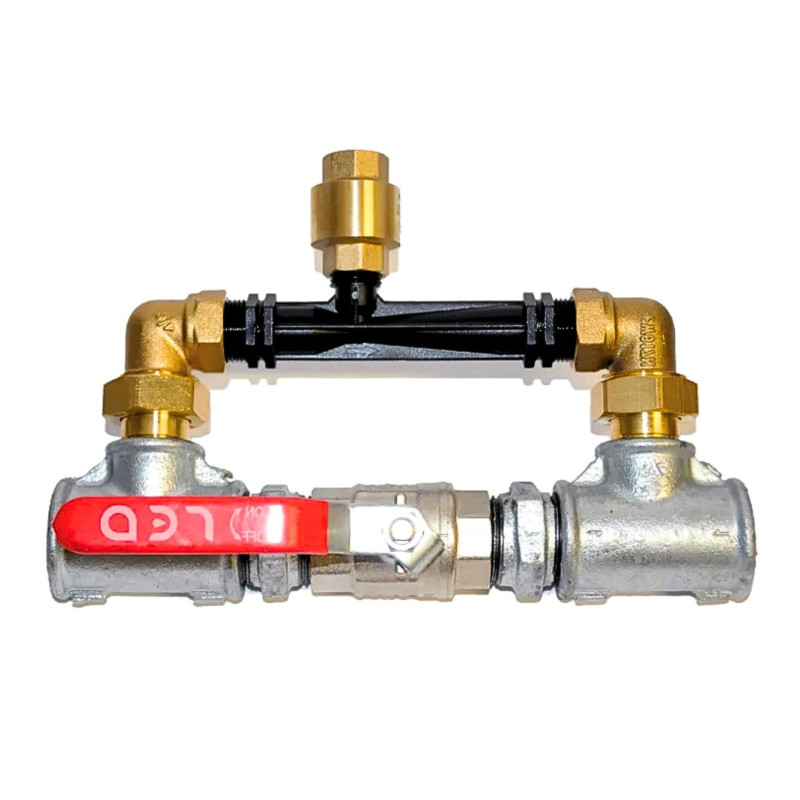
The water aerator is a key component of a water treatment installation used in sets with an iron remover or manganese remover. The design is based on two basic elements: the Venturi nozzle and the ball valve.
Its task is effective water aeration, thanks to which iron and manganese can be transformed from a dissolved state into an insoluble form. This process makes it easier to remove them at the next stage of the installation’s operation.
The Venturi principle is based on reducing the pipe cross-section over a certain section. In such a zone, the flow speed of the liquid increases while its pressure decreases.
As a result, negative pressure is created, which draws air through a special opening in the injector. The water is intensively aerated and then passes on to the pressure tank, where the precipitation of undesirable compounds can begin.
The ball valve is responsible for adjusting the intensity of aeration, allowing the system to be matched to the installation conditions.
This solution provides a simple and convenient way to control the amount of air introduced into the water stream without the need for complex auxiliary systems.
Water aeration is a necessary process in installations working with iron removers and manganese removers. Thanks to the presence of oxygen, iron and manganese can precipitate in the pressure tank and then be effectively removed during filtration.
The aerator works with systems using catalytic filter media such as:
In practice, this means more efficient preparation of the water for further treatment and better operating conditions for the entire water filtration system. Unlike solutions such as reverse osmosis, osmosis filter, reverse osmosis filter, or reverse osmosis system, this component serves a typically pre-treatment and process function in installations for removing iron and manganese.
The aerator should be installed before a pressure tank without a diaphragm in any installation with an iron remover. Such a mounting method supports the proper operation of the entire system and enables effective removal of iron and manganese compounds from the water.
The proper operation of the aerator depends on correct installation in the appropriate place in the system and proper adjustment of the ball valve. Installation before a pressure tank without a diaphragm is key to achieving the expected aeration effect and further precipitation of contaminants.
| Type | Aerator with Venturi nozzle and ball valve |
|---|---|
| Connections | 1 inch |
| Intended use | Installations with an iron remover or manganese remover |
| Materials | Durable plastics and corrosion-resistant metal |
The aerator should be installed before a pressure tank without a diaphragm in systems equipped with an iron remover or manganese remover.
Yes. Aeration is necessary because it enables iron and manganese to be transformed into a form that can be effectively precipitated and removed during further filtration.
The nozzle reduces the flow cross-section, which increases the water speed and lowers the pressure. The resulting negative pressure draws air through the opening in the injector, aerating the water.
The ball valve is used to adjust the level of aeration. It allows you to control how much water flows through the injector and thus affects the intensity of mixing water with air.
The more closed the ball valve is, the larger the portion of water that flows through the injector and the more intense the aeration. With the valve more open, most of the water bypasses the nozzle, so aeration is lower.
The aerator works with systems using catalytic media such as Birm, Defeman, and Ironit (formerly Klarsanit).
The model with 1 inch connections is intended for water treatment installations with an iron remover or manganese remover, where effective aeration is required before further filtration.
The main advantages are effective water aeration, support for iron and manganese removal, the ability to adjust operation with a ball valve, and a durable design based on resistant materials.
Water aerator with a Venturi nozzle and a ball valve (1-inch connection) for water treatment systems with a deironsing or demanganizing unit. It creates a vacuum, draws in air, and intensively mixes it with water, which supports the oxidation and precipitation of iron and manganese compounds before the filtration stage. You can adjust the aeration level using the ball valve.