
- There are no more items in your cart
- Shipping
- Total 0.00 zł



- Bestsellers
- Wholesale
- Water filters
- Whole house filters
- Kitchen filters
- Bathroom filters
- Aquarium filters
- Reverse osmosis
- Water demineralizers
- Filter cartridges
- UV bactericidal lamps
- Alkaline water ionizers
- Industrial water filters
- Accessories, parts, and others
- Descaling filters for the coffee machine
- Water softeners and iron removers
- Water saturators
- ACES
- AMBERLITE
- AQUA VITA
- AQUAFILTER
- AQUAPHOR
- AQUATOR
- BASSAU
- BERG
- BIOCERA
- BIONIQ
- BLUEFILTERS
- CHEMOFORM
- CINTROPUR
- DAFI
- DELONGHI
- DIAMOND
- DOM WODY
- ECOWATER
- FILMTEC
- FIT ALCO
- FITAQUA
- GREEN FILTER
- HANNA INSTRUMENTS
- HELIXPRO
- HELLO PURE
- HIDROTEK
- HM-DIGITAL
- HONEYWELL
- Ibo
- JAVEL
- KLARWOD
- KRUPS
- MIDEA
- OTOWODA
- OTTONE
- Palintest
- PENTAIR
- PHILIPS
- PLATINUM WASSER
- PUROLITE
- SIEMENS
- Steingraf
- SUPREME
- TAB-SOL
- TOP FILTER
- UST-M
- USTM
- VONTRON
- WODARO
-
PayU

Tips
-
The water in the osmosis system is constantly flowing to the sewage - what to do?
-
Hydrogen water – effects, benefits, reviews – is it a scam?
-
Reverse osmosis - operating costs
-
Elimination of chlorine from water – why is it worth doing?
-
Pesticides in water - what they are, health risks, how to remove them
-
The water in the osmosis system is constantly flowing to the sewage - what to do?
-
Organic compounds in water – harmfulness, removal, and where do they come from?
-
Ammonia in water – where does it come from, is it harmful, and how to remove it?
-
Water filtration - why? Hit or miss?
-
Drinking water - effects after a month, skin and weight loss
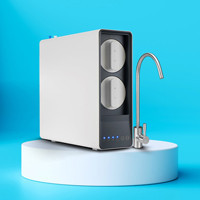
Reverse osmosis and reverse osmosis filters – what is osmosis?
Reverse osmosis is one of the most effective technologies for treating drinking water at home. Thanks to the osmotic membrane, RO systems make it possible to obtain water of very high purity, improving its taste, smell, and safety for everyday use.
By choosing a reverse osmosis filter, you can enjoy crystal-clear water straight from the tap and reduce the need to buy bottled water. It is a convenient solution for people who want to take care of their own health and that of their family, as well as kitchen comfort.
Filter
Price
Wysokość wkładu
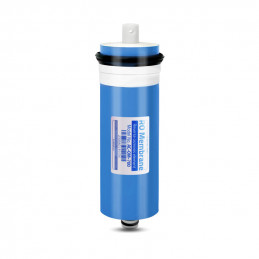
High-efficiency osmotic membrane 300 GPD (2642 l / 24h)
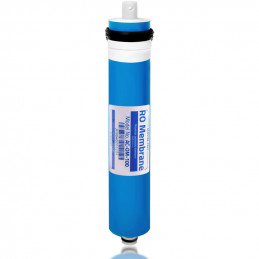
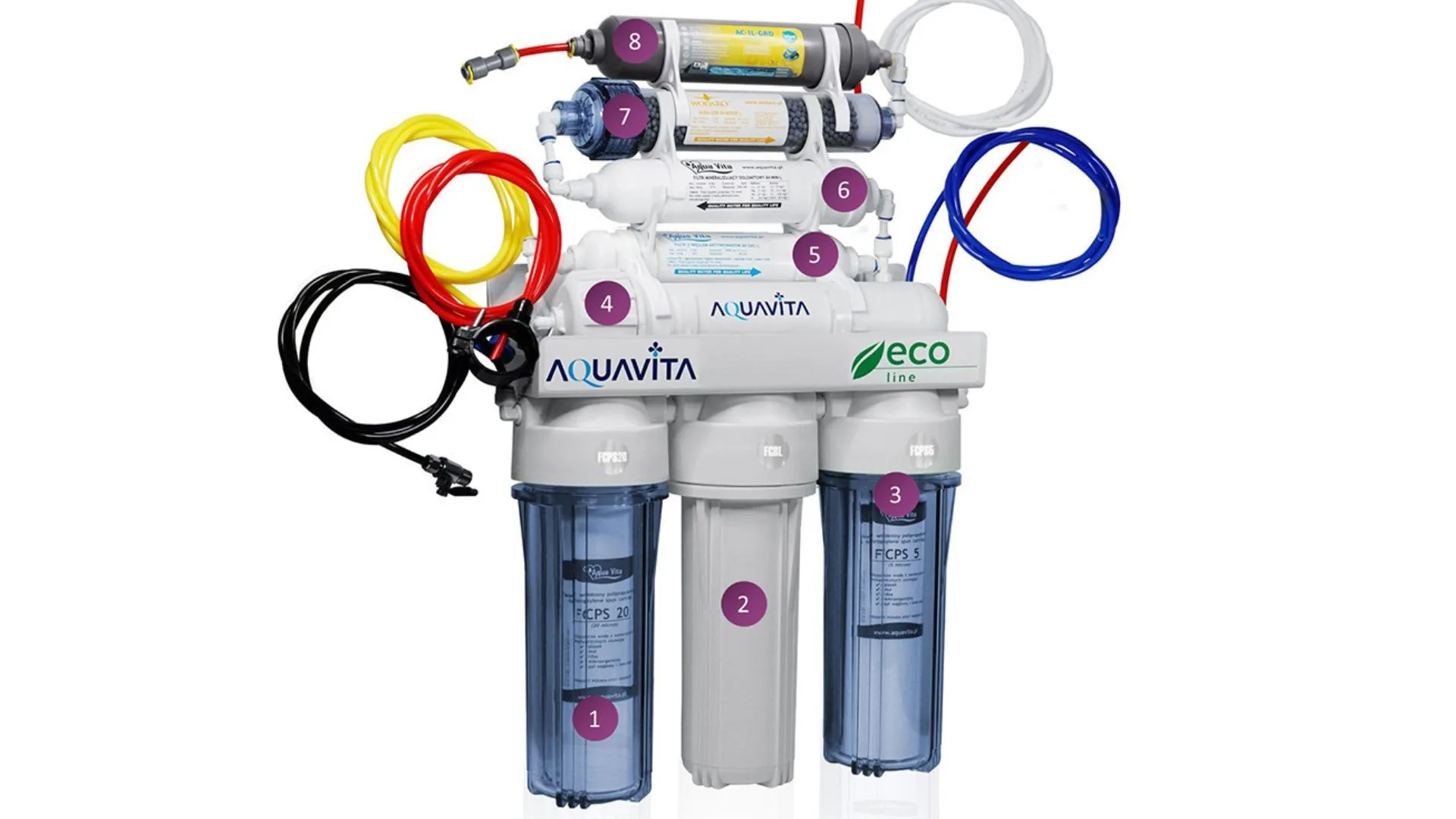
In this category you will find RO reverse osmosis systems for home use in various configurations: with a tank and tankless, with a remineralizer or without remineralization, as well as more advanced solutions with ionization. RO filters are used for drinking water treatment and help remove many unwanted contaminants, improving taste and the comfort of everyday water use.
Reverse osmosis is a technology valued by users who expect highly effective water filtration in domestic conditions. A properly selected RO system can provide constant access to clean water for drinking and cooking, while also reducing the need to buy bottled water.
This category includes both classic osmotic systems and modern models with a compact design. This makes it easier to match the solution to the available space, pressure in the installation, and the way water is used at home.
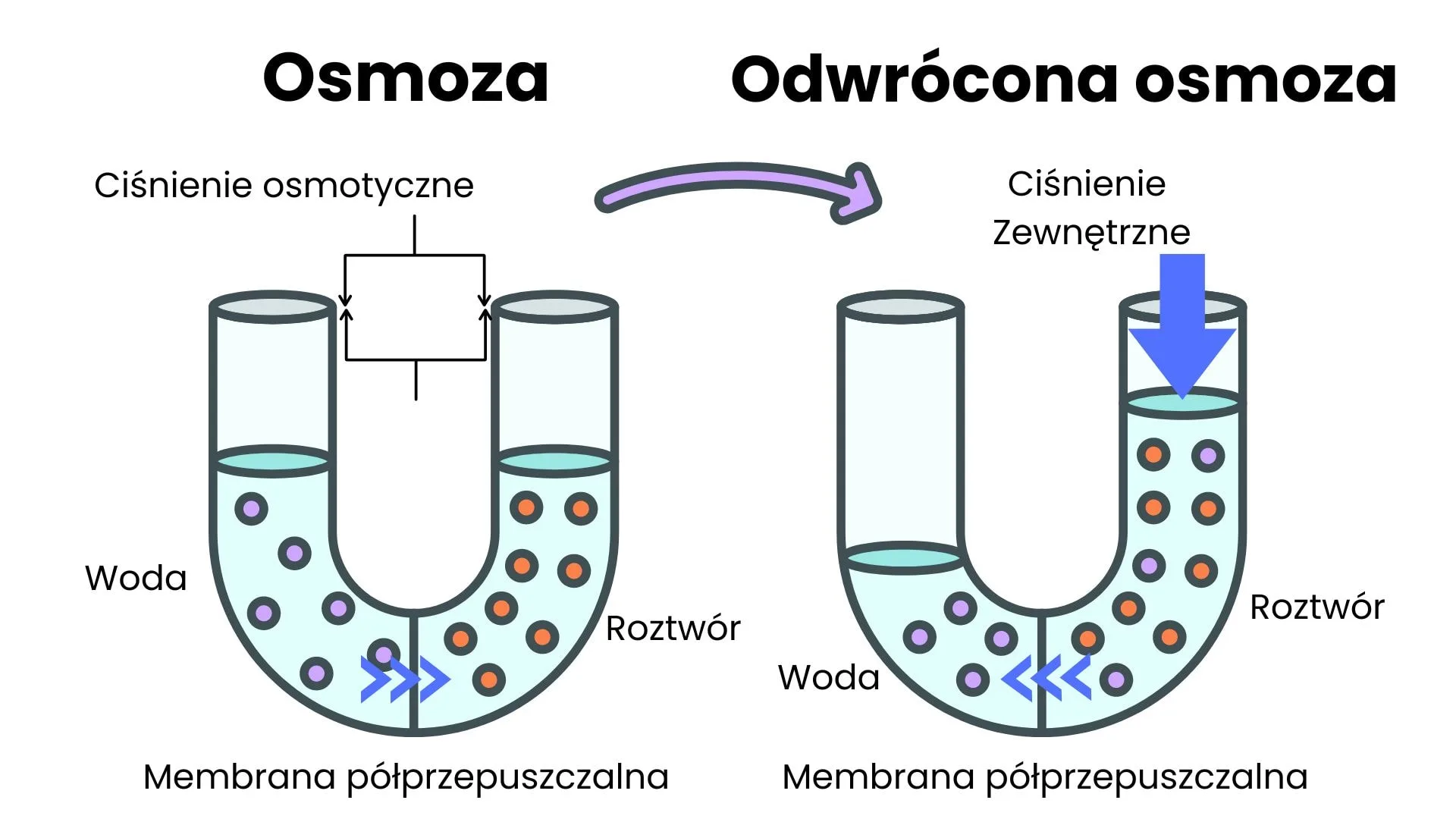
What is osmosis?
Osmosis is a natural phenomenon in which water molecules move through a semipermeable membrane from a solution with a lower concentration to a solution with a higher concentration. In practice, this means a tendency to equalize concentrations on both sides of the membrane. Microscopic openings allow water molecules to pass through while retaining larger contaminants. It is a process commonly found in nature, occurring for example in plant and animal cells.
Understanding this phenomenon makes it easier to explain how reverse osmosis works, that is, the controlled reversal of the natural direction of water flow through the membrane.
How does reverse osmosis work?
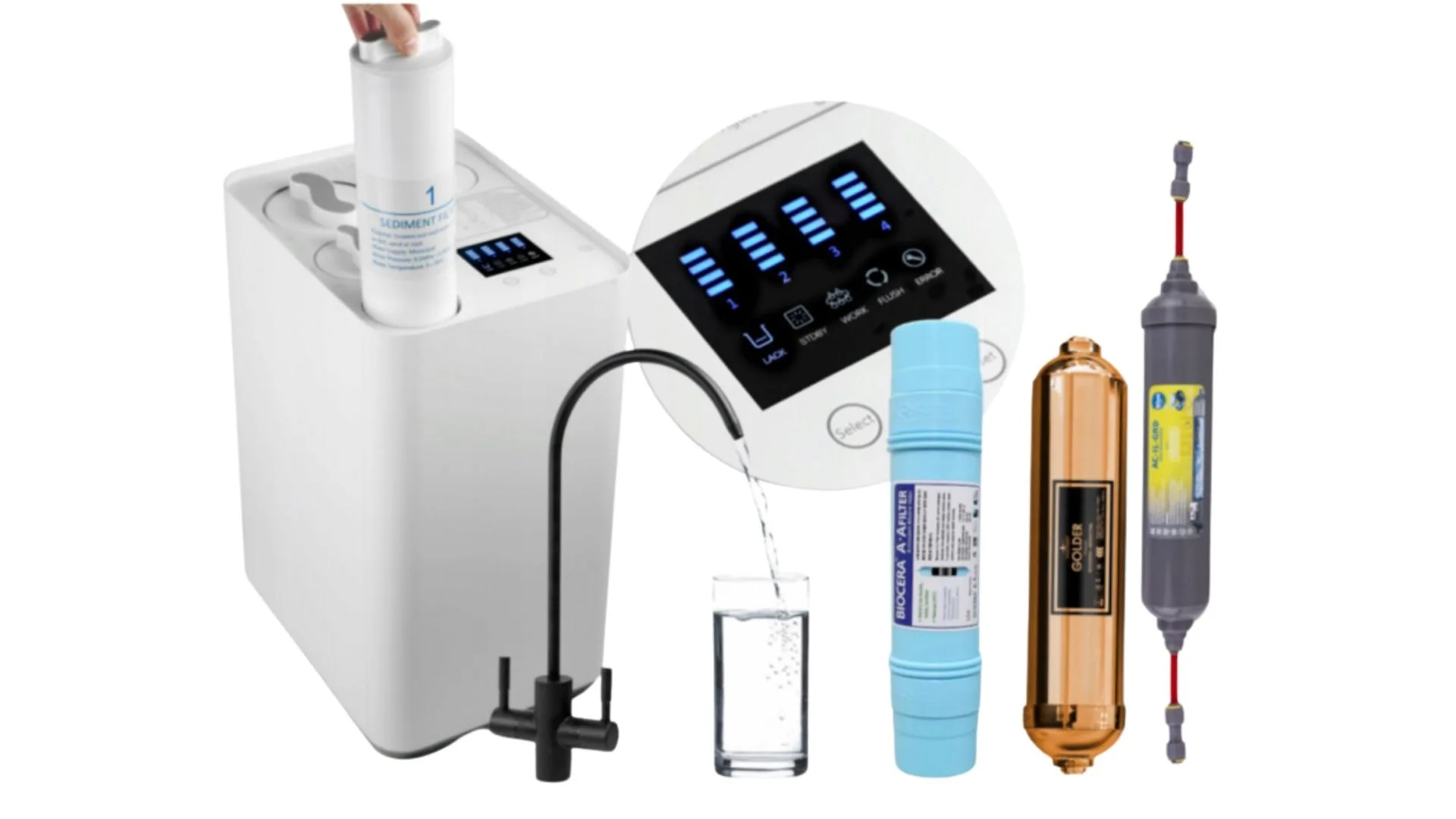
Reverse osmosis filters are advanced devices in which pressurized water is passed through an osmotic membrane. Its microscopic pores are small enough to retain many contaminants while still allowing water molecules to pass through.
In practice, this means that contaminants remain on one side of the membrane and are discharged into the drain, while the user receives purified water suitable for drinking and cooking. This is exactly why RO systems are chosen where high filtration efficiency matters.
What does an RO filter remove?
RO filters are valued for their broad range of reduction of contaminants present in tap water or well water. Based on the category content, the most important removed or reduced substances include:
- heavy metals such as lead, mercury, and cadmium,
- organic substances and pesticides,
- microbiological contaminants,
- bacteria, viruses, and fungi,
- microplastics and hormones,
- unpleasant water taste and odor related, among other things, to the presence of chlorine,
- compounds responsible for water hardness, which may help protect household appliances.
Why choose reverse osmosis for your home?
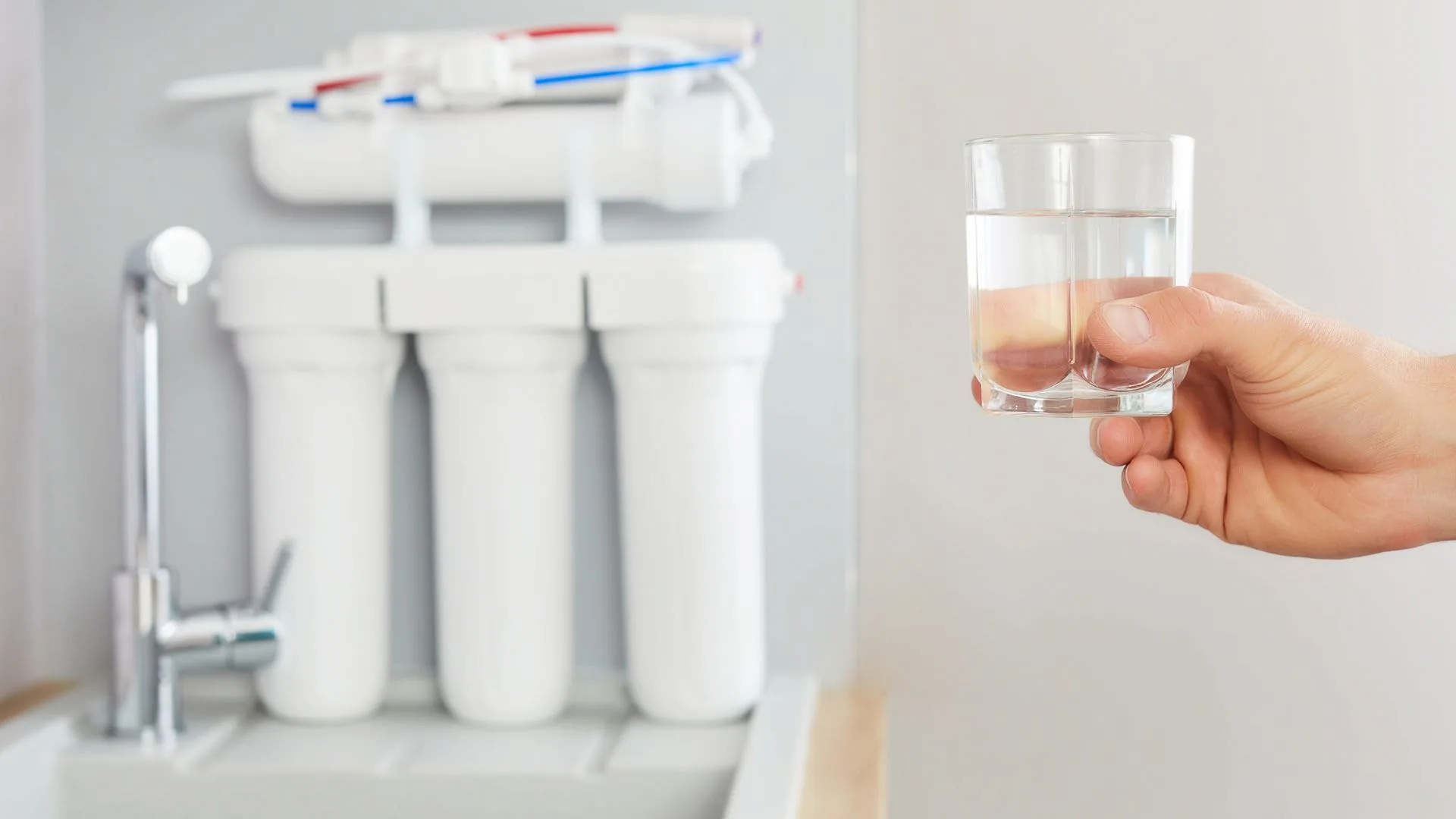
Water from a reverse osmosis filter is a solution for people who want to improve the quality of drinking water at home and use it conveniently every day.
- Better water taste and odor for drinking, coffee, tea, and cooking.
- Very high filtration efficiency thanks to the use of an osmotic membrane.
- Constant access to clean water without the need to carry packs of bottled water.
- Reduced plastic use and less burden on the environment.
- Support for household appliances by reducing compounds affecting water hardness.
- Ease of use in modern systems with quick cartridge replacement.
Disadvantages and limitations of osmotic systems
Like any solution, reverse osmosis also has its limitations. The most important information is that an RO system removes not only contaminants but also mineral salts. This may lead to obtaining water with very low mineralization, commonly referred to as demineralized or "empty" water.
That is why, in the case of water intended for daily drinking, systems with a remineralizer are often recommended, as they enrich the water with needed minerals. In turn, reverse osmosis without a remineralizer may be a good choice for technical applications such as supplying a kettle or iron. If such water is to be consumed regularly, it is worth ensuring mineral intake through the diet.
When choosing an RO system, it is worth distinguishing the intended use of the water: for daily drinking, models with remineralization are often selected, while for technical applications, versions without a remineralizer are often sufficient.
Types of reverse osmosis systems
Reverse osmosis filters with a tank
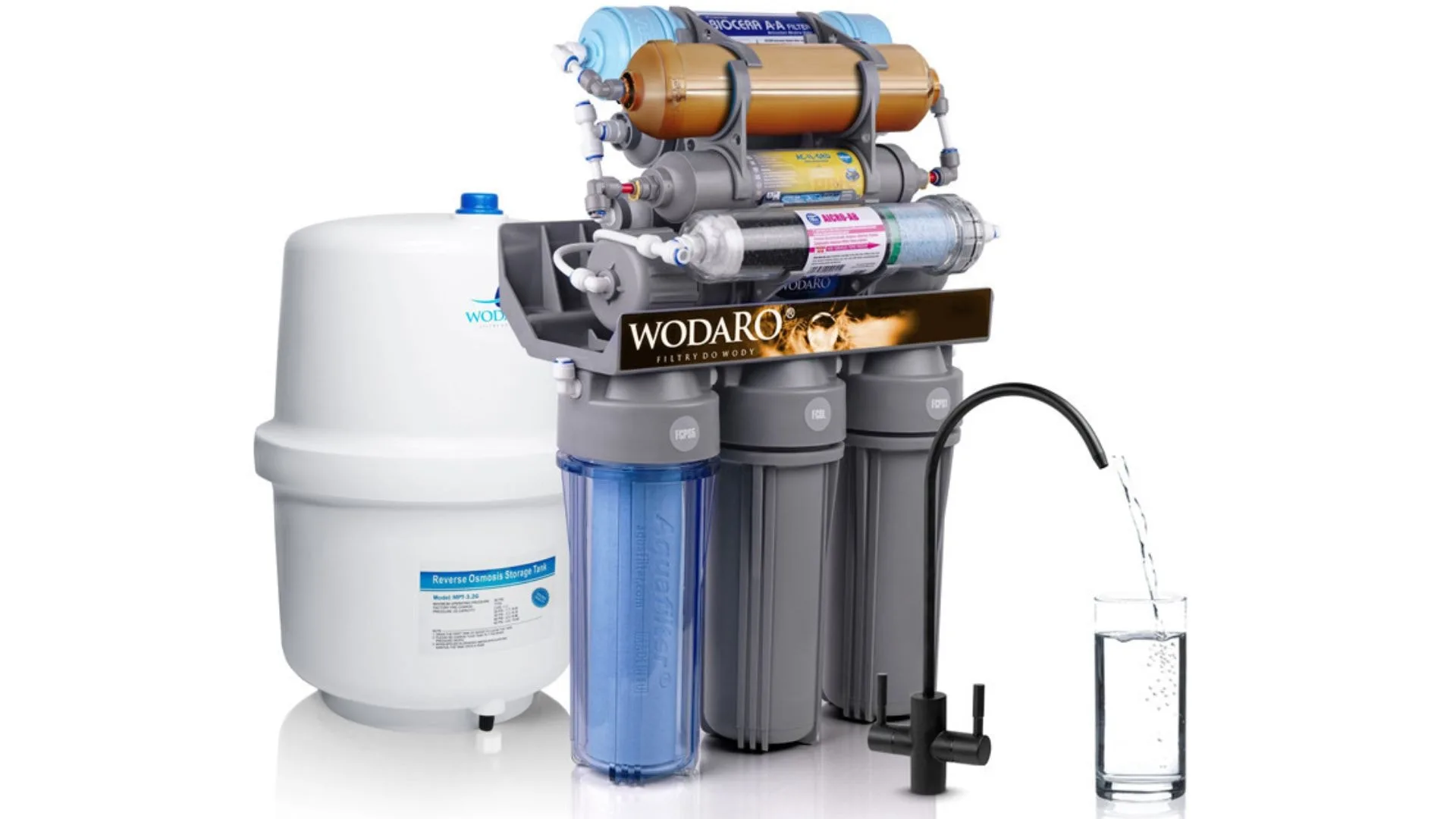
This is a classic solution in which purified water is stored in a tank. After the reserve is used up, you need to wait until the tank fills again. These types of systems usually have higher water reject, stated in the category content at around 1 liter of clean water to 4–8 liters of reject water.
The system operates effectively at pressure from 3 bar. At lower pressure, installation of a booster pump is mandatory, and at proper pressure its use is an optimal solution. The content also indicates that with high pressure the reject amount may decrease.
Tankless reverse osmosis filter
These are modern systems in which water is filtered on an ongoing basis, without storage. The user does not have to wait for the tank to refill after higher water consumption. In many such models, cartridges are replaced quickly and conveniently, and the design itself is usually more compact.
According to the category description, tankless systems are usually equipped with a pump, which allows them to operate efficiently even at very low pressure.

Reverse osmosis systems with remineralization
In these models, a remineralizer has been added to the RO system, so the water is enriched with minerals after filtration. This is a popular choice for people who want to use purified drinking water every day.
The category description also indicates the possibility of drawing water using a dual-flow faucet – on one side water after remineralization, and on the other crystal-clear osmotic water without minerals.

Osmosis filters without remineralization
This is a solution for users looking for very pure osmotic water mainly for technical purposes. Such systems are often chosen for devices in which water with the lowest possible mineral content is desired.
Osmotic filter with ionization
More advanced models can additionally ionize water, raise its pH, and give it antioxidant properties. This is an option for users who expect advanced functions and are looking for a system that goes beyond standard filtration and remineralization.
How to choose the right RO filter?
The choice of system is worth basing on several practical criteria:
- Intended use of the water – for drinking, models with a remineralizer are most often chosen; for technical applications, a system without remineralization is often sufficient.
- Available space under the sink – tankless models usually take up less space.
- Pressure in the installation – at lower pressure, a pump may be necessary, especially in traditional tank systems.
- Ease of use – if you care about quick water dispensing and easy cartridge replacement, it is worth considering a modern tankless model.
- Expected functionality – basic variants, options with remineralization, and options with ionization are available.
Comparison of the most important types of RO systems
| System type | Characteristic features | For whom |
|---|---|---|
| With a tank | Stores purified water, requires time for the tank to refill, usually higher water reject | For people choosing proven, traditional solutions |
| Tankless | Filters water continuously, compact design, quick cartridge replacement, often built-in pump | For people who value modernity and convenience |
| With remineralization | Enriches water with minerals after filtration | For users looking for water for daily drinking |
| Without remineralization | Provides very pure osmotic water without additional remineralization | For technical applications and selected household uses |
| With ionization | Additionally raises pH and offers extended functionality | For demanding users interested in an advanced system |
Additional information about the category offer
The category description indicates that the offer includes a wide selection of reverse osmosis filters tailored to various needs. It also mentions the availability of solutions such as an RO filter for an aquarium, which may be important for aquarium enthusiasts.
It also emphasizes the importance of professional technical and advisory support, which helps select the right system for installation conditions and user expectations.

FAQ – most frequently asked questions about reverse osmosis
What is reverse osmosis?
Reverse osmosis is a water filtration method that uses a semipermeable membrane. Under pressure, water passes through the membrane, while many contaminants are retained and discharged into the drain.
Does an RO filter improve the taste and odor of water?
Yes. According to the category description, RO systems help remove compounds affecting unpleasant water taste and odor, including those related to the presence of chlorine, making the water more pleasant for everyday use.
What contaminants does reverse osmosis remove?
RO filters reduce, among other things, heavy metals, organic substances, pesticides, bacteria, viruses, fungi, microplastics, hormones, and compounds affecting water hardness. The scope of operation depends on the system design and the condition of the installation.
Does reverse osmosis also remove minerals?
Yes. One of the features of this technology is that it also removes mineral salts. That is why, for daily drinking, systems with a remineralizer are often chosen to enrich the water after filtration.
Which system should you choose: with a tank or tankless?
A system with a tank is a classic and proven solution, while a tankless model filters water continuously and usually provides greater convenience and a more compact installation. The choice depends on the amount of space, expectations, and the way the water is used.
Is a pump needed for an RO filter?
In traditional tank systems, effective operation requires pressure from 3 bar. At lower pressure, pump installation is mandatory. In many tankless systems, a pump is standard equipment.
Is reverse osmosis suitable only for drinking?
No. RO systems can be used both for preparing water for drinking and cooking, as well as for selected technical applications. Models without remineralization are often chosen where very pure water is needed, e.g. for an iron or kettle.
Does an RO filter help reduce buying bottled water?
Yes. This is one of the most frequently indicated benefits. Access to purified water straight from the tap helps reduce bottled water purchases, which is convenient and beneficial for the environment.
Will reverse osmosis work well in a small kitchen?
Yes, especially modern tankless systems, which usually take up less space under the sink than classic setups storing water in a separate tank.