
- There are no more items in your cart
- Shipping
- Total 0.00 zł



- Bestsellers
- Wholesale
- Water filters
- Whole house filters
- Kitchen filters
- Bathroom filters
- Aquarium filters
- Reverse osmosis
- Water demineralizers
- Filter cartridges
- UV bactericidal lamps
- Alkaline water ionizers
- Industrial water filters
- Accessories, parts, and others
- Descaling filters for the coffee machine
- Water softeners and iron removers
- Water saturators
- ACES
- AMBERLITE
- AQUA VITA
- AQUAFILTER
- AQUAPHOR
- AQUATOR
- BASSAU
- BERG
- BIOCERA
- BIONIQ
- BLUEFILTERS
- CHEMOFORM
- CINTROPUR
- DAFI
- DELONGHI
- DIAMOND
- DOM WODY
- ECOWATER
- FILMTEC
- FIT ALCO
- FITAQUA
- GREEN FILTER
- HANNA INSTRUMENTS
- HELIXPRO
- HELLO PURE
- HIDROTEK
- HM-DIGITAL
- HONEYWELL
- Ibo
- JAVEL
- KLARWOD
- KRUPS
- MIDEA
- OTOWODA
- OTTONE
- Palintest
- PENTAIR
- PHILIPS
- PLATINUM WASSER
- PUROLITE
- SIEMENS
- Steingraf
- SUPREME
- TAB-SOL
- TOP FILTER
- UST-M
- USTM
- VONTRON
- WODARO
-
PayU

Tips
-
The water in the osmosis system is constantly flowing to the sewage - what to do?
-
Hydrogen water – effects, benefits, reviews – is it a scam?
-
Reverse osmosis - operating costs
-
Elimination of chlorine from water – why is it worth doing?
-
Pesticides in water - what they are, health risks, how to remove them
-
The water in the osmosis system is constantly flowing to the sewage - what to do?
-
Organic compounds in water – harmfulness, removal, and where do they come from?
-
Ammonia in water – where does it come from, is it harmful, and how to remove it?
-
Water filtration - why? Hit or miss?
-
Drinking water - effects after a month, skin and weight loss

PPM meters, TDS meters – water quality testers
Looking for a reliable PPM meter or TDS tester? In this category, you will find practical devices for quick and precise water quality control at home, in service work, and in water treatment systems.
TDS and PPM testers help check the level of dissolved substances in water, making it easier to assess its purity, taste, and suitability for everyday use. It is a convenient solution for people who want to continuously monitor the parameters of drinking water, filtered water, or water after reverse osmosis.
Choose a device tailored to your needs and use accurate, fast, and easy-to-use water quality meters. It is a proven way to consciously monitor water parameters every day.
Filter
Price
Brand
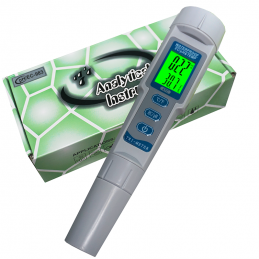
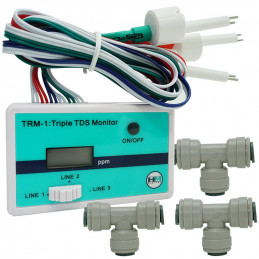
TRM1 HM Digital TDS meter three probes triple
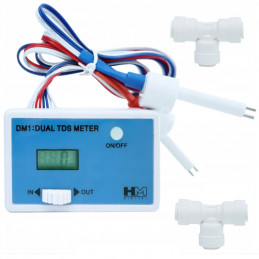
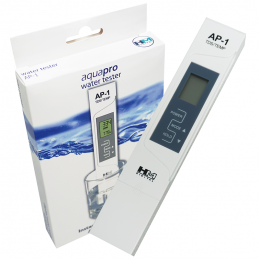
AP-1 HM Digital TDS meter with thermometer
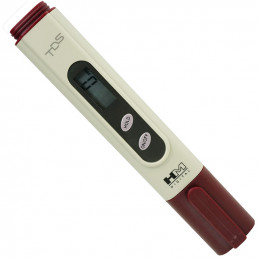
TDS-4 HM Digital TDS meter with calibration
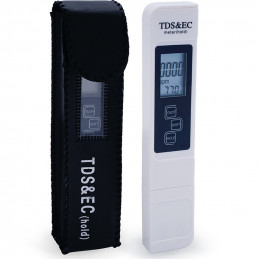
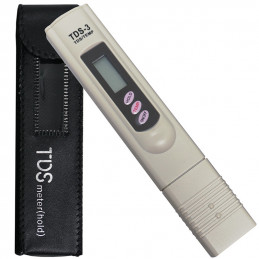
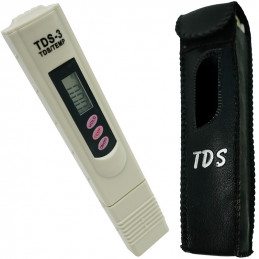
TDS testers are among the most convenient devices for everyday water quality control. They allow you to quickly check the level of dissolved substances and, depending on the model, also electrical conductivity (EC) and temperature. It is a useful tool for both home users and for service technicians, installers, and people dealing with water filtration more professionally.
In the TDS Testers category, you will find PPM and TDS meters for quick water quality measurement. Models are available for basic control as well as more advanced devices with additional features such as EC conductivity measurement, temperature measurement, or the possibility of calibration. It is a practical solution for monitoring drinking water, water after reverse osmosis, in aquaristics, hydroponics, the food industry, laboratories, pools, and spas.
If you want to know whether the water you drink or use in an installation has the right parameters, a TDS meter is a simple and effective choice. You get the reading almost instantly, which makes everyday monitoring and decision-making regarding filtration, mineralization, or equipment servicing easier.
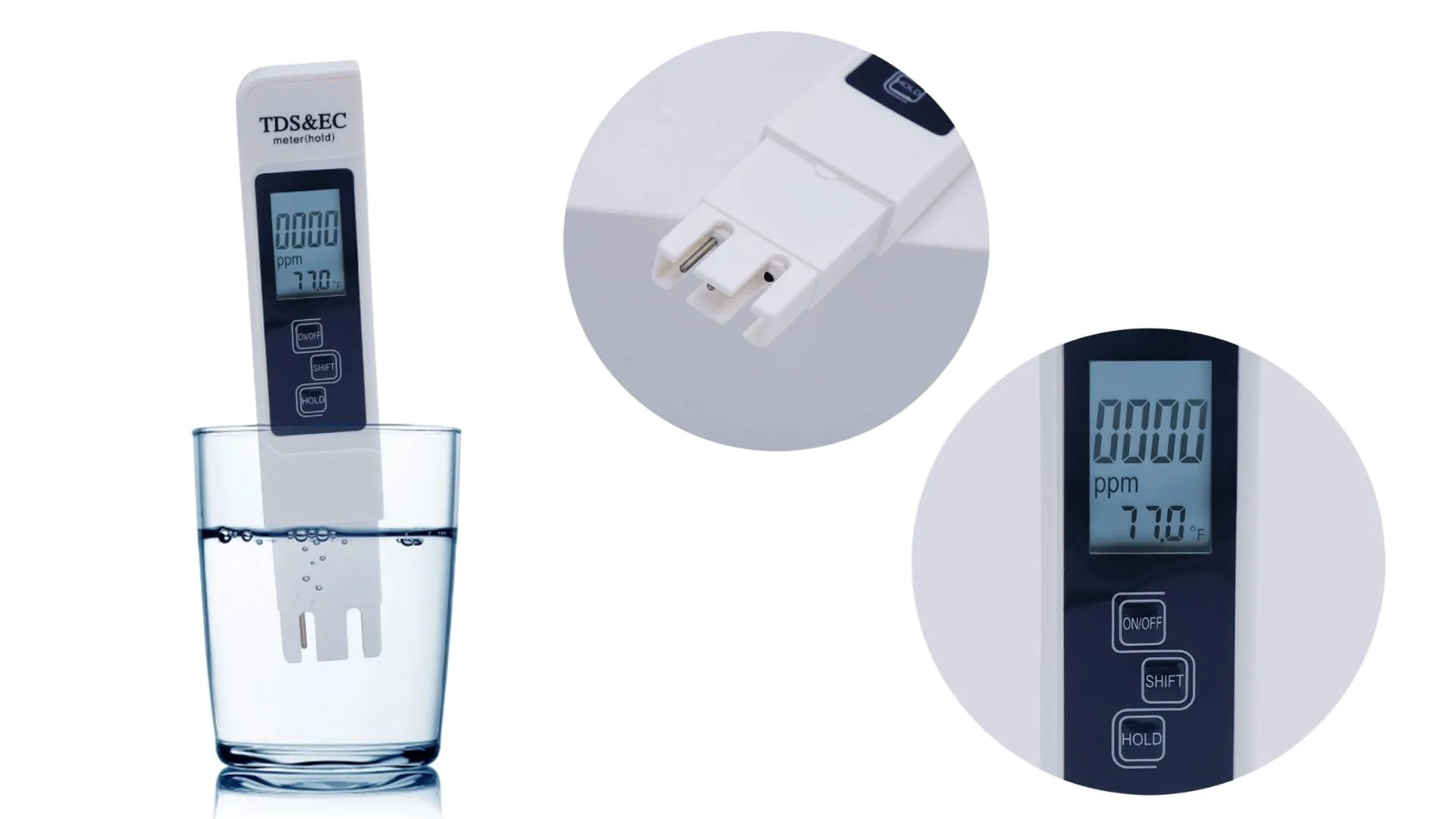
TDS and PPM – what do these parameters mean?
PPM (parts per million) is a unit that defines the number of substance particles per million particles of solvent, which in practice means water. In water quality measurements, ppm indicates the amount of dissolved substances such as minerals, salts, or heavy metals.
TDS (Total Dissolved Solids) means the total amount of dissolved solids in water. The TDS value is most often presented in ppm. A high TDS level may indicate the presence of undesirable substances, which is why regular monitoring of these values is so important.
TDS and PPM indicators matter not only when assessing water purity, but also its taste, smell, and everyday usability. With a simple tester, you can quickly check whether the water parameters meet expectations.
Why is it worth using a TDS tester?
A TDS and PPM conductivity meter for water is valued for its ease of use and quick readout. Depending on the model, the device can be used for basic control or for more advanced analysis.
- Precise ppm calculation – accurate measurement helps assess water quality and detect possible irregularities.
- EC conductivity measurement – many models also allow control of the water’s electrical conductivity.
- Temperature measurement – selected devices measure temperature in degrees Celsius or Fahrenheit, which supports reading accuracy.
- Speed and convenience – the result appears almost instantly, usually in less than 5 seconds.
- Versatility of applications – testers are suitable from home use to professional and laboratory applications.
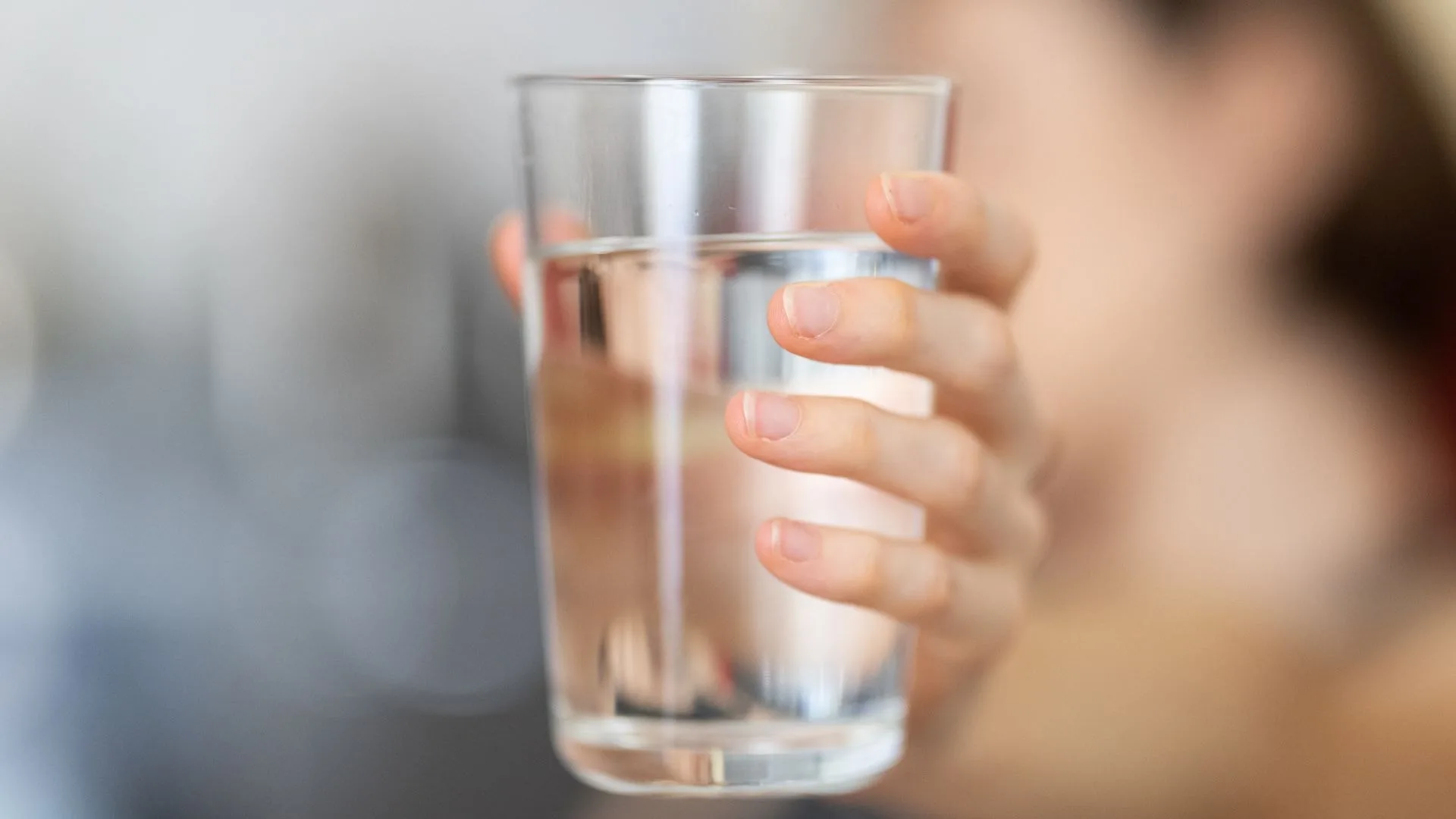
Applications of PPM and TDS meters
TDS and PPM meters are used in many areas where quick monitoring of water parameters matters:
- Drinking water control – monitoring ppm values helps assess water quality for consumption.
- Aquariums and fish breeding – maintaining appropriate parameters for the health of aquatic organisms.
- Agriculture and hydroponics – control of nutrient levels and working water quality.
- Food industry – supervision of water used in production.
- Pools and spas – ongoing monitoring of parameters affecting safety and comfort of use.
- Laboratories and scientific research – precise measurements for analytical applications.
- Water treatment systems – control of filtration effectiveness and reverse osmosis system performance.
How many ppm in drinking water?
The answer depends on the norms and standards applicable in a given country, but according to World Health Organization data, the optimal TDS value in drinking water should be within the range of 50–300 ppm.
Water after the reverse osmosis process often reaches values below 15 ppm, which indicates its high purity but also a very low mineral content. For this reason, mineralizers are often used to raise the ppm level to around 30–100 ppm, enriching the water with essential components.
A low TDS result after reverse osmosis usually indicates effective filtration. However, the ppm result alone does not replace a full laboratory analysis if a detailed assessment of water composition is needed.
How to choose the right TDS tester?
It is worth matching the device selection to the intended use and the expected measurement accuracy.
For home use
- a simple meter ready to work immediately after taking it out of the package will be sufficient,
- easy operation and a quick readout are important,
- the HOLD function for freezing the result on the display may be useful.
For service work and more advanced applications
- it is worth considering a model with EC measurement,
- the temperature measurement function is helpful,
- in professional work, the possibility of calibration can be useful.
With calibration or without?
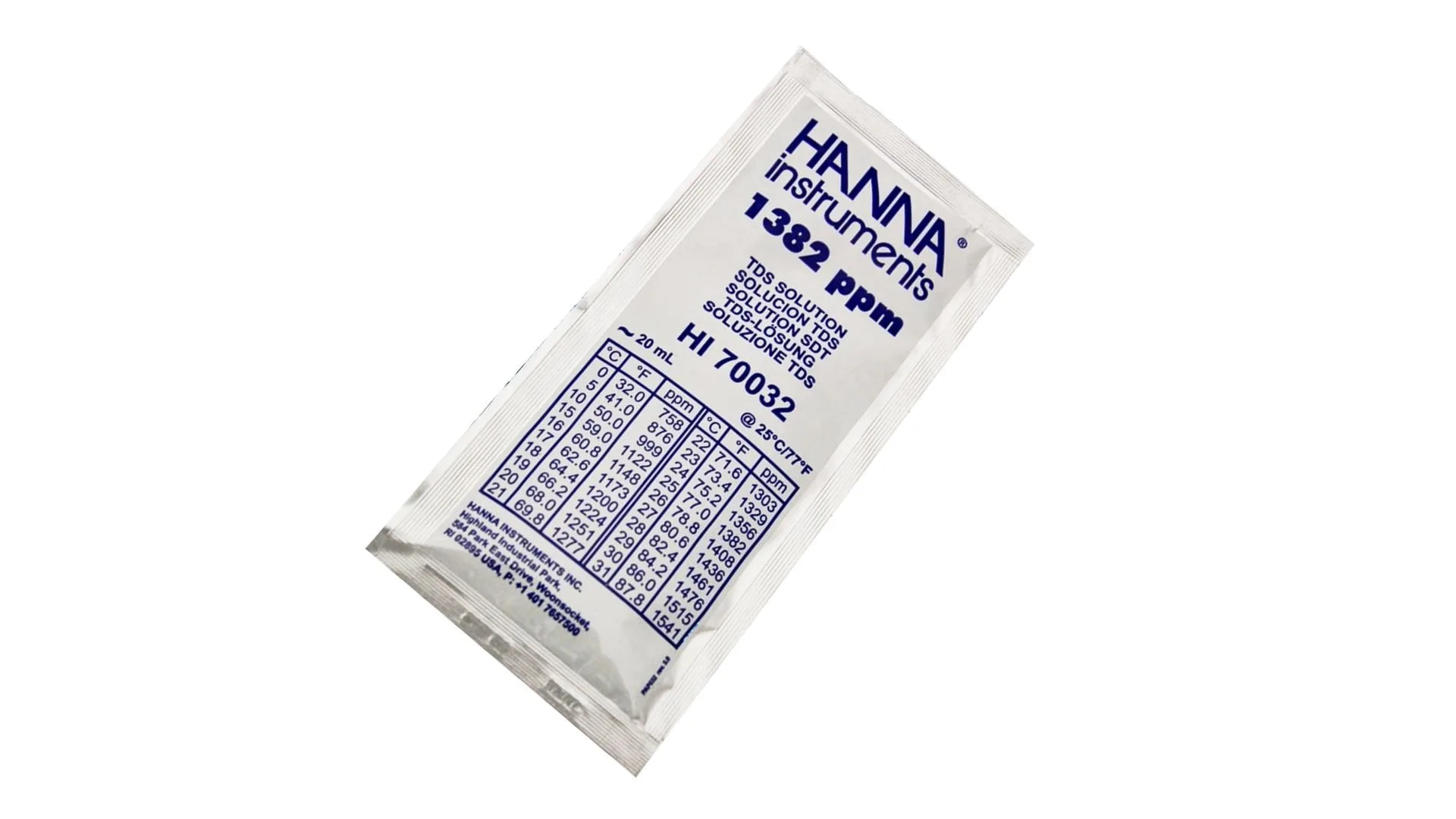
TDS PPM meters with calibration allow the device to be matched to reference standards using solutions with a known TDS value. This is especially important where precision is crucial.
TDS PPM meters without calibration are ready to use immediately after taking them out of the package. Factory settings usually provide sufficient accuracy for everyday applications. Operation is simple: turn on the device, immerse it in water, and read the result.
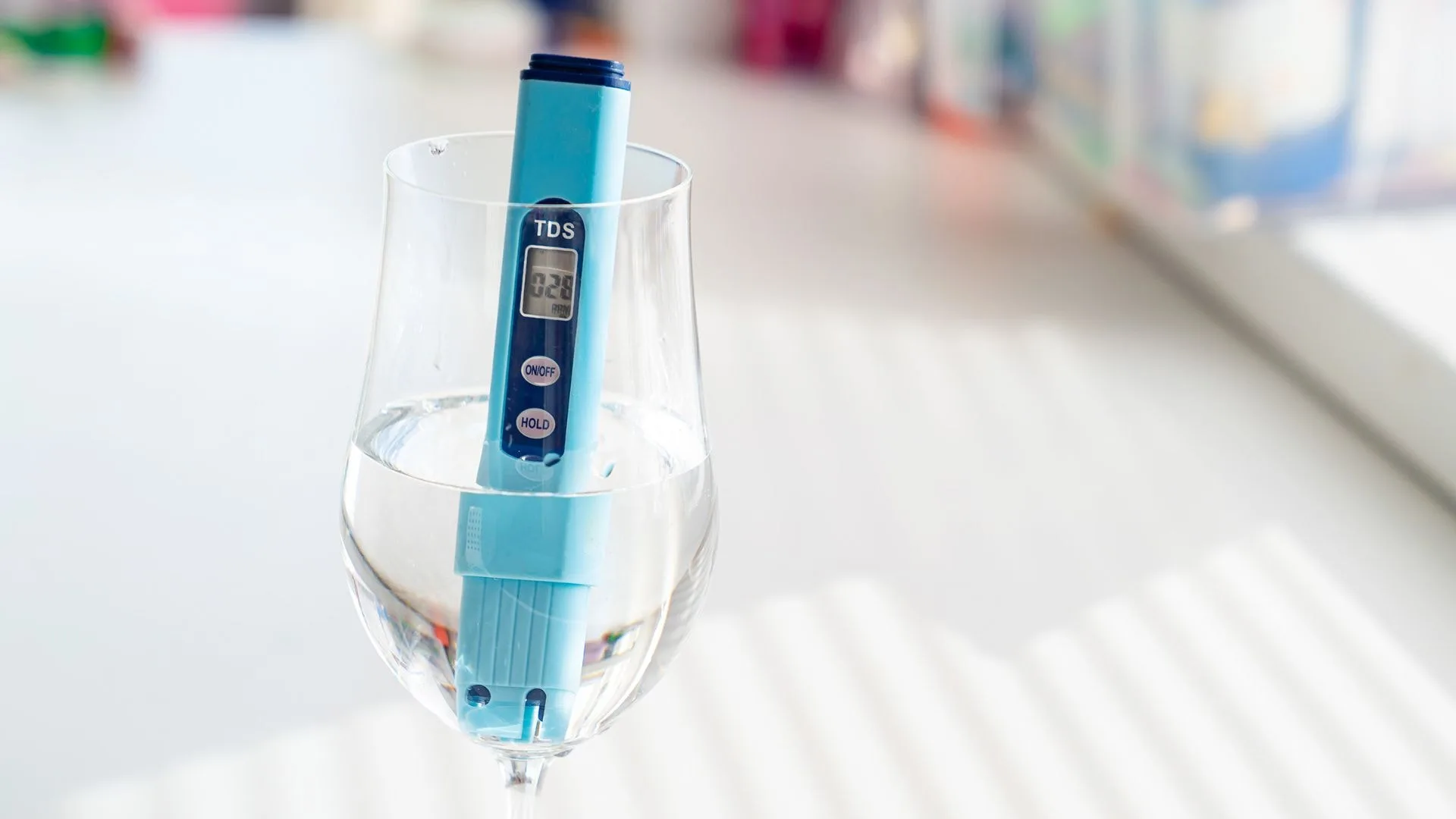
Popular types of meters in this category
The range includes different types of devices, including meters from renowned brands such as HM Digital. The assortment includes, among others:
- TDS 3 – a popular model enabling measurement of TDS ppm and temperature,
- meters with EC conductivity measurement – for more demanding users,
- devices with calibration and without calibration – tailored to different needs and levels of advancement.
How to perform a PPM and TDS measurement?
The measurement is simple and takes only a moment. To obtain a reliable result, it is worth following the basic procedure:
- Remove the protective cap.
- Turn on the meter with the ON / OFF button.
- Immerse the device in the tested water without exceeding the immersion line.
- Wait until the value stabilizes – this usually takes less than 5 seconds.
- Read the result from the display or use the HOLD function if available.
- After completing the measurement, wipe the electrode with a cloth.
- Turn off the meter and put on the protective cap.
How to interpret a TDS tester result?
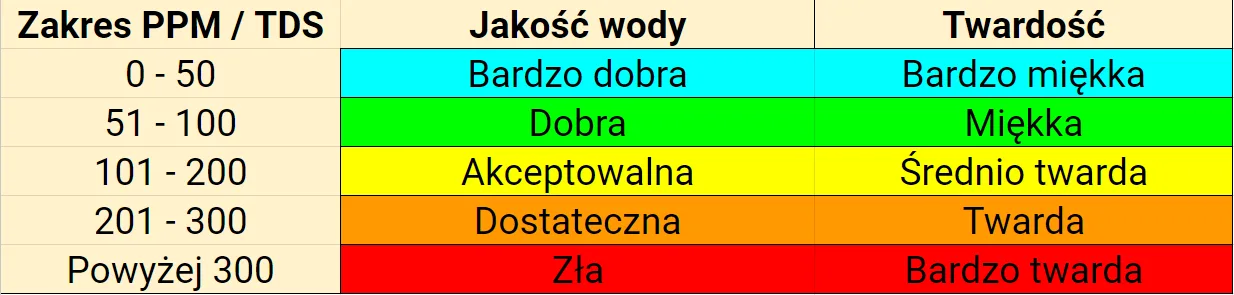
The ppm reading makes it easier to generally assess the amount of dissolved substances in water. In practice, the following division is often used:
| Range | Interpretation |
|---|---|
| 0–50 ppm | Very soft water |
| 51–150 ppm | Soft water |
| 151–300 ppm | Moderately hard water |
| 301–500 ppm | Hard water |
| Above 500 ppm | Very hard water |
The water hardness table in ppm helps with everyday interpretation of measurements. It is worth remembering that the TDS/PPM result is an indicative parameter and does not show exactly which specific substances are in the water. More detailed testing is needed for that.
PPM and TDS results table and calculator
Users often look for a simple way to convert and interpret results. A water TDS table as well as an online ppm calculator and TDS calculator can help better understand readings and compare results for raw water, filtered water, and water after reverse osmosis.
In everyday use, regular monitoring of changes is the most important thing. Comparing subsequent results often best shows whether filtration is working properly and whether water parameters remain stable.
Summary
PPM and TDS meters are practical and indispensable tools for ongoing water quality control. They work well both when you need a simple device for home use and when you are looking for a more advanced model with additional features.
Whether you are interested in quick drinking water control, checking parameters after reverse osmosis, or supervising an installation, a properly selected TDS tester allows you to work conveniently, consciously, and precisely.
FAQ – frequently asked questions about TDS testers
What does a TDS tester measure?
A TDS tester measures the total amount of dissolved solids in water. The result is most often given in ppm and allows assessment of the general level of minerals, salts, and other dissolved substances.
What is the difference between TDS and PPM?
TDS is the name of the parameter meaning the total amount of dissolved solids, while PPM is the unit in which this result is usually presented. In practice, users often use these terms interchangeably.
What ppm level in drinking water is considered optimal?
According to the cited World Health Organization data, the optimal TDS value in drinking water should be within the range of 50–300 ppm. However, the final assessment depends on local standards and the intended use of the water.
How many ppm does water after reverse osmosis have?
Water after reverse osmosis often reaches values below 15 ppm. This means very high purity, but also low mineral content, which is why many systems use an additional mineralizer.
Why is a mineralizer used after osmosis?
A mineralizer raises the ppm level usually to around 30–100 ppm, enriching the water with selected mineral components. Thanks to this, water after filtration can have more balanced utility parameters.
Does a TDS meter require calibration?
Not every model requires calibration. Devices without calibration are ready to work immediately after taking them out of the package, while models with calibration allow increased measurement accuracy using reference solutions.
How to properly perform a TDS measurement?
You should turn on the device, immerse it in water without exceeding the immersion line, wait for the result to stabilize, and then read the value from the display. After the measurement, it is worth wiping the electrode and securing the meter with the cap.
Does a TDS tester show exactly what contaminants are in the water?
No. A TDS tester shows the total level of dissolved substances, but it does not identify their composition. If you need exact information about specific compounds, a more detailed laboratory analysis is necessary.
What are EC and temperature measurements useful for?
EC measurement helps assess the electrical conductivity of water, and temperature measurement increases convenience and can support more accurate interpretation of results. Such functions are especially useful in more advanced applications.