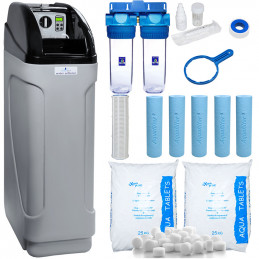
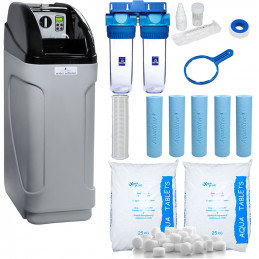
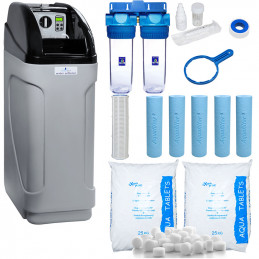
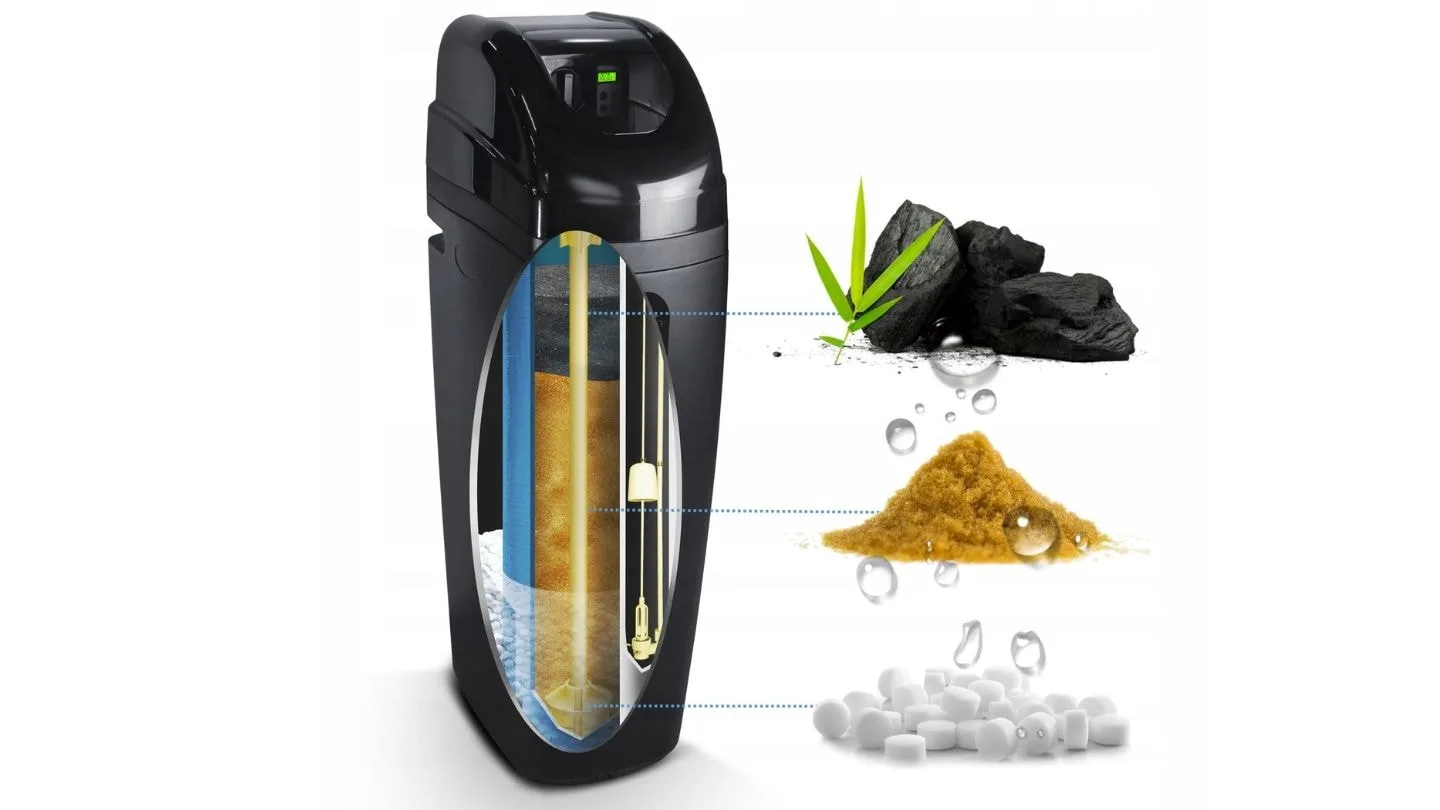
Water softeners reduce water hardness through the exchange of calcium and magnesium ions for sodium ions. Calcium and magnesium are responsible for limescale formation, which builds up in plumbing systems, fittings and household appliances. Using a water softener helps reduce troublesome deposits and protect everyday appliances such as washing machines and dishwashers. Soft water can also improve everyday comfort at home and may have a beneficial effect on the condition of the skin1 and hair2.
In this category, you will find water softeners that help you deal with hard water in your house or apartment.
Sources and scientific studies:
1 Danby, S.G. et al. (2018). The Effect of Water Hardness on Surfactant Deposition after Washing and Subsequent Skin Irritation in Atopic Dermatitis Patients and Healthy Control Subjects. Journal of Investigative Dermatology, 138(1), 68–77.
2 Ayyas, M. et al. (2018). To evaluate and compare changes in baseline strength of hairs after treating them with deionized water and hard water and its role in hair breakage. International Journal of Trichology, 10(3), 113–117.
CALCULATE BEFORE YOU CHOOSE
Useful calculators
Check the key values before choosing a solution.
01Convert water hardnessCompare common hardness units and better assess the scale of the problem.Open calculatorCollapse calculator→
Convert water hardness
Water hardness converter
Convert between °dH, mg/L and ppm as CaCO₃.
02Estimate softener sizeEstimate the unit size from water hardness and consumption.Open calculatorCollapse calculator→
Estimate softener size
Preliminary water-softener sizing
Estimate the minimum resin volume from household water use and hardness.
03Estimate salt consumptionCheck the approximate salt consumption for softener regeneration.Open calculatorCollapse calculator→
Estimate salt consumption
Indicative softener salt-use calculator
Estimate regeneration frequency and salt demand for a water softener.
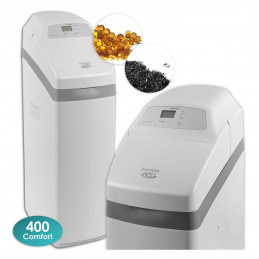
EcoWater COMFORT 400 is an intelligent water softener for the home that automatically monitors usage and adjusts the regeneration of the resin to reduce salt and water consumption. It provides soft water, helps reduce limescale deposits, and makes it easier to maintain fixtures and protect plumbing and appliances.
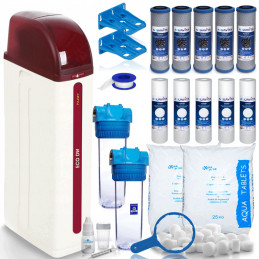
ECO DW20 RUBY BNT Water Softener is a compact device for removing water hardness in homes and service applications (restaurants, boiler rooms, car washes). Designed with low operating costs in mind. It features a by-pass, adjustable output water hardness, and a controller in Polish with a backlit display. During regeneration, it does not cut off the water supply.
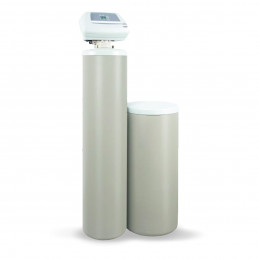
ECOWATER industrial device from the 4500 series. It will work perfectly in small hotels, guesthouses, workplaces, residential buildings, and boiler rooms.
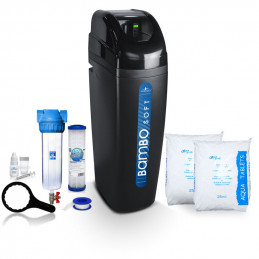
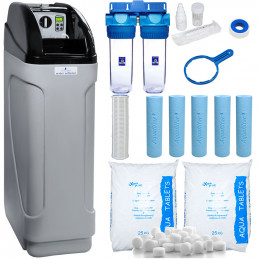
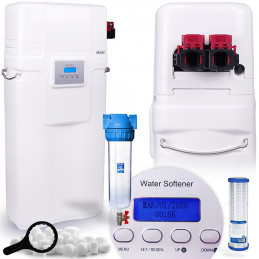
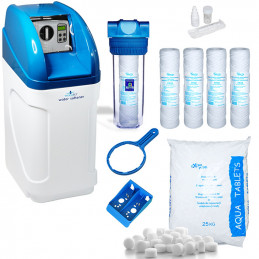
WodaRO BAMBO SOFT 25 is a compact water softener with a 25 l ion exchange resin bed PUROLITE C100-E. It removes calcium and magnesium ions responsible for hardness, protecting the installation and devices from scale. Equipped with a by-pass, residual hardness mixer, and a backlit programmer in Polish. The set includes, among others, a pre-filter with a drain valve, a hardness tester, and 2x tablet salt.
WodaRO ECO 30 BNT MAXI is a compact, automatic water softener for the whole house with 30 l of ion-exchange resin PUROLITE C100-E and volumetric control BNT7650 (PL menu). The package includes a BY-PASS valve and a MIXING valve to set the residual hardness, as well as an anti-overflow protection. Free of charge : 2-stage pre-filter with a mesh and antibacterial cartridge.
WORK 30 LOGIX is a proven water softener for home use with 30 l of Purolite C100E ion exchange resin and a volumetric head AUTOTROL LOGIX 255/760 with a built-in water meter. The device initiates regeneration based on water consumption and hardness, and the internal bypass ensures access to water during regeneration. The package includes, among others, tablet salt, inline filters, cartridges, andhardness tester.
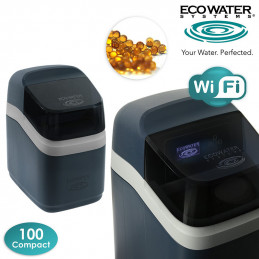
EcoWater eVOLUTION 100 COMPACT is a compact water softener with modern electronics and a built-in Wi-Fi module. It intelligently selects the regeneration timing to minimize salt and water consumption. A clear display, menu in Polish, settings memory (up to 72 hours without power), and a salt level sensor with SMS/email notifications ensure convenience and minimal maintenance.
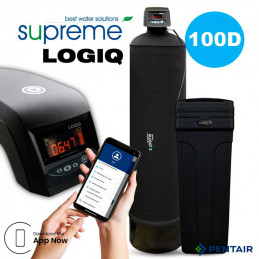
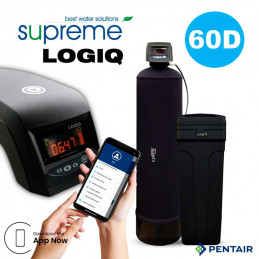
The SUPREME-LOGIQ series water softeners are technologically advanced devices equipped with the reliable "PERFORMA LOGIX 269" control valve from PENTAIR/USA. They offer high efficiency, low salt and water consumption, and the ability to operate in eco mode, making them an ideal choice for homes, public institutions, and industry.
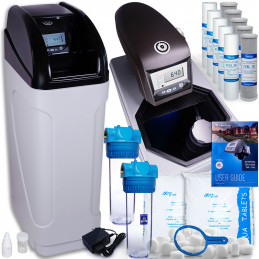
WodaRO MONO 32 is a compact water softener with LEWATITT S1567 monospheric resin and BNT1650 control head. It removes hardness by exchanging calcium and magnesium ions for sodium, reducing scale buildup in the installation and appliances. The device features a by-pass, adjustable output water hardness, a backlit display, and a menu in Polish. Regeneration occurs with brine and does not cut off water during operation.
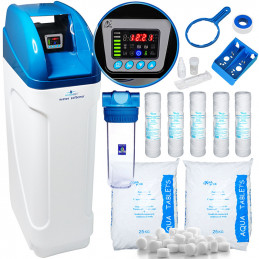
OCEAN RX 30 MAXI is a compact, fully automatic water softener with a modern volumetric controller, a by-pass with a mixer, and anti-overflow protection. It removes calcium and magnesium ions on a cation exchange resin, reducing the formation of scale in the installation and devices. The set includes, among other things, a 10" pre-filter with 5 PP20 cartridges, a hardness tester, and tablet salt.
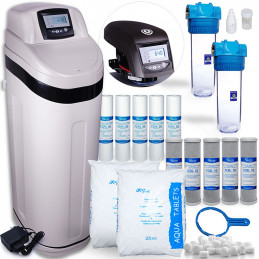
WodaRO LOGIX 30 MAXI is a proven water softener with 30 l of LEWATIT resin , designed for households of 2-8 people . It operates on a volumetric head AUTOTROL LOGIX 760 (255/760) with a built-in water meter and a clear display. Thanks to the internal bypass, it ensures access to water during regeneration . The set includes, among others, tablet salt, housings.narrow, inserts and hardness tester.
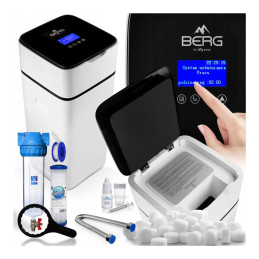
Small water softener BERG 15L for home or small business. Compact housing, Polish menu, and a large, backlit display make operation easier. The automatic head with up-flow and down-flow regeneration reduces water and salt consumption, while the built-in by-pass ensures access to water even during regeneration. Included: 2x 25 kg salt, pre-filter with drain valve and mesh cartridge, hardness tester.
OCEAN BNT MINI 10 is a compact water softener with 10 liters of PUROLITE C100-E ion exchange resin. It protects installations and heating devices as well as household appliances from scale, improves bathing comfort, and helps reduce detergent consumption. Automatic operation, BNT head with Polish menu, BY-PASS valve, and MIXING for setting residual hardness. Included: 25 kg of salt, 10" pre-filter with accessories, 5 cartridges of 20 microns, and a hardness tester.
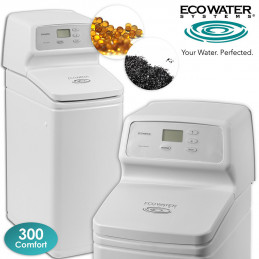
EcoWater COMFORT 300 is a home water softener with intelligent control that monitors consumption and adjusts regeneration to real needs. It provides soft water with very low salt and water consumption during regeneration. It protects the installation and appliances from scale, improves bathing comfort, and makes it easier to keep fixtures and dishes clean.
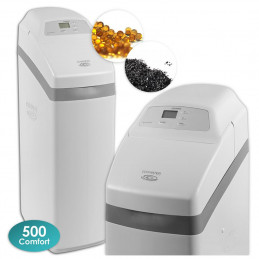
EcoWater COMFORT 500 is a water softener with intelligent control that continuously monitors usage and adjusts regeneration to reduce operating costs. It provides soft water throughout the home, supports the protection of installations and appliances against limescale, and helps keep fixtures clean. Low salt consumption (1.2-3.8 kg) and water for regeneration (about 3%).
Westa-XL FITaqua is a water softener for home use that removes hardness (calcium and magnesium salts), reducing scale and limescale in plumbing and household appliances. Recommended for 4-6 people (up to 20 dH). The RX electronic controller automates regeneration and allows you to set operational parameters. Connection 3/4", nominal flow 1.5 m3/h, power consumption 18 W.
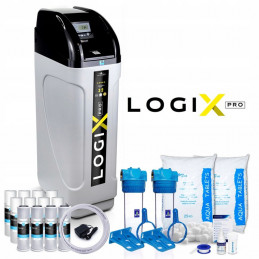
LOGIX PRO 32 is a fully automatic water treatment station for softening water in the home. Equipped with a LOGIX control head featuring SMART LOGIX intelligent control, a 9-cycle regeneration program, and brass connections with a BY-PASS. Inside, there is 32 liters of monospheric ion exchange resin. The package includes a large starter kit: 50 kg of tablet salt, pre-filters before and after the device, foam and carbon cartridges, a drain hose, and a hardness tester. We provideprogramming and lifetime technical support.
The SUPREME-LOGIQ series water softeners are technologically advanced devices equipped with the reliable PERFORMA LOGIX 269 control valve from PENTAIR/USA. They offer high efficiency, low salt and water consumption, and the ability to operate in eco mode, making them an ideal choice for homes, public institutions, and industry.
Ocean BNT MAXI 30 is a compact water softener with 30 liters of ion exchange resin PUROLITE C100-E and a controller BNT7650 with a Polish menu. It protects the installation and heating devices as well as household appliances from scale, improves bathing comfort, and helps reduce detergent consumption. Included: 25 kg of salt, a 10" inline pre-filter with accessories, 5 PP20 string filters, and a hardness tester.
WodaRO ECO 25 BNT MAXI is a compact water softener with 25 l of ion exchange resin PUROLITE C100-E and a controller BNT7650 (menu PL). It operates automatically, features a BY-PASS valve and MIXING for setting residual hardness. The package includes 2-stage pre-filter (reusable mesh cartridge +antibacterial insert 20 µm), which protects the substrate and the installation.
WodaRO ECO 25 BNT MIDI is a compact water softener with 25 liters of PUROLITE C100-E ion exchange resin and a BNT 7650 controller (PL menu). It operates automatically, has a BY-PASS valve and MIXING for setting residual hardness. The package includes a free 2-stage pre-filter with a reusable mesh cartridge and a 20 µm antibacterial cartridge.
WodaRO ECO 20 BNT MIDI is a compact water softener for home use, equipped with 20 l of PUROLITE C100-E resin and a BNT 7650 controller with a Polish menu. The package includes a BY-PASS valve and MIXING for setting residual hardness. It operates automatically (volumetric-timed control) and helps protect the installation, boiler, and household appliances from limescale buildup. Free: 2-stage pre-filter with mesh insert and antibacterial properties.
Water softeners are among the most frequently chosen water treatment devices for homes and commercial facilities. Their main task is to reduce water hardness and, in practice, also to protect installations, fittings, and devices against limescale buildup. This solution improves the comfort of everyday water use and helps limit the effects of the presence of calcium and magnesium ions.
This category includes water softeners for various applications: from compact models for apartments and houses to more advanced devices intended for small businesses, hotels, restaurants, and selected industrial applications. A properly selected water softener supports the efficient operation of the installation and allows better control of the effects of hard water.
Key information about water softeners: Devices in this category operate on the principle of ion exchange and remove calcium ions (Ca²⁺) and magnesium ions (Mg²⁺) from water, replacing them with sodium ions (Na⁺). As a result, the water becomes softer, which reduces limescale buildup in pipes, boilers, washing machines, dishwashers, and fittings. Water softeners use ion exchange resin, which requires periodic regeneration with a table salt solution (NaCl). The range includes compact and two-piece models as well as devices with manual, time-based, and volume-based regeneration.
Water softening helps reduce limescale buildup in the installation and devices.
How does a water softener work?
The operation of a water softener is based on ion exchange. Hard water contains calcium ions (Ca²⁺) and magnesium ions (Mg²⁺), which are responsible for its hardness. The device contains an ion exchange resin, often based on cation resin, thanks to which liquid with a pH level above 7 undergoes the ion exchange process.
During the operation of the softener, calcium and magnesium ions are removed from the water, and sodium ions (Na⁺) are introduced in their place. The result is significantly softer water, which prevents limescale from building up in devices and pipes.
Why is it worth using water softeners?
The benefits of using a water softener are noticeable both at home and in service facilities or selected business installations. Soft water makes everyday use of the installation easier and helps reduce many problems associated with hard water.
Protection of fittings and installations – lower risk of limescale buildup in pipes, lines, and on fitting components.
Longer lifespan of household appliances – washing machines, dishwashers, boilers, and heat exchangers are less exposed to failures and reduced performance.
Greater efficiency of device operation – reducing limescale supports better heat transfer and lower energy consumption.
Better comfort of everyday water use – soft water is often perceived as more pleasant during bathing and washing.
Benefits for skin and hair – reducing hardness may improve care comfort and reduce the feeling of dryness.
Lower consumption of detergents and cleaning products – soft water usually requires smaller amounts of soaps, detergents, and cleaning agents.
Reduction of deposits and waste – less limescale on sanitary equipment and household appliances means easier cleaning.
A well-chosen water softener helps protect equipment and increases the comfort of water use.
Water softener regeneration
Water softeners have a limited capacity for removing calcium and magnesium ions. As the device is used, the ion exchange resin becomes saturated with these ions, so regeneration is necessary.
The regeneration process consists of rinsing the resin with a table salt solution (NaCl). This releases the calcium and magnesium ions, and sodium ions take their place again. After regeneration is complete, the water softener is ready for another water treatment cycle.
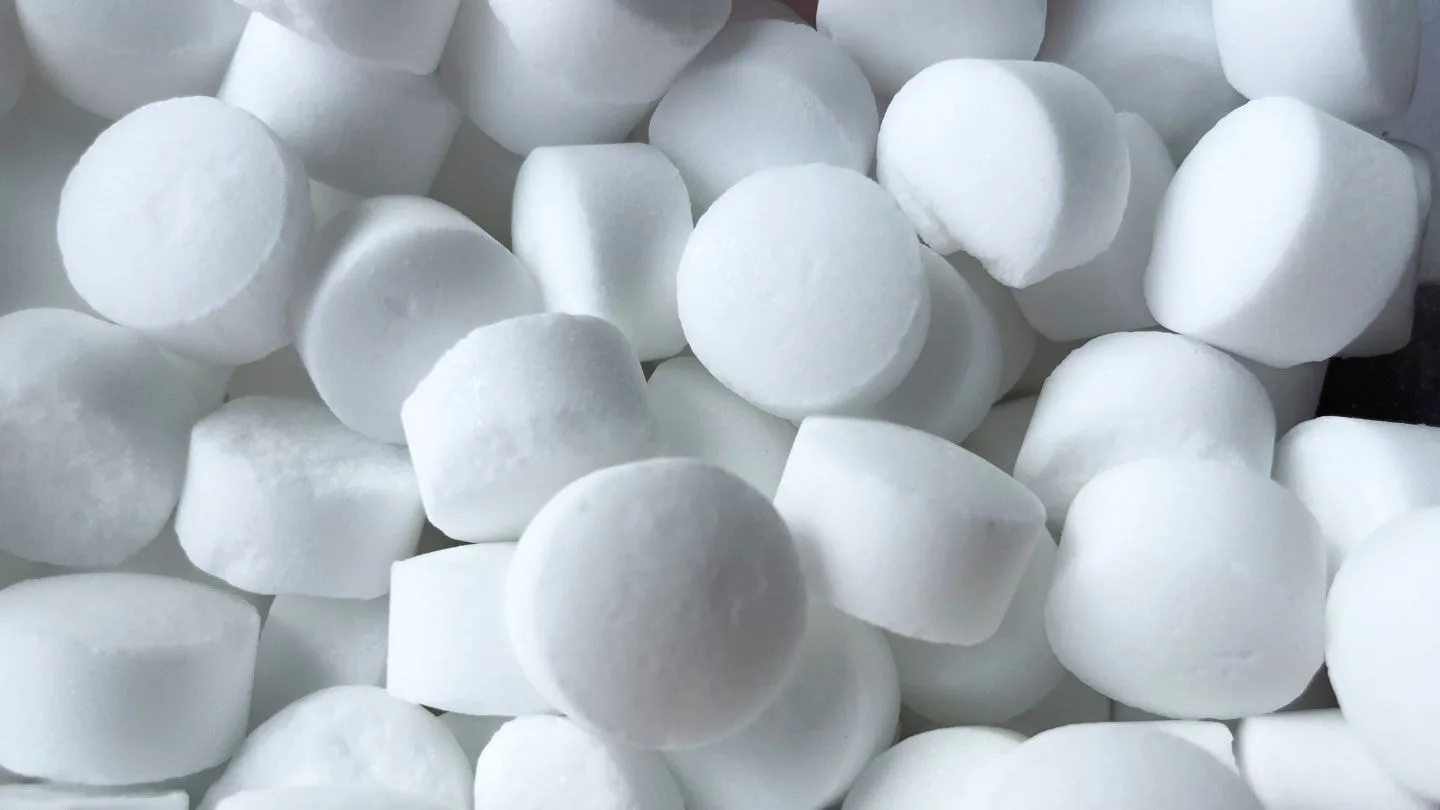
Practical tip: the softener requires regular refilling with tablet salt, as it is essential for the proper regeneration of the ion exchange resin.
Types of ion exchange resins
An important element of every water softener is the type of ion exchange resin used. Materials describing this technology most often mention three basic types of resin.
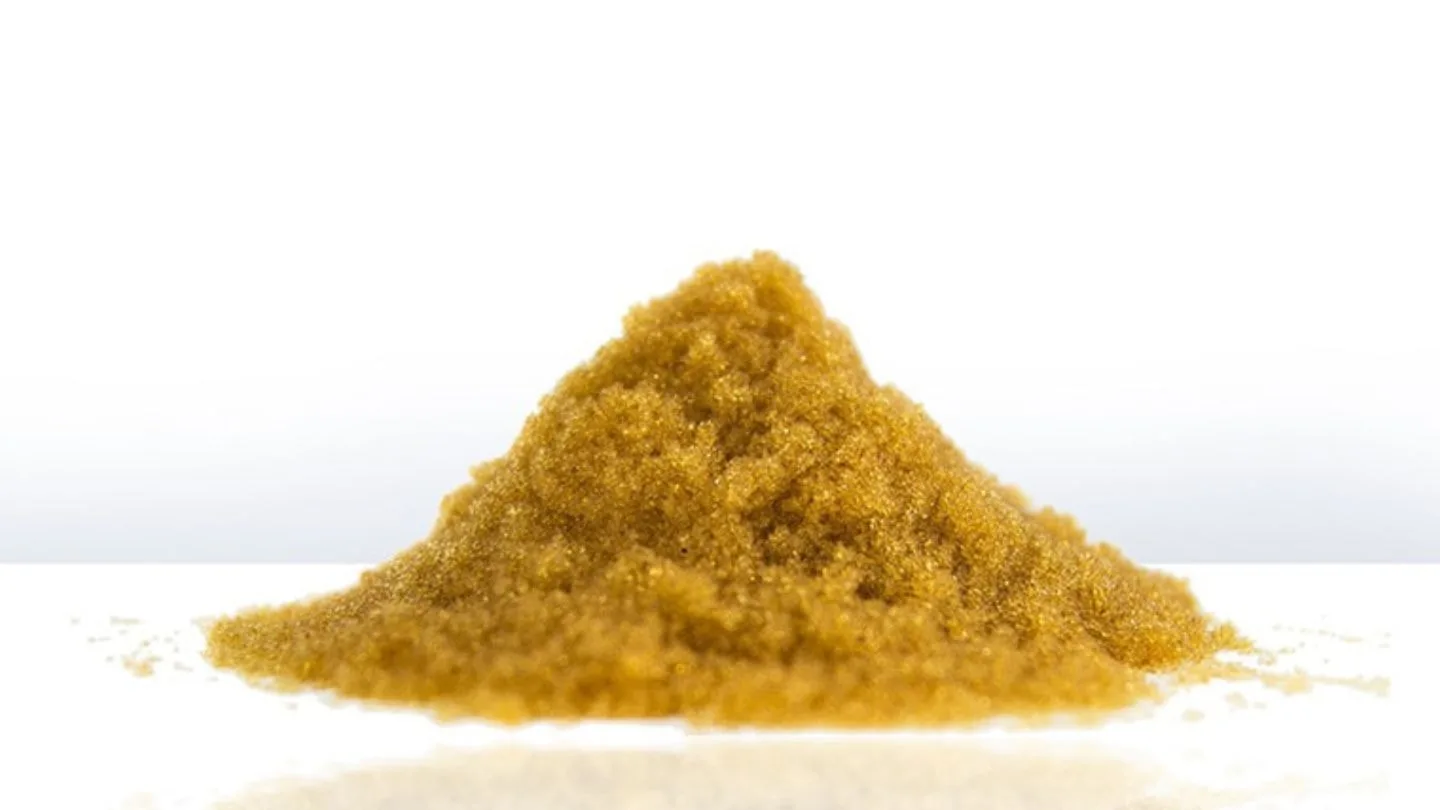
Cation resin – used to remove calcium and magnesium ions; this is the typical solution for classic water softeners.
Anion resin – used when it is necessary to remove anions such as chloride or sulfate ions.
Mixed resin – a combination of cation and anion resins that allows water treatment for various types of contaminants.
Types of water softeners by design
Compact water softeners
Compact water softeners are a common choice in households and small businesses. Their advantage is their small size, simple operation, and easy installation and maintenance.
These are standalone devices that do not require a separate tank for tablet salt or a separate pressure vessel with filtration media. Due to their limited capacity, they are best suited mainly for less demanding applications.
Two-piece water softeners
Two-piece water softeners consist of two separate units: a salt tank and a pressure vessel filled with filtration media with a control head. This is a more advanced solution than compact models.
A larger salt tank and greater working capacity mean that such devices can handle higher water flow. For this reason, they are often used in hotels, restaurants, or industrial plants, where water demand is higher.
The choice between a compact and a two-piece design depends on the scale of water consumption and the available space.
Types of softeners by regeneration method
Manual regeneration softeners
This is the basic type of device in which the user starts and controls the regeneration process themselves. The solution is relatively simple, but it requires more attention and regular operation.
Time-controlled softeners
Time-controlled models, also called timer-based models, start regeneration automatically at set time intervals. This is a convenient solution, but with irregular water consumption it may lead to higher salt and water usage.
Volume-controlled softeners
The most advanced devices monitor water consumption and start regeneration only when it is actually necessary. This is an efficient and economical solution that helps minimize salt and water losses.
How to choose a water softener for a home or business?
Choosing the right device should be based on the actual needs of users and the nature of the installation. In practice, not only the dimensions of the device matter, but also the expected intensity of use.
Scale of water consumption – the greater the demand, the more important the appropriate capacity and performance of the device become.
Installation location – in smaller boiler rooms or technical rooms, compact models often work better.
Type of facility – a single-family house, small business, restaurant, or hotel may require different design solutions.
Regeneration method – with regular and higher water consumption, automatic models are usually the most convenient, especially volume-controlled ones.
Operation and maintenance – it is worth considering the ease of adding salt, servicing, and ongoing monitoring of device operation.
Key information at a glance
Area
Information
Operating principle
Exchange of calcium and magnesium ions for sodium ions.
Working media
Ion exchange resin, often cation resin.
Effect
Reduction of water hardness and limitation of limescale buildup.
Regeneration
Rinsing the resin with a table salt solution (NaCl).
Division by design
Compact and two-piece water softeners.
Division by regeneration
Manual, time-controlled, and volume-controlled.
Application
Homes, small businesses, hotels, restaurants, and selected industrial applications.
The water softener should be matched to water demand and installation conditions.
Water softeners for homes and commercial applications
In households, water softeners help protect fittings, washing machines, dishwashers, boilers, and installations from the effects of hard water. In small businesses and service facilities, they support maintaining device efficiency and predictable installation performance.
In many branches of industry, softer water is important for process stability and device protection against failures. Reducing hardness can translate into better efficiency and a lower risk of downtime resulting from deposit buildup.
Water softeners are used both in homes and in facilities with higher water demand.
FAQ – frequently asked questions about water softeners
What is a water softener?
A water softener is a device that reduces water hardness by removing calcium and magnesium ions and replacing them with sodium ions. As a result, it limits limescale buildup in the installation and devices.
How does a water softener work?
The device works on the principle of ion exchange. Hard water flows through ion exchange resin, which captures calcium and magnesium ions and releases sodium ions into the water.
Why is a water softener used at home?
A water softener is used to limit limescale buildup, protect fittings and household appliances, improve the comfort of bathing and washing, and also reduce the consumption of detergents and cleaning products.
Does a water softener help protect a washing machine, dishwasher, and boiler?
Yes. Reducing water hardness helps limit limescale deposits, which reduce device performance and may accelerate wear or lead to failure.
What does water softener regeneration involve?
Regeneration consists of rinsing the ion exchange resin with a table salt solution (NaCl). This process restores the resin’s ability to continue removing calcium and magnesium ions.
What types of water softeners are there?
By design, there are compact and two-piece water softeners. By regeneration method, there are manual, time-controlled, and volume-controlled models.
When should you choose a compact water softener?
A compact model is a good choice when saving space, simple operation, and use in a home or small business with moderate water demand are important.
When is a two-piece water softener a better choice?
A two-piece water softener is worth considering for higher water consumption and where greater working capacity is needed, for example in hotels, restaurants, or some industrial applications.
Which regeneration method is the most economical?
Volume-controlled softeners are usually the most economical because they start regeneration only when it results from actual water consumption.
Does soft water affect the comfort of skin and hair?
Soft water is often perceived as gentler during daily care. Reducing hardness can improve the comfort of bathing and washing and reduce the feeling of dryness of the skin and hair.