
- There are no more items in your cart
- Shipping
- Total 0.00 zł



Microplastics - what it is, harmful effects, removal, where it is found
We live in the age of plastic. While it makes our lives easier, it has become an invisible threat that seeps into our water, food, and even our brains. Did you know that according to the latest estimates, you could be consuming the equivalent of a credit card every week? In this article, we explain what microplastics are, where they hide (including places you might not expect), and how to effectively remove them from your drinking water at home.
Table of contents
- What is microplastic and nanoplastic? Definition and types
- Where does the enemy hide? Water, food, and cosmetics
- Harmfulness: Microplastic in the brain and blood
- How to remove microplastic from water – the only effective method
- How to removemicroplastics from the body?
- Frequently Asked Questions (FAQ)
In this article, you will learn:
- Why microplastics in bottled water is a myth, and the problem lies in the packaging.
- Are trendy Tritan bottles and glass containers 100% safe.
- What water filters are actuallyremoving nanoplastics (and why a jug is not enough).
- How to check the composition of cosmetics to avoid applying plastic to your face.
What are microplastics and nanoplastics? Definition and types
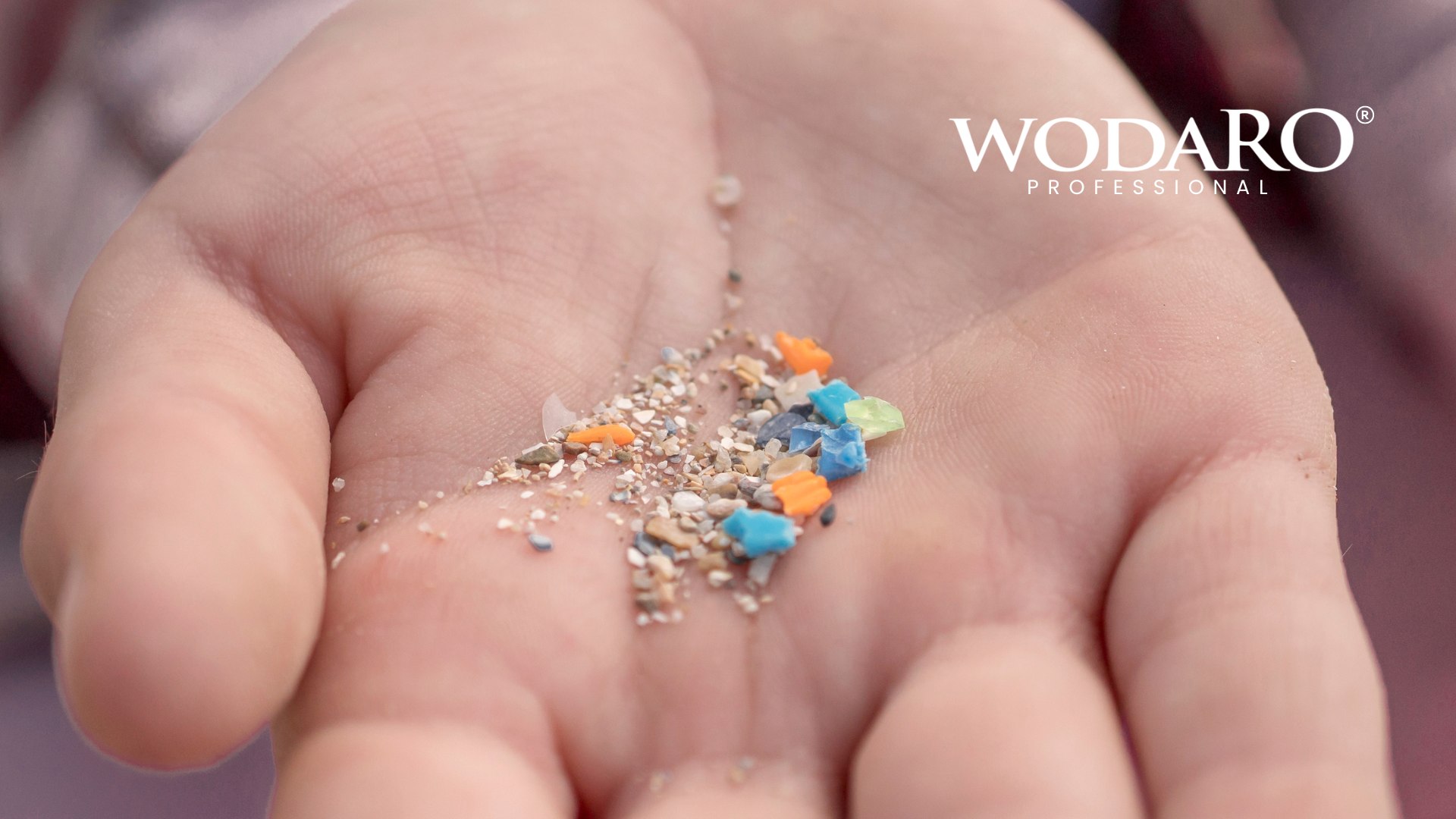
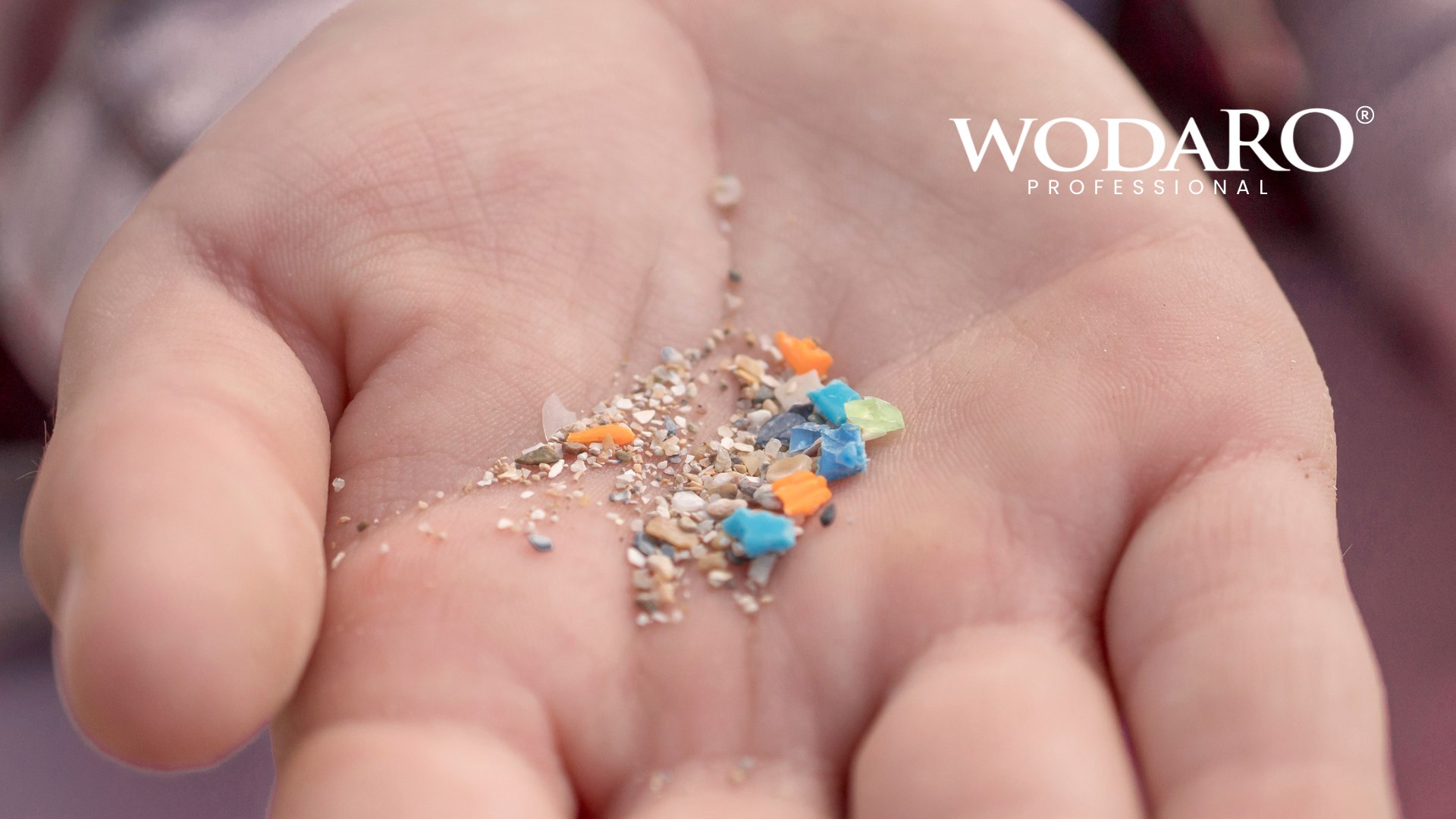
In public debate, we often use the general term "plastic," but to understand the threat, we need to be precise. What is microplastic? These are plastic particles with a diametersmaller than 5 mm. However, it is not these visible particles that are the most dangerous. The real challenge is nanoplastics – particles so small (below 1 micrometer) that they can penetrate biological barriers of the body.
Microplastics are divided into two main groups:
- Primary: Produced intentionally in small sizes, e.g., as an abrasive additive in scrubs or pastes.industrial.
- Secondary: They are created as a result of the breakdown of larger items – bottles, plastic bags, tires, or synthetic clothing. This type predominates in the aquatic environment.
The problem is that plastic in water does not disappear. It only fragments into smaller and smaller pieces, becoming easier to ingest and harder to remove by standard treatment plants.sewage.
Key thought: The most dangerous is not the plastic you see, but the nanoplastic you don't see – it is what penetrates tissues.
Where is the enemy hiding? In water, food, and cosmetics
Many people believe that the problem only concerns the oceans. Unfortunately, research from 2024-2025 shows that the sources of exposure are much closer to us – inare the main contributors to this contamination.release particles during transport, crushing, and twisting. What instead of water in plastic bottles? The safest option is filtered tap water, stored in glass or steel.
Microplastics in tea bags
Elegant, silky tea pyramids are often made of nylon or PET. Pouring boiling water (95°C) over them is a thermal shock for the plastic. One such bag releases billions of microplastic particles into the brew andnanoplastics. By drinking such tea, you are literally consuming "plastic brew." Choose loose leaf tea and brew it in a stainless steel infuser.
Microplastics in cosmetics – what are you applying to your skin?
Is microplastic in cosmetics harmful? Yes, because it can be absorbed and, after rinsing, ends up in rivers. In INCI compositions, look for (and avoid) names such as: Polyethylene, Acrylates Copolymer, Nylon-12,Carbomer. They are common in lipsticks, creams, and mascaras.
Ambiguous role of packaging: Tritan and glass
Many people ask about tritan and microplastics. Tritan is marketed as a safe material "BPA Free." Although it is more durable than PET, it is still a synthetic polymer. Under the influence of scratches and washing in a dishwasher, it can release micro-particles. On the other hand, microplastics in glassbottles is a paradoxical phenomenon – the bottle itself is safe, but the metal caps are sealed with plastic, which, due to friction when opening, ends up in the drink.
Kitchen: Which plastic is microwave safe?
Short answer: none. Even if the container is labeled "Microwave Safe" (usually PP - polypropylene), heating it drastically accelerates the degradation of the material and the migration of chemicals into food.Which microwave-safe plastic is safe? Only the one you won't use. Always transfer food to ceramic or glass for heating.
Key thought: Avoid heating plastic and tea bags – high temperature is a catalyst for releasing billions of particles into your food.
Harmfulness: Microplastics in the brain and blood
The question "is microplastic harmful" has ceased to be a matter of debate and has become the subject of research into the scale of this harm. The statistics are alarming – it is estimated that on average how much microplastic do we consume annually? From 250 grams upwards, which corresponds to the weight of about 50 credit cards.
Recent scientific reports confirm the presence of microplastic inblood, which means that these particles travel throughout the body. The most alarming are the studies from 2024, which detected microplastics in the brain. Nanoplastics are capable of crossing the blood-brain barrier, potentially increasing the risk of neurodegenerative diseases and inflammatory conditions.
The harmfulness of microplastics manifests at three levels:
- Physical: Particles can block capillaries and damage tissues.
- Chemical: Plastic releases toxic additives (e.g., bisphenols, phthalates) that disrupt hormonal balance.
- As a carrier (Trojan Horse): Bacteria and heavy metals settle on the surface of plastic, which then enter our interior.the organism (microplastics in the body act like a magnet for toxins).
How to remove microplastics from water – the only effective method
Tap water is microbiologically safer than river water, but standard treatment plants are not designed to capture nanoplastics. Plastic in tap water often comes from the wear and tear of pipes.installation. How to deal with it at home?
Popular filter jugs or simple carbon filters improve taste, but their pores are too large to stop nanoplastics. The only technology that offers nearly 100% effectiveness is reverse osmosis. Why?
- Osmotic membrane: It has pores of 0.0001 micrometers. It is a barrier sotight enough to allow only water molecules through while rejecting viruses, bacteria, chemicals, and even the tiniest nanoplastics.
- Safety: These systems are installed in the kitchen cabinet, providing constant access to crystal clear water.
If you're wondering what to use instead of water in plastic bottles, your own filtration system is the answer that protectshealth and wallet.
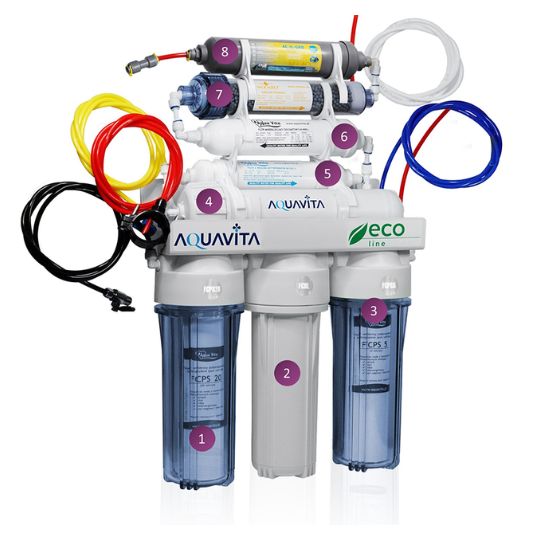
Expert recommendation: To ensure the removal of 100% microplastics, choose a reverse osmosis system with mineralization. It provides water free from toxins but rich in healthy minerals.
Check out the RO8 system and protect your family from microplastics ->
How to remove microplasticsfrom the body?
Many people search online for ways to remove microplastics from the body. Unfortunately, there is no magic pill. Our body has limited capabilities to excrete plastics (some are expelled through the digestive system, some through the kidneys), but those that have lodged in tissues can stay with us for years. Therefore, prevention is the most important.
Checklist: Minimize plastic in 3
- Step 1 (Water): Install a water filter based on osmosis in the kitchen. This will cut off the main source of nanoplastic supply.
- Step 2 (Kitchen): Throw away scratched plastic cutting boards and containers. Replace them with wood and glass. Never put plastic in the microwave.
- Step 3(Zakupy): Read the ingredients of cosmetics and clothing. Avoid polyester where possible, or wash it less frequently and at lower temperatures.
Key thought: The best detox is cutting off the supply of new toxins. Clean water is the foundation of this strategy.
Frequently Asked Questions (FAQ)
Is microplastic harmful toeveryone?
Yes, although the degree of harm depends on the dose and duration of exposure. Children and fetuses are particularly vulnerable due to their developing nervous and hormonal systems, which are sensitive to substances released from plastic.
How to check if I have microplastics in my body?
Currently, there are no routine blood tests available for patients that measure plastic levels. However, consideringThe prevalence of (microplastics in food, water, air), it can be assumed that each of us has a certain concentration of these particles in our tissues.
What is secondary microplastic?
These are particles that result from the breakdown of larger items, such as fibers from fleece released during washing or fragments from car tires. They make up the majority of pollutants in tap water.
What filter removes microplastics?
Pitcher and carbon filters are not very effective against nanoplastics. The only reliable solution is reverse osmosis, which serves as a mechanical barrier that is impenetrable to solid particles of this size.
How much microplastic do we consume annually?
Scientific estimates suggest a weight ranging from one to even 50 credit cards per year (about 250g), depending on diet (high in...seafood, drinking water from PET bottles drastically increases this number).
Sources:
- https://www.pnas.org/doi/10.1073/pnas.2300582121 - Rapid single-particle chemical imaging of nanoplastics by SRS microscopy (PNAS 2024).
- https://www.who.int/publications/i/item/9789241516198 - WHO Report: Microplastics in drinking-water.
- https://hscnews.unm.edu/news/hsc-newsroom-post-microplastics-human-brains - Research by the University of New Mexico on the accumulation of microplastics in the brain (2024).
Author: Maciej Waliduda - Expert in water treatment technology with many years of experience in selecting filtration systems for home and industry. Last updated: 2026-02-08.
