
- There are no more items in your cart
- Shipping
- Total 0.00 zł





Order of water filters - How to properly install a filtration system?
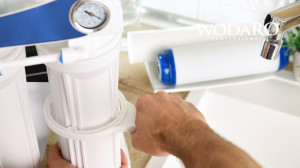
The correct order of installing water filters is a key element that determines the efficiency of the entire filtration system. Whether you are installing filters at home, in a business, or in an industrial facility, it is important to know the order in which to install the filters to achieve the best results. In this article, we will explain this topic, indicating which order of installing water filters is the most effective and why it is so important.
Last updated: August 26, 2025
In this article, you will learn…
- Why is the order of installing water filters important?
- What is the order in which to install water filters?
- What is a reverse osmosis system?(ro)?
- What are water inlet body systems?
- What is the importance of the correct order of installing water filters?
- What is the most common mistakes we make when installing water filters?
- What arecontributes to better water quality and extends the lifespan of the system components.translates to cleaner water and a longer lifespan for household appliances. Removing heavy metals and improving water quality is crucial for both health and the functioning of household appliances.
In what order should water filters be installed?
The answer to the question "in what order should water filters be installed?" depends on the type of filtration system and the specific needs of the user. Belowwe present the recommended order of filters both in reverse osmosis (RO) systems and in housing systems used at the water entry point to the building.
It's worth remembering: The appropriate order of filters affects their efficiency and the durability of the entire system.
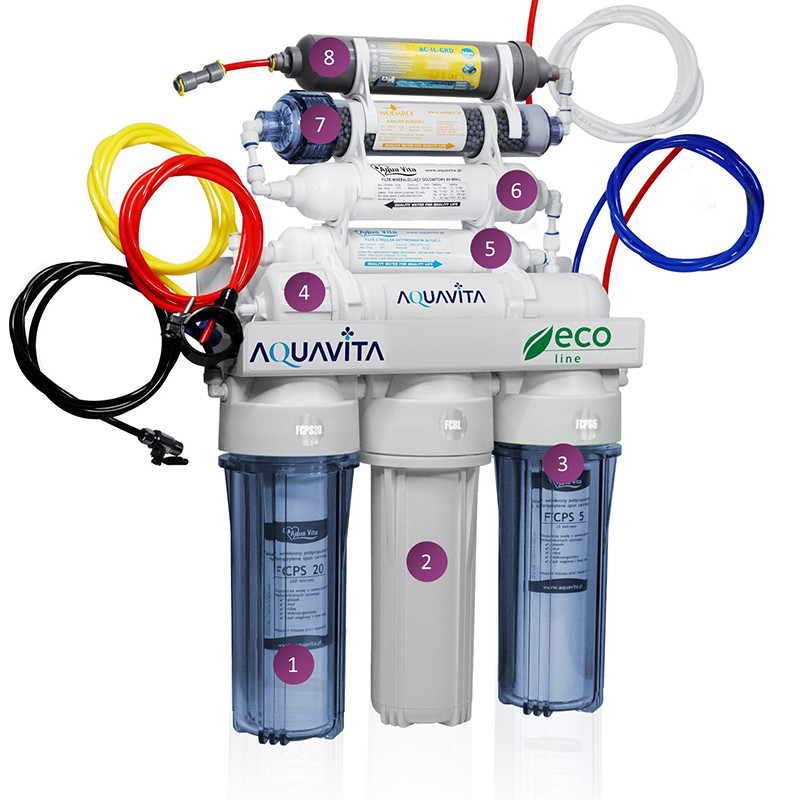
Reverse osmosis (RO) system
- Mechanical cartridges with a higher micron rating: Mechanical filtration that removes larger impurities such as sand, rust, silt, or other solid particles. The mechanical filter is the first stage that protects subsequent filtration stages from damage and clogging.
- Carbon filters: Responsible for removing chlorine, pesticides, herbicides, and organic contaminants.
- Mechanical filter with a smaller micron rating or antibacterial cartridges: Removes smaller solid particles, providing additional filtration of solids.
- Osmotic membrane: Removes even the smallest impurities, including heavy metals, bacteria, and viruses from water, and also reduces water hardness.
- Post carbon filter: Improves taste and conditionof water, removing residual impurities.
Specialized cartridges:
- Mineralizing cartridges: Enrich the water with valuable minerals such as calcium and magnesium.
- Ionizing cartridges: Raise the water's pH, making it more alkaline.
- Cartridgesstructuring: Changes the structure of water at the molecular level, improving its biological properties.
Depending on the set, some elements may be missing or may be used in pairs to maximize efficiency.
Water inlet housing systems
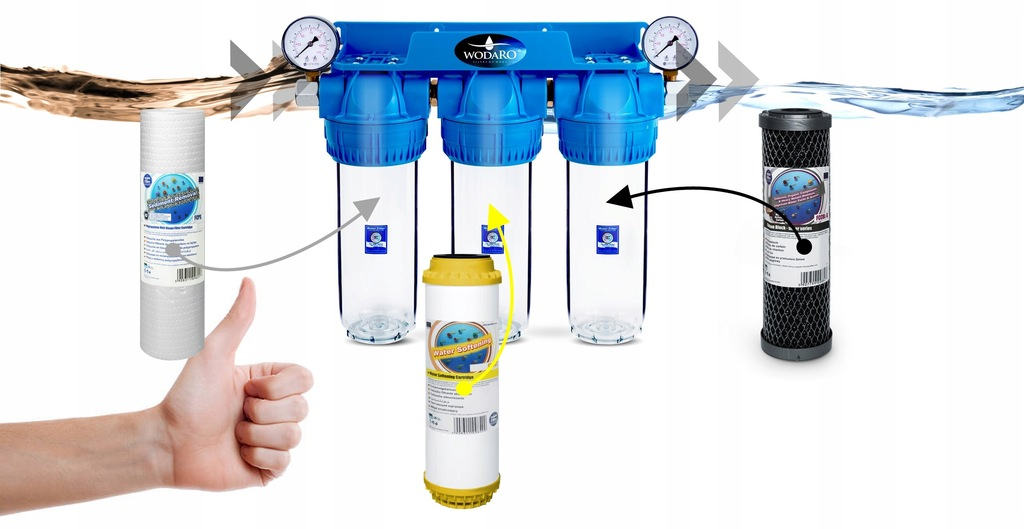
Systemscylindrical filters are a popular solution used at the water entry point into a building, effectively purifying the water before it reaches taps, showers, or household appliances. Here is the recommended order of filter installation in cylindrical systems:
- Mechanical filter: The first stage is always pre-filtration, which removes larger mechanical impurities such as sand, rust, silt, and other solid particles. This ensures thatprotect the further stages of filtration from damage and clogging.
- Softening filter or iron removal filter: The next stage is a water softener or iron removal filter, which removes calcium and magnesium ions responsible for water hardness, as well as iron, which can cause discoloration and an unpleasant taste.
- Carbon filter: The final stage involves carbon filters, whichremove chlorine, organic compounds, pesticides, herbicides, and other chemicals that can affect the taste and smell of water.
Depending on the number of bodies, some elements may be omitted or used doubly, but the basic scheme is always the same. This allows us to tailor the filtration system to the specific needs of the user and the quality of water in a given region.
WhatWhat are the benefits of the correct order of water filter installation?
Following the correct order of water filter installation brings many benefits:
It is worth remembering: The correct order of filters is crucial for maintaining the quality of drinking water and the efficiency of the filtration system.
- More effective purificationwody: Removing contaminants in the appropriate sequence ensures better quality drinking water.
- Longer filter lifespan: By protecting the subsequent stages of filtration from excessive wear, we extend the lifespan of the entire system.
- Protection of household appliances: Water softening prevents limescale buildup in appliances such as washing machines, dishwashers, and kettles.
- Better taste and smell of water: Carbon and final filters remove organic compounds, chlorine, and improve the taste quality of water.
What mistakes do we most often make when installing water filters?
Incorrect installation of water filters can lead to ineffective water filtration and increased operating costs. Here arecommon mistakes to avoid:
- Skipping mechanical filtration: Without preliminary mechanical filtration, contaminants can damage more expensive carbon cartridges or osmotic membranes.
- Incorrect order: Installing filters in the wrong order can significantly reduce the efficiency of the entire system.
- Mismatch with local conditions: Water quality varies in different regions, so it is important to adapt the water treatment system to specific needs.
- Failure to adhere to filter replacement deadlines: Regular filter replacement is crucial for maintaining their efficiency and water quality.
- Lack of consultation with an expert: It is advisableconsult a professional before purchasing and installing a filtration system to avoid mistakes.
Conclusions
Understanding the correct order of installing water filters allows for effective and long-term use of filtration systems. Proper installation not only improves water quality but also protects your household appliances and the health of your family members. Remember that eachInstallation may require an individual approach, so it is worth consulting an expert before purchasing and installing a filtration system. There are various filtration systems available on the market that can be tailored to individual needs, and their purpose is to improve water quality and safety.
Frequently Asked Questions (FAQ)
How often should filters be replaced in the systemfiltration?
Filters should be replaced every 6-12 months, depending on their type and water quality.
Can one filter be used for all systems?
No, each filtration system requires dedicated filters tailored to its specifications.
What are the signs that a filter needs to be replaced?
Signs include changes in water taste, decrease inpressure and visible impurities in the filter.
Are carbon filters effective in removing chlorine?
Yes, carbon filters effectively remove chlorine and other organic impurities.
What are the differences between mechanical and carbon filters?
Mechanical filters remove larger particles, while carbon filters eliminate chemical impurities andorganic.
Can the filtration system be installed independently?
Yes, however, it is recommended to consult an expert to avoid installation errors.
Author: Maciej Waliduda — a specialist in filtration systems, with many years of experience in the industry. He helps in selecting appropriate solutions forindividual and business clients.
