
- There are no more items in your cart
- Shipping
- Total 0.00 zł





What are the types of mechanical water filters?
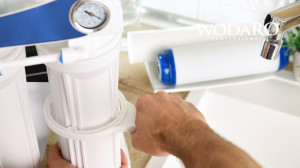
Mechanical filters play a key role in the water treatment process, eliminating mechanical impurities even before further stages of filtration. In this article, we will discuss the different types of mechanical filters, their applications, and how to select and maintain them to ensure optimal performance of water systems in homes and businesses.
Last updated: August 26, 2025
In this article, you will learn…
- What are mechanical water filters?
- How does a mechanical filter work – basics?
- What are key concepts (explanations)?
- What are the types of mechanical cartridges forwater?
- What is a mesh insert?
- What is a string insert?
- What is a foam insert?
- What does the comparison of insert types involve?
- What is the selection of a mechanical filter for yourneed?
- What is step 1: identify the water source?
- What is step 2: assess the level of contamination?
- What is step 3: determine the required flow rate?
What are mechanical water filters
Mechanical water filters forwater is the first barrier that stops solid particles: sand, silt, rust, corrosion debris, and suspensions causing turbidity. They work solely physically – they do not change the chemical composition of the water but reduce the load of particles that could clog, wear out, or degrade subsequent filter media (activated carbon, ion exchange resins, RO membranes).
They are used:
- inin single-family homes (protection of fittings, faucets, household appliances),
- in installations from wells (often high mineral sediment content),
- in gastronomy and industry (protection of nozzles, valves, heat exchangers),
- before high-precision treatment systems (reverse osmosis).
Summary: A mechanical filter is a "pre-gate", whose task is to reduce solid particles and prepare water for further, more precise filtration.
.jpg)
How a mechanical filter works – basics
Mechanical filtration is based on the separation of particles based on their size. The cartridge has a structure that retains particles larger than its filtration capacity (expressed in microns – μm, 1 μm = 0.001 mm).
Keyconcepts (explanations)
- Micron rating (e.g., 100 μm, 50 μm, 20 μm, 5 μm): the lower the value, the finer particles will be retained. Too low a micron rating at the beginning of the installation can quickly clog.
- Surface filtration vs deep filtration: mesh cartridges primarily filter on the surface (the layer retains particles), while string and foam cartridges offer deep filtration.(particles penetrate into the pore structure with decreasing diameter).
- Nominal vs absolute retention: nominal means effectiveness of e.g. 85–95% for a given particle size; absolute approaches ≥99% (more often in membrane filters; in standard mechanical cartridges, nominal retention is usually used).
- Pressure drop (ΔP): the pressure difference before and after the cartridge.An increasing ΔP indicates growing clogging – a signal for flushing or replacement.
- Nominal flow: the value at which the cartridge operates optimally without excessive pressure drop. The instantaneous (peak) flow may be higher, but it increases ΔP and shortens lifespan.
Summary: Understanding micron rating, type of filtration, and pressure drop allows for the selection of the cartridge,which effectively stops contaminants without clogging the system.
Types of mechanical water cartridges
Mesh cartridge
Construction: core (often made of plastic or stainless steel) + reusable mesh (most often stainless steel or nylon).
Type of filtration: surface.
Typicalmicrons: 80–200 μm (also found in 50 μm).
Applications: preliminary filtration for larger fractions (sand, small pebbles, rust flakes). Ideal as a prefilter protecting subsequent, finer stages.
Advantages:
- multiple use – regeneration by rinsing (backwash /flushing with running water),
- low pressure drop at higher micron ratings,
- quick inspection (in transparent housings).
Disadvantages: - does not retain fine suspensions (colloidal turbidity),
- requires regular flushing, otherwise it forms a "scum" that lowersflow.
Maintenance: depending on the load – from once every few weeks (tap water) to every few days (well with a lot of sand).
Best scenarios: as the first stage in a home installation; in irrigation systems; before fine filtration (e.g. 20 μm, 5 μm).
String cartridge
Construction: polypropylene string spirally wound around a core (sometimes polypropylene or from a reinforcing material). It creates a gradient of porosity – larger pores on the outside, smaller on the inside.
Filtration type: deep (multi-layered).
Typical microns: 1–100 μm (most popular: 20 μm, 10 μm, 5μm).
Applications: reduction of rust particles, sludge, fine mineral deposits; preliminary protection for carbon filters and RO membranes (e.g., 5 μm before carbon, 1–5 μm before the membrane).
Advantages:
- high capacity for contaminant accumulation (particles "enter" deep into the structure),
- relatively low pricesingle,
- good chemical resistance (polypropylene).
Disadvantages: - single-use (do not rinse and reuse – loses structure),
- pressure drop increases faster than in foam at very fine gradations if the water has a high colloidal suspension.
Maintenance / replacement: usually every 1–3 months at home;more often in murky water. Manometers or visual assessment of color (rusty/brown) accelerate the decision.
Best scenarios: stage after the mesh cartridge or as the only filter for moderately clean tap water that requires "finishing" before carbon.
Foam cartridge
Construction: foamed polypropylene (so-called melt-blown) with a gradientof the filter (often denser towards the core).
Filtration type: deep (gradient).
Typical microns: 1–50 μm (popular: 20 μm, 10 μm, 5 μm, 1 μm).
Advantages:
Worth remembering: Summary: Mesh cartridge = reusable, coarser filtration; string cartridge = cheap, high sediment capacity; foam cartridge= stable flow and high accuracy with low initial pressure drop.
- very uniform flow and low initial pressure drop,
- effective retention of fine particles while maintaining efficiency,
- no fibers that can be released (compact structure).
Disadvantages: - disposable; you do not regenerate by rinsing,
- with an extreme amount of larger particles, it may clog faster (it is advisable to add a mesh insert "before").
Applications: as a more precise filter (polishing) before the RO membrane, in systems requiring stable flow, in water with high fine (colloidal) turbidity.
Maintenance / replacement: usually every 1–3months (home), in intensive applications even every few weeks – monitor ΔP and color.
Summary: Mesh cartridge = reusable, thicker filtration; string cartridge = inexpensive, high sediment capacity; foam cartridge = stable flow and high accuracy with low initial pressure drop.
Comparison of cartridge types
Differenceskey:
- Reusability: only mesh insert (flushing).
- Life cycle cost: mesh – higher initial cost, low operating costs; string – low initial cost, more frequent replacements; foam – moderate cost, depending on water quality.
- Micron range: mesh (coarser), string and foam (also small values).
- Pressure drop: lowest initially: mesh > foam (slight) > string (dependent on structure).
- Dirt capacity (amount of trapped contaminants before ΔP increases significantly): high in string and foam (deep), low to medium in mesh (surface).
- Chemical resistance: polypropylene (cord, foam) has a wide resistance; stainless steel mesh – very good, but requires protection against aggressive chlorides (in industrial environments).
Quick selection map:
- A lot of sand/particles >80 μm: mesh insert (prefilter).
- Variable turbidity, you want high capacity: string cartridge.
- Stable flow + fine suspensions: foam cartridge (melt-blown).
- Multi-stage system: mesh → (20 μm string/foam) → (5 μm foam) → carbon → RO.
Summary: ConsciousThe arrangement of filters in sequence from coarse to fine maximizes the lifespan of each element and minimizes costs.
Selection of a mechanical filter for your needs
Step 1: Identify the water source
- Water supply: usually stable quality; 20–10 μm + 5 μm is sufficient.
- Dug / drilled well: possible large fluctuations of suspensions and iron – necessary preliminary mesh input + more precise (10–5 μm).
- Special applications (refrigerators, coffee machines): fine filtration 5–1 μm before specialized modules.
Step 2: Assess the level of contamination
- Visually (transparent bottle, sediment after standing).
- A simple testturbidity (NTU scale – when no instrument is available, observe the sedimentation rate).
Step 3: Determine the required flow
Sum the maximum simultaneous draw-off points. For a single-family home, typically 1–2 m³/h of instantaneous flow on the main line is sufficient – select a housing (10″, 20″, Big Blue 10″/20″) appropriate for the flow and pressure drop.
Step 4: Plan the sequence
Example for wells with sediments:
- Mesh cartridge 100 μm (washed)
- String cartridge 20 μm
- Foam cartridge 5 μm
Step 5: Consider maintenance
If you do not want frequent replacements – apply a regenerable (mesh) stage at the beginning.
Step 6: Check Compatibility
Diameter and height of the cartridge (e.g., standard 10″, 20″, Big Blue). Make sure that the mechanical filter fits the housing (gaskets, outer diameter).
Summary: Methodical selection based on the source, turbidity, and target flow reduces costs and the risk of under-filtration or excessive clogging of the cartridges.
Operation and Maintenance
Monitoring: install pressure gauges before and after the filter housing. When ΔP reaches 0.5–0.7 bar (approximately), consider flushing (mesh) or replacing (string/foam).
Procedure for flushing the mesh cartridge:
- Close the inlet, reduce the pressure (open the valve
- Remove the cartridge, rinse under running water (in the opposite direction of flow).
- In case of heavy sediment, use a soft brush (without aggressive detergents).
Replacement of disposable cartridges:
- Wear gloves to limit the introduction of bacteria.
- Rinse the body (withoutfragrance agents).
- Check the O-ring seal – lubricate with technical petroleum jelly for contact with drinking water if dry.
Replacement indicators:
- Decrease in flow in the shower,
- Increased turbidity at the tap after impulse flow (sudden release of sediments),
- Noticeable browning
Summary: Systematic monitoring of ΔP and quick response (flushing or replacement) prevents secondary contamination and protects further stages of treatment.
It's worth remembering: The most commonly used are mesh filters of 80–100 μm or string filters of 50–20 μm – depending on the amount of larger particles in the water.
Common mistakesusers
- Too fine micron size at the start: causes quick clogging and frustration (e.g., starting with 1 μm with sand-laden water).
- Lack of pressure gauges: "eyeballing" the replacement can be delayed – energy costs (pumps) increase.
- Flushing of string or foam cartridge:gives the illusion of "cleanliness," but the pore structure has already lost its properties.
- Omitting the O-ring seal: leaks, air suction, micro-leaks.
- Lack of sequence: a single very fine insert instead of a cascade (coarse, then fine).
Summary: Avoiding several common mistakessignificantly extend the lifespan of cartridges and the stability of water parameters.
Integration with other stages of treatment
A well-designed mechanical filter extends the life of:
- Carbon cartridges: less suspended matter = slower clogging of pores.
- RO membranes: particles canmechanically damage the membrane surface or increase the biofilm.
- Ion exchange softeners: no solid particles = lower risk of resin channeling.
Sequential configuration reduces the need for frequent replacements of expensive components (block carbon, membrane).
Summary: Mechanical prefiltration is an investment inlonger and more stable operation of subsequent stages of treatment.
Quality and safety aspects
- Materials: polypropylene (PP) – neutral, compliant with food contact; stainless steel – check the resistance class (e.g., to corrosion).
- Certifications / attestations: confirm that the material does not introduce undesirable substances intowater (search for manufacturer information).
- Hygiene: when replacing, avoid touching the active surface of the internal cartridge; close and vent the system before disassembly.
- Storage of new cartridges: dry, away from UV radiation and chemical vapors.
- Environment: regenerable mesh cartridgereduces waste; used PP cartridges can be passed on to the plastics stream (depending on local regulations).
Summary: The quality of materials and hygienic handling ensure that the mechanical filter enhances safety rather than becoming a potential source of secondary contamination.
Summary – key findings
Mechanical filtersThe water filters are the foundation of an effective treatment system. The mesh cartridge is reusable and captures the largest particles. The string cartridge offers a high dirt capacity at a low cost, while the foam cartridge ensures even flow and high accuracy. Proper selection of micron rating, monitoring of pressure drop, and the "coarse → fine" sequence minimize costs.and maximize the durability of the entire system.
Frequently Asked Questions (FAQ)
1. Which mechanical filter should I choose for the start of a home installation?
The mesh filter of 80–100 μm or the string filter of 50–20 μm is usually the best choice, depending on the amount of larger particles in the water.
2. Can I rinse the string or foam filter to extend its life?life?
It's not worth it – the structure of the pores does not return to its original parameters after clogging. Replace the cartridge.
3. What does the number of microns on the cartridge mean?
It is the approximate minimum size of the particle being retained (nominally) – the smaller the number, the more precise the filtration and potentially faster clogging.
4. How often should the mechanical cartridge be replaced?
On average, every 1–3 months (string/foam) or when the pressure drop increases by ~0.5–0.7 bar. Rinse the mesh cartridge when sediment is visible or when there is a drop in flow.
5. Can one very fine 1 μm cartridge replace the entire sequence?
Theoretically yes, but practically it will clog quickly and increase costs – a cascade of several stages is better.
6. What is the difference between a mesh cartridge and a foam cartridge?in practice?
The mesh filter works on the surface and can be rinsed; the foam filter works deeply, more effectively trapping fine particles with a low initial pressure drop.
7. How do I know that the cartridge is worn out if the flow seems fine?
Check the ΔP with manometers. If it has significantly increased despite an acceptable instantaneous flow, the cartridge is already operating outside of optimal conditions.scope.
8. Do I need to use a mechanical filter before the water softener?
Yes – removing suspensions protects the resin from clogging and channeling.
9. What housings are compatible with most cartridges?
Standard 10″ and 20″ (Slim) and Big Blue 10″/20″ – the choice depends on the required flow rate and the volume of retained sediments.
10.Do the foam and string inserts with the same gradation (e.g., 5 μm) filter identically?
No – they differ in structure and pore distribution. Foam often provides a more uniform flow and lower initial pressure drop; string may have a higher dirt-holding capacity with certain types of sediments.
Author: Maciej Waliduda — specialist inMojaWoda.com, with experience in water treatment and filtration systems.
