
- There are no more items in your cart
- Shipping
- Total 0.00 zł




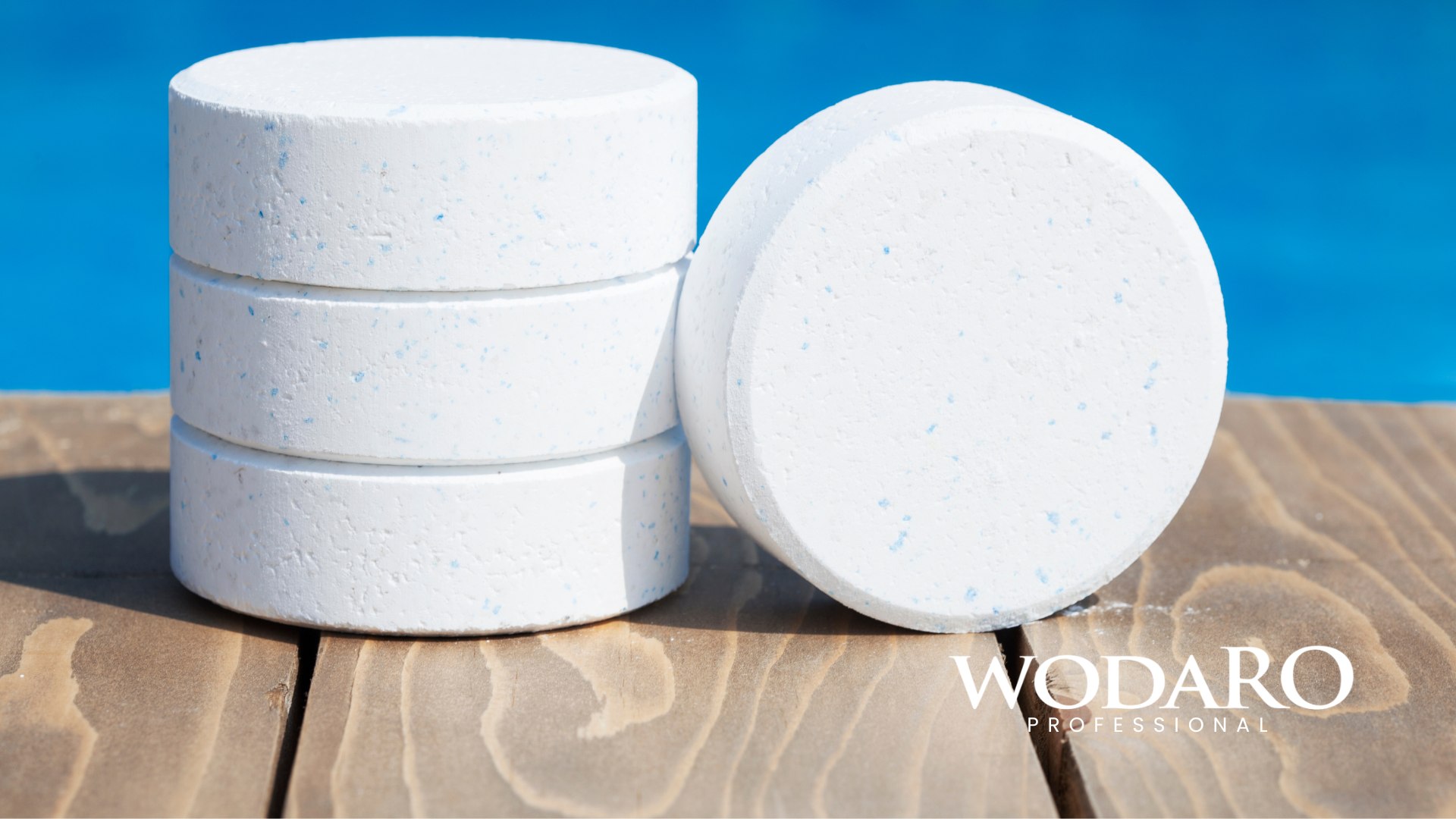
Chlor is more common than you think - in tap water, in pools, in household cleaning products, and in industry. While it is a cornerstone of microbiological safety, its excess can be bothersome. In this compendium, we organize the knowledge: we explain where its specific smell comes from, when it becomes a problem, and how to effectively remove it from drinking water. You will find specific instructions for selecting filters, as well as practical tips for the safe use of chemicals.pool and well disinfection.
Table of Contents
- What is chlorine and how does it work
- Chlor as an element - chemistry and myths
- Chlor in tap water and smell
- Health effects - irritations and allergies
- Chlor poisoning - safety
- How to effectively remove chlorine from drinking water
- Pool chemistry - chlorine, shock, and dosing
- Chlor generator vs traditional tablets
- Disinfection and chlorination of wells
- Glossary of terms - oxides, chlorides, and myths
In this article, you will learn:
- What forms chlorine takes and why common names can be misleading.
- Where the smell of chlorine in the tap comes from and why drinking water must be disinfected.
- How to easily improve the taste of water in the kitchen by using the right...filtration.
- How to safely use chlorine in the pool to avoid skin and eye irritation.
- What are the most common mistakes during well disinfection and how to avoid them.
What is chlorine and how does it work as a disinfectant?
Short answer: Chlorine is an element, but in disinfection, we do not use pure gas, but its compounds dissolved in water. They formactive oxidizing agents that destroy the cell walls of bacteria and viruses, ensuring hygienic safety in water supply networks and swimming pools.
The wide application of chlorine results from its unique ability to create a so-called disinfection reserve. This means that after the pathogens are destroyed, a small amount of active substance remains in the water, protecting it from recontamination in the transmission pipes. In market practiceyou will encounter different forms: granules, liquid chlorine and the most popular chlorine tablets. Although each of these forms is meant to deliver the active agent to the water, they differ in their dissolution speed and impact on pH.
Key takeaway: Effective disinfection is not about throwing any product into the water, but about selecting the right form and maintaining appropriate parameters, such as pH and time.contact.

Chlorine as an Element - Chemistry and Myths
Chlorine belongs to the group of halogens (symbol Cl). In its pure form, it is an irritating, yellow-green gas. Analyzing its physical properties, the mass of chlorine (atomic mass) is 35.45 u. Due to its high reactivity, it does not occur freely in nature but in the form of minerals (e.g., chlorideMany internet users search for information by typing the mysterious phrase element ci or simply ci. Let's clarify this once and for all: there is no such symbol in the periodic table. It is most often just a simple typo that is intended to mean the Polish chlorine or the English chlorine. Another common question on chemistry forums is how many valences it has.chlor. The answer depends on the compound: it takes oxidation states from -1 (in chlorides) up to +7 (in perchlorates), which explains the multitude of its industrial applications.
Key thought: Understanding that the colloquial "chlorine" or the invented "chlorine hydroxide" are incorrect names helps in accurately reading labels of pool and household chemicals.
Chlorine in tap water and smell
The presence of disinfectants in water supply systems is a sanitary requirement. Water flowing through kilometers of pipes must be protected against the development of biofilm. However, sometimes when you turn on the tap, a characteristic smell hits you - in colloquial language, this phenomenon is called chlorinated water.
So, does chlorine have a smell? Pure gas has a very sharp odor, but what you feel intap water, it is most often chloramines - by-products of reactions with minor organic contaminants in the pipes. The duration of chlorine in the water depends on the temperature and aeration. Water left in an open pitcher will lose its smell after just a few hours, as volatile compounds naturally evaporate.
Key takeaway: The pool smell from the tap does not indicate contamination, but rather a more intenseof chlorine can be much higher. This can lead to irritations and allergies, especially for sensitive individuals. It is important to ensure proper ventilation and water treatment in such environments to minimize any adverse effects on health.are higher, and the environment is closed.
Frequently diagnosed chlor allergy is actually a strong irritation of the epidermis. True chlor allergy occurs very rarely. Common chlor allergy rash or redness of the eyes is the result of drying out the skin's lipid barrier and the action of chloramines. For the same reason, chlor allergy inA child's skin requires special attention - the skin of a little one is thinner and loses moisture more quickly. It's important to ensure a thorough shower after leaving the pool and to use emollient creams. And is chlorine in the pool harmful when there is too little of it? Yes, lack of disinfection poses a real risk of serious bacterial infections, which is much more dangerous than temporary skin irritation. Key thought: MostSkin reactions are not an allergy, but irritation caused by a disruption of the water's pH and insufficient hygiene (lack of a shower) before entering the pool.
Chlor poisoning - safety
The highest risk does not come from drinking tap water, but from irresponsible use of household chemicals. Chlor poisoning most often occurs when the user experiments with mixing strongcleaning agents. The combination of chlorine bleach with acid (e.g., descaler) releases toxic gas violently.
Acute symptoms include shortness of breath, burning of the respiratory tract, coughing, and tearing of the eyes. In such a situation, it is necessary to immediately ventilate the room, go outside for fresh air, and if there is no improvement, seek medical assistance. Safety requires that pool and household chemicals be stored in their original, sealed containers, away from children and sources ofwarm.
Key thought: Never mix different types of cleaning chemicals - this is the simplest way to cause dangerous irritation to the respiratory system.
How to effectively remove chlorine from drinking water
If the smell and specific aftertaste discourage you from drinking tap water, the solution is very simple. Just implement effective filtration in your home system. The technologythe first choice is activated carbon, which performs phenomenally in adsorbing oxidizing compounds.
For point-of-use taste improvement at the sink, dedicated kitchen water filters are perfect. Inside them is a compressed carbon block that not only removes pool odors but also traps pesticides and organic compounds. If you are looking for a comprehensive solution for the whole house, it is worth considering inline filters,remembering to regularly replace the cartridges. A clogged carbon filter stops working, so consistency is the key to crystal-clear water.
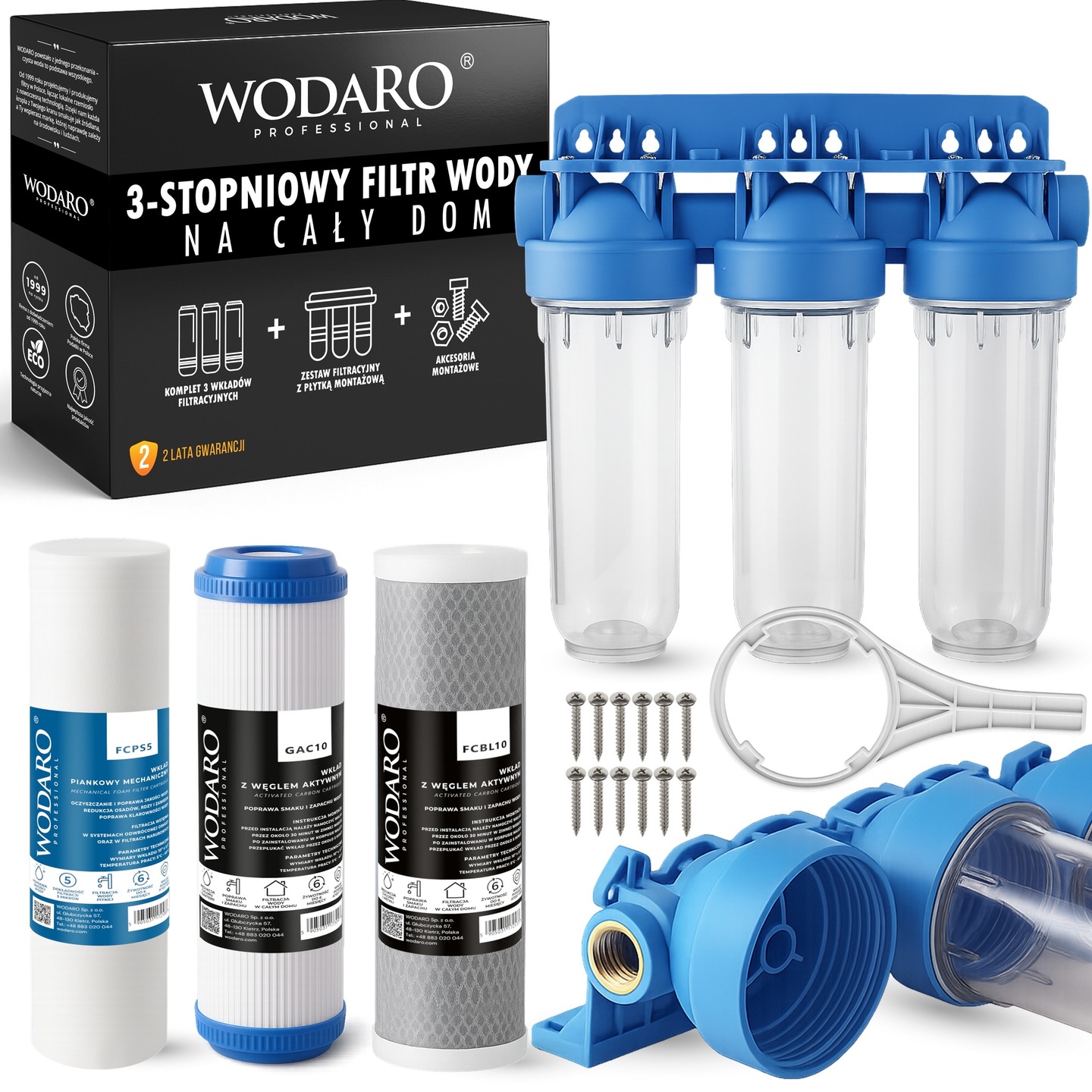
Do you want to get rid of the irritating smell of chlorine from your kitchen? Choose trusted carbon blocks that will restore the natural taste of water. See the full offer at: water filter cartridges.
Key thought:Activated carbon is a natural, inexpensive, and most efficient way to remove chlorine and chloramines from your home water system.
Pool chemicals - chlorine, shock, and dosing
Maintaining clean water in a home pool requires consistency. Universal pool chlorine can be divided into two main types of action: maintenance and intervention. For continuous disinfection, it is usedchlorine tablets for pools (often simply referred to as pool tablet or pool tablets). For spa baths with higher temperatures, a dedicated, faster-acting chlorine for jacuzzis is selected.
- Dosage: In response to a frequently asked question, what is the container forpool chlorine - a plastic float (buoy) ensures slow, even release of the substance. Dropping chlor tablets into the pool directly on the bottom will damage and discolor the liner.
- Intervention: When the water becomes cloudy and green, you need a powerful shock. That's when shock chlorine (often in granule form) comes into play. The operation known asshock chlorination involves quickly introducing a large dose of the active agent. Remember to take the pool out of use during this time. We are talking about a product such as pool shock chlorine - its application immediately oxidizes accumulated impurities and kills algae.
Customers also ask, does chlorine raise the pH of the water. It depends on the compound used.Chemical - hypochlorites usually slightly raise the pH, while some organic multifunctional tablets can lower it. Loss of control leads to a situation where we have too much chlorine in the pool, the effects are then evident: sharp burning of the eyes and shortness of breath. In such a case, the only solution is partial water replacement and strong ventilation (if the pool is indoor).
Key thought: No chemistry will workcorrectly, if the water has a bad pH (ideally 7.0 - 7.4). Measurements are the basis for pool maintenance.
Chlor generator vs traditional tablets
An increasingly popular alternative to manually adding chemicals is the chlor generator (so-called salt electrolyzer). This device converts the special salt (sodium chloride) added to the pool into natural, active free chlorine through the process of electrolysis with alow voltage.
The advantage of this solution is the absence of unpleasant chloramine odor and the extremely soft, skin-friendly water. The user does not have to remember to buy and add corrosive tablets. However, it does require an initial equipment investment and occasional monitoring of salinity levels. It also does not relieve the owner from taking care of the filtering pump and maintaining the correct pH.
Key thought: Salt generator means convenience and noeye irritation, but the process still involves chlorine production - only in an optimal and continuous dose.
Disinfection and chlorination of wells
Microbiological problems in private water sources are a common issue. When tests indicate Coli bacteria, it will be necessary to chlorinate the well. Usually, this is done with liquid sodium hypochlorite, although there are also options available on the market.specialized chlorine for disinfection in the form of tablets and powders.
Proper chlorination of wells requires precision. A high-concentration solution is poured into the intake, rinsing the walls of the casing. After waiting the required time (from several hours to 24 hours), the water must be pumped out completely until the smell disappears. Importantly, the disinfected water should not be immediately directed tohome sewage treatment plant, so as not to destroy the bacterial flora within it. After the entire operation, consider professional multifunctional stations, which will protect your installation from other problems with your own water supply.
Key thought: A one-time application of the preparation is a fight against the effect, not the cause. After successful chlorination, always find the source of contamination leaks into the well.
Glossary of terms - oxides, chlorides, and myths
For full clarity, let’s distinguish the concepts that often mislead users. Many of them relate to medicine and side processes that have nothing to do with home filtration.
- Chlorine dioxide: A highly selective and very effective disinfectant used in industry and large networks. Unliketraditional hypochlorite less frequently forms unpleasant chloramines and handles thick biofilm well.
- Chlor oxide / Chlor oxides: This is a broad family of chemical compounds. As a single term, it is not very precise in the context of household water chemistry.
- Chlorides vs. chlorides in serum: Chloride anions (Cl-) naturally occur in water and affect itscorrosiveness, however, are not biocidal agents. On the other hand, the chlorides in serum studied by doctors are important blood electrolytes whose levels indicate the body's water-acid balance - a strictly medical topic.
- Lice and chemistry: Internet users, in an act of desperation, type into the search engine the question: does chlorine kill lice. Remember - pool chemicals and household bleaches are strongcaustic substances. Do not apply them to skin and hair! This would result in burns.
Key takeaway: Precise terminology helps avoid catastrophic mistakes when purchasing home water treatment systems and cleaning agents.
Frequently Asked Questions (FAQ)
How to quickly and cheaply remove the smell of chlorine from tap water?
The simplest and most effective method is to install an under-sink filter with a carbon block. Activated carbon almost immediately adsorbs free chlorine, restoring the water's neutral, odorless taste. Cheaper and slower methods include letting the water sit in an open container for a few hours.
Is pool water with a strong chlorine smell safe?
Paradoxically, the intense "pool" smell is rarelyindicates an excess of chlorine itself. It is usually a signal that there are high levels of chloramines in the water, which are compounds associated with sweat, urine, and cosmetics. Such water requires shock treatment with chemicals and good filtration, rather than reducing the doses of disinfectant.
When should shock chlorination of a deep well be performed?
This procedure is necessary if the physicochemical analysis shows the presence of harmful bacteria (e.g., E. Coli,Enterococci), when the well has been contaminated as a result of flooding or inundation, as well as immediately after drilling or a general service of the pump.
What are the symptoms of too high a dose of chlorine in pool water?
Overdose manifests as intense burning and redness of the conjunctiva, dryness and itching of the skin, difficulty breathing (especially in enclosed spaces), and a strong chemical smell. Additionally, high concentrations may
rapidly bleach swimsuits.
Is a floating dispenser necessary if I have chlorine in tablets?
Yes, it is highly recommended. The tablet dissolves slowly, and if thrown directly to the bottom, it will create a very high, corrosive local concentration that will discolor and damage the material of the pool bottom. The dispenser allows for controlled distribution along with wave movement.
How much salt does the generator require?chlorine, to work properly?
The salinity of the water for standard home electrolyzers should be around 3-4 grams per liter (i.e., about 0.3 - 0.4%). For a pool with a capacity of 10,000 liters, this means you need to add about 30 to 40 kilograms of pure, non-iodized pool salt.
Sources:
- https://www.gov.pl/web/wsse-warszawa/woda-przeznaczona-do-spozycia - Polishand European drinking water quality standards (Sanepid).
- https://www.who.int/publications/i/item/9789241549950 - World Health Organization (WHO) guidelines for drinking-water quality and disinfection processes.
- https://pubchem.ncbi.nlm.nih.gov/compound/Chlorine - National Center for Biotechnology Information (NCBI) USA: Chemical properties card for the element (chlorine).
Author: Maciej Waliduda. Expert in water treatment, designer of filtration systems, and consultant for home purification stations. Last updated: 2026-02-20.
