- There are no more items in your cart
- Shipping
- Total 0.00 zł



Cooking and Boiling Water - 34 Facts | Boiled Water from A to Z
Boiling water is an activity we perform almost daily without thinking about its details. But do you know what really happens at the molecular level during the boiling process? We have prepared a practical guide for you, where you will find the most important information and tips for effectively utilizing this phenomenon. In the article, we will discuss not only the basic principles of boiling but also its impact on impurities and methods that will allowHere is the safe and effective preparation of water.
Last updated: August 26, 2025
In this article, you will learn…
- What are Temperature and pressure — key factors of boiling?
- What does boiling look like?water?
- What are the different methods of boiling water?
- What is the relationship between boiling and water contamination?
- What does boiling water look like in practice?
- What is baby water?
- What is cooking water?dish?
- What does Boiling water twice involve?
- What does Boiled water - summary involve?
Temperature and pressure — key factors in boiling
Water begins to boil when its temperature reaches the boiling point, which is the moment when the molecules have enough energy,to transition from a liquid state to a gaseous state. At sea level, where atmospheric pressure is about 1013 hPa, water boils at a temperature of 100 degrees Celsius. This is a commonly accepted value, but in reality, the boiling point is closely related to pressure. At higher altitudes, where the pressure is lower, water boils at a lower temperature, which extends the cooking time of dishes.
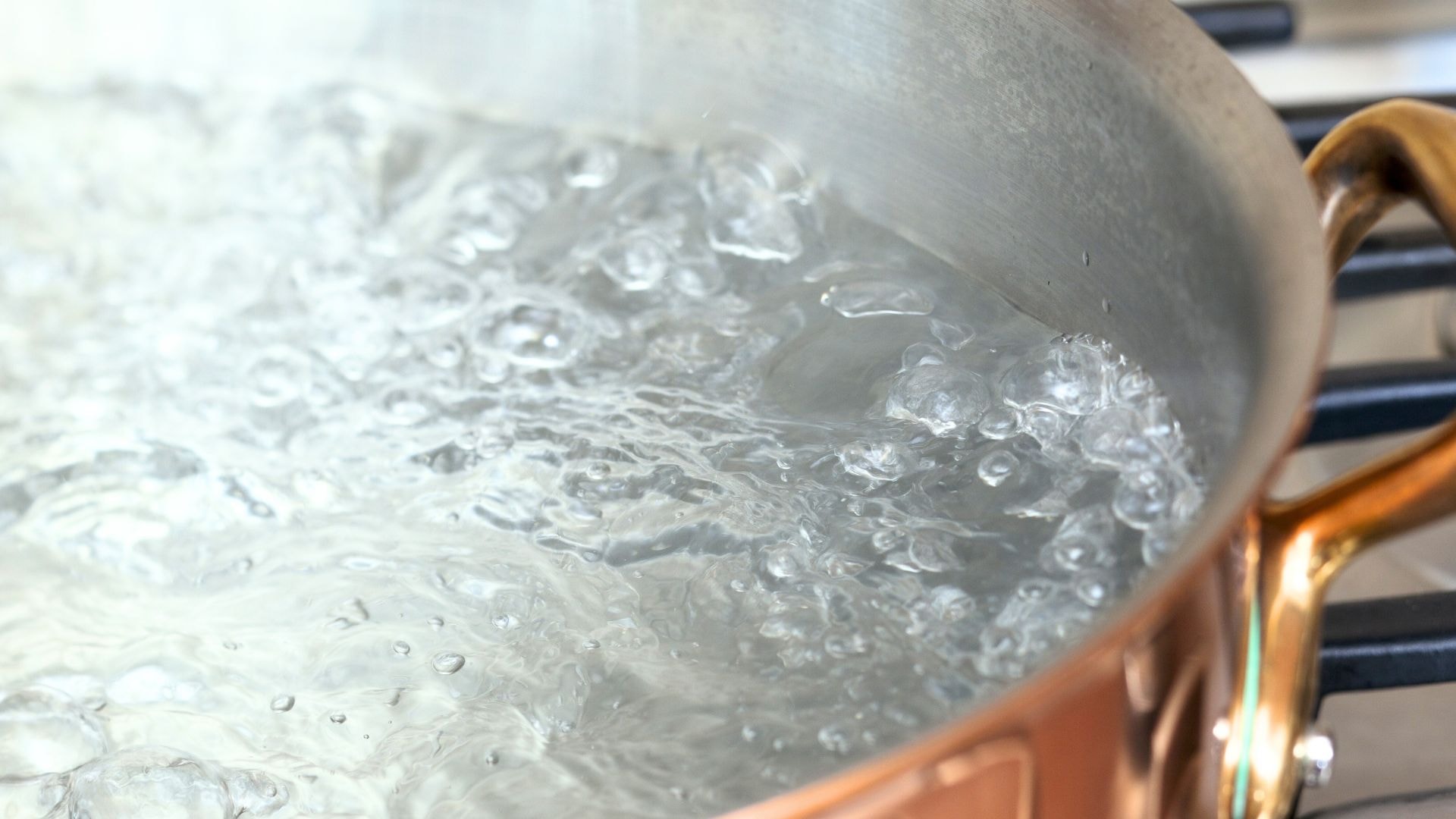
What does boiling look likewater?
During the boiling process, we observe the formation of bubbles of steam that rise to the surface. This is the result of water molecules gaining kinetic energy as the temperature increases, leading to their transformation into a gaseous state.
It's worth remembering: Hot water will always boil faster than cold, which is important when cooking.
An interesting fact is, that there is a myth that cold water boils faster than hot water. In reality, it is the opposite. When we heat water at a lower temperature, we need to supply it with more energy to reach the boiling point. This means that hot water will always boil faster than cold water.
Different methods of boiling water
Boiling water can be done in many ways. This method affects the efficiency, time, and safety of the entire process.
- Induction cooking: It is an efficient and fast method. Induction works by generating a magnetic field that directly heats the cookware. This allows us to heat water faster than on traditional stoves, which translates to savings in time and energy.
- Microwave cooking: Boiling water in the microwave is possible, but it is necessary toexercise caution. Water can superheat above its boiling point without visible signs, which can lead to rapid boiling when removed from the microwave. To avoid this, it's advisable to place a wooden stick or spoon in the container.
- Cooking at high altitudes: In high altitudes, where the pressure is lower, water begins to boil at a lower temperature. This means that dishes may require longer cooking times or special techniques.culinary.
Boiling and water pollution
Boiling water is a proven disinfection method, but it is not a universal solution for all contaminants.
- Chlor: Yes, boiling water removes chlorine as it evaporates in the form of gas. This makes the water have a less intense smell, which improves its taste.
- Fluoride: No, fluoride is an element that does not evaporate during boiling. To remove it, special filters are necessary, such as reverse osmosis.
- Bacteria and viruses: Boiling water for at least one minute effectively kills most pathogenic microorganisms, including E. coli bacteria andenterococci, making the water safe to drink.
- Chemical contaminants: Unfortunately, boiling does not remove chemical contaminants such as pesticides, heavy metals, or nitrates. In some cases (multiple boiling), it may even increase their concentration.
Boiling water in practice
Water for
Boiling water for infants is recommended, especially if we are using tap water. This eliminates potential bacteria and contaminants. Specially prepared bottled waters that are sterilized and have the appropriate mineral composition can also be used without the need for boiling.
Water for cooking dishes
Choosing high-quality water for cooking is important for the taste of the dishesand beverages. Water with a high mineral content can affect the texture and flavor of dishes. For preparing meals, it is best to use filtered water or good quality bottled water. It is advisable to avoid tap water, which may contain undesirable chemicals.
It is worth remembering: Boiling water is an effective way to disinfect, but it does not remove chemical contaminants or excessminerals.
Boiling water twice
Repeatedly boiling water is safe in most cases. However, for preparing beverages such as tea, it is recommended to use fresh water, as repeated boiling may slightly increase the concentration of certain substances. Additionally, water that has been boiled multiple times may have a changed taste, which can affect the quality of drinks and dishes.
Boiled Water - Summary
In this article, you learned when and why water boils, what factors affect the boiling temperature, and what different cooking methods exist. Understanding the boiling process and temperature is crucial for effectively and safely preparing dishes and beverages. While boiling is a great way to disinfect, remember that other methods are necessary to remove chemical contaminants.such as professional filtration systems.
Frequently Asked Questions (FAQ)
At what temperature does water boil?
Standardly at 100 degrees Celsius at sea level. However, the boiling point of water decreases with altitude and lower atmospheric pressure.
Does cold water boil faster than hot water?
Yes, it does. In fact, hot water always boils faster because it requires less energy to reach the boiling point.
Does boiling water remove chlorine and fluoride?
Boiling removes chlorine, which evaporates from the water. However, it does not remove fluoride or other elements that require specialized filtration.
Does boiling kill all bacteria?
Boiling water for at least one minute effectively eliminates most pathogenic microorganisms, including E. coli and enterococci, making it safe for consumption.
Is boiling water safe for infants?
Yes, boiling water for infants is recommended to eliminate potential bacteria. You can also use specially sterilized bottled waters that do not requirecooking.
Can water be boiled twice?
In most cases, it is safe; however, it is recommended to use fresh water for preparing tea or coffee. Repeated boiling may lead to a slight increase in the concentration of certain substances.
Author: Maciej Waliduda — specialist inwater treatment, with many years of experience in water quality analysis and filtration technology.
