
- There are no more items in your cart
- Shipping
- Total 0.00 zł



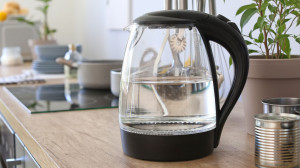
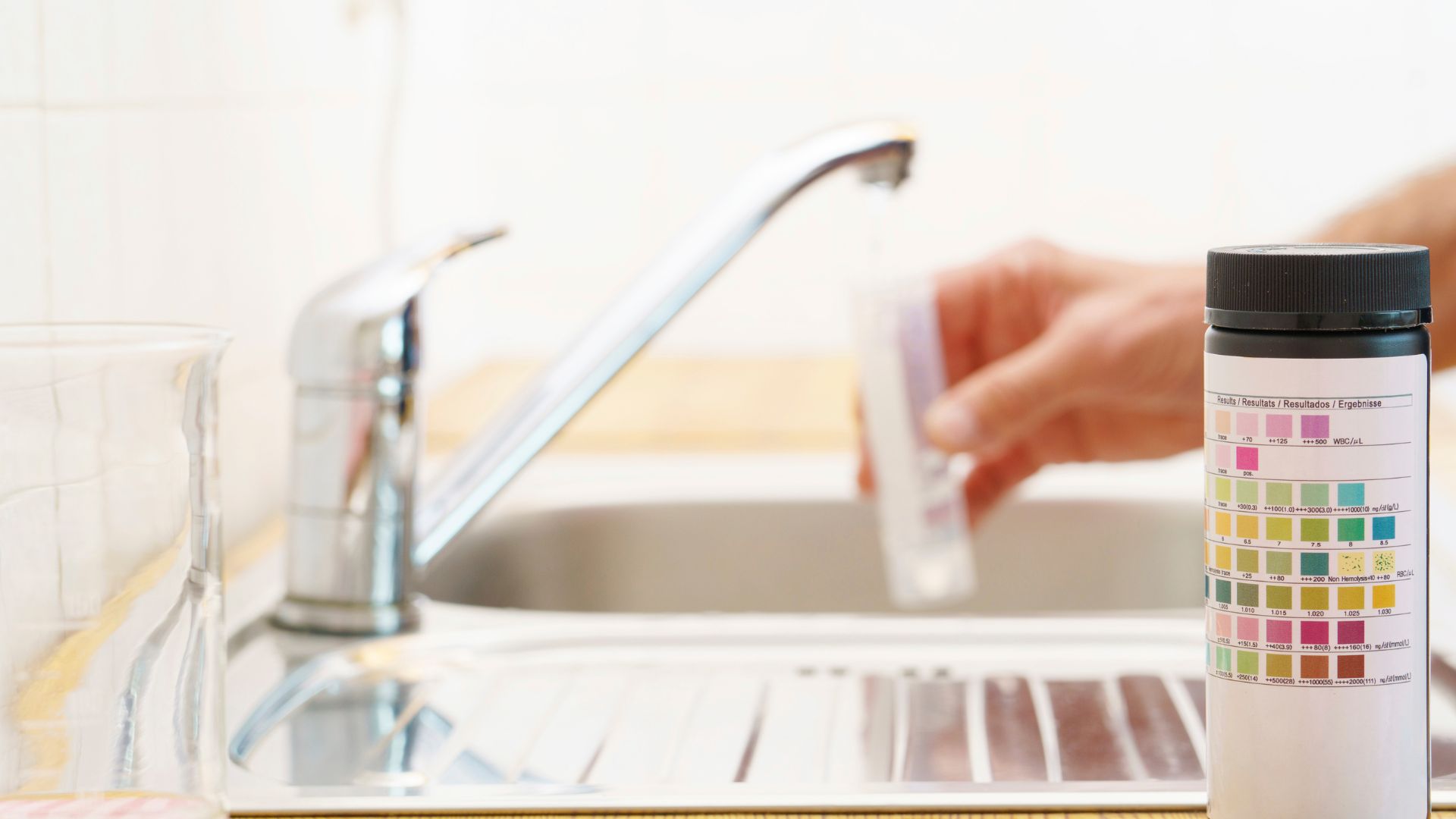
Water Hardness - How to check what the measurement units are?
Water hardness is a key parameter affecting our daily lives, from health to the functioning of household appliances. In this article, you will learn how to check the hardness of water at home, what the measurement units are, and how to interpret the results. You will also discover various methods of water softening. We invite you to read on to better understand and manage the quality of water in your home!
Last updated: August 26, 2025
In this article, you will learn…
- What is water hardness and how do calcium and magnesium ions affect it?
- What is water hardness: basic information?
- Why is it worth checking water hardness?
- How to check water hardness inhome?
- How to Check Water Hardness at Home with Soap?
- What are the units of measurement for water hardness and the water hardness scale?
- How to interpret test results?
- How to soften hard water?
- What are the standardswater hardness and ranges of water hardness?
- What does the Summary consist of?
What is water hardness and how do calcium and magnesium ions affect it?
Water hardness is one of its key properties that affects many aspects of our daily lives. What does water hardness depend on? Hard water is water that contains a high concentration ofof calcium and magnesium ions. These minerals are essential for health, but they can also cause the formation of scale in household appliances.
Water hardness: Basic information
Water hardness is divided into two types: carbonate hardness and non-carbonate hardness. Carbonate hardness is the part of hardness caused by the presence of magnesium and calcium bicarbonates. Non-carbonate hardness results from the presence of other salts, such aslike chlorides and nitrates. The ideal water hardness according to the World Health Organization (WHO) and the German classification of water hardness is crucial for health and the protection of household appliances.
Why is it worth checking water hardness?
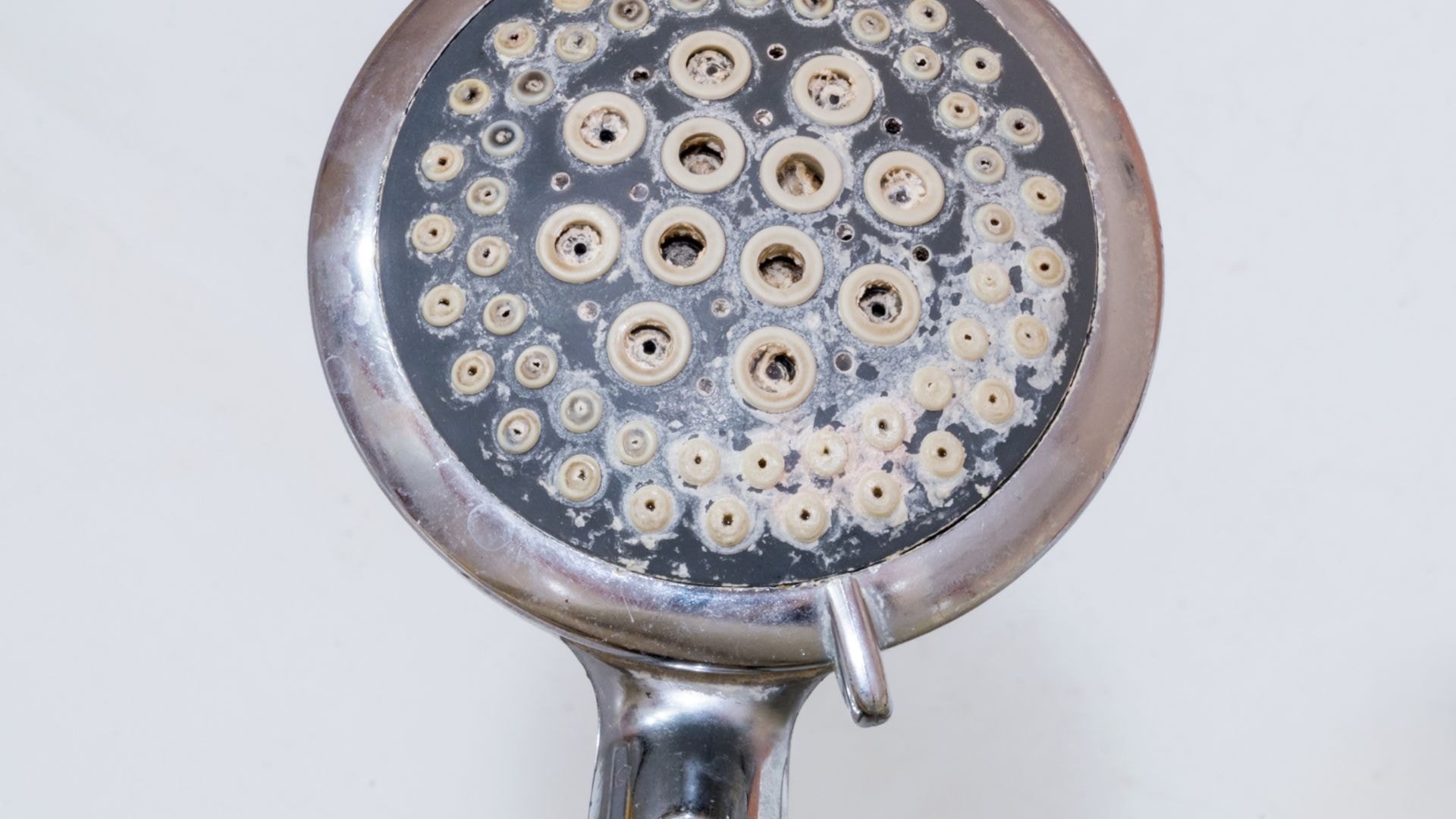
Understanding water hardness is essential for both health and the protection of our household appliances. Hard water can lead to skin problems, such as dryness andirritations, as well as to hair damage. Additionally, high water hardness contributes to the formation of limescale in appliances such as washing machines, dishwashers, or coffee makers, which can lead to their failure.
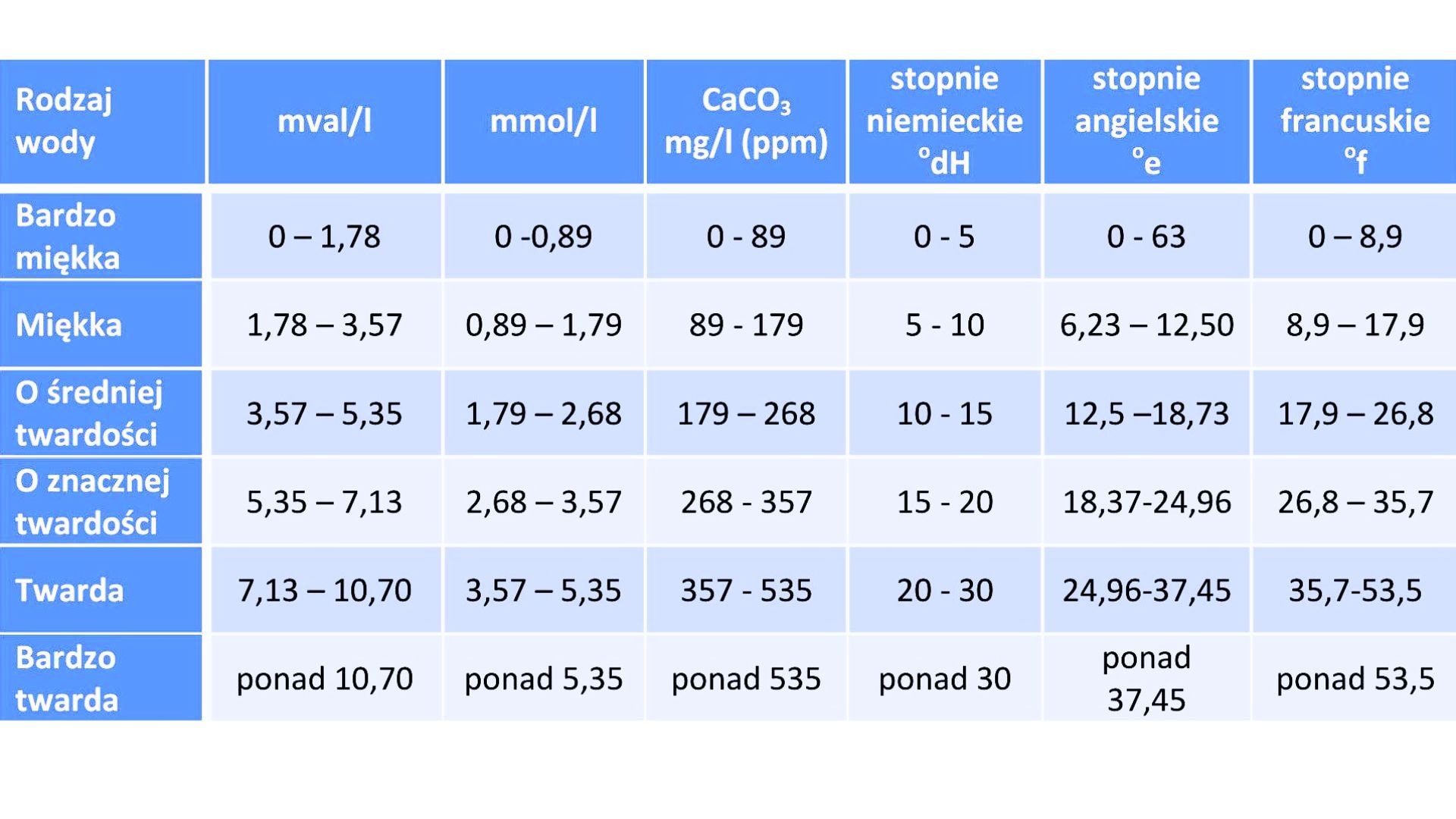
How to check water hardness at home?
There are several simple methods to test water hardness at home:
- Test strips - They areeasily available in stores and allow for quick testing of water hardness. Simply dip the strip in water and compare the color with the included water hardness scale.
- Drop tests - These tests require adding a few drops of reagent to a water sample. A color change will indicate the degree of water hardness.
- Professional laboratory tests - When we suspect that we have a hard water problemwater, it is worth commissioning a test in a specialized laboratory. The results of such tests are the most precise and can determine the exact amount of calcium and magnesium ions in the water.
- Information from the local water supply - Many larger cities have such information on the websites of local water utilities, type "Water hardness - City" and you should find the information you need!
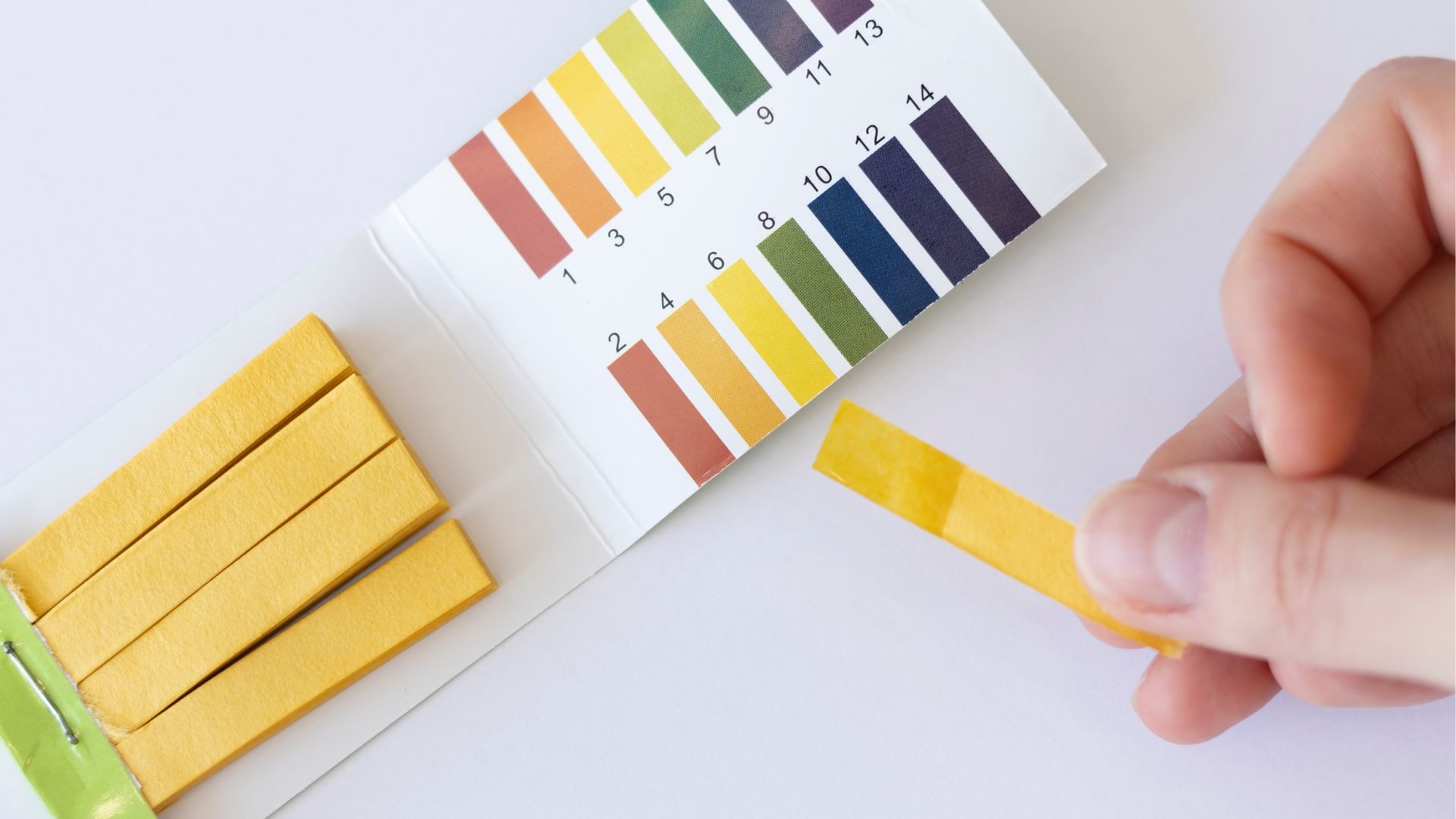
How to Check Water Hardness at Home with Soap?
If you're wondering what the water hardness is in your home, there is a simple home method to check it using soap. This is a method that can provide quick and sufficiently accurate results to determine whether you are dealing with increased water hardness.
It's worth remembering: Water hardness is important not only for health, butalso for the efficiency and durability of household appliances.
To conduct the test, you will need:
- A transparent bottle with a cap (preferably with a capacity of about 1 liter).
- Clean, distilled water (for comparison).
- Liquid soap (unscented and without additives).
Step-by-step instructions:
- Fill the bottle halfway with tap water.
- Add 10 drops of liquid soap.
- Screw the bottle and shake vigorously for about 30 seconds.
- Set the bottle aside for a moment and observe what happens.
If after shaking the water in The bottle will create a lot of foam, and the water will remain clear; the hardness level of the water in your home is low. This means you are dealing with soft water. However, if the water is cloudy and does not foam well with soap, it indicates increased water hardness.
Additional tips:
- For comparison, perform the same test with distilled water. Distilled water should easily create foam.
- To obtain more precise results, it is worth using a professional tool such as a water hardness tester. This will allow you to accurately determine the hardness level of the water in your home.
This simple method can be helpful in daily life and allows for a quick check to see if your tap water has the appropriate quality. It is advisable to regularly monitor water hardness to avoid problems related toof CaCO3 per liter) and other effects of increased water hardness.
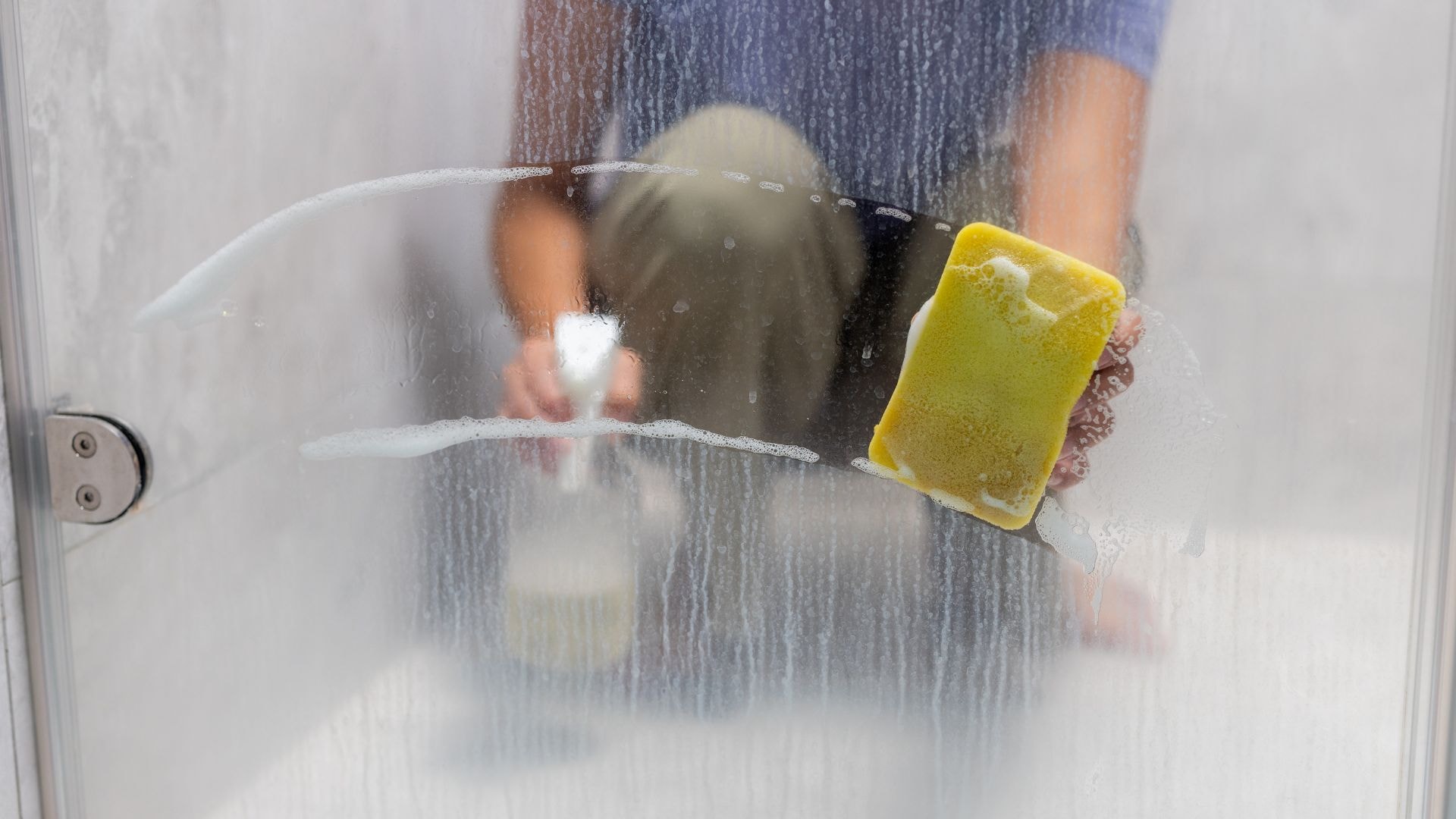
Units of measurement for water hardness and the water hardness scale
Water hardness is measured in various units, which can make interpretation difficult, and water hardness scales, such as the German and French scales, are often used. Here are the most commonly encountered units:
- mg CaCO3/l (milligrams of CaCO3 per liter) and other effects of increased water hardness.per liter of calcium carbonate) - This is the most commonly used unit that specifies the amount of calcium salts in water.
- ppm (parts per million) - A unit used to denote water hardness in some countries.
- German degree °dH (degrees German) - One of the most popular scales in Europe, widely used in many countries. Water hardness valuesexpressed in German degrees are understandable and practical for everyday use, especially in households. The German scale includes various levels of hardness that can help determine whether water is soft, moderately hard, hard, or very hard. For example, water considered "moderately hard" on this scale falls within the range of 8-14 German degrees. These values are commonly used to assess water quality and can influence decisions regarding water treatment and maintenance.household devices. In many regions, regular monitoring of water in German degrees is crucial for maintaining optimal water quality.
- French degree °fH - French degrees are mainly used in France.
- English degree °eH (English degrees) - English degrees are mainly used in the United Kingdom.
- mmol/l (millimoles per liter) - Used in chemical sciences for precise determination of hardness.
How to interpret test results?
Water hardness is divided into several categories depending on the amount of calcium and magnesium ions:
- Very soft water - < 0.7 mmol/l (0-4 °dH)
- Soft water - 0.7-1.5 mmol/l (4-8 °dH)
- Medium hard water - 1.5-2.5 mmol/l (8-14 °dH)
- Hard water - 2.5-3.8 mmol/l (14-21 °dH)
- Very hard water - > 3.8 mmol/l (> 21 °dH)
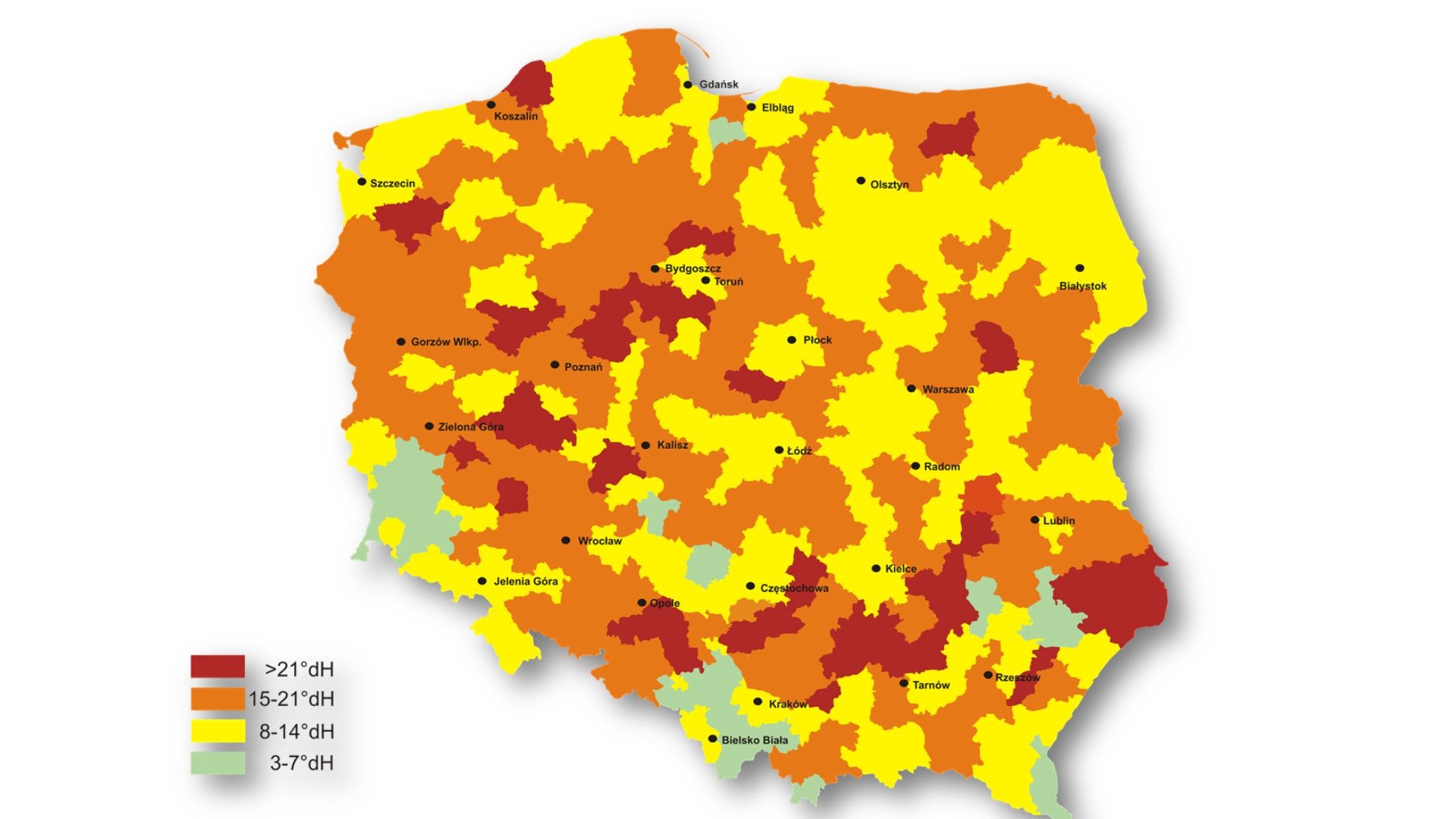
It is worth remembering thatWater hardness in Poland can vary significantly depending on the region. The water hardness map of Poland shows that some areas have very hard water, while others may enjoy soft water. The recommended water hardness according to the World Health Organization (WHO) is 50-500 mg CaCO3/l, with an optimal level of 3-6 °dH to avoid problems with limescale buildup.
It is worth remembering: Regularly checking water hardnesshelps avoid costly repairs of household appliances.
How to soften hard water?
Water softening can be achieved in several ways:
- Homemade methods of softening water:
- Boiling water - This process causes calcium salts to precipitate, which reduces water hardness. However, this is a short-term method.
- Adding salt - Adding salt to water can help reduce its hardness, but it is not a recommended method for drinking water.
- Professional water softeners:
- Water softeners work on the principle of ion exchange. Calcium and magnesium ions are replaced by sodium ions. This is an effective way to obtain soft water.
- There are many devices available on the market that can automatically soften water throughout the house, which is an ideal solution in areas where water hardness is very high.
Water hardness standards and ranges
Water hardness standards according to the World Health Organization (WHO) are 50-500 mg CaCO3/l, and the optimal level is 3-6 °dH, toto avoid problems with limescale buildup. In Poland, water hardness varies depending on the region. The water hardness in Poland's largest cities is:
- Water hardness in Warsaw: 16-18 °dH
- Water hardness in Krakow: 14-16 °dH
- Water hardness in Lodz: 17-19 °dH
- Water hardness in Wroclaw: 14-16 °dH
- Hardnesswater hardness in Poznań: 17-19 °dH
- Water hardness in Gdańsk: 10-12 °dH
- Water hardness in Szczecin: 13-15 °dH
- Water hardness in Bydgoszcz: 14-16 °dH
- Water hardness in Lublin: 15-17 °dH
- Water hardness in Katowice: 18-20 °dH
Water hardness map in In Poland.
Summary
Monitoring water hardness is crucial for the health and longevity of household appliances. By knowing the water hardness in your home, you can take appropriate steps to minimize the negative effects of hard water. Regular testing and the use of appropriate water softening methods can significantly improve quality of life.
Frequently Asked Questions (FAQ)
Is hard water safe to drink?
Yes, hard water is safe to drink. In fact, the minerals found in hard water can be beneficial for health. However, for individuals with sensitive skin and hair, soft water may be a better option.
How often should water hardness be checked?
It is recommended, to check the hardness of water at least once a year. It is also worth testing the hardness of water after any major changes in the plumbing system.
What are the costs of professional water hardness tests?
Costs may vary depending on the laboratory, but typically range from 100 to 300 zlotys.
Are water softeners expensive to maintain?
Maintenance costsThe costs of water softeners depend on the model and technology. Salt replacement and servicing of the device are the main operating costs. Regular maintenance ensures their long-lasting performance.
What are the effects of hard water on health?
Hard water can lead to skin problems, irritations, and affect the condition of hair. It is worth monitoring its hardness to avoid these negative effects.
What areWhat are the most effective methods of water softening?
The most effective methods of water softening are ion exchange softeners and the use of carbon filters. Both methods effectively reduce water hardness.
Author: Maciej Waliduda — an expert in water quality and water treatment technology, with many years of experience.experience in the industry. It helps clients choose the right solutions for their needs.
