
- There are no more items in your cart
- Shipping
- Total 0.00 zł



Methods of water disinfection
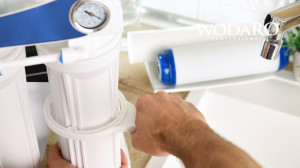
We use water every day – we drink it, use it while cooking, and during washing. Therefore, a key issue is that it meets the appropriate cleanliness standards. For this purpose, disinfection is essential, which can be carried out in several ways. In this article, we will present various methods of water disinfection, their advantages and disadvantages, and also suggest how to choose the best method for your home or business.
Last updated: 26August 2025
In this article you will learn…
- What is water disinfection?
- Why is it worth disinfecting water?
- What are the methods of water disinfection?
- What does chlorination involve?water?
- What is Water Ozonation?
- What is Ultrafiltration of Water?
- What is UV Irradiation?
- What are Thermal Methods?
- What are Other Methods?supportive?
- How to choose the best method for your home or business?
- What are the most common mistakes during disinfection?
- What does the Summary consist of?
What is water disinfection
Water disinfection, also known aswater disinfection is the process of removing microorganisms (bacteria, viruses, fungi, protozoa) and their dormant forms, so that the liquid is safe and suitable for drinking. In practice, this means reducing the number of pathogens to a level that does not pose a threat to human health.
Key thought: Water disinfection has one main goal – to ensure your safety and that of yourto the family (or customers) water free from pathogenic microorganisms.
Why it is worth disinfecting water
- Health safety – even seemingly clean water from your own source may contain E. coli bacteria or intestinal viruses.
- Compliance with legal standards – in Poland, the quality of drinking water is regulated by the RegulationMinister of Health; entrepreneurs must demonstrate that the water meets microbiological standards.
- Protection of installations – some microorganisms form biofilm, which increases pipe corrosion and worsens the taste of water.
- Cost savings – regular disinfection can prevent more expensive repairs related to damage to the water system.
- Improvement of qualitywater – effective disinfection affects the clarity and taste of water, which is important for its acceptance by users.
Water disinfection methods
The choice of method depends on the composition of the water, the scale of consumption and the budget. Below you will find the most popular water disinfection methods along with a brief analysis of the pros anddisadvantages.
Water chlorination
Chlorination involves dosing water with chlorine compounds (e.g., sodium hypochlorite) or gaseous chlorine. The operational dose in household installations is usually 0.3–0.5 mg Cl₂/L.
Advantages
- Low cost per liter of treated waterwater.
- Effectiveness against most bacteria and viruses.
- Leaves residual protection – prevents secondary contamination in pipes.
Disadvantages
- May worsen taste and smell (the so-called "pool" odor).
- Forms by-products(THM), if organic matter is present in the water.
Key thought: Chlorination is cheap and effective, but it requires monitoring chlorine levels to avoid excessive taste and by-products.
It's worth remembering: Ozone (O₃) is a strong oxidizer that breaks down to oxygen in a few minutes.
Ozonation of Water
Ozone (O₃) is a strong oxidizer that decomposes into oxygen within minutes. The doses used in households range from 0.5 to 2 g O₃/h.
Advantages
- Neutral taste – ozone disappears without a trace.
- It kills bacteria, viruses, Giardia cysts, andCryptosporidium faster than chlorine.
- Reduces hydrogen sulfide odors and color caused by iron.
Disadvantages
- No residual effect – does not protect against recontamination.
- Higher investment cost of equipment.
- Requires good ventilation, as ozone in the air irritates the airways.breathable.
Key thought: Ozonation is a fast and "clean" physico-chemical method, ideal where the taste of water matters, but it needs to be supplemented with a final filter or UV lamp.
Water ultrafiltration
In ultrafiltration, water passes through a membrane with pores 0.01–0.1µm. Bacteria and larger viruses are retained, as well as suspensions and microplastics.
Advantages
- Without the use of chemicals – no aftertaste and by-products.
- Removes cloudiness and improves clarity.
- Modular design = easy system expansion.
Disadvantages
- Does not eliminate dissolved heavy metals or ions.
- Requires periodic flushing and membrane replacement.
Key thought: Ultrafiltration is a good "gateway" for biological particles, but for full biological-chemical protection, it is worth combining it with activated carbon orUV.
UV irradiation
UV lamp emits light at a wavelength of 254 nm (UVC range), which deactivates the DNA of microorganisms.
Advantages
- Zero chemicals – no impact on taste and smell.
- Effectiveeven on chlor-resistant virus strains.
- Low energy footprint – home lamps 10–30 W.
Disadvantages
- Works only at the installation site – no residual protection.
- Requires clean, clear water (max. 1 NTU turbidity).
- The quartz cover needs to be cleaned regularly and replacedbulb (every 8-12 months).
Key thought: UV radiation is the "last line of defense" in filtration systems; it will take care of the biology as long as the water is well pre-treated.
It's worth remembering: Yes, as long as the free chlorine concentration remains within 0.1–0.3 mg/L.
Methodsthermal
The simplest form of water disinfection – boiling for 1 minute (3 minutes above 1500 m above sea level) kills most microorganisms.
Pros
- Available in any conditions.
- No chemicals.
Cons
- High energy cost at large volumes.
- Does not remove chemical contaminants or heavy metals.
Key thought: Boiling is an emergency method; great for camping, but not cost-effective as a daily procedure at home.
Other supporting methods
- Activated carbon filtration – reduces chlorine and improves taste, but does not disinfect on its own.
- Chlorine dioxide – an alternative to chlorine with lower THM content, often found in travel tablets.
- Distillation – removes practically everything, but is energy- and time-consuming.
Key takeaway: The above methods should be combined with the main disinfection techniques to obtain water that is not only biologically safe but also tasty.
How to choose the best method for your home or business
- Test the water – start with microbiological and chemical analysis.
- Determine consumption – a family of 4 has different needs than a café with a 200 L/day espresso machine.
- Calculate costs → TCO – include purchase, operation, service, and energy.
- Check local regulations – e.g., HACCP in gastronomy requires water quality documentation.
- Setmethods – often the best effect is achieved by combination (e.g., ultrafiltration + UV lamp).
- Monitor the effects – regular water testing after implementing the system will help assess its effectiveness.
Most common mistakes during disinfection
- Lack of regular maintenance (replacementcartridges, UV lamps).
- Incorrect chemical dosing – too much = bad taste, too little = lack of disinfection.
- Skipping water tests after installation changes (e.g., after renovation).
- Ignoring secondary contamination – a rusty tank or biofilm can undermine efforts.
- Non-compliance with manufacturer recommendations – improper handling of devices can lead to their damage.
Summary
Effective water disinfection is a combination of a well-chosen method, regular monitoring, and care for the entire installation. Regardless of whether you choose chlorination, ozonation, ultrafiltration, or UV lamp, remember towater testing and equipment maintenance. An appropriate approach to water disinfection will not only ensure safety but also improve its quality and taste.
Frequently Asked Questions (FAQ)
How often should I test water from my own well?
At least once a year for microbiology + a full chemical analysis every 2-3 years.
Is chlorinationis safe for infants?
Yes, as long as the free chlorine concentration remains within the range of 0.1–0.3 mg/L.
Does UV light remove heavy metals?
No, UV radiation disinfects biologically but does not affect chemical compounds.
Can I combine ozonation with activated carbon?
Yes, ozone oxidizes pollutants, and activated carbonremoves their residues and improves taste.
How much energy does an average UV lamp consume?
Home units of 10–30 W operate continuously, which translates to 7–22 kWh per month.
Does ultrafiltration remove microplastics?
Yes, the membrane pores <0,1 µm skutecznie zatrzymują cząstki mikroplastiku.
How to store chlorine dioxide tablets?
In a dry,store in a cool place, away from light; use within 1 year after opening.
Does boiling water remove nitrates?
No, boiling does not reduce the concentration of nitrates – a reverse osmosis filter is needed.
What is the residual chlorine effect?
It is a small concentration of free chlorine that remains in the network and prevents recontamination.
WhereI need to know that my method works?
Regular microbiological testing and measurement of indicators (e.g., free chlorine) confirm the effectiveness of disinfection.
Author: Maciej Waliduda — a specialist in water treatment, with many years of experience in the industry. He helps in selecting appropriate solutions for individual clients andbusiness.
