Regular replacement of filters, cartridges, and media determines the quality of water, the durability of devices, and the safety of household members. Below you will find a practical, simple schedule – for reverse osmosis, inline filters, water softeners, iron/manganese removers, multifunctional stations, jugs, coffee machines.for coffee, refrigerators with a dispenser and UV lamps. We indicate signs of wear, replacement steps, and effect monitoring to ensure that your system operates as it should.
Table of contents
- Signs of wear and replacement guidelines
- Reverse osmosis (RO)
- Inline filters (POE/BigBlue)
- Water softeners (cation exchange resin)
- Deionizers and manganese removers (bedscatalytic)
- Multifunctional water treatment stations (e.g. Ecomix)
- Pitcher filters
- Coffee machine water filters
- Filters in refrigerators with dispensers
- UV lamps – lamp replacement andelements
- Annual schedule – quick reference
- Summary
In this article you will learn:
- How often to replace water filters at home – for the most popular systems
- How to recognizeconsumption after a drop in flow, taste/smell, TDS, or device alarms
- How often to replace the string filter for water and carbon filter for water in practice
- How to service the softener, iron remover, and multifunction station (Ecomix)
- How to set up a schedule for replacementsfor the whole year, so as not to miss deadlines
Signs of wear and replacement rules
Instead of "waiting for it to stop working," it's worth reacting to the first signs: a noticeable drop in flow or pressure, deterioration in taste/smell, an increase in TDS behind the RO membrane, discoloration of the mechanical filter, an alarm from the coffee machine, or a reminder from the UV system. When determining how often to replace the water filter at home, let's keepof short intervals set by the manufacturer – and in more difficult conditions (dirty well water, high hardness, presence of iron/manganese) let’s shorten them.
- Rule 1: replace according to instructions (months/liters) – this is a condition for maintaining effectiveness and warranty.
- Rule 2: monitor symptomatically – TDS behind the RO membrane, pressure drops, taste/smell, filter alarms in coffee machines.
- Rule 3: use original/brand cartridges and UV lamps – it's a matter of quality, safety, and certification (NSF/ANSI).
Key thought: the schedule is the starting point. Local conditions (turbidity, hardness, Fe/Mn, consumption) can shorten the actual operating time of cartridges and media – respond to the symptoms.
Reverse osmosis (RO)
Pre-filters (mechanical and carbon)
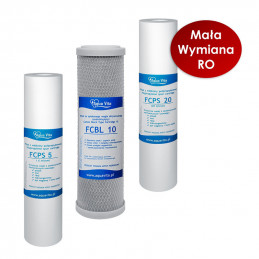
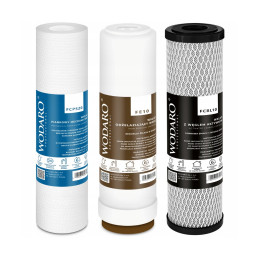
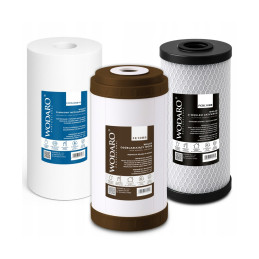
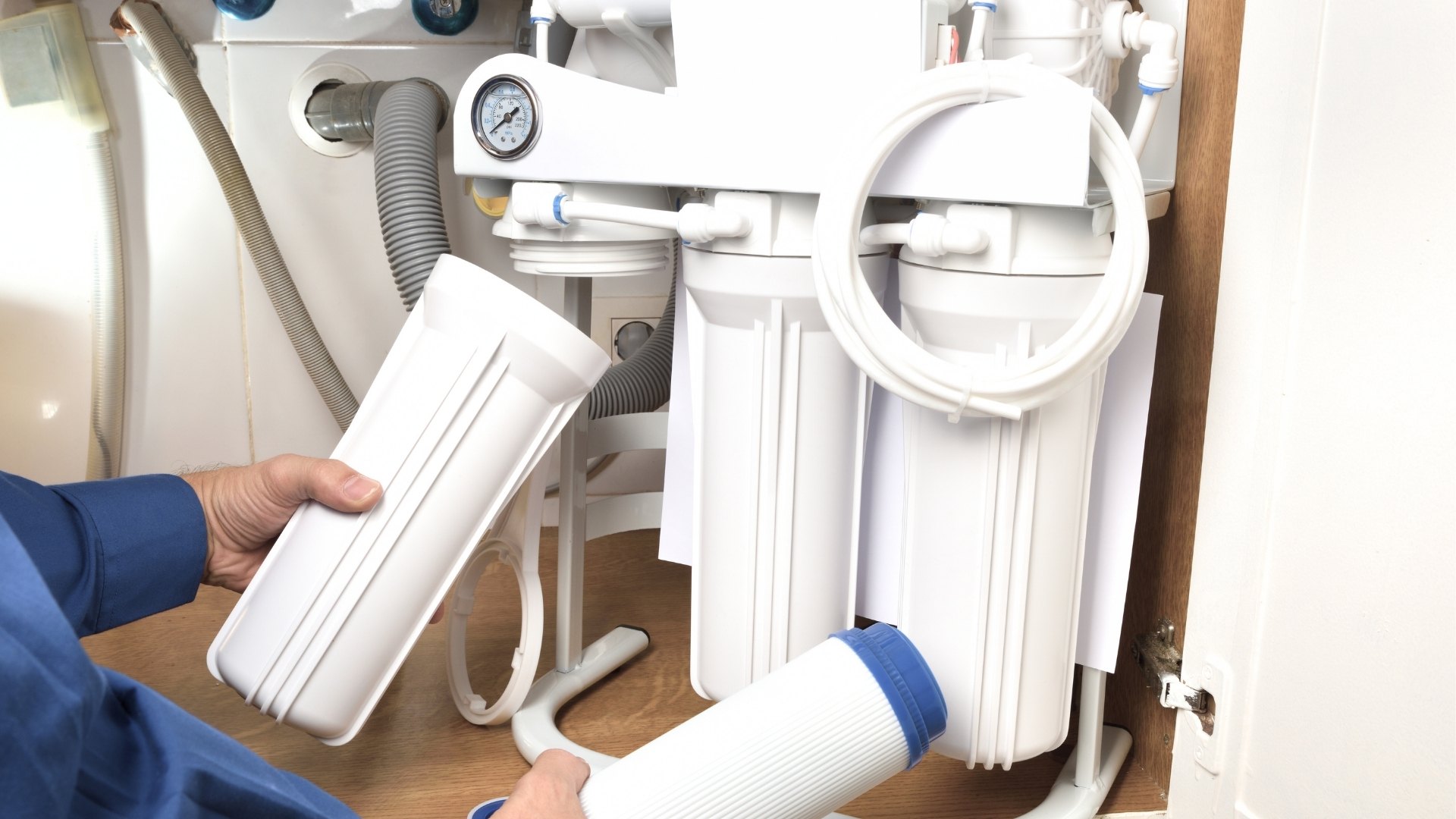
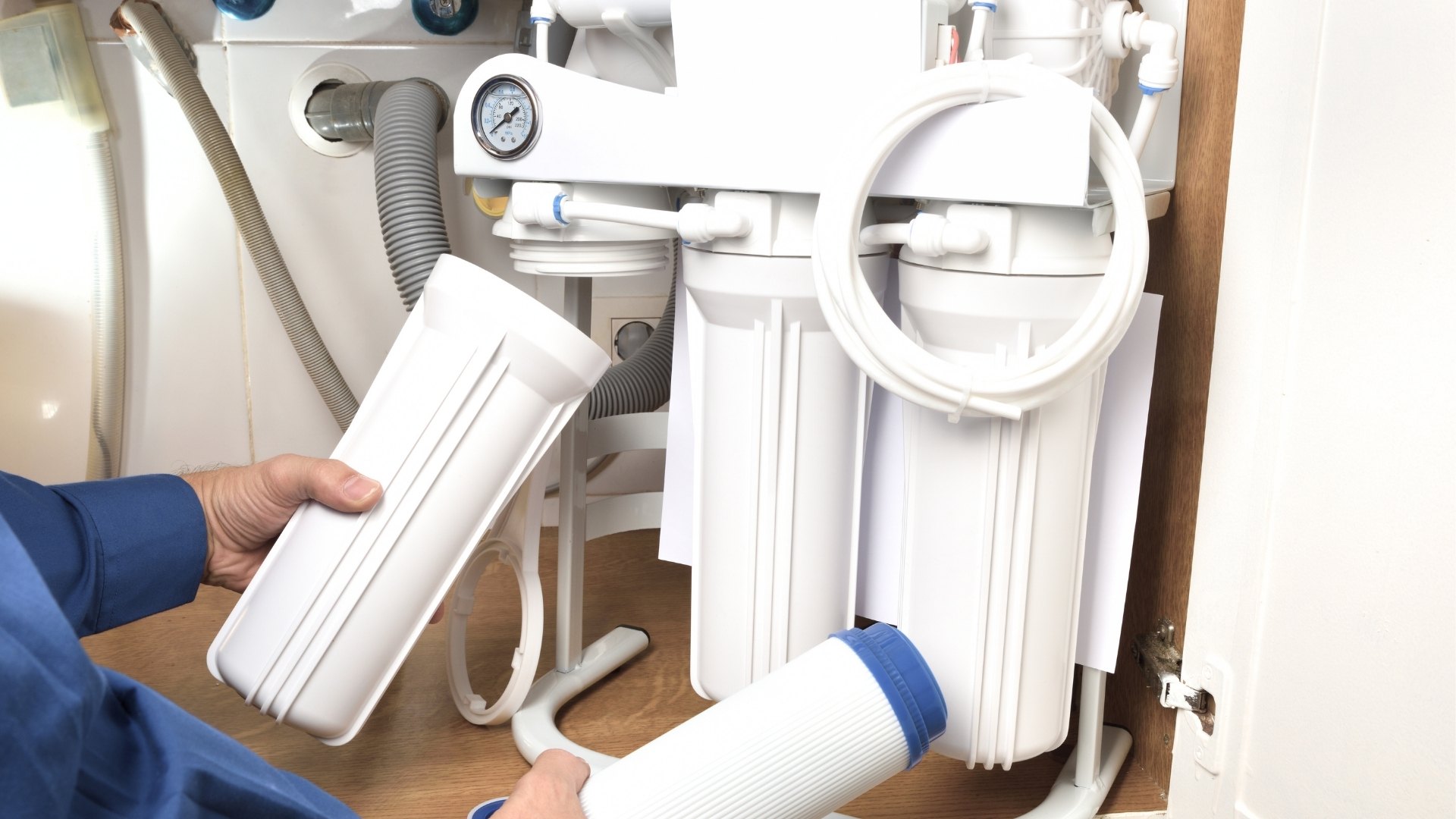
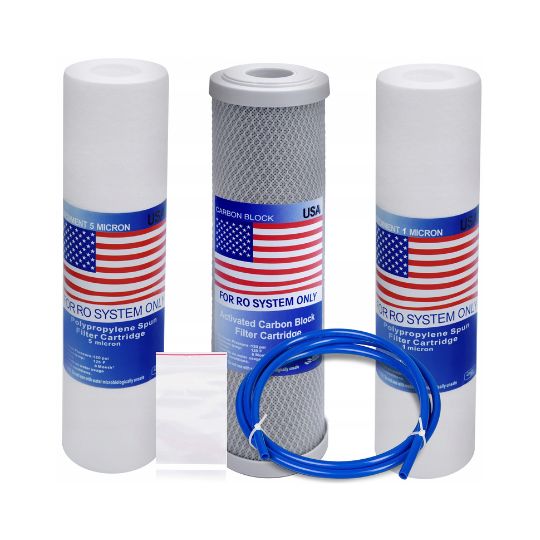
They are typically replaced every 6 months (sometimes 3–6 months with "dirty" water or high usage). This applies to string/melt-blown filters (e.g., 5–20 µm) and carbon filters (block/granular). Practical rule: if there is significant contamination visible in the transparent housing or if the flow has decreased – it's time toreplacement.
- String filter for water – how often to replace: usually every 3–6 months; with high turbidity even every 1–3 months.
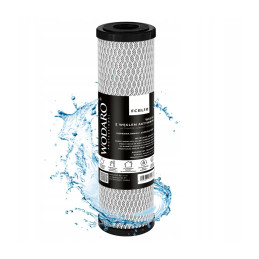
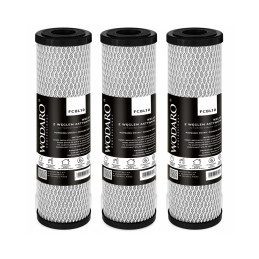
- Carbon filter for water – how often to replace: typically every 6 months; check for taste/smell and pressure drops.
Pre-filters for reverse osmosis
RO Membrane – when to replace
The lifespan of an RO membrane is usually 2–5 years. The timing depends on the quality of the feed water, proper operation (flushing, absence of chlorine), and actual usage. Service practice: replace when the TDS of the permeate rises and remains clearly above typical values for the given system or when performance declines.
- Check TDS: if values are rising despite fresh prefilters – the membrane may be at the end of its life.
- Take care of prefilters – they extend the life of the membrane and stabilize parameters.
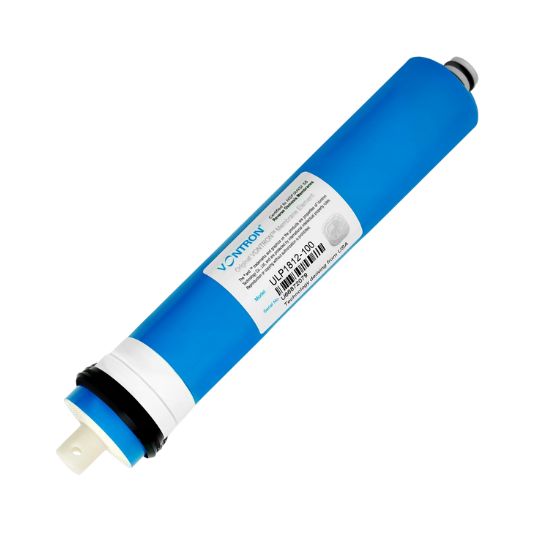
Osmotic membranes for reverse osmosis systems
Post-filters, mineralizers, ionizers
“Flavor” and finishing elements (linear carbon, mineralizer, ionizing/REDOX cartridge) should be replaced every 12 months. For tankless systems (e.g., RO600/RO800/RO1400) – post-filters are also typically every 6–12 months, and membranes every 2–3 years.
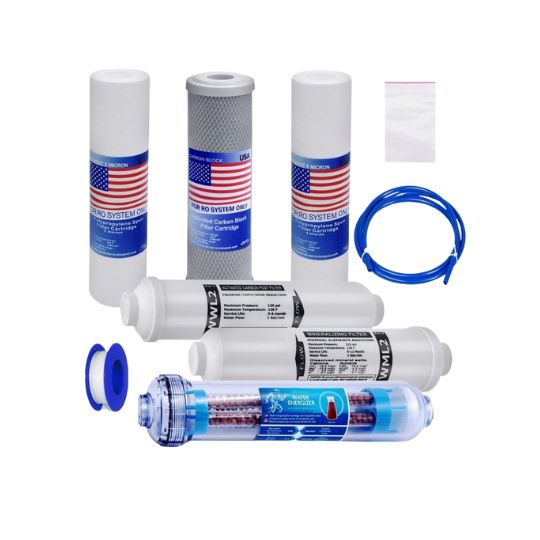
Reverse osmosis filters, annual sets RO5, RO6, RO7, RO8, RO9, RO10
Quality control: TDS, pressure, flow
Once a quarter, record the TDS of raw and produced water – compare trends, not individual readings. Also check the supply pressure (recommended 3–6 bar;below the manufacturer usually provides a pump) and the time to fill the tank/the faucet output.
It's worth remembering: in RO, the greatest impact on durability is regular replacement of prefilters and TDS control. Evaluate the membrane based on results, not just age.
Inline filters (standard/Big Blue flow)
This is the first "wall" for the entire house. We select 10″/20″ cartridges (regular or Big Blue 4.5″) according to the purpose: mechanical (1–50 µm), carbon (taste, odor, chlorine), and specialized media (softening, de-ironing, KDF/REDOX, anti-scalant). Intervals depend on water quality and consumption.
- How often to replace the string filter for water: usually every 1–6 months (the smaller the micron rating, the faster it clogs).
- Carbon water filter – how often to replace: typically every 3–12 months (check for taste/smell and pressure drop).
- Inspection with each replacement: clean the basin, apply silicone grease to the o-ring, check for leaks.
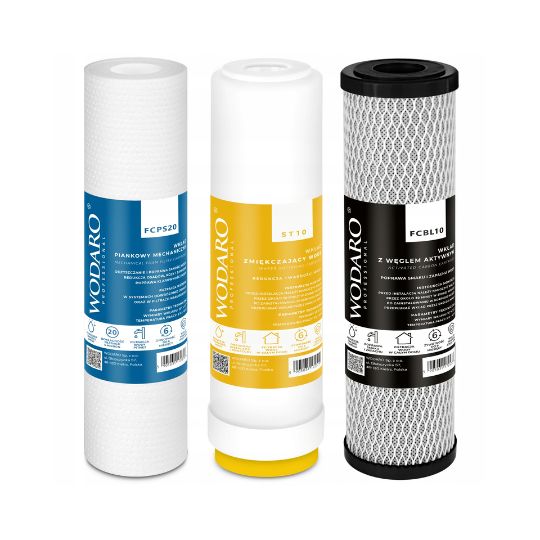
Cartridge filters
Specialized cartridges: softening, deionizing, KDF, antiscalant
"Media" cartridges in 10"/20" standard are used to correct specific parameters. Their effectiveness and lifespan depend on the concentrations in raw water and flow rate.
- Softening (cation exchange resin in a can) – for reducing hardness at a single point (e.g., dishwasher). Replacement is usually every 3–6 months or after depletion.ion exchange capacity; does not replace a whole-house softener.
- Iron/manganese remover in a can – catalytic media in a cartridge (e.g., mixtures with quartz/catalytic sand) for correcting slight exceedances; replacement according to the drop in effectiveness (often 3–6 months). For higher concentrations, a column with a bed and backwash is better.
- KDF/REDOX – copper-zinc granulesfor the reduction of chlorine, heavy metals, and hydrogen sulfide; they work with carbon or mechanics. Replacement approximately every 6–12 months or according to flow and symptoms.
- Antiscalant (polyphosphate) – inhibits scale formation; for dishwashers/flow heaters. Refill crystals, replace the cartridge when it dissolves/runs out (often every 3–6 months).
Selective cartridges/resins (nitratesNO3−)
To reduce nitrates, a selective anion exchanger is used in 10″/20″ canisters or in column stations. Cartridge filters require regular regeneration with brine or frequent replacement, while columns require standard regeneration just like water softeners.
- Regeneration of the nitrate cartridge in the canister: flush withsaline solution (2 tablespoons of non-iodized salt per 1 liter of water), then rinse with clean water and pour back into the can.
- Interval: monitor NO3− in treated water; regenerate according to the drop in effectiveness (often every 2–8 weeks for small cans). Lifespan of the medium in the column: approximately several years with properexploitation
Key thought: treat "media" inserts in 10"/20" housings as point correction. For higher concentrations of parameters, choose column with bed and backwash.
Water softeners (cationic resin)
The softener requires adding salt tobrine tank and periodic service. In a typical home, maintenance is quick and uncomplicated, and a properly selected and set water softener works for years.
- Regeneration salt: replenish every 2–3 weeks; the level should be at least halfway up the tank. A 25 kg bag usually lasts about 3 months.
- Pre-filter before the water softener: drain impurities into a bucket every 2–3 weeks (this takes 1 minute of work).
- Cationic resin (softening bed): exchange approximately after 5–10 years; signs of wear: increased hardness after regeneration despite correct settings.
It's worth remembering: regular salt replenishment and pre-filter rinsing are the most important maintenance tasks – simple, yet crucial for stable operation.

Ion exchange resin for water softener
Iron and manganese removers (catalytic media)
The selection and lifespan of the media depend on the concentrations of Fe/Mn/H2S, pH, oxidation, and hydraulics. Indicative ranges (atproper selection and service):
- Greensand/Greensand Plus: usually 5–10 years; requires regeneration/oxidation (e.g., KMnO4).
- Birm: approx. 4–8 years; requires dissolved oxygen, free from oily contaminants.
- Katalox/Catalox Light: often 5–10 years; prefers periodic oxidation/checkup.
Deteriorating color/smell, Parameter breakage and increasing pressure drop – these are signals for service or media replacement. Remember to perform backwashing at the proper flow rate (according to the media sheet).
Key thought: catalytic media lasts long, but only if operating conditions are met (pH, oxidation, proper backwash).
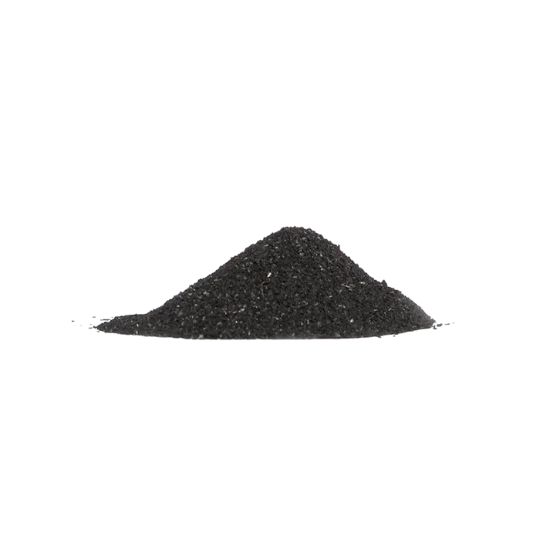
Media for water deionizers
Multifunctional treatment stations (e.g., Ecomix)
Multifunctional stations with a mixed media layer (e.g., Ecomix) combine several processes in one column: softening, reduction of iron and manganese, the absorption of organic substances and the reduction of ammonium ion. Regeneration is carried out with brine, and the backwash cycle is set on the control head.
- Operation: regularly replenish salt (as in a softener), check the correctness of backwashing; use a pre-filter before the station.
- Lifespan of the medium: approximately 5–10 years depending on water quality.and hydraulic load; a symptom of wear is a decrease in multi-parameter effectiveness.
- Selection: requires current water tests (hardness, Fe, Mn, ammonium, oxidizability, pH). Excessive turbidity and iron may require pre-filtration/oxidation.
It's worth remembering: the multifunctional station simplifies installation, but requires proper selection forthe composition of water and the correct settings of the head.
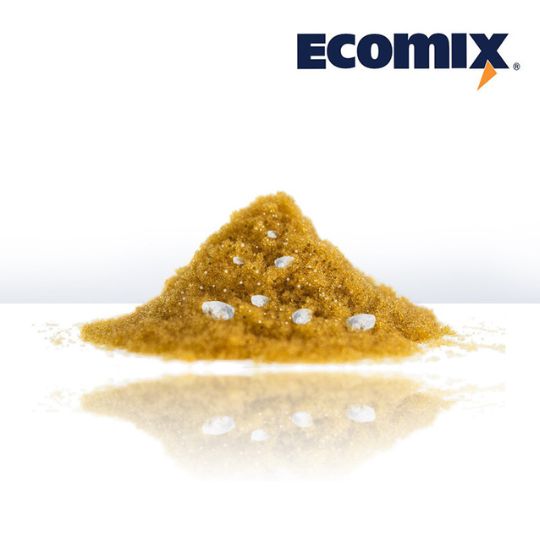
Replaceable media for multifunctional treatment stations
Filters in jugs
Jugs most often use carbon/composite cartridges. Manufacturers provide both the time (months) andcapacity (liters). In practice, many models are replaced every 2 months or after reaching the declared liters.
- Example: 2 months or 150–200 liters (standard variants); "extended" versions – up to 6 months.
- Set a reminder in the app/on the calendar – pitchers are the easiest to "miss"
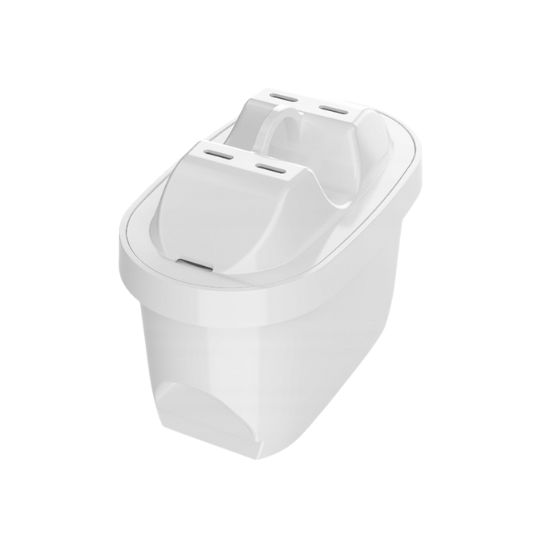
Replacement cartridges for bottles and pitchersfiltering
Water filters in coffee machines
Automatic machines count liters/cups and remind you to replace the filter. Replace the filter according to the prompts – it affects both taste and descaling.
- JURA (CLARIS): approximately 50 liters or 2 months (model dependent on version), the device reminds you to replace it.
- De’Longhi (DLS C002): usually every 2 months or about 50 liters.
- Philips/Saeco (AquaClean): up to about 625 cups per filter; regular replacement reduces the need for descaling to even 5000 cups.
It's worth remembering: the machine "knows" when – do not ignore the alerts. Hard watershortens the filter's lifespan and increases the frequency of descaling.
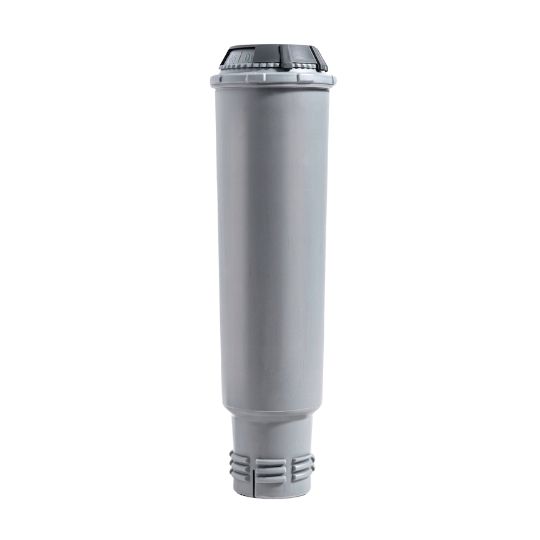
Filters and cartridges for coffee machines
Filters in refrigerators with dispensers
Typically every 6 months or according to the time/flow counter in the refrigerator. Symptoms of prematureof use: worse taste/smell, decrease in dispenser performance.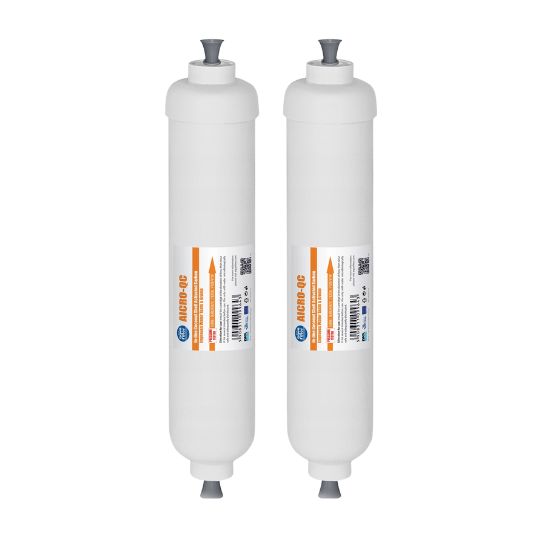
Filters and replacement cartridges for the refrigerator
UV Lamps – replacement of lamps and components
UV lamps should be replaced every 12 months regardless of "lighting" – their bactericidal intensity decreases. Clean the quartz with each replacement, and the sealsreplace according to the manufacturer's recommendations (often every 12–24 months).
- Lamp replacement: every 12 months (approx. 9000 hours of continuous operation).
- Quartz sleeve: clean with every service; replace approximately every 24 months or when it becomes cloudy.
Key thought: in UV power matters, not "brightness." Replace the lamponce a year, even if it shines visually.
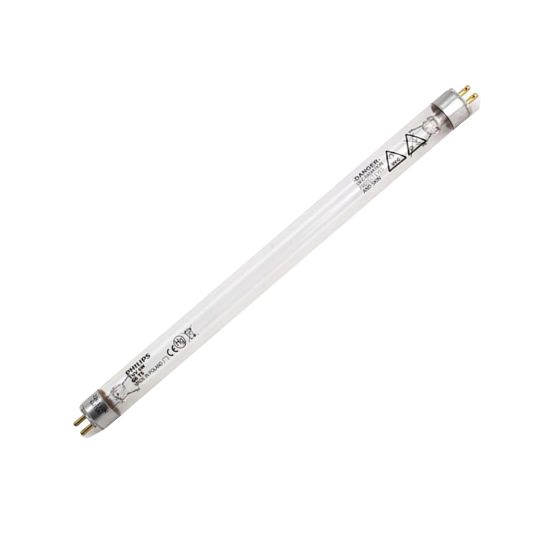
Replaceable bulbs and fluorescent lamps for UV lamps
Annual schedule – quick reference
Universal proposal for a single-family home (4 people, tap water from the municipal network):
- Every 2–3 weeks: check and add salt in the softener/multi-functional station; drain impurities from the pre-filter.
- Every 3–6 months: replace the mechanical cartridge (inline/RO), inspect the carbon filter; replace/refill specialist cartridges (anti-scalant, canister softener, KDF).
- Every 6–12 months: replace RO pre-filters, post-filters, and mineralizers; filters in refrigerators; dzbanki (more often: every 2 months).
- Every 12 months: UV lamp; full inspection of the softener/deironizer/multifunction station; replacement of carbon filters (if not earlier); regeneration of NO3 cartridges as indicated.
- Every 2–5 years: RO membrane (according to TDS and performance). Bed materials: cationic/Ecomix/catalytic – usually 4–10 years depending on conditions and usage

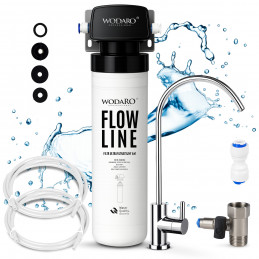
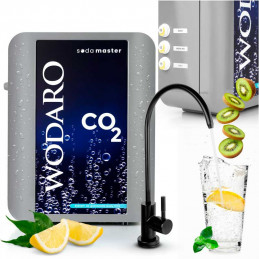
Recommended product: WODARO FLOWLINE – compact under-sink filter with quick-release bayonet connection (UF 0.01 µm).
Summary
Maintaining water quality is a combination of scheduling and responding to symptoms. Short replacement intervals protect devices, improve taste and safety. If you have any doubts, please contact us – we will select a set of cartridges and remind you of the replacement dates.
It's worth remembering: first pre-filters and TDS control, then – if needed – membrane/media. UV lamp every 12 months.
Frequently Asked Questions (FAQ)
How often should I change water filters at home if I use tap water?
Mechanical cartridges every 3–6 months, carbon filters every 6–12 months, UV lamp every 12 months, pitchers usually every 2 months. In RO systems, pre-filters every 6–12 months, membrane every 2–5 years.
How often should I change the string filter for water?
It depends on the turbidity: in homes every 1–6 months, with "dirty" water even every 1–3 months. Watch for pressure drop.and the color of the cartridge.
Carbon water filter – how often should it be replaced?
Usually every 6–12 months (taste/smell and pressure drops are good indicators). In refrigerators and pitchers, often shorter.
How often should specialized cartridges in pipe systems (KDF, softening, anti-scaling) be replaced?
Most often every 3–12 months depending on the medium and water usage; replenish anti-scaling when crystals form.they will be used up, replace KDF when effectiveness or flow decreases.
When to replace the RO membrane?
When the TDS of the water after filtration increases despite fresh pre-filters or the performance decreases – usually after 2–5 years of standard operation.
How often should the nitrate cartridge in a 10″ canister be regenerated?
According to the decrease in effectiveness and usage – often every 2–8 weeks. Use a brine solution, and after regenerationrinse thoroughly.
How to take care of the softener to make the resin last longer?
Add salt every 2–3 weeks, clean the pre-filter, perform an annual inspection. The resin usually lasts 5–10 years; hard water shortens this period.
Should the UV lamp be replaced if it "still lights up"?
Yes. After about 12 months, the UV intensity decreases – the lamp lights up, but does not provide full disinfection. Replace everyrok.
Will a multifunctional station replace a separate iron remover and water softener?
Often yes, if the water parameters fall within the operational range of the medium. However, it requires proper selection based on testing and appropriate head settings.
Sources:
- https://wqa.org/ — Water Quality Association (materials on treatment technologies andcertification)
- https://www.nsf.org/consumer-resources/articles/standards-water-treatment-systems — overview of NSF/ANSI standards 42/53/58
- https://www.who.int/publications/i/item/9789240045064 — WHO: Guidelines for Drinking-water Quality (2022)
- https://blog.ansi.org/ansi/nsf-ansi-58-2022-reverse-osmosis-for-drinking-water/ — outline of NSF/ANSI 58 (RO) requirements