
- There are no more items in your cart
- Shipping
- Total 0.00 zł



Medicinal waters – types, sources, where to buy
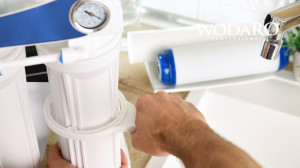
Medicinal waters are underground "cocktails" of minerals that nature has mixed for decades before reaching your glass. Unlike regular table water, they are legally defined, have precisely specified mineralization, and documented health benefits. In this guide, I will show you how the different types differ, what benefits they bring, and ‒ most importantly ‒ where to buy the most interesting labels or how to achieve a similar effect in your own kitchen usingof reverse osmosis with a ionizer.
In this article, you will learn
- What are the legal definitions of therapeutic waters in Poland.
- What are the types of therapeutic waters and their health benefits.
- What are the most popular Polish health resorts and their waters.
- What are modern alternatives to bottled water (ionized, structured, RO).
- Where to buy medicinal waters and how to read labels.
- What are contraindications and safety rules for their use.
What are medicinal waters? – definition and regulations
Polish law (regulation of the Minister of Health from March 31, 2011) states clearly: we can call a healing water underground water with a mineralization of ≥ 1 g/l or with the presence of specific ions (e.g., sulfates, bicarbonates, or iodides) in therapeutic concentrations. In practice, it constitutes a separate category alongside "natural mineral waters" and table waters; the former is mainly used for daily hydration, while the latter is a blend that helps balance the flavor profile. Thanks to the fact that the parameters arelegally described, easy to compare the action of healing waters of different brands.
A quick dictionary:
- pH – shows whether the water is acidic or alkaline; the body prefers slightly alkaline conditions around 7.4.
- ORP (redox) – oxidation-reduction potential; negative values favor the neutralization of free radicals.
- Osmolarity – the concentration of molecules; the higher it is, the more electrolytes in the drink.
Why is the chemical composition of mineral water important?
Calcium supports bones, magnesium takes care of the neuromuscular system, bicarbonates relieve heartburn, and silica smooths the skin. It is the precise balance of these elements that helps in treating diseases of the digestive system.or urinary. Regular drinking of medicinal water with the appropriate profile (e.g., rich in HCO₃⁻ for reflux) is a great recipe for your health. Systems producing such water - it's a way to use medicinal waters without leaving home.
Classic types of medicinal waters from Polish spas
It's worth remembering: In this section, you will learnfour main types of therapeutic waters used in Polish balneology, their characteristic taste, and medical indications.
Below you will find brief descriptions of classic therapeutic waters from Polish health resorts:
- Sulfur waters (e.g., Busko-Zdrój): Ideal for psoriasis and joint pain. Sulfur penetrates through the skin, stimulates collagen, and has documented properties forsulfates.
- Bicarbonate-sodium waters (e.g. Krynica-Zdrój): Helpful in cases of hyperacidity and reflux. Their alkaline pH buffers stomach acid, supporting the treatment of digestive system diseases.
- Iodine waters (e.g. Ciechocinek): Indicated for hypothyroidism. They contain iodide (I⁻) at a concentration of ≥ 1 mg/l, which supports the synthesis of thyroid hormones.
- Iron-rich waters (e.g. Długopole-Zdrój): Used in cases of anemia. The iron content (Fe²⁺) improves hemoglobin parameters, especially in drinking cures.
Polish medicinal waters – the most popular brands of bottled waters
- Staropolanka 2000 – high mineralization (2000 mg/l), high in calcium.
- Jan medicinal water – sodium-bicarbonate from Krynica, great for hyperacidity.
- Zuber – record 22 g/l of ingredients, pH 6.4; only for short treatments!
- Hanna – moderate level of CO₂, delicate taste.
- Henryk – silica + magnesium, good "water aftertraining”.
Modern medicinal waters – types (ionized, structured, and from osmosis)
Balneology is keeping up with the times. Here’s how medicinal waters used in medicine meet kitchen technology.
Ionized water (alkaline and acidic)
Ionizer passes current throughthe membrane, separating H₂O into a basic fraction (pH 9-10, ORP ≈ -200 mV) and an acidic one. You drink the basic one after exercise or when struggling with acidity; the acidic one is good for rinsing the skin.
Structured water (H₂O in a "hexagonal" arrangement)
The theory speaks of a change in the structure of water into hexagonal micro-networks resembling the water in plant cells. Users praise the soft taste of the water and better mineral absorption.
Reverse osmosis water – a pure base that you "remineralize"
The RO membrane removes 95-99% of everything. You get a perfectly clean "sheet" that you can enhance with a dolomite cartridge, magnesium filter, or ionizing module. These medicinal waters for drinking serve us daily without the need to carry packs of bottled water.
How are medicinal waters created? – geology, technology, and water sourcetherapeutic
Rainwater seeps through sandstones and limestones for even 50-100 years. The deeper you go, the higher the temperature and pressure, which promotes the dissolution of elements. After drilling, the water goes to CO₂ separation, and then to aseptic bottling. Each batch undergoes internal testing and external audits (SGS, PZH) – so you can be sure of the consistency of the composition.
The most popular health resorts inPoland
- Szczawnica medicinal waters – calcium + magnesium for heart patients.
- Duszniki Zdrój medicinal waters – classic CO₂ springs, great for reflux.
- Brine medicinal water – Ciechocinek, inhalations in graduation towers.
- Rymanów Zdrój watersmedicinal – boron sorrels for the skin.
- Krynica Zdrój medicinal waters – diverse sources, from the delicate "Słotwinka" to the extreme "Zuber".
Where to buy medicinal waters in Poland? – stores, spas, online
Below you will find the advantages and disadvantages of various distribution channels for medicinal waters:
- Spa: Pros: Freshest, cheap, available in drinking halls. Cons: Baggage limit, travel time.
- Pharmacy / drugstore: Pros: Batch and date control, convenient purchase. Cons: Highest price per liter.
- Online store: Pros: Courier delivery to your door, wide selection. Cons: Check the bottling year and cost.transport.
- City fountain: Pros: Eco-friendly thanks to your own bottle. Cons: Limited availability, lack of complete chemical analysis.
How to read the label to avoid overpaying?
- General mineralization – the higher it is, the shorter the treatment recommended by the balneologist.
- Datebottling – CO₂ escapes after 6-9 months.
- The word “spring” does not mean “medicinal” status; it’s just marketing.
How to obtain functional water at home?
Possible solutions for preparing water at home:
- RO system + remineralizer: Cost from 700zł, filter replacement every 6-12 months.
- Flow ionizer: From 2500 zł, energy consumption like a kettle in standby mode.
- Hydrogen generator: Pocket-sized device for charging H₂ into water.
Key thought: The standalone system allows you to avoid lifting and plastic production, andThe monthly cost of filters can be lower than two packs of bottled water.
Medicinal water and safety and contraindications
- Be cautious of high sodium content if you are dealing with hypertension.
- Sulfates can be problematic for sensitive intestines.
- CO₂ can worsen reflux – choose de-gassed versions.
- Drink strongly mineralized waters in a dose of 400-600 ml/day and consult a doctor if you have kidney stones.

Summary and purchase recommendations
From classic springs in Pieniny, through brine from Ciechocinek, to futuristic RO membrane water – the range of options is wide. Read the labels, match the composition to your health needs, and remember:technology can recreate nature. In our store, you will find RO filters with mineralizers, flow ionizers, and tasting sets of medicinal waters – check which combination of taste and minerals suits you best.
Recommended product:
You can find all products in the "Reverse Osmosis" category in our store

Frequently Asked Questions (FAQ)
Is medicinal water suitable for cooking?
Yes, but you will lose some CO₂ and iodine – drink it "cold", cook with regular tap water from the filter.
How long can I store it after opening?
24 hoursthe fridge; later it loses gas and the aroma of minerals.
Can children drink Zuber?
No – it is extremely concentrated water; Jan or the gentle Staropolanka would be better.
Does ionized water really rejuvenate?
Research on ORP is promising, but consider it as support, not a youth elixir.
What is divalent sulfur inin water?
These are sulfide and hydrosulfide ions (S²⁻ / HS⁻) – the main component of sulfur waters.
Can I take five packs from the spa?
Yes, but ask the staff about the limit; some drinking halls allow up to 30 liters per day.
