Reverse osmosis is an advanced technological method of water purification that is gaining increasing popularity in both households and industry. This filtration process is valued for its exceptional efficiency in removing contaminants, minerals, and chemical compounds, making it an ideal solution for those seeking clean and safe water. In this article, we will present the principles of reverse osmosis and the stages of the filtration process.and the benefits of its application.
Last updated: August 26, 2025
In this article, you will learn…
Principle of operation of reverse osmosis
Reverse osmosis (eng. RO –Reverse Osmosis is a membrane process. This means that its operation is based on passing water through a semi-permeable membrane under high pressure. Unlike natural osmosis, where water flows from a solution of lower concentration to a solution of higher concentration, reverse osmosis forces the flow of water in the opposite direction. Water is pushed from a solution of higher concentration to a solution of lower concentration, resulting in the retention of most contaminants on one side.of the osmotic membrane.
It's worth remembering: Reverse osmosis is one of the most effective filtration methods, capable of removing up to 99% of contaminants.
The reverse osmosis procedure requires the use of a high-pressure pump that generates the pressure necessary to overcome the natural osmotic pressure. The typical operating pressure in reverse osmosis systems ranges from 2.8 to 6 bars, depending on the qualityraw water and requirements for the purity of treated water. The membrane used in reverse osmosis is made from polymer materials, such as polyamide, which are characterized by high selectivity and the ability to retain various types of contaminants.
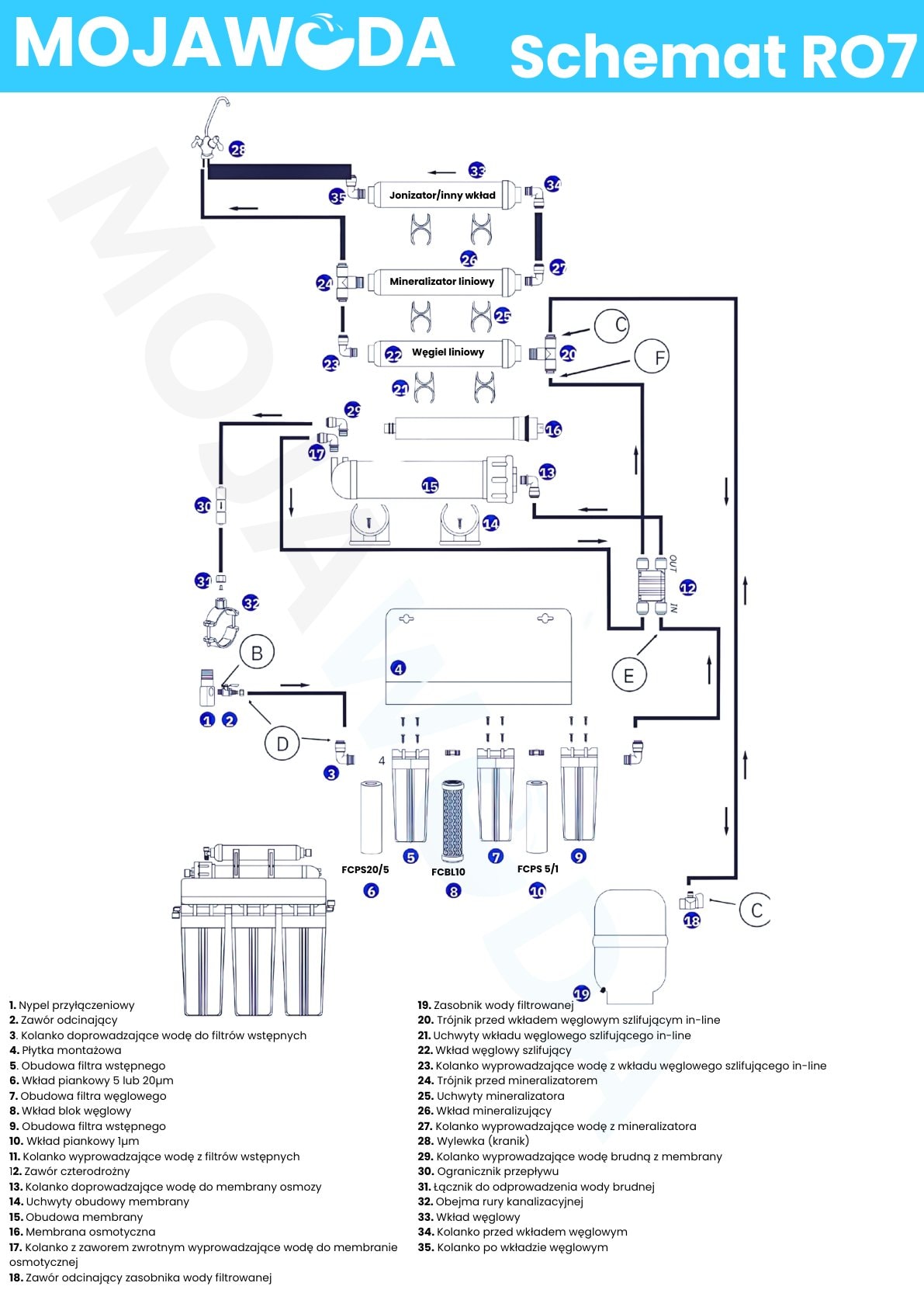
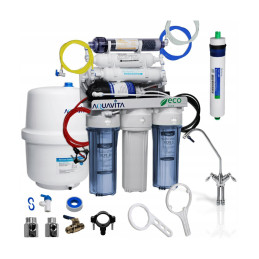
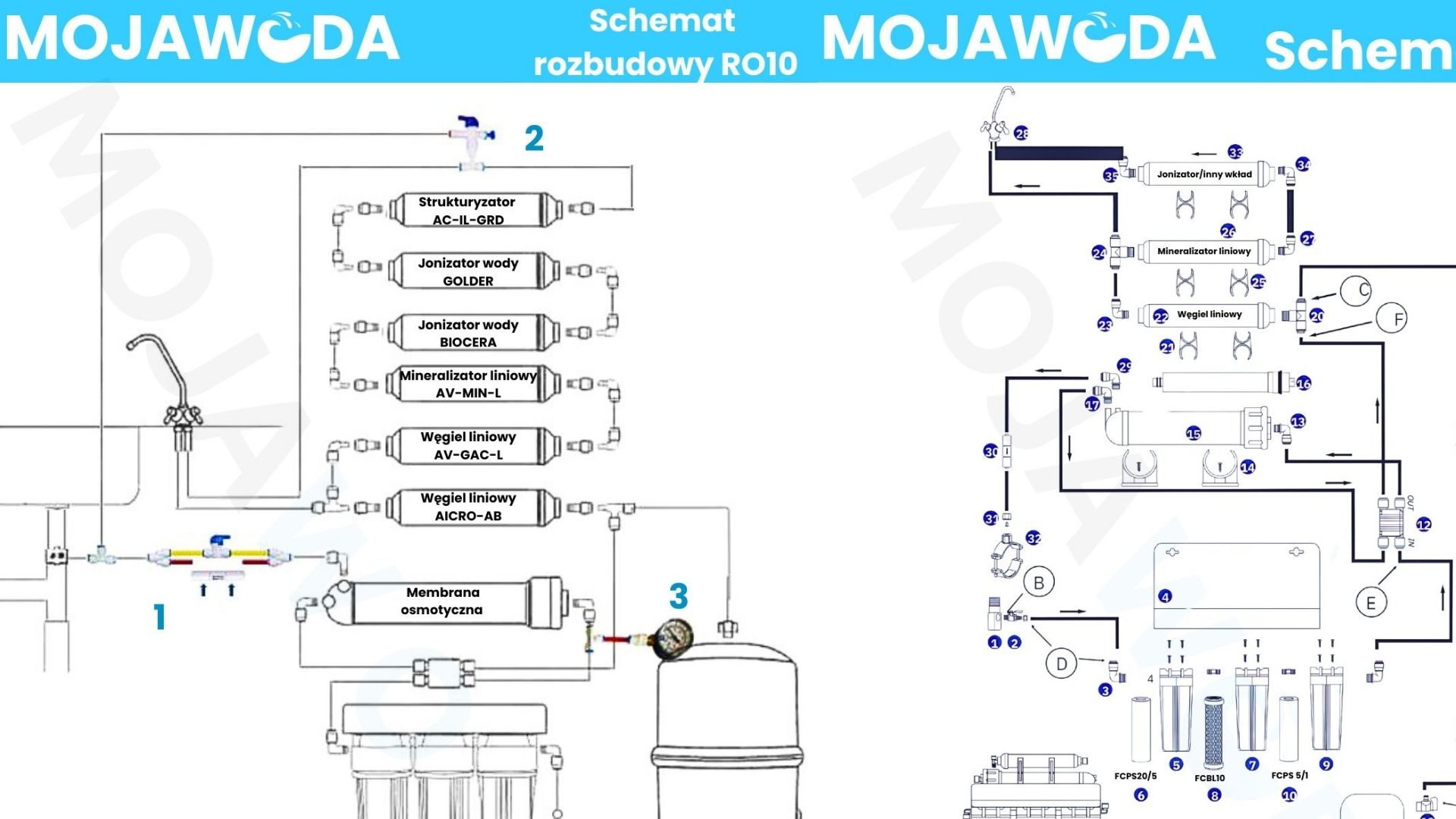
Example diagram of a reverse osmosis system
Pre-treatment stageswater
Reverse osmosis systems typically include several stages of preliminary water purification aimed at protecting the membrane and increasing the efficiency of the entire process. The first stage is mechanical filtration, during which water flows through sediment filters and larger particles such as sand and rust are removed.mud.
The next step is carbon filtration, during which water passes through cartridges with activated carbon. This is a more advanced process, as it allows for the removal of including. chlorine, organic compounds, and other chemical substances that could damage the RO membrane. Some systems usethere are also softening filters that remove calcium and magnesium ions, reducing water hardness and preventing the buildup of scale.
It is worth remembering: Pre-filtration is crucial for the efficiency of the reverse osmosis system.
The proper filtration stage – RO membrane
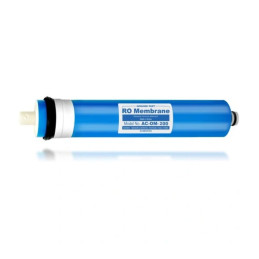
A key component of the reverse osmosis system isreverse osmosis membrane, through which water flows under high pressure. It consists of many layers of semi-permeable material that retain impurities and allow only pure H2O particles to pass through. This process is very effective, retaining up to 99% of dissolved salts, heavy metals, bacteria, viruses, and other hazardous contaminants.
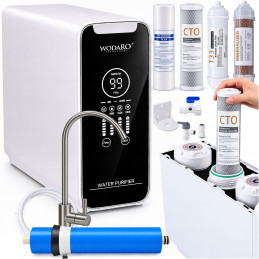
Purified water,the so-called permeate, passes through the membrane and is collected in a tank for clean water or goes directly to the tap – this depends on the type of reverse osmosis (in our store you will find RO with a tank and RO without a tank). The contaminants retained by the membrane are flushed out of the system asconcentrate or reject, and then discharged into the sewage system or recirculated, depending on the design and user needs.
It is worth remembering: The osmotic membrane is a key element that determines the effectiveness of the entire system.
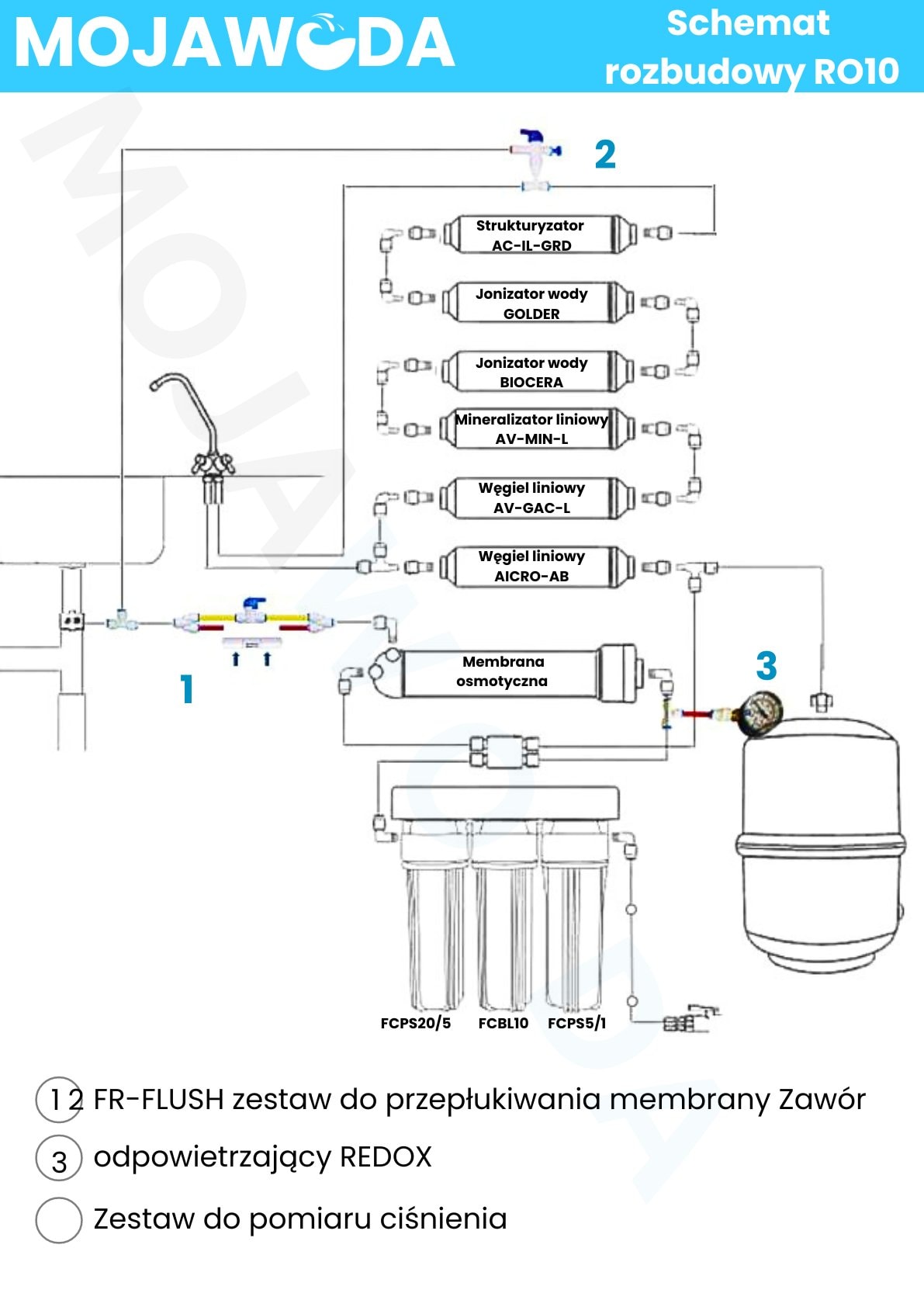
The operation of reverse osmosis –osmosis is an advanced and extremely effective water purification method that has a wide range of applications in both households and industry. Thanks to its ability to remove a broad spectrum of contaminants, the water obtained through the RO process is clean, safe, and free from unpleasant tastes and odors. Despite some drawbacks, such as high water consumption and costs, reverseOsmosis remains one of the best solutions for water treatment, offering many health and economic benefits. It is also worth noting that technologies related to reverse osmosis are continuously evolving, contributing to improved efficiency and reduced operating costs of these systems.
Frequently Asked Questions (FAQ)
What is reverse osmosis?
Reverse osmosis is a water filtration process that uses a semi-permeable membrane to remove contaminants.
What contaminants does reverse osmosis remove?
Reverse osmosis removes dissolved salts, heavy metals, bacteria, viruses, and other hazardous substances.
Is water from reverse osmosis healthy?
Yes, the water obtained through the processreverse osmosis is clean and safe to drink.
What are the operating costs of the RO system?
The operating costs of the RO system may include energy consumption, membrane replacement, and device maintenance.
How often should the membrane in the RO system be replaced?
The membrane in the RO system is typically recommended to be replaced every 2-3 years, depending on water quality.raw.
Are RO systems energy-efficient?
Modern RO systems are becoming increasingly energy-efficient, but their effectiveness may vary depending on the model.
Author: Maciej Waliduda — an expert in water treatment with many years of experience in the industry.