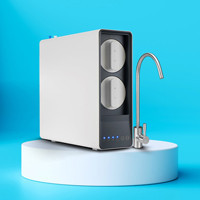
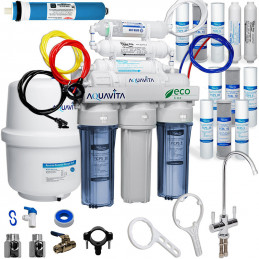
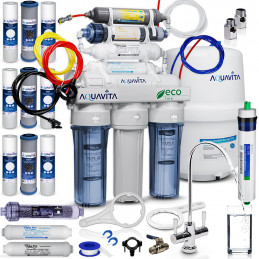
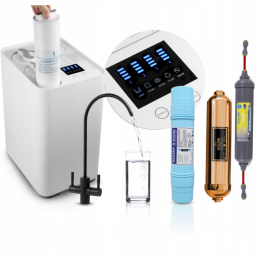
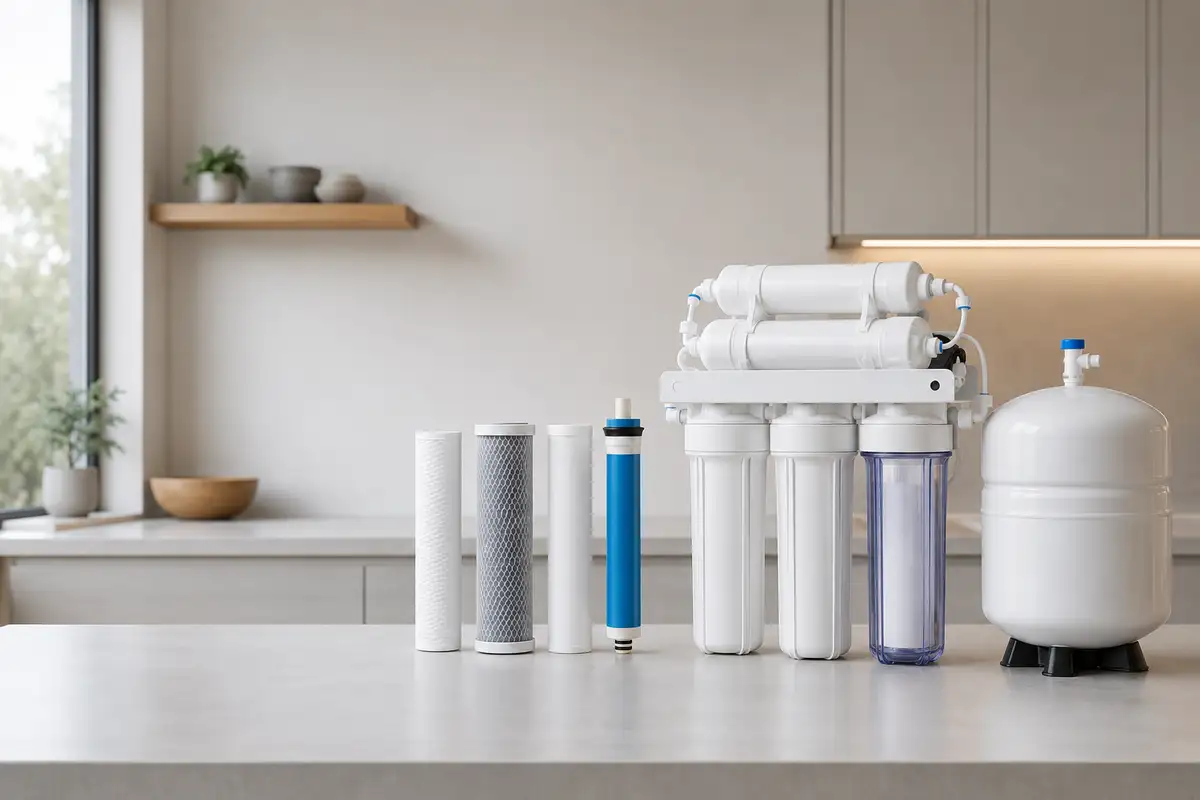
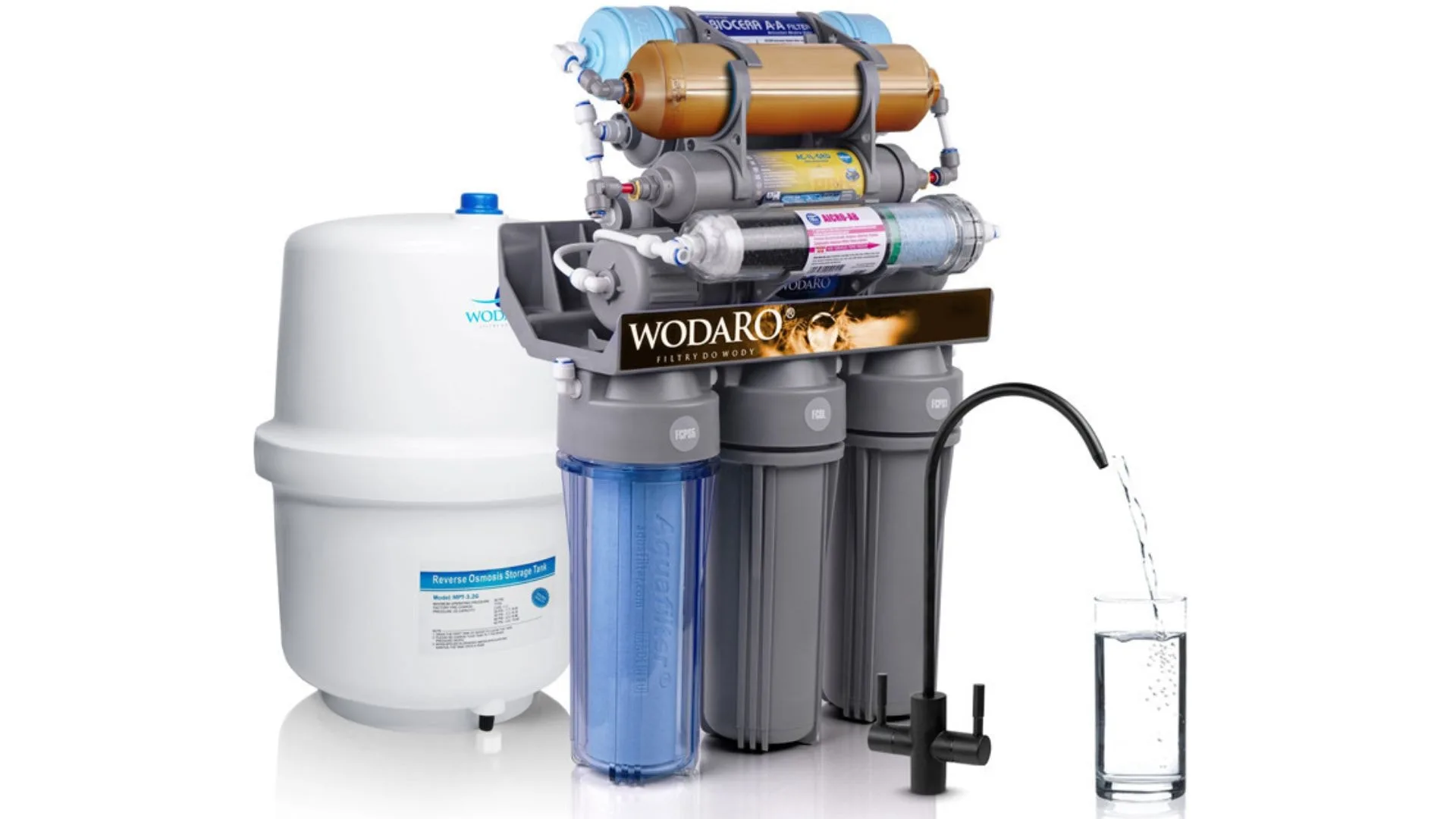
Reverse osmosis is a solution for anyone who wants constant access at home to thoroughly filtered water for drinking, cooking, coffee and tea. This category includes complete RO systems as well as membranes, cartridges, mineralizers, pumps, tanks and service parts. If you are looking for a device under the term “reverse osmosis”, start by choosing between a tank and tankless filter, then match the pump, mineralization and capacity to your installation.
Need a complete unit for your kitchen? Go to the reverse osmosis filters and systems category. You will find models with and without a tank, with a pump, mineralizer and additional water treatment stages.
Choose a complete RO system according to the available space, water pressure, expected capacity and preferred servicing method.
Which reverse osmosis filter should you choose?
First, determine how the water will be used and how much space you can allocate to the unit. A complete under-sink filter is the most common choice for a typical kitchen. Separate solutions are used for aquariums, technical equipment or preparing larger volumes of water. Before making a decision, also learn about the advantages and disadvantages of reverse osmosis systems.
Your requirement
Best starting point
What to consider
Water for drinking and cooking
Complete under-sink RO filter
Mineralization, number of users and cabinet space
Lower purchase price and simple servicing
Tank system
Free space for the filter and tank
High flow and limited space
Tankless system
Actual capacity, pump and cost of dedicated cartridges
Low water pressure
System with a pump
Access to a power outlet and space for the power supply
Water for an aquarium
RO or RO-DI system
Membrane capacity and required level of demineralization
Servicing an existing unit
RO cartridges, membranes and parts
Filter model, dimensions, connections and flow direction
Reverse osmosis – tank or tankless system?
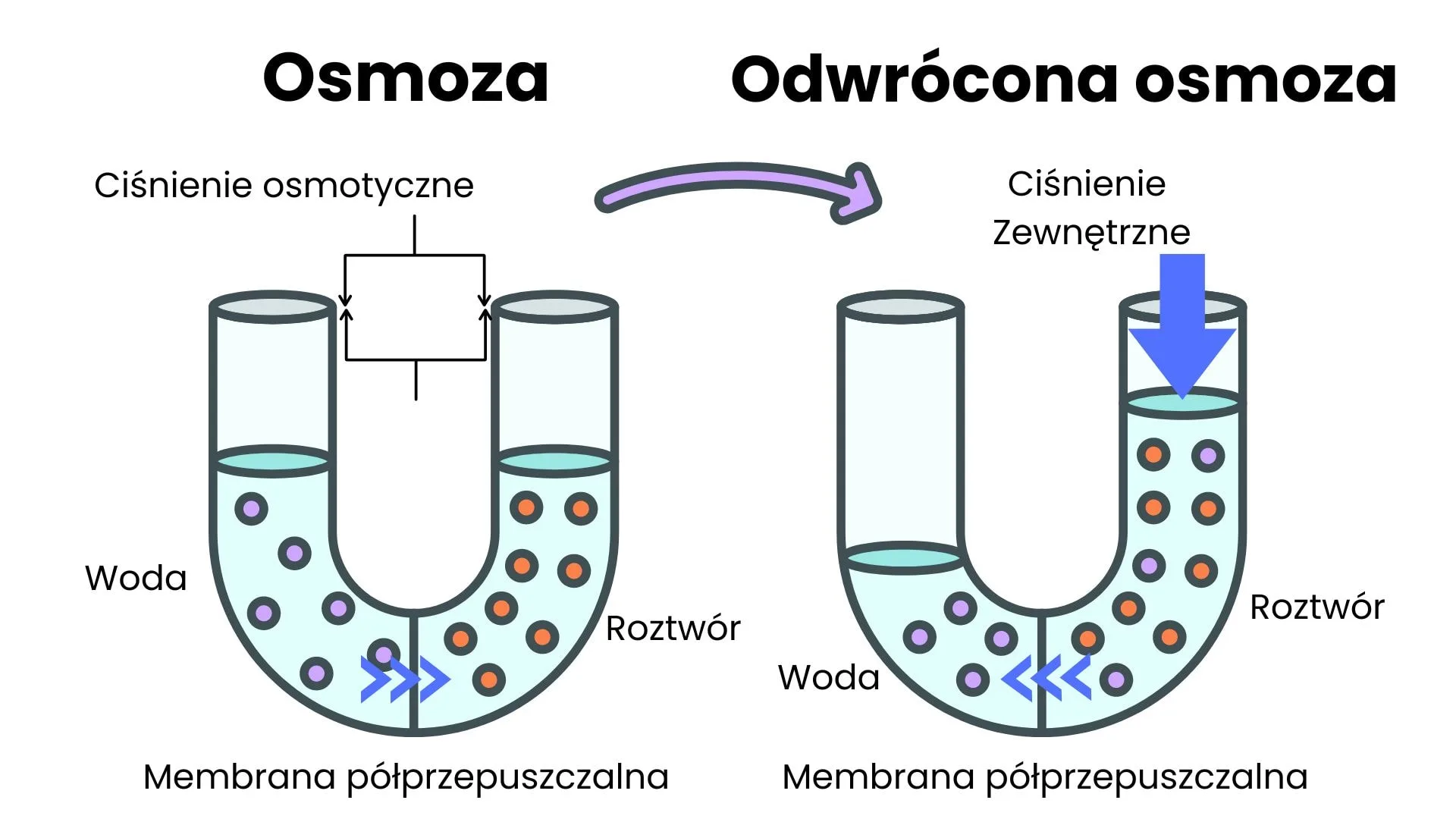
Both solutions use an RO membrane, but they differ in how they deliver water, the space they occupy and their operating costs. The roles of the membrane, cartridges, tank and drain are shown in this reverse osmosis system diagram.
Feature
Tank system
Tankless system
Operating method
Filters more slowly and stores water in a tank
Filters water on demand
Space
Requires space for the unit and a separate tank
Usually takes up less cabinet space
Flow from the faucet
Depends on the tank fill level and pressure
Usually high and stable when the pump operates correctly
Power supply
A version without a pump can operate without electricity
Usually requires a power supply
Servicing
Usually uses popular, readily available cartridges
More often requires dedicated manufacturer cartridges
Best for
People who value a simple design and lower purchase cost
People who expect high capacity and compact housing
In practice: a classic tank filter is a good choice if you have space under the sink and want easy access to replacement parts. A tankless system is worth choosing when high flow, modern housing and the absence of a separate tank are more important.
Does an RO filter need a pump?
Measure the water pressure in your installation before purchase, preferably also while water is being drawn. Many classic systems without a pump require approximately 2.8–3 bar, while higher and stable pressure improves membrane capacity and reduces the amount of water discharged to the drain. The exact minimum always depends on the specific unit.
If the pressure periodically drops below the value required by the manufacturer, choose a filter with a booster pump. A pump is also a standard component of many high-capacity tankless systems. Such a filter requires access to an electrical outlet and space for the power supply.
Pressure that is too low may cause slow tank filling, low flow, more reject water and poorer membrane performance. The capacity stated in GPD should not be assessed without considering the actual water pressure and temperature. If the filter does not stop operating after the tank has filled, see what to do when water from the RO system keeps flowing to the drain.
Reverse osmosis with a mineralizer – is it worth it?
A reverse osmosis membrane significantly reduces many dissolved substances, including minerals. A mineralizer installed after the membrane enriches the water and may affect its taste. It is a popular choice in filters designed to prepare drinking water.
If you need water for everyday drinking and cooking, choose a system with a mineralizer or a design that can be upgraded with one later. Mineralization is usually not required in filters for aquariums or technical applications because the water composition is prepared separately for the specific use.
When using a three-way faucet or a separate spout, check whether the system should provide mineralized water only or allow water to be drawn both before and after the mineralizer.
Reverse osmosis – costs and replacement schedule
When comparing filters, check not only the price of the unit but also the cost of a complete cartridge set, servicing frequency and parts availability. A filter that is cheaper to buy may prove more expensive to use if it requires dedicated cartridges or more frequent replacement. The individual expenses are explained in detail in the guide to reverse osmosis operating costs.
The annual operating cost should primarily include pre-filter cartridges, the final filter, the mineralizer, a proportion of the membrane cost and water discharged to the drain. A system with a pump also uses a small amount of electricity. Find out what determines reject water and water consumption in an RO system.
Component
Approximate schedule
Why it matters
Sediment and carbon cartridges
Approximately every 6 months
Protect the membrane against sediment and chlorine
Inline carbon filter
Approximately every 12 months
Provides the final improvement in water taste
Mineralizer
Approximately every 12 months
Enriches the water after filtration
RO membrane
Usually every 3–5 years
It is the main purification component
System disinfection
Recommended during annual servicing
Helps maintain the hygiene of tubing and housings
These intervals are approximate. Hard, heavily contaminated or highly chlorinated water may shorten cartridge life. Always follow the instructions for the specific system and account for actual water consumption.
Do not choose a filter solely by the number of stages
More cartridges do not always mean a better system. The quality of the membrane, actual capacity, operating pressure, availability of consumables and the purpose of each stage are more important when choosing a filter.
Pre-filtration retains sediment and reduces chlorine before the membrane.
The RO membrane performs the main purification stage.
The final filter improves the taste of water before dispensing.
A mineralizer is an addition for drinking water, not a substitute for the membrane.
A UV lamp, ionizer or other modules should be selected according to the water quality and the expected result.
Quick RO system selection in 6 steps
Define the application: drinking and cooking, aquarium, food service or technical equipment.
Check the available space: measure the cabinet width, depth and height, as well as the space for a tank.
Measure the pressure: if it is too low or unstable, choose a model with a pump.
Choose the operating method: a simple tank system or a high-capacity tankless system.
Decide on mineralization: it is usually worth considering for drinking water, but generally not for an aquarium.
Compare servicing costs: check the price of an annual cartridge set and membrane, as well as parts availability.
Comparing membrane capacities?
Ratings such as 75, 100, 400 or 600 GPD describe the membrane’s nominal capacity. Convert them into litres per day and per hour, but remember that actual output depends on pressure, temperature and water quality.
This category is a hub covering both complete filters and components for servicing existing units. If you are buying your first system, go to the complete filters subcategory. If you are carrying out maintenance, check the marking on the current membrane and cartridges before ordering. After replacing components, the guide explaining how to vent a reverse osmosis system and tank may be helpful.
complete RO systems for kitchens, aquariums and professional applications,
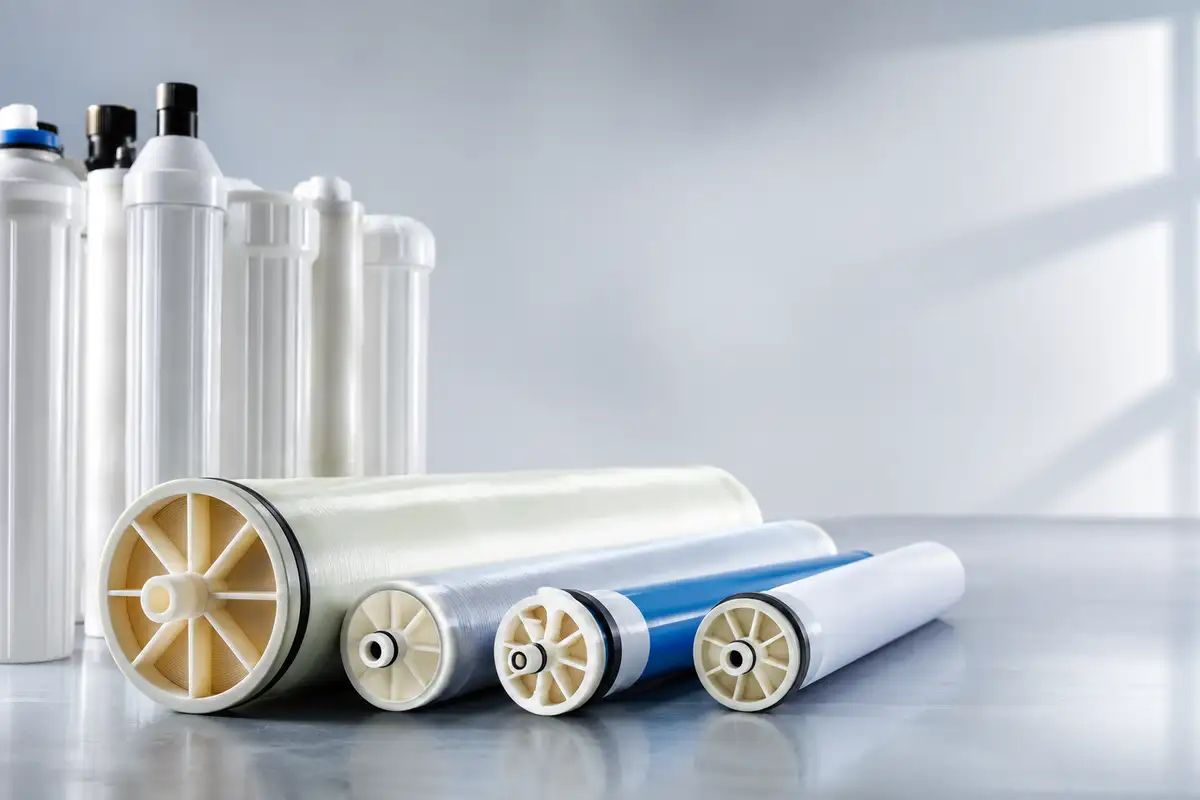
RO membranes in various capacities and dimensions,
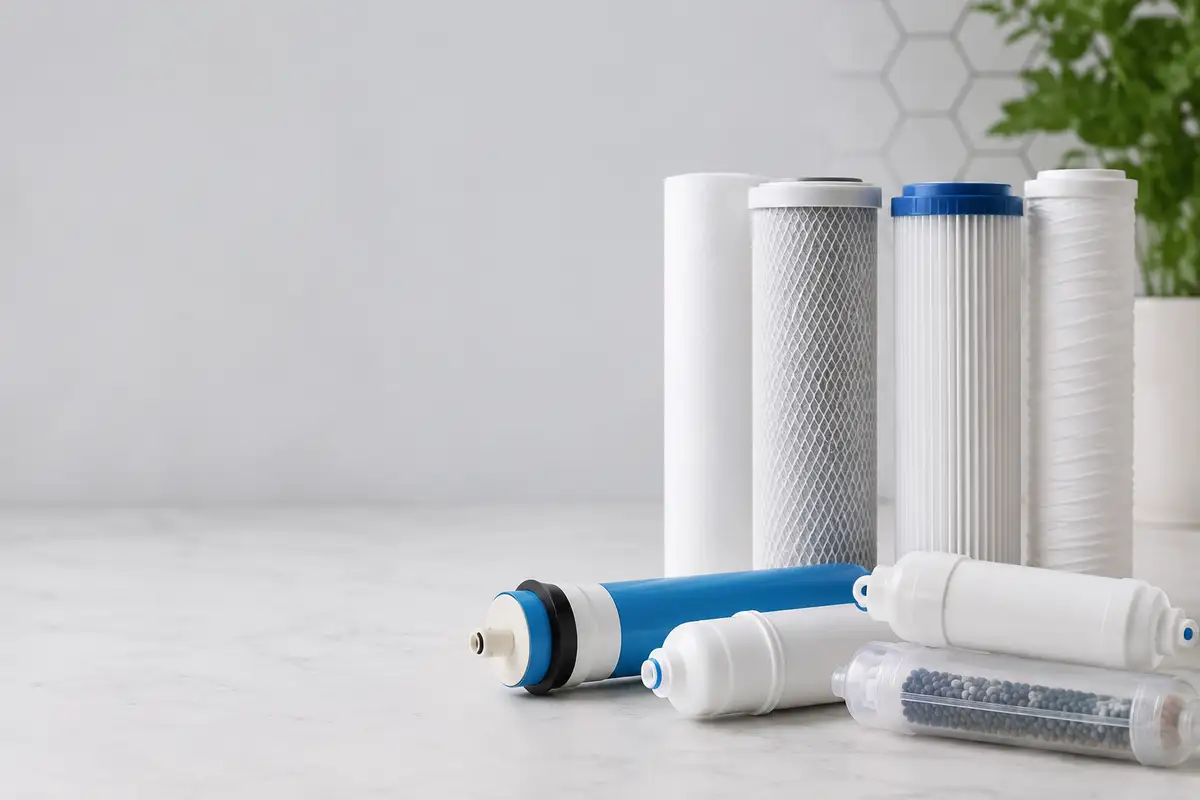
cartridges and service sets for pre- and post-filtration,
mineralizers and additional modules selected according to the expected result,
pumps and tanks for repairing or expanding an installation,
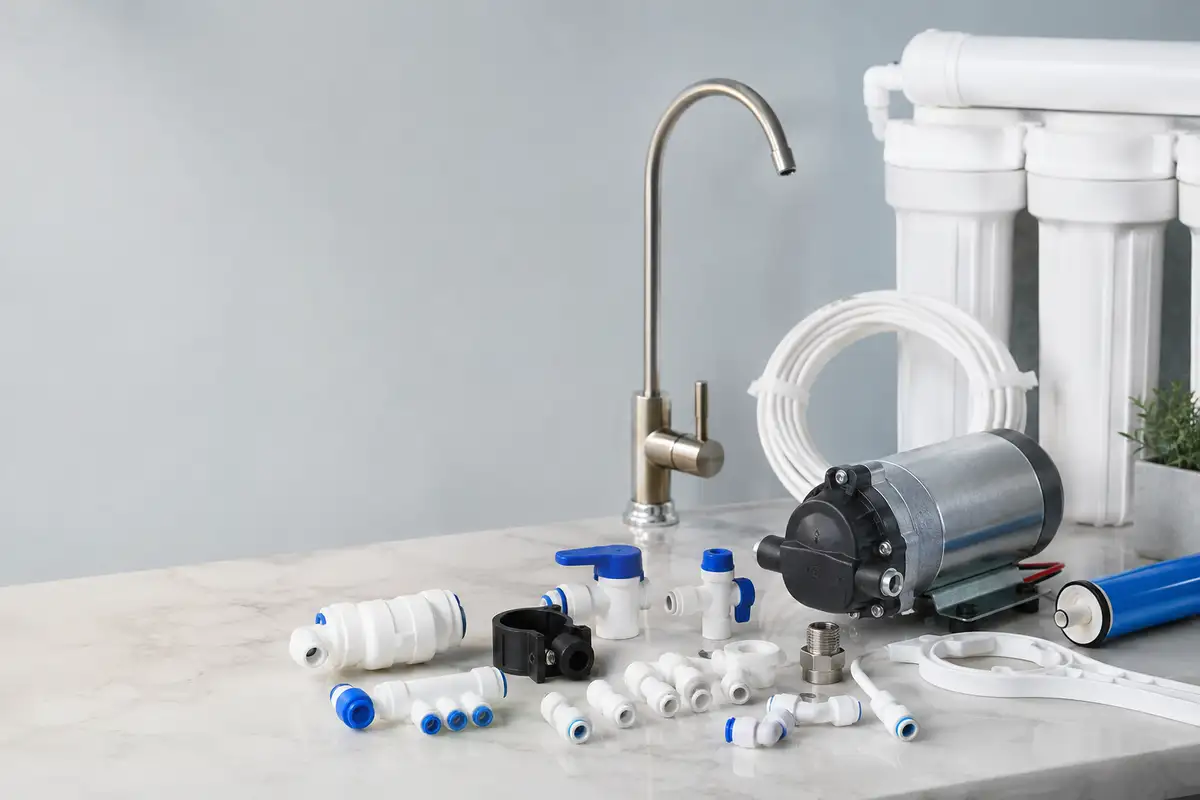
tubing, valves, flow restrictors and quick connectors required for installation.
When buying parts, check the unit model, dimensions, connection type, capacity and flow direction.
Buying a complete filter? Compare units by operating method, capacity, pump and mineralization.
Which RO filter should I choose for a flat or house?
Choose a complete under-sink system for a typical kitchen. A tank model is suitable if you value a simple design and easy servicing. A tankless model is worth choosing when space is limited and you expect high flow.
Do I need a system with a pump?
A pump is required if the water pressure is lower than the manufacturer requires or is unstable. In many classic systems, the approximate threshold is around 2.8–3 bar. A pump is also a standard component of many tankless systems.
Is a tankless filter always better?
No. It is compact and efficient, but usually requires a power supply and dedicated cartridges. A tank filter takes up more space but has a simple design and often uses popular consumables.
Is a mineralizer worth the extra cost?
For drinking water, a mineralizer is a practical addition because it enriches the water after the membrane and may improve its taste. Water without this stage is usually chosen for aquariums and technical applications.
How often should the cartridges and membrane be replaced?
Sediment and carbon cartridges are most often replaced approximately every 6 months, inline filters and the mineralizer approximately every 12 months, and the membrane usually every 3–5 years. Adjust the schedule to the water quality, consumption and the unit’s instructions.
Can an RO system be connected to well water?
Yes, but the selection should be based on a current water test. Excessive hardness, iron, manganese, turbidity or microbiological contamination may require additional treatment before the RO filter.