

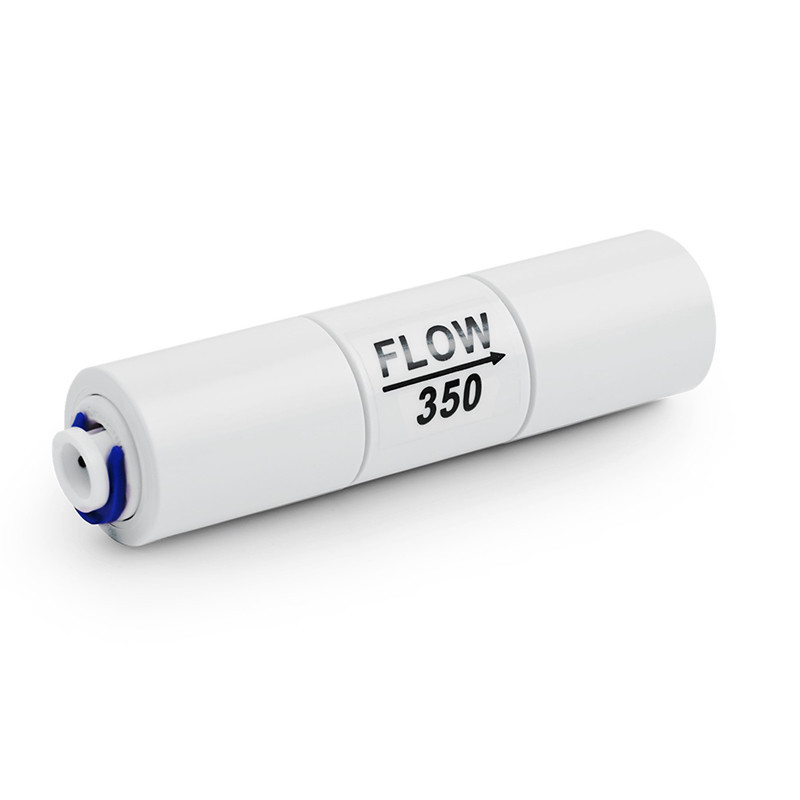

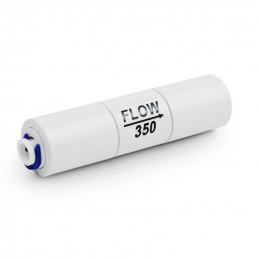
FR3-350 flow restrictor for reverse osmosis systems, installed on the wastewater outlet with quick connectors. It enforces the correct flow of rinse water through the membrane, which helps remove accumulated contaminants and supports its longevity. Recommended for replacement along with the membrane, especially in hard or contaminated water. Suitable for 75 GPD membranes.
The FR3-350 flow restrictor is a practical consumable component for systems such as reverse osmosis, reverse osmosis filter, and a home water filtration system. Installed on the wastewater outlet using quick-connect fittings, it is responsible for maintaining the correct flow of water that rinses the membrane, thereby supporting its cleaning, helping remove accumulated contaminants, and improving the durability of the entire system. The FR3-350 model is designed for 75 GPD membranes and is an important element for the proper operation of an RO set.
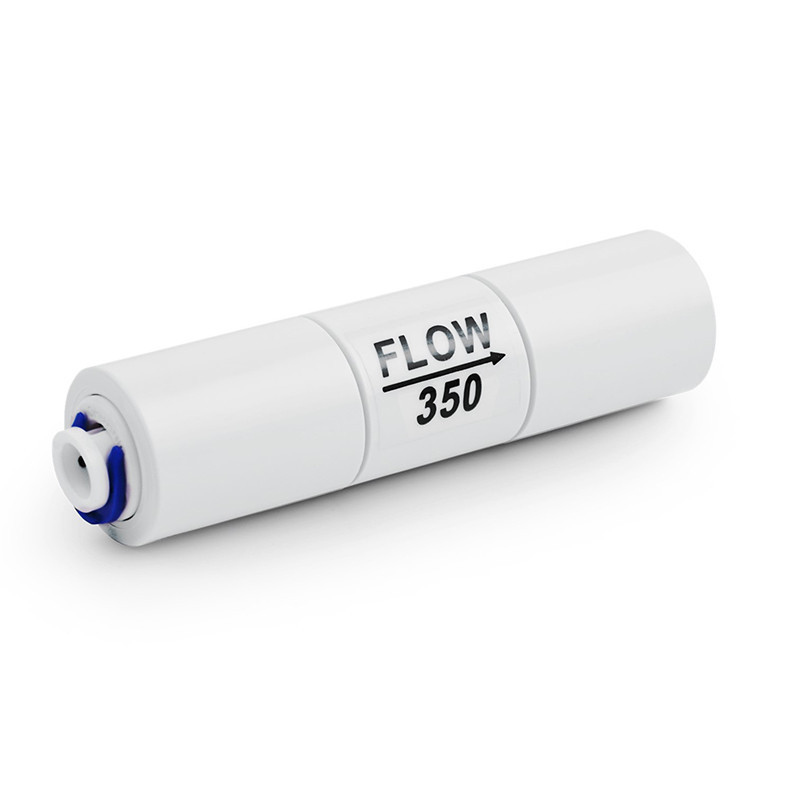
The flow restrictor is used in reverse osmosis systems on the wastewater outlet. Its task is to force the proper water flow that enables effective rinsing of the reverse osmosis membrane during device operation.
In practice, this means that the FR3-350 helps maintain the correct operating conditions of the membrane, and thus supports the efficiency of the process carried out by the osmosis filter and the entire reverse osmosis system. It is a small component, but very important for the correct discharge of dirty water to the sewer and for the ongoing cleaning of the membrane surface.
During system operation, the restrictor forces the flow of water that cleans the membrane. This makes it possible to flush away contaminants that accumulate on the reverse osmosis membrane during filtration.
These contaminants are then discharged to the sewer along with the wastewater stream. This operating principle helps limit sediment buildup and supports proper membrane use, which is important for the durability of the entire system intended for water treatment.
The restrictor is a consumable component, so its condition has a direct impact on the operation of the reverse osmosis membrane. Regular replacement helps maintain proper system performance and reduces the risk of deteriorated membrane operating conditions.
In the case of heavily contaminated water, especially with a high calcium and iron content, the restrictor should be replaced every few years. Such preventive maintenance supports stable system operation and helps maintain proper membrane rinsing.
When replacing the reverse osmosis membrane with a new one, a new flow restrictor must be installed. It is fitted in place of the old, worn restrictor on the pipe that carries dirty water to the sewer. This is an important service step that helps ensure the membrane operates properly from the start of its service life.
The FR3-350 is installed on the wastewater discharge pipe, i.e. the line carrying dirty water to the sewer. Connection is made via quick-connect fittings, which makes it easy to replace a worn element with a new one.
This solution is used in RO systems as the component responsible for proper flow management on the outlet side. A properly selected restrictor works with the reverse osmosis membrane and helps maintain the correct operating balance of the entire system.
The FR3-350 model is designed for membranes with a capacity of 75 GPD. It is suitable as a service and replacement component in domestic reverse osmosis systems where a membrane with this capacity is used.
If your device uses a 75 GPD membrane, this flow restrictor is the right choice to maintain proper rinsing and removal of contaminants from the system.
| Model | FR3-350 |
|---|---|
| Product type | Flow restrictor / restrictor |
| Intended use | Reverse osmosis systems |
| Installation location | Wastewater outlet / pipe carrying dirty water to the sewer |
| Connection method | Via quick-connect fittings |
| Function | Forces the correct flow of water rinsing the membrane |
| Operation | Enables membrane cleaning and flushing contaminants to the sewer |
| Compatibility | 75 GPD reverse osmosis membranes |
It is a component installed on the wastewater outlet in a reverse osmosis system. It is responsible for forcing the proper water flow that rinses the reverse osmosis membrane and helps remove accumulated contaminants from it.
The restrictor is installed on the pipe carrying dirty water to the sewer, i.e. on the wastewater outlet. Connection is made via quick-connect fittings.
No. The FR3-350 model is designed for membranes with a capacity of 75 GPD. Before purchase, it is worth checking the designation of the membrane used in the system.
Because it ensures the correct flow of water rinsing the membrane. As a result, contaminants are flushed out and discharged to the sewer, which supports proper membrane operation and limits excessive sediment buildup.
In the case of very contaminated water, especially water containing a lot of calcium and iron, the restrictor should be replaced every few years. Regular replacement helps maintain proper reverse osmosis membrane operation.
Yes. When replacing the reverse osmosis membrane with a new one, a new flow restrictor should also be installed. It is fitted in place of the old, worn element on the pipe carrying dirty water to the sewer.
A worn restrictor may worsen membrane rinsing conditions and disrupt the proper operation of the drainage section in an RO system. In practice, it is worth treating it as a consumable component and replacing it according to system maintenance, especially when replacing the membrane.
Yes, if the home water filter operates on a 75 GPD membrane and uses a standard reverse osmosis setup with a wastewater outlet. In such an application, the restrictor supports the proper operation of the entire system.
FR3-350 flow restrictor for reverse osmosis systems, installed on the wastewater outlet with quick connectors. It enforces the correct flow of rinse water through the membrane, which helps remove accumulated contaminants and supports its longevity. Recommended for replacement along with the membrane, especially in hard or contaminated water. Suitable for 75 GPD membranes.