

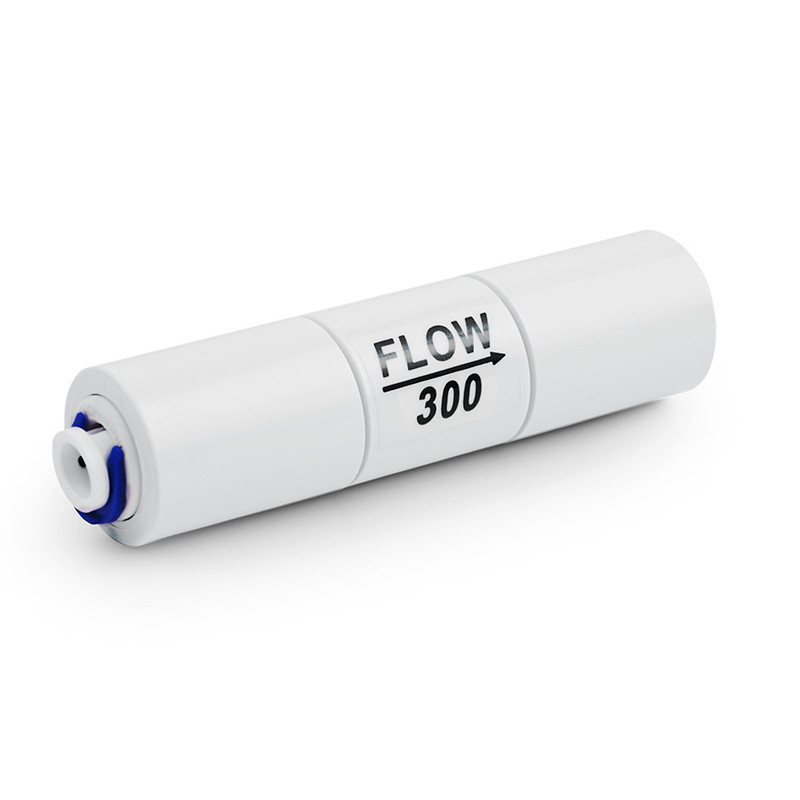

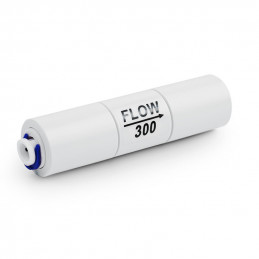
FR-300 restrictor (flow limiter) for reverse osmosis systems, mounted on the wastewater outlet with quick couplings. It enforces proper flow, which supports membrane flushing and the removal of contaminants to the sewage system. Recommended replacement every few years, especially with water containing high levels of sediments (e.g., calcium and iron). When replacing the membrane, it is advisable to install a new restrictor.
FR-300 flow restrictor is an important component of an installation such as reverse osmosis and any modern reverse osmosis system. Mounted on the wastewater outlet, it helps maintain the correct water flow in the system, supports membrane flushing, and facilitates effective discharge of contaminants to the sewer. It is a practical component for users who want to maintain the efficiency, service life, and stable operation of devices such as an osmosis filter or reverse osmosis filter.
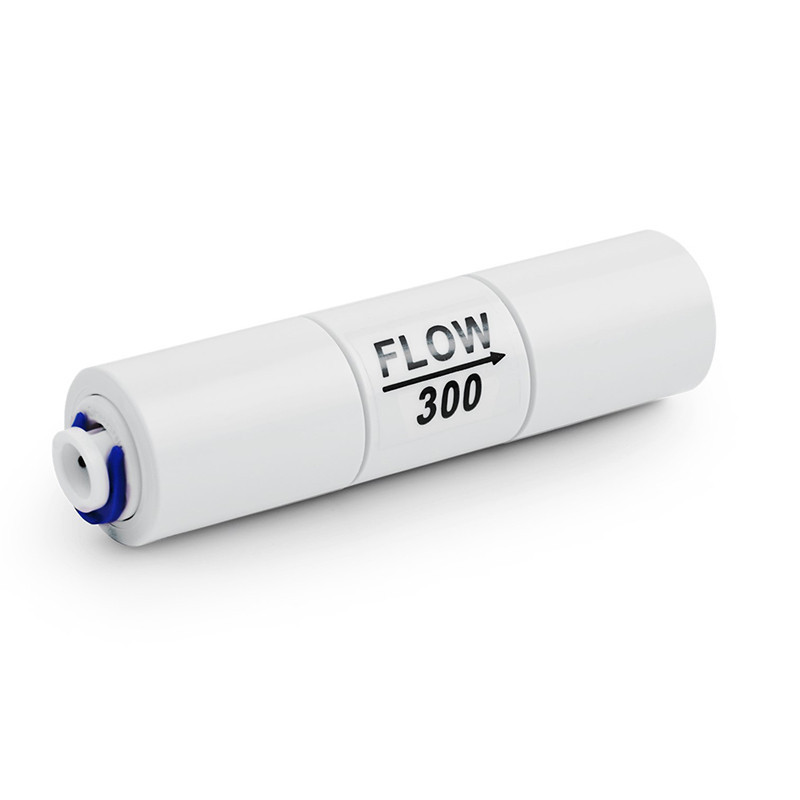
The FR-300 flow restrictor is used in reverse osmosis systems on the wastewater outlet. Its purpose is to force the correct water flow in the discharge section of the system, which has a direct impact on the operation of the osmotic membrane.
In practice, this means that the component supports proper membrane flushing, helps remove accumulated contaminants, and discharges them to the sewer. It is a small but very important component of the entire water filtration system, because proper operation of the osmosis system depends on its condition.
In a system such as a water filter based on an osmotic membrane, proper concentrate discharge is crucial for stable operation of the entire system. The FR-300 restrictor helps maintain appropriate flow conditions, allowing the membrane to be cleaned more effectively during operation.
Continuous removal of contaminants to the sewer reduces their accumulation in the system. This is especially important where water treatment takes place with an elevated content of deposits, including calcium and iron compounds.
FR-300 is installed on the pipe that discharges dirty water to the sewer. The component works on the wastewater outlet and is designed for connection with so-called quick couplings, which simplifies integration into an existing system.
This solution is used in installations where a 75 GPD osmotic membrane operates. Thanks to compatibility with such membranes, the restrictor can be properly matched to the flow parameters required by the reverse osmosis system.
When replacing the osmotic membrane with a new one, a new flow restrictor should be installed. It is mounted in place of the old, worn restrictor on the pipe that discharges dirty water to the sewer.
The restrictor is a consumable component. In the case of very contaminated water, especially with a large amount of calcium and iron deposits, the restrictor should be replaced every few years. Regular replacement helps maintain proper membrane operation and supports reliable operation of the entire system.
In practice, checking the condition of the restrictor is a good maintenance habit wherever the reverse osmosis filter works intensively or in more difficult water conditions. Replacing a worn component helps keep the system efficient and reduces the risk of deteriorating membrane performance parameters.
| Model | FR-300 |
|---|---|
| Product type | Flow restrictor / restrictor |
| Application | Reverse osmosis systems |
| Installation location | Wastewater outlet / pipe discharging dirty water to the sewer |
| Connection method | Quick couplings |
| Function | Forcing proper flow, supporting membrane flushing, removal of contaminants |
| Compatibility | 75 GPD osmotic membranes |
| Operating recommendations | When replacing the membrane, replacing the restrictor is recommended; with heavily contaminated water, replace every few years |
FR-300 is responsible for forcing the correct water flow at the wastewater outlet in a reverse osmosis system. This supports osmotic membrane flushing and the discharge of contaminants to the sewer.
The component is installed on the pipe that discharges dirty water to the sewer, i.e. on the wastewater outlet in a reverse osmosis system.
Yes, the FR-300 restrictor is designed for osmotic membranes with a capacity of 75 GPD.
A properly working restrictor supports membrane cleaning and helps remove contaminants from the system. This has a positive effect on membrane operating conditions and its proper performance.
Yes. When replacing the osmotic membrane with a new one, a new flow restrictor should also be installed, in place of the old, worn component.
In the case of very contaminated water, especially with a large amount of calcium and iron deposits, it is worth replacing the restrictor every few years. Regular replacement helps maintain proper system operation.
Yes, the FR-300 is designed for installation with quick couplings, which makes installation and later replacement in the water filtration system easier.
The restrictor performs an important function in the wastewater discharge system and supports proper membrane operation. In practice, it is an important component of a reverse osmosis system wherever maintaining proper flow and effective removal of contaminants is required.
FR-300 restrictor (flow limiter) for reverse osmosis systems, mounted on the wastewater outlet with quick couplings. It enforces proper flow, which supports membrane flushing and the removal of contaminants to the sewage system. Recommended replacement every few years, especially with water containing high levels of sediments (e.g., calcium and iron). When replacing the membrane, it is advisable to install a new restrictor.