PH Testers – a comprehensive guide to measuring water pH
PH testers and meters are practical devices for monitoring water quality at home, in pools, aquariums, installations, and hydroponic cultivation. Knowing the pH level is important wherever users’ health, comfort of water use, and proper operation of equipment matter.
In this category, you will find solutions for fast and accurate measurement of water pH – from simple testers to electronic pH meters. Choosing the right model depends on the application, the expected precision, and the convenience of everyday use.
EZDO7011 is a portable, waterproof meter for measuring pH, ORP (mV), and liquid temperature. It offers a range of 0.00-16.00 pH and -1000 to +1000 mV, with a resolution of 0.01 pH and a clear, dual-display LCD set at a 45° angle. It features automatic temperature compensation, a HOLD function, automatic calibration, and a replaceable electrode, which reduces operating costs.
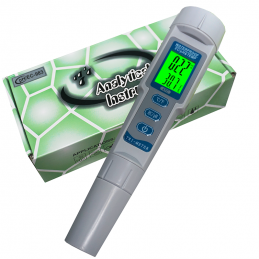
Portable Combo pH/EC-983 meter with thermometer for quick checking of pH, conductivity (EC), and temperature in water samples. It is suitable for aquaculture, laboratories, swimming pools and spas, water treatment, agriculture, and beverage testing. The replaceable probe, backlit LCD screen, IPX5 waterproof rating, and automatic temperature compensation (ATC) make field measurements easier.
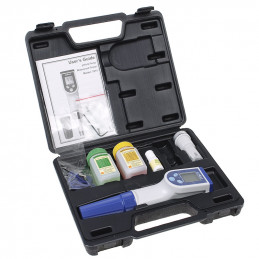
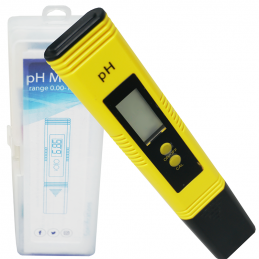
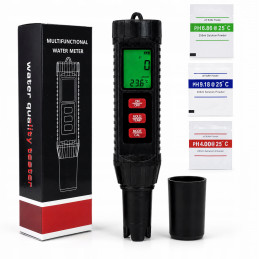
The Electronic pH Meter 02 is an easy-to-use pH tester for water and other solutions. Calibration is done using buttons (no screwdriver needed), and the automatic temperature compensation (ATC) makes it easier to obtain a stable reading. It is suitable for use in aquariums, swimming pools and spas, water treatment, laboratories, and for monitoring the pH of beverages. The package includes 2 calibration buffers and a protective case.
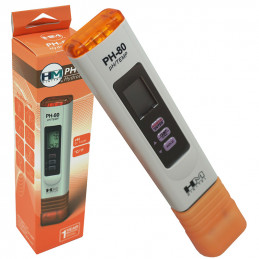
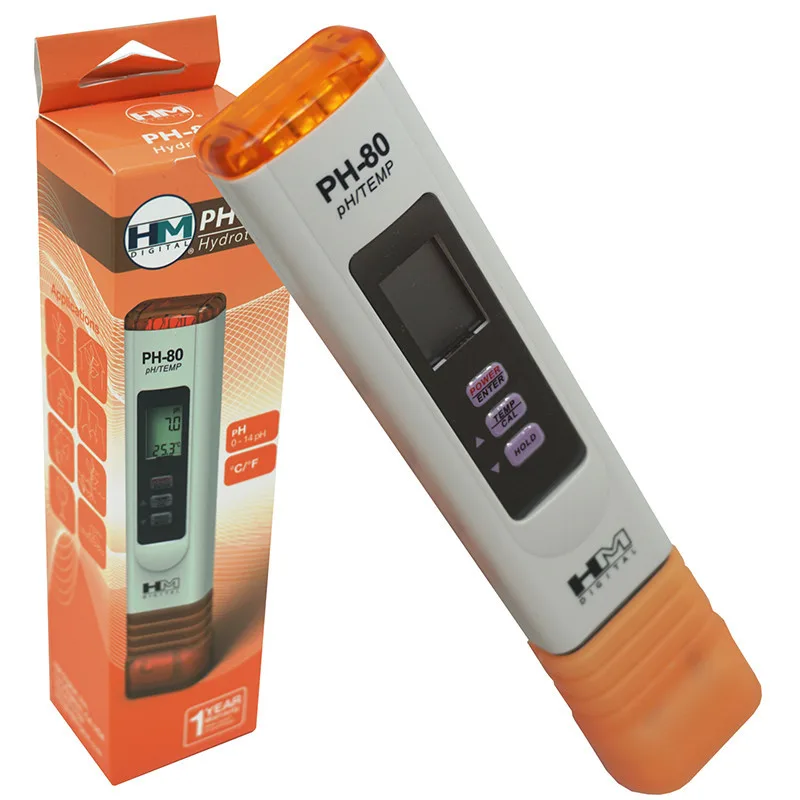
The pH-80 HM Digital meter is a waterproof, electronic pH tester with simultaneous temperature measurement. It floats on the water's surface, has a large LCD display, a HOLD function, automatic shut-off, and a low battery indicator. It offers automatic three-point calibration and temperature compensation (ATC). It is suitable for use in aquaculture, swimming pools and spas, laboratories, water treatment, and testing of water and wastewater.
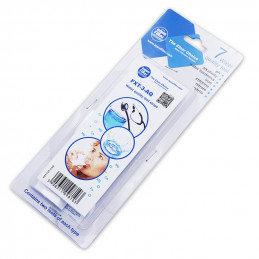
Aquafilter FXT-3-AQ colorimetric water quality testing kit. It allows you to monitor 7 common parameters: pH (6-11), hardness (0-425), iron (0-5.0), chlorine (0-4.0), alkalinity (0-720), nitrates (0-50), and nitrites (0-10). From one kit, you can perform 2 complete water tests.
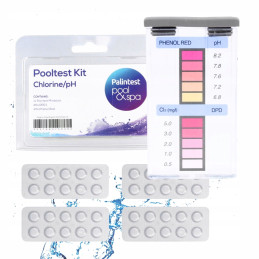
Pooltest Kit Palintest Tablet Tester for quick water quality testing in pools or jacuzzis. The kit allows for the measurement of chlorine (DPD1 tablets) and pH (Phenol Red tablets). Included are 40 tests : 20 for chlorine and 20 for pH, a test container, and a color scale for result comparison. Easy to use and clear reading without specialized equipment.
The WODARO 7-in-1 water quality tester is a compact meter for pH, TDS, EC, ORP, SAL, S.G. and temperature with a backlit display, ideal for testing drinking water, aquariums, swimming pools, hydroponics, ponds and RO filtration systems.
PH testers are essential accessories wherever water quality control has a real impact on health, comfort of use, and the durability of installations and devices. Regular pH measurement helps you respond more quickly to deviations, reduce the risk of operational problems, and maintain water parameters suitable for a specific application.
In the PH Testers category, you will find devices for measuring the acidity and alkalinity of water, useful for example at home, for drinking and filtered water, in pools, aquariums, irrigation systems, and in gardening and service applications. Depending on your needs, you can choose an electronic water pH meter, a water pH tester for quick checks, or a pH meter for frequent and precise measurements.
PH control makes it easier to assess water quality and monitor its parameters on an ongoing basis.
What is pH and why is it important?
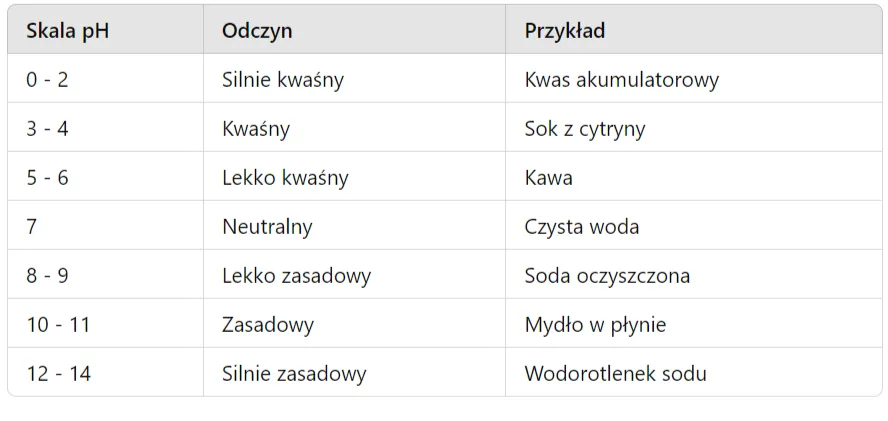
pH is a measure of the acidity or alkalinity of water or soil. The pH scale ranges from 0 to 14, where 7 means a neutral reaction. Water with a pH below 7 is acidic, and above 7 – alkaline.
Monitoring water pH is important because it affects:
the health and safety of users,
the comfort of using water,
the taste and quality assessment of drinking water,
the technical condition of devices and installations, including pools and irrigation systems,
the stability of conditions in aquariums, cultivation, and other specialist applications.
How can water pH be measured?
Water pH can be measured in several ways, depending on the expected accuracy and the frequency of checks.
Water pH meter
This is a precise device that provides an immediate result. It works well for daily water monitoring, for example in a pool or aquarium.
Water pH tester
This is an easy-to-use solution, often in the form of test strips that change color depending on the pH level. Their use is wide-ranging – from home use to more professional working environments.
Water pH meter
An electronic device enabling quick pH readings in various liquids. It is a good choice wherever convenience, repeatability of measurements, and greater control over the result matter.
The choice of tester depends on the application, required accuracy, and ease of use.
Which water pH meter should you choose?
The choice of the right device depends primarily on where and how often it will be used.
Electronic pH and chlorine meter for pools – especially useful for pool owners who want to monitor both pH and chlorine levels at the same time.
Pool water pH tester – a portable and easy-to-use solution, suitable for quick tests.
pH meter for drinking water – useful for people who want to monitor the quality of the water they consume every day.
When buying, it is worth paying attention to:
accuracy and readability of the reading,
ease of use,
the automatic calibration function,
the presence of temperature compensation,
device durability,
the length of the warranty,
user reviews regarding the model’s reliability.
What water pH is considered correct?
Application
Recommended / optimal range
Why is it important?
Drinking water
6.5–8.5
Too low a pH may promote pipe corrosion, while too high a pH may lead to limescale buildup.
Filtered water
Maintaining the proper pH level
It affects health and the taste of the water.
Pool water
7.2–7.6
It helps reduce skin and eye irritation and protects pool components from corrosion.
Are water hardness and pH the same?
No. Water hardness and pH are two different parameters.
Water hardness refers to the content of minerals, mainly calcium and magnesium.
pH defines the acidity or alkalinity of water.
Both indicators are important when assessing water quality, but they describe different properties and serve different functions.
Applications of pH testers
PH meters and testers are used in many fields where controlling the reaction of solutions affects quality, safety, or operational effectiveness.
at home and for checking drinking water,
when handling filtered water,
in pools,
in aquaristics,
in agriculture and horticulture, including hydroponics,
in irrigation systems,
in the food industry,
in selected medical and laboratory applications.
Regular pH measurement makes it easier to maintain stable water parameters in various applications.
How to use a pH meter?
Using a pH meter is usually simple, but for reliable results it is worth following the basic rules.
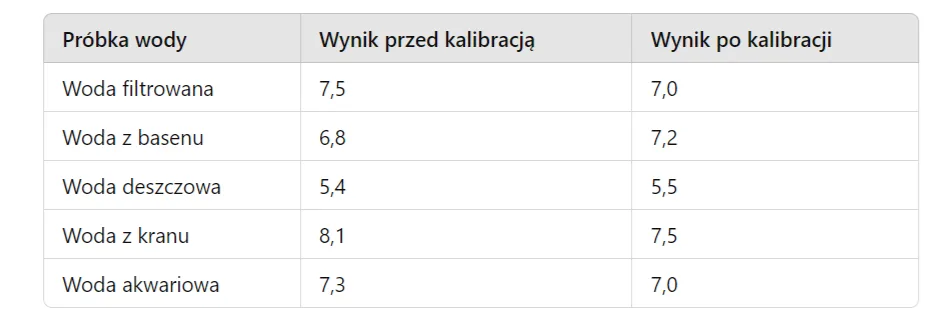
Calibrate the device according to the manufacturer’s instructions before first use and then repeat calibration regularly.
Take a water sample or immerse the probe directly in the tested water.
Wait a few seconds until the result stabilizes.
Read and record the result so that you can compare measurements over time.
If necessary, take corrective action if the pH differs from the expected range.
Measurement accuracy is affected by regular calibration, probe cleanliness, and using the device in accordance with the manufacturer’s recommendations.
Maintenance of a pH meter
To ensure the tester or pH meter works properly for a long time, it is worth remembering a few basic rules.
Regular calibration in accordance with the manufacturer’s recommendations.
Cleaning the probe after use to avoid deposits that distort results.
Proper storage of the device, protecting it from damage and loss of accuracy.
What should you pay attention to before buying?
A good pH tester should be matched to the actual method of use. A person checking drinking water at home needs a different device than a pool owner or a user of a filtration system operating regularly.
If you take measurements often, choose an electronic pH meter.
If you value simplicity and a quick check, a pH tester will be enough.
For a pool, it is worth considering a model that also measures chlorine.
For drinking and filtered water, accuracy, calibration, and temperature compensation will be important.
Regular pH monitoring helps maintain proper water quality and detect changes more quickly that may affect users and the condition of installations.
FAQ – frequently asked questions about pH testers
What does a pH tester measure?
A pH tester measures the acidity or alkalinity of water or another liquid. The result is given on a scale from 0 to 14, where 7 means a neutral reaction.
What is the correct pH of drinking water?
The optimal pH range for drinking water is usually considered to be from 6.5 to 8.5. Maintaining this range is important for water quality, taste, and its impact on the installation.
What pH should pool water have?
The optimal pH level of pool water should be between 7.2 and 7.6. Regular monitoring helps reduce skin and eye irritation and protect pool components.
Do water hardness and pH mean the same thing?
No. Water hardness concerns the content of minerals such as calcium and magnesium, while pH defines the acidity or alkalinity of water.
How often should a pH meter be calibrated?
The meter should be calibrated according to the manufacturer’s recommendations, especially before first use and regularly during operation. The frequency depends on the model and intensity of use.
What should you choose: strip tester or electronic pH meter?
A strip tester is suitable for simple, quick measurements. An electronic pH meter will be a better choice if you want convenience, frequent measurements, and greater reading precision.
Why is water pH that is too low or too high a problem?
Too low a pH can promote acidity and pipe corrosion, while too high a pH can lead to limescale buildup. An incorrect reaction also affects the comfort of using water.
Is a pH tester suitable for filtered water?
Yes. Monitoring the pH of filtered water is important both for health and for the taste of the water. A suitable tester helps quickly check whether the parameters are stable.
How should you care for the probe in a pH meter?
After use, the probe should be cleaned and the device stored according to the manufacturer’s instructions. Deposits and improper storage can reduce measurement accuracy.